
Politics
Constitution Review: lt’s Time For FG To Shed Excess Weight -Akeredolu

The Chairman of the South-West Governors’ Forum, Rotimi Akeredolu, SAN, has asked the Federal Government to shed itself of the excess weight it has appropriated over time.
Akeredolu declared that the present arrangement “is the major cause of friction in the country and reason for politics of bitterness”.
The governor, who insisted that the current system was not sustainable, said that the Federal Government should only coordinate and receive royalties.
He said this at the Public Hearing by the Senate Committee on Review of the 1999 Constitution in Akure, the Ondo State capital, yesterday.
“All the agitations of the peoples of this country must be looked into with a view to improving the economic power of the average citizens.
“The best way possible is to allow each region flower in its areas of comparative advantage.
“The behemoth called the Federal Government must shed the excess weight unduly appropriated over time. It is the major cause of friction.
“It is the reason for the politics of bitterness. It explains why everyone wants the power at the centre. It promotes ethnic chauvinists and encourages mediocrity.
“The new law must view, critically, the current misnomer which sees the Federal Government appropriating humongous amounts for moribund agencies whose duties overlap with those of the states.
“The fiscal policy of the country must be restructured to encourage ingenuity and uncommon resourcefulness.
“The Federal Government should only coordinate and receive royalties. The current system is not sustainable. All of us are beginning to appreciate this fact.
“The current exercise will derive its legitimacy if taken to the people for revalidation.
“Nothing must be taken for granted. Everyone must be treated as an equal partner in this whole enterprise of nation-building.
“The constitution of a country should reflect the aggregate of the realistic expectations of the components parts which form the union.
“It is the basic law which must define the powers and responsibilities of the offices created to serve the people.
“It must address the possible areas of anxiety. Nothing must be taken as given. All aspects of concern must be looked into with a view to reaching a consensus.
“All disparate aspirations must be harnessed to evolve a national ethos. No section of the country must feel short-changed.”
“The document produced must be a true reflection of collective bargaining and concessions secured in an ambiance of frank exchanges among members of the same family.
“The current attempt at Constitution amendment should be taken beyond the usual jamboree conceived and executed to arrive at predetermined result.
Akeredolu advocated for the return to the 1973 Constitution describing it as “the best practicable guide towards nationhood”.
According to him, “The 1963 Constitution retained regionalism and upheld the principle of autochthony, an organic development of the law using local experiences.
“The Republican status of the country was reflected. Each region had considerable latitude to blossom at her own pace. There was devolution of powers in the true sense of the term.
“This was the period when even outsiders noticed the potential greatness of the nascent post colonial country.
“The major provisions which allowed the three regions which existed before independence were retained in the 1963 Constitution.”
“That remains the best document for a country as heterogeneous as Nigeria. It was the best practicable guide towards nationhood.
The governor said, “Unfortunately, the military coup of 1966 destroyed that when it abolished regionalism and created the so-called provinces while imposing a unitary system on the country.
“Any honest analyst will agree that this act marked the beginning of the crises of confidence among the peoples of this country.
“This gross commission led to the civil war and the attendant loss of lives and property on monumental scale.
“The country still smarts from the effects the needless war among brothers till date.
“The 1979 Constitution was a departure from the 1963’s but it lacked originality. The 1995 Sani Abacha document was not used for a day.
“The 1999 Constitution has been described as a document which tells lies against itself. It was just decreed into existence by the departing military. This explains the several amendments in barely two decades of its existence.
“The current exercise, therefore, must not toe the path of the previous attempts at tokenism.
“The basic law of any country must not be reduced to frivolities reflecting preferred whimsies.
“It must not be oppressive of the minorities. Its provisions must indeed give teeth to the primary purpose for which the government exists.
“No provision of the law must not be justifiable as Chapter Two of the current 1999 Constitution seeks to impress on us.
The Leader of the committee, Senator Ajayi Boroffice, said that the review provides a platform for Nigerians to express their opinions on the fundamental law that governs their lives through proposals that will lead to the highest good for the greatest number of our people.
Boroffice said, “No doubt, we are going to have diverse and differing views on the different themes of the exercise. However, the focus for this committee is how to manage the review exercise in a fair, inclusive, credible, and transparent manner.
“Public Hearings are critical to participatory democracy and indispensable in a Constitution amendment exercise if the Constitution is to be seen as the people’s Constitution.
He noted that, “These Zonal Public Hearings have been designed in such a manner as to give citizens greater opportunities to make inputs more than ever before in the Constitution amendment process.
Similarly, the Lagos State Governor, Mr. Babajide Sanwo-Olu, yesterday, demanded state police, fiscal federalism and a special economic status for the state as constitutional review public hearing begin across the country.
Sanwo-Olu made the demands at the opening of the two-day Senate Zonal Public Hearing on the Review of the 1999 Constitution under the leadership of Senator Oluremi Tinubu, held at Marriot Hotel, Ikeja, in Lagos State, according to a statement by the state government.
He said, “For us in Lagos State, the issues of state police and fiscal federalism are at the top of the priority list for us, in this ongoing review process. Equally fundamental, particularly for us in Lagos State, is the issue of a special economic status for Lagos, considering our place in the national economy and the special burdens we bear by virtue of our large population and limited landmass.
“I believe the need for this special status has been sufficiently articulated and justified. It suffices for me at this point to restate that this request is by no means a selfish one, but one that is actually in the interest of every Nigerian and of Nigeria as a nation.
“The progress and prosperity of Nigeria is inextricably linked to the progress and prosperity of Lagos State. A special status for Lagos State, therefore, must be a concern not only for the people of Lagos State alone, but for all Nigerians.”
Sanwo-Olu also called on all Nigerians within the zone being covered by the Senate Committee on Constitutional amendment to embrace the opportunity of the zonal hearing so that their voices and opinions will count in the amended constitution that will emerge.
Sanwo-Olu, who commended the leadership and members of the National Assembly for responding to the concerns of Nigerians on the need to carry out a review of the 1999 Constitution to reflect current realities, assured them of the Lagos State Government support in any way necessary to make the assignment easier and highly rewarding for all Nigerians.
Representatives of several states, town, communities, associations and civil society organisations spoke on several issues that have to do with states creation, gender equality and special status, among others.

Politics
Alleged Coup: Protests Rock N’Assembly As Detained Officers’ Children, Wives Demand Justice

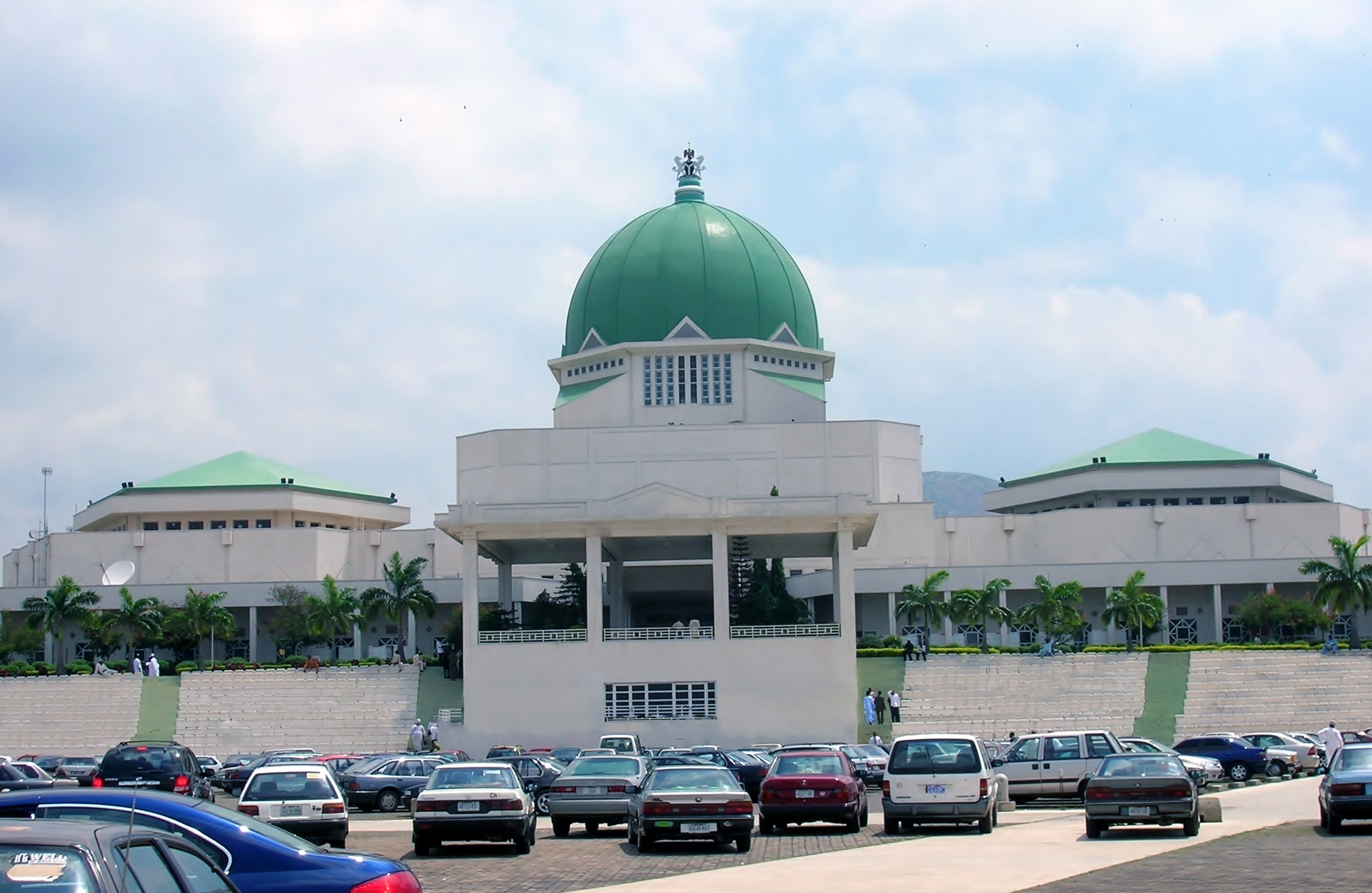
Scores of children and wives of military officers detained over an alleged coup plot yesterday staged a peaceful protest at the National Assembly, demanding a speedy trial and the release of the accused officials.
The protesters who gathered at the entrance of the National Assembly complex, moved in a slow procession while clutching placards with inscriptions such as “Don’t Kill Our Daddies,” “Detention Without Trial is Injustice,” and “Six Months of Torture: Enough Is Enough.”
Amid tears and trembling voices, the children appealed for justice and access to their detained fathers, many of whom they said they had not seen for months.
The appeal was made during a press briefing in Abuja attended by no fewer than 20 wives and several children of the detained officers, including a two-month-old baby.
The families were accompanied by human rights lawyer, Deji Adeyanju and activist Omoyele Sowore.
At the briefing, the families lamented that the officers had been held for over 160 days without trial or contact with their relatives, describing the situation as a violation of their fundamental rights.
Speaking on behalf of the families, Memuna Bashiru said the prolonged detention had thrown their households into uncertainty and emotional distress, noting that while allegations had been widely publicised, families remained in the dark about the fate of their loved ones.
The arrest of the indicted officers was first announced on October 4, 2025, by the then Director of Defense Information, Brigadier General Tukur Gusau, who disclosed that 16 officers were taken into custody for alleged breaches of military regulations and acts of indiscipline.
However, an interim investigation later suggested the existence of a clandestine network of officers, allegedly coordinated by a senior Army officer, which had begun preliminary planning for a coup.
According to the report, the alleged plot involved surveillance of key national assets, including the Presidential Villa, Armed Forces Complex, Niger Barracks in Abuja, and major international airports, with October 25, 2025, cited as the planned date for the operation.
Those reportedly in custody include Brig Gen M. A. Sadiq, Col M. A. Maaji, Lt Col S. Bappah, Lt Col A. A. Hayatu, Lt Col P. Dangnap, Lt Col M. Almakura, Maj A. J. Ibrahim, Maj M. M. Jiddah, Maj M. A. Usman, Maj D. Yusuf, Capt I. Bello, Capt A. A. Yusuf, Lt S. S. Felix, Lt Cdr D. B. Abdullahi, Sqn Ldr S. B. Adamu and Maj I. Dauda.
The alleged plot, according to findings, targeted senior government officials, including President Tinubu and Vice President Kashim Shettima.

In a statement issued yesterday, the party’s National Publicity Secretary, Mr Felix Morka, said the exercise would take place in all wards and designated centres nationwide.
He called on existing members to update their records, while encouraging new entrants to join the party through the digital platform.
“As the electronic membership registration exercise resumes in all wards and designated locations nationwide, we urge existing members to validate their membership while new members are encouraged to register and join the progressive family,” Mr Morka said.
According to him, eligibility for registration is limited to individuals aged 18 and above who possess a valid National Identification Number (NIN).
The party said the initiative is part of efforts to modernise its operations by transitioning to a digital database that would enhance record accuracy and accessibility.
Mr Morka noted that the e-registration would “digitise the party’s membership register, ensure the integrity of records, and enhance efficient access to membership data for planning and management decisions.”
He added that the move is also aimed at promoting internal democracy within the party and strengthening its commitment to democratic innovation.
The APC had previously introduced electronic registration as part of broader reforms to streamline its membership system and improve organisational efficiency.