Connect with us

Business

How Maritime Sector Fared In 2020

Published

on

Activities in the Nigerian maritime sector in 2020 were greeted with mixed feelings as the sector witnessed a lot of ups and downs.
In the first quarter of 2020, the sector recorded great improvement across the nation’s seaports as maritime activities boomed. Container traffics across the nation’s six seaports were on the increase due to local and foreign patronage by investors.
The ports within the period recorded high volume in foreign vessels. In the two ports in Rivers State – Onne and Rivers Port Complex, for instance, the volume of container traffic was so high that importers and clearing agents were smiling to the banks. It also generated huge revenue for the Nigerian Ports Authority (NPA) and the government.
The outbreak of the Coronavirus pandemic in the first quarter of the year, however, halted the progress being made in the sector. For nearly four months, activities at the ports ceased, while move-ment of vessels and personnel were restricted due to the lockdown imposed by the government as a result of the pandemic.
In a nutshell, the sector was confronted by three major challenges that generally hampered socio-economic development in the country. These are piracy, Corona-virus pandemic and EndSARS protests across the country.
An x-ray of the above challenges would assist in knowing how the maritime industry feared in 2020.
Piracy:
Piracy constituted one of the major setbacks to the maritime industry in 2020. The sector witnessed a decline in operations due to incessant attacks on ship owners by sea robbers. The menace became a daily norm in the indu-stry, scaring away foreign investors and reducing investments in the sector.
Many stakeholders, investors and vessel owners abandoned the nation’s ports and relocated to other African countries for safety of their crews and vessels.
Over 138 crew members, vessel owners and other personnel were kidnapped in the Gulf of Guinea by rampaging pirates in the year under review. Many died in the process while huge ransom were paid to rescue some from the hands of hoodlums.
Here in Rivers State, over 15 persons, including passengers, were hacked down on their way to Bonny, Andoni, Bille and other riverine communities with their valuables worth millions of Naira carted away by sea hoodlums.
Sea robbers within the year under review, also stole over 16 speed boat engines and other personal items, frustrating operators to do business and rendering the sector unproductive.
This situation forced many foreign ship owners to hire at a huge cost the services of the Nigerian Navy to escort their vessels to the points of destination.
Coronavirus:
Coronavirus is a global pandemic that wreaked havoc on the socio-economic activities of the entire globe. Beside causing death, it led to the closure of industries and restriction of goods and services.
The maritime sector had its own share of the adverse effects of the pandemic. Due to lull in maritime activities, many dockworkers lost their jobs, while seafarers, ship owners, crew members and vessels were stranded at sea for months. Some were quarantined and many lost their lives to the pandemic. Vessels laden with cargoes were suspended on high sea while most perishable goods got spoilt.
#EndSARS Protests:
The EndSARS protests that rocked the nation in the month of October affected operations at the nation’s ports. For instance, the headquarters of the Nigerian Ports Authority (NPA) in Lagos was set ablaze by hoodlums that hijacked the End-SARS protests in Lagos. The attack led to the destruction and looting of some of the NPA’s valuables worth millions of Naira. Over N807 million had been earmarked to rehabilitate the port.
Maritime activities were also disrupted in all the six seaports in the country including Apapa and Tin Can ports, Lagos; Onne and Rivers ports in Rivers State; Warri and Calabar ports, thereby depriving the sector a huge billions of naira.
Any Hope For The Sector In 2021?
Notwithstanding the numerous challenges that confronted maritime industry in 2020, there is a ray of hope for the sector in the coming year going by several efforts being made to reposition the sector.
It would be recalled that the Federal Government had, earlier in 2020, approved the construction of Port Har-court to Maiduguri Eastern narrow gauge railway with new branch lines and trans shipment facilities to boost and facilitate maritime operations in the country.
Approval has also been given for the construction of deep seaport at Bonny, Rivers State by the Federal Government at a cost of over $46.924.369 to boost operations in the sector.
Meanwhile, the National Inland Waterways Authority (NIWA) has commenced the trial movement of containers from Onne Port to Onitsha River Port by barges with the aim of decongesting Onne Port and boosting maritime activities in the eastern zone.
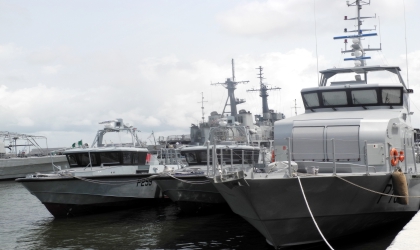
In a bid to curb insecurity on the waterways, the Nigerian Navy is planning to acquire two warships to tackle piracy in the Gulf of Guinea in 2021 and make the water more navigable and safer for ship owners.
In recognition of the leadership role being played by Nigeria in tackling insecurity in the Gulf of Guinea, the International Maritime Organisation (IMO) through its Secretary General, Kitsch Lum, wrote a commendation letter to the  Federal Government through IMO Director, Maritime Safety Division, Heike Daggim.
There are also good news from the International Transport Workers Federation (ITF) through its African Regional Secretary, Muhammed Safiyanu, that Nigerian seafarers would henceforth be assisted to secure jobs with foreign vessels.
Another window of opportunity for the sector to bounce back was the training of over 500 dockworkers and seafarers by the Nigerian Maritime Administration and Safety Agency (NIM-ASA) across the nation’s ports to boost maritime activities in the country.
The NPA has also earmarked over N807 million for the rehabilitation and repair of the damaged facilities at the NPA headquarters during the EndSARS protests in Lagos.
It is also noteworthy that the West African Containers Terminal (WACT) has acquired two mobile Harbour Cranes at Onne Port to boost marine operations.
There is no gainsaying the fact that all these efforts are geared towards putting the maritime sector on a good footing in the Year 2021, beginning from today. But the success of these efforts in the maritime sector depends on the political will and sincerity of all the players in the sector, especially the government.


By: Chinedu Wosu

Continue Reading

Business

33 Banks Raise N4.65tn As Recapitalisation Ends

Published

on

The Central Bank of Nigeria (CBN) yesterday said 33 banks have met new minimum capital requirements under its recapitalisation programme, raising a combined N4.65 trillion to strengthen the financial system.

The apex bank disclosed this in a statement marking the end of the exercise, which commenced in March 2024 and drew participation from domestic and foreign investors.

The statement was jointly signed by the Director of Banking Supervision, Olubukola Akinwunmi, and the Acting Director of Corporate Communications, Hakama Sidi-Ali.

The statement said “Over the 24-month period, Nigerian banks raised a total of N4.65tn in new capital, strengthening the resilience of the financial system and enhancing its capacity to support the economy.”

The regulator said local investors accounted for 72.55 per cent of the funds, while international investors contributed 27.45 per cent, reflecting continued confidence in the sector.

Commenting on the outcome, the CBN Governor, Olayemi Cardoso, said in the statement, “The recapitalisation programme has strengthened the capital base of Nigerian banks, reinforcing the resilience of the financial system and ensuring it is well-positioned to support economic growth and withstand domestic and external shocks.”

It added that while 33 banks have complied with the new thresholds, a few others are still undergoing regulatory and legal processes.

The statement noted, “The CBN confirms that 33 banks have met the revised minimum capital requirements established under the programme.

“A limited number of institutions remain subject to ongoing regulatory and judicial processes, which are being addressed through established supervisory and legal frameworks.

“All banks remain fully operational, ensuring continued access to banking services for customers.”

The apex bank stressed that the exercise was executed without disrupting banking operations, ensuring uninterrupted access to services nationwide.

It further stated that key prudential indicators have improved, particularly capital adequacy ratios, which remain above global Basel benchmarks.

The minimum ratios were set at 10 per cent for regional and national banks and 15 per cent for banks with international licences.

The bank also said the recapitalisation coincided with a gradual exit from regulatory forbearance, a move it said improved asset quality, strengthened balance sheet transparency, and enhanced overall stability.

To preserve these gains, the CBN said it has reinforced its risk-based supervision framework, mandating periodic stress tests and adequate capital buffers for banks.

It added that supervisory and prudential guidelines would be reviewed regularly to strengthen governance, risk management, and resilience across the sector.

“The successful completion of the programme establishes a stronger and more resilient banking system, better positioned to support lending, mobilise savings, and withstand domestic and global shocks,” the statement said.

The Tide learnt that foreign capital inflows into Nigeria’s banking sector rose by 93.25 per cent year-on-year to $13.53bn in 2025, up from $7.00bn recorded in 2024, amid the ongoing recapitalisation drive by the Central Bank of Nigeria.

Data from the National Bureau of Statistics capital importation report showed that the banking sector remained the dominant destination for foreign capital, accounting for $13.53bn of the total $23.22bn recorded in 2025, representing 58.26 per cent of total inflows, up from 56.81 per cent in 2024.

The surge reflects heightened investor interest in Nigerian banks as they raised fresh capital to meet new regulatory thresholds introduced by the apex bank, with industry-wide recapitalisation activities driving large-scale inflows across all quarters of the year.

However, the Centre for the Promotion of Private Enterprise (CPPE) recently raised concerns over weak credit flows to small businesses despite recent banking sector reforms.

The CPPE, led by a renowned economist, Dr Muda Yusuf, acknowledged that the ongoing bank recapitalisation exercise by the CBN has strengthened the financial system, but warned that the benefits have yet to translate into meaningful support for the real economy.


Continue Reading

Business

SMEs Dev: Firms Launch N100m Loan Scheme 

Published

on

The Coalition of Microlending and Cooperative Institutions in Nigeria (COMCIN), the umbrella body of non-bank microfinance institutions and cooperative societies in Nigeria, in partnership with NEAT Microcredit, has unveiled a N100 million joint loan facility aimed at supporting small and medium-scale enterprises (SMEs) across the country.

The facility will be disbursed through participating Microfinance Institutions (MFIs), which will in turn extend the loans to their customers, particularly SMEs, as they directly interface with businesses at the grassroots level.

The Executive Director of COMCIN, Mr. Micheal Ogbaa who represented the Chairman, Dr. Iredele Oyedele (FCA, FCCA),  said the initiative is designed to strengthen micro-lending institutions and expand access to finance for grassroots entrepreneurs, particularly women and youths in the informal sector.

Ogbaa explained that COMCIN does not lend directly to individuals but works through its network of microfinance and cooperative institutions, which in turn provide loans to end users.

“We came together to advocate for the microfinance ecosystem. Commercial banks often exclude people at the grassroots, but our members are positioned to reach them. This facility will empower them to do more,” he said.

He noted that the loan scheme offers low interest rates and flexible repayment plans, making it more accessible to small business owners.

According to him, about 90 percent of beneficiaries are expected to be women, who play a key role in sustaining families and driving economic activities at the local level.

“Our focus is on traders, service providers, and players in the informal sector. These are the real movers of the economy. By supporting them, we are strengthening families and contributing to national development,” he added.

Ogbaa disclosed that eligible SMEs with proven integrity and business track records could access up to N5 million each through participating micro-lending institutions. The rollout has commenced in Lagos and will extend to Abuja, Enugu, and other regions, including the South-West, South-East, and North-East.

He said 12 micro-lending institutions have already benefited from the scheme, while 85 applications are currently being processed under the pilot phase.

“Our target is to reach at least 100,000 SMEs nationwide. We are building a platform that connects funding partners with credible micro-lending institutions, creating a reliable channel for financial inclusion,” Ogbaa said.

He added that COMCIN is also working to attract larger funding pools from development finance institutions and private investors, noting that successful implementation of the pilot phase would boost confidence and unlock more capital for SMEs.

“We have seen encouraging testimonies from early beneficiaries. As we demonstrate transparency and efficiency, more institutions will be willing to channel funds through us,” he said.

Continue Reading

Business

Yenagoa’s Radisson Hotel Ready  December   — NCDMB, Other 

Published

on

The Executive Secretary of the Nigerian Content Development and Monitoring Board (NCDMB), Engr. Felix Omatsola Ogbe, has expressed confidence that the five-star Radisson Hotel and Conference Centre, Yenagoa, Bayelsa State, would be completed and commissioned this December .
He said this while addressing visiting top executives of Edison Corporation  and Megastar Technical and construction company at the conclusion of a one-day project management tour and workshop at the headquarters of the Nigerian Content Tower (NCT), Yenagoa, weekend.
The Board in a statement from the Directorate of Corporate Communications said  all other stakeholder assured of the delivery of world-class services in the hotel upon it’s completion.
Ogbe described the hospitality facility as a top priority project of the Board whose progress he would be following up every day and week.
“This project is critical to the Board, critical to Yenagoa, Bayelsa State and Nigeria. With this hotel becoming functional at the end of the year, I believe there will be tourism in Bayelsa State, and that’s one of my dreams.
“When I took up this job as Executive Secretary in December 2024 I said I must make this hotel work”, the NCDMB boss said.
He commended the team from Edison Corporation and the project contractor, Megastar Technical and Construction Company, for the quality and pace of work, adding “much is required from the Management to meet up the schedule delivery
“Most of the critical aspects of the project have been resolved in terms of mark-up room, scope of work in terms of financing and contracting strategies”
The Board’s  Scribe said he was sure all hands would be on deck to ensure that work proceeds unhampered.
In his remarks, the Chief Executive Officer of Edison Corporation, Mr. Vivian Reddy, said the team from Edison Hotel Group was very excited to come into a contractual arrangement with NCDMB, assuring the project will put the city on the world map.
“What is so important with the group Radisson International is that, if anyone around the world looks for Radisson Yenagoa, they will see this place pop up, and it’s going to help to uplift the area in terms of visitors and tourism.
“Our role is to make sure we deliver a world-class quality hotel from start to finish. We will open the hotel, we’ll furnish it. We’re working with the main contractor to make sure the facility meets world-class standards”, he said.
Speaking on the sealing of the contractual deal with the NCDMB, he noted it took great efforts, saying “getting Radisson in the agreement was not easy, and it took several months and cumulative one and a half years of discussions and documentation”.
The Edison boss, who is reputed to be the first South African businessman to lead a high-level business delegation from that country to Nigeria during the tenure of President Thabo Mbeki in 1999, was full of commendation for the NCDMB boss, describing him as “a great and visionary leader”.
“The vision and dream of the Executive Secretary of the NCDMB are going to become a reality.  We’re going to help him and make it a reality and it’s going to be the best hotel in this region”, the   boss noted.
Mr Reddy also commended the project contractors and professional teams involved, stating that his team has every confidence in their technical competence.
By: Ariwera Ibibo-Howells, Yenagoa
Continue Reading

Trending