Connect with us

Oil & Energy

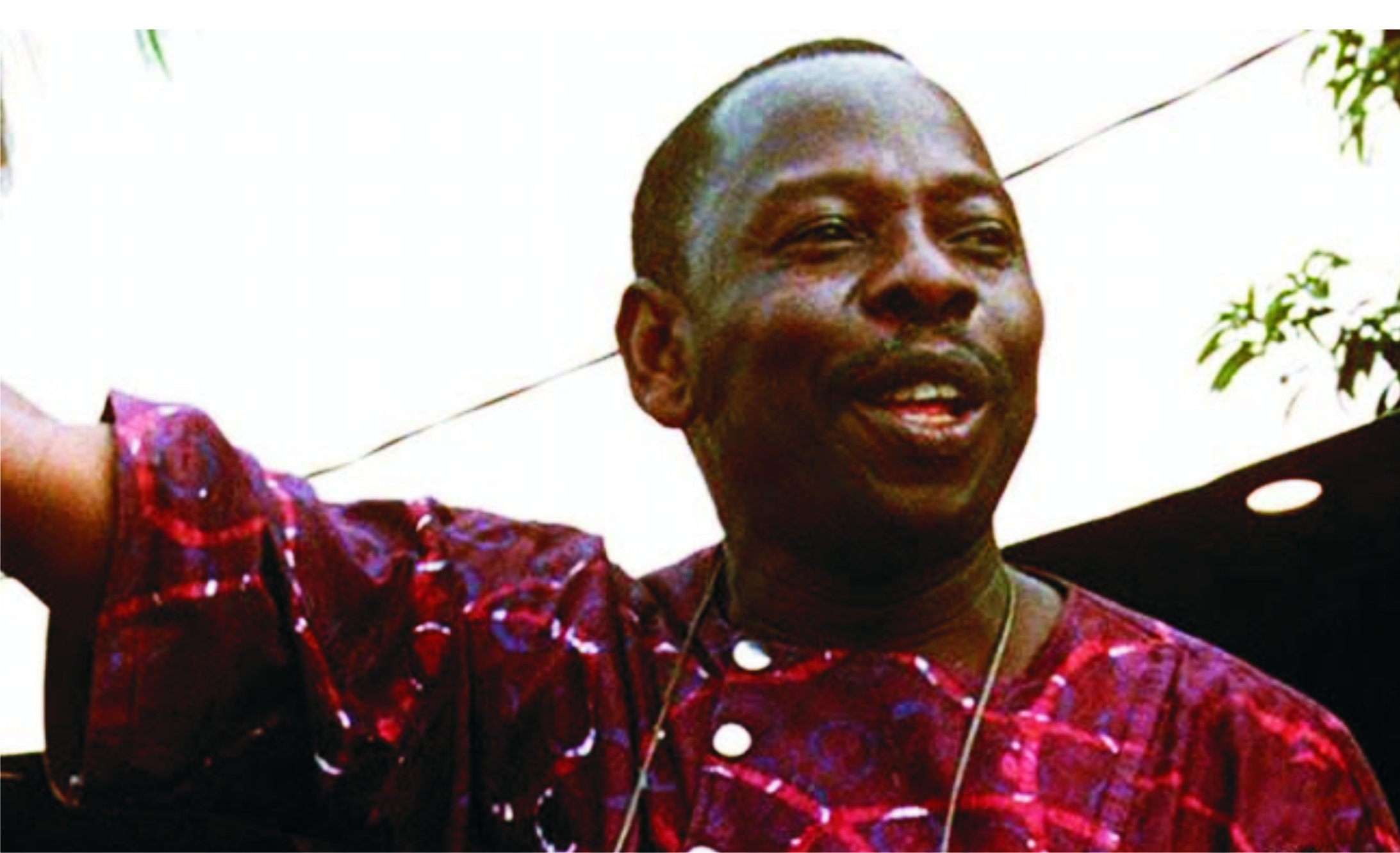
Ken Saro-Wiwa And Oil Politics In Nigeria

Published

on

The American Negro leader, Frederick Douglas, once asked, “who will stand for the downtrodden, open his mouth for the dumb and remember those in bonds as if bound with them”.
At a period when men worshipped at the altar of Nigeria’s self styled dictator and maximum ruler, when men so shackled by the ferocious cruelty of a wild and ruthless military junta, kept numb over the atrocious deeds that permeated the political waves of the country, when the chimney of injustice and institutional compromise reeked to its most repulsive and insipid taste, a bold, courageous and fearless Ogoni activist, Ken Saro- Wiwa braved the odds, putting his life on the line to question the excesses of the Abacha junta.
It was a critical period in Nigeria’s chequered political history which analysts described as a “decisive moment”.
Angered by the sad realities of the loss of the natural environment of the Niger Delta to a convoluted oil economy, where oil bearing communities existed as mere pawns in the game of power, he dusted up his hitherto docile Ogoni people to confront the deep-seated inequities and outright contraventions of the principles of justice in the Nigerian State.
He duly alerted his people that their foes; the Military Junta and Shell were formidable, but he pinned his conviction on the fact that it was better to fight the glaring environmental injustice that besieged them, than to remain silente and phase out of existence as a result of reckless oil exploratory activities by Shell which was ongoing in the area for decades. The moment was therefore ripe to confront the vilest political contraption in the history of Nigeria led by a pugnacious General, fully at home with the culture of might to subdue every real or imaginary enemy of the junta. The stage was set for the battle, and Ken Saro-Wiwa was not deterred to carry out his identified course of action.
Through the platform of the Movement for the Survival of Ogoni People, (MOSOP), he instituted a global campaign against the activities of the Royal Dutch in Ogoni. Through his oratory, activist posture and unique literary voice, he reaped cans of worms open against Shell, exposing the many social defects and corporate irresponsibilities of the company to a mass global and local audience.
As the controller of the highest stake among the IOCs in the Joint Venture agreement with the Nigeria National Petroleum Corporation, (NNPC) Shell and the Military junta were badly heated by Saro Wiwa’s campaign. Abacha was challenged to his chagrin, and he let loose his ill temper against the defenceless Ogoni people, framed up their leaders under junket of charges and summarily executed Ken Saro Wiwa and other Ogoni compatriots after a Kangaroo trial.
Shell also took cover under the Military junta to perfect it perfidy in Ogoni; the climax of which was the decimation of the elitist class in Ogoni, the wanton wastages of innocent lives, and the eventual pullout of the company from Ogoni. It is on record that during the Kangaroo trial of Ken Saro Wiwa a military Tribunal, Shell was duly represented even when they were supposedly not a party in the trial. What evidence could then be required for their complicity in the Ogoni crisis?. When Shell’s role in the prosecution of the Ogoni leaders became apparent, the company claimed it was the state’s role to ensure fairness under the law, and not a corporation’s. Such hypocrisy has continued to resonate among some unrepentant apologists of shell and other foes of Ogoni till date. But history has judged Ogoni fairly, as Shell’s record of environmental abuse and human rights abuse has continued to swell. Reports show that a Shell security fraud scandal in 2004, led to the forced resignation of the group chairman, Sir Philip Watts, who was escorted from the Shell centre by security staff.
Thus not its self righteousness or impregnable posture has saved the company from a diminishing corporate reputation globally. The denigrating poverty and unabated pollution in Ogoni and other Niger Delta communities are also glaring evidence against Shell. Reports reveal that between 1976 and 1991, over two million barrels of oil polluted Ogoni in 2,976 separate oil spills, and pipelines operated by Shell still traverse the land, creeks and water ways in Ogoni after oil production has ceased.
Although Ogonis paid dearly for their foremost role in environmental awareness in the Niger Delta, the fact remains that Saro Wiwa’s campaign has changed the face of oil politics in Nigeria. Shell and other nonchalant IOCs and corporate firms that prospect for oil in the Niger Delta have continued to incur the odium of its host communities. There is also pressure on the federal government to ensure strict compliance of international laws and politics in the oil industry.
As a Chief Proponent of true federalism, Ken Saro- Wiwa approached the leadership echelon of the country to rule by democratic ideals, rather than a surplus appropriating centralised command system immersed in an oil economy that survived vampire like on the fortune of the Niger Delta. Predictably, some leaders of Niger Delta cashed in on the Ogoni struggle and made themselves amiable tools in the hands of Shell and the military junta. Saro-Wiwa predicted this. He knew that the consequences of a failed oil-led development were conflicts, and divide and rule by the beneficiaries of the fraudulent system.
He therefore admonished the Niger Delta leaders to key into the vision and pointed out that, “Genocide was not selective”.
The implication being that such compromisers would equally become targets of destruction after aiding the external aggressors to destroy their kith and kin. History was to judge him correctly. Saro Wiwa also kicked against what he referred to as “indigenous colonialism”, a system where the minority ethnic groups in Nigeria are expected to render perpetual obedience to the majority ethnic groups, which history and colonal annexation has made a determinate superior.
He had a strong conviction in Thomas Jefferson’s Postulation during his inaugural address that, “All, too, will bear in mind this sacred principle, that though the will of the majority in all cases should prevail; that which will to be rightful must be reasonable; that the minority possess their equal rights, which equal law must protect, and to violate would be oppression”.
Saro-Wiwa was therefore deeply concerned about the moral issue that confronted Nigeria as a sovereign nation; the issue of constitutional democracy that would guarantee the rights of every citizen, irrespective of ethnic affiliation. Like the sage, Obagemi Awolowo, his idea of federalism was that all ethnic groups in Nigeria, should be given fair treatment, irrespective of size or numerical strength. Exactly 24 years after the death of Ken Saro Wiwa, the forces of oppression against Ogoni and the Niger Delta is yet to abate. The environment remains contaminated and polluted. There is more oil, more money and yet more poverty in the Niger Delta, there is more security troops and yet more insecurity in the Niger Delta.
National security as it affects the Niger Delta, at best relates to unfettered oil production. The hope of oil resumption in Ogoni is also very elusive, as Ogonis have insisted that the issues of environmental injustices raised by Saro Wiwa must be addressed before any oil resumption deal. Addressing a mammoth crowd of supporters at a memorial lecture organised to mark the 24th anniversary of Ogoni matyres day, MOSOP President, Legborsi Pyagbara, said the organisation would remain committed to the tenets of the Ogoni struggle. He called on Ogonis and the Niger Delta to remain steadfast in the pursuit of environmental justice in the region.
Speaking with The Tide in an interview, the president of a foremost pan Ogoni youth body, the Ogoni youth federation, Comrade Legborsi Yaanabana called on the federal government to expedite action on the implementation of the United Nations Environment Programme, (UNEP) report on the cleanup of Ogoni.
The Ogoni youth leader also urged the federal government to exonerate Saro Wiwa from the questionable circumstances that greeted his trial and death, by offering him post humus pardon. He said Ogoni youths will resist any forced resumption of oil exploration in Ogoni without properly negotiated settlements.
Also speaking in an exclusive interview with The Tide, foremost environmentalist, Engr Olu Andah Wai-Ogosu called for a more sustainable environmental policy to address the lingering challenges in the Niger Delta.
The environmental consultant and university don, also solicited local and international concern over the plight of the Ogoni people, to address the issues raised by Saro-Wiwa. In death, Saro Wiwa did not only set the pace for a new environmental consciousness in Nigeria, he also raised a new consciousness in minority rights activism in Nigeria. He won the Rights Livelihood Award for exemplary courage in striving nonviolently for civil economic and environmental rights, and he is one of the few Africans celebrated in the international mainstream of martyrdom.


Taneh Beemene

Continue Reading

Oil & Energy

NCDMB Unveils $100m Equity Investment Scheme, Says Nigerian Content Hits 61% In 2025 ………As Board Plans Technology Challenge, Research and Development Fair In 2026

Published

on

The Nigerian Content Development and Monitoring Board (NCDMB), has unveiled a $100 million Equity Investment Scheme among a raft of fresh initiatives to bolster indigenous capacity and participation in the oil and gas industry.
Executive Secretary of the Board, Engr. Felix Omatsola Ogbe, disclosed this while delivering his keynote address at the opening of the 14th Practical Nigerian Content Forum, held in Yenagoa, Bayelsa State.
Ogbe said the $100 million Equity Investment Scheme would provide equity financing to high-growth indigenous energy service companies, while diversifying the income base of the Nigerian Content Development Fund (NCDF).
In furtherance of the scheme, a memorandum of understanding (MOU) was signed at the event between Engr. Ogbe and the Managing Director of the Bank of Industry, Dr. Olasupo Olusi toward the management of the scheme, which is a new product of the Nigerian Content Intervention Fund (NCI Fund).
The NCDMB Scribe also announced that 61 per cent Nigerian Content level has already been attained in the oil and gas sector by the third quarter of 2025 from projects being monitored by the Board.
Ogbe further expressed the board’s readiness to onboard a new set of Project 100 Companies after the successful implementation of approved interventions relating to the first set of Project 100 Companies, launched in 2019, for which an exit plan is slated for April 2026.
The ‘Project 100 Companies’, TheTide learnt, is an initiative of the Ministry of Petroleum Resources and the NCDMB under which 100 indigenous companies in the oil and gas industry were nurtured and empowered to higher levels of competitiveness through capacity building and access to market opportunities.
The NCDMB helmsman also said the Board has concluded plans to launch its NCDMB Technology Challenge in the first quarter of 2026 and to hold a Research and Development Fair in the second quarter of 2026.
In addition to its ongoing initiatives, the board further stated that a review of its seven current guidelines would be undertaken between the first and second quarter of 2026.
“The Board has completed the framework for issuance of NCDF Compliance Certificate, an instrument to confirm that a company in the oil and gas industry has complied with the one per cent remittance obligations.
“The Certificate will become effective on Ist January 2026 and would be required to obtain key permits and approvals from the Board”, Ogbe said.
In his address, the Minister of State for Petroleum Resources (Gas), Rt. Hon. Ekperikpe Ekpo, said the theme of the PNC Forum, “Securing Investments, Strengthening Local Content, and Scaling Energy Production,” captures Nigeria’s national priorities that guide interventions by the Board and his Ministry.
He insisted that investment remains the lifeblood of the energy sector, and that the Board and the Ministry were committed to providing stable policies, transparent processes, and market-driven incentives, to attract long-term capital,  assuring that the ministry would continue to strengthen local capacity across fabrication, engineering, technology services, manufacturing of components, and research and development.
On his part, the Minster of State for Petroleum Resources (Oil), Senator Heineken Lokpobiri, noted with satisfaction that a decade-long stagnation in the oil and gas industry was overcame with the enactment of the long-delayed Petroleum Industry Act (PIA), 2021, and Presidential Directives issued by the Administration of President Bola Ahmed Tinubu in March 2024.
He said Nigeria has regained investor-confidence as signalled by the recent surge in FIDs and the increase of oil rigs from 14 to over 60, with 40 currently in active service.
“Our investment climate now is globally competitive, our fiscal terms are globally competitive. Our policies must be seen to be consistent at all times. The Federal Government is prepared to support Nigerian Content and the oil and gas industry, but then, things have to be done responsibly., he said.
In a goodwill message, the Managing Director, BOI, Dr. Olasupo Olusi, said that the collaboration between the NCDMB and BOI marked a significant expansion of a longstanding relationship, while assuring that through the $100 million NCIF Equity Investment Fund, the Bank of Industry would deploy equity and quasi-equity capital to support high-potential Nigerian companies to complement traditional debt financing and strengthening access to the long-term risk capital required for scale, competitiveness, and value creation.
“With a single obligor limit of $5 million, the Fund is designed to catalyze multiple high-impact investments while maintaining strong governance and prudent risk management”, the BOI Managing Director said.
On her part, the Special Adviser to the President on Energy, Mrs. Olu A. Verheijen, commended the NCDMB for sustaining the PNC Forum, which she said, accelerates change, drives competitiveness, and pushes the industry toward global standards.
She urged stakeholders to remain intentional and not incidental about in-country value addition, as they chart the path toward building a resilient, competitive industrial base in Nigeria.
By;  Ariwera Ibibo-Howells, Yenagoa
Continue Reading

Oil & Energy

Power Supply Boost: FG Begins Payment Of N185bn Gas Debt

Published

on

In the bid to revitalise the gas industry and stabilise power generation, President Bola Ahmed Tinubu has authorised the settlement of N185 billion in long-standing debts owed to natural gas producers.

The N185 billion legacy government obligations to gas producers for past supplies had strained cash flow and hindered operations, discouraged further exploration and production, and reduced gas supply for power generation, thereby worsening Nigeria’s power shortages and unreliable electricity supply.

The payment, to be executed through a royalty-offset arrangement, is expected to restore confidence among domestic and international gas suppliers who have long expressed concern about persistent indebtedness in the sector.

Minister of State for Petroleum Resources (Gas), Ekperikpe Ekpo, said the move, endorsed by the National Economic Council (NEC) headed by Vice President, Kashim Shettima, marked one of the most significant interventions in Nigeria’s energy sector in recent years.
In a statement issued by the his Spokesman, Louis Ibrahim, Ekpo described the approval as a “decisive step towards revitalising Nigeria’s gas sector and strengthening its power-generation capacity in a sustainable manner,”
While noting that the intervention aligned with the ‘Decade of Gas’ initiative, which aims to unlock more than 12 billion cubic feet per day (bcf/d) of gas supply by 2030, Ekpo said clearing the arrears would deliver wide-ranging benefits, beginning with restoring investor confidence in the sector.

According to him, settling the debts is crucial to rebuilding trust between the government and gas producers, many of whom have withheld or slowed new investments due to uncertainty over payments.

Ekpo explained that improved financial stability would help revive upstream activity by accelerating exploration and production, ultimately boosting Nigeria’s gas output adding that Increased gas supply would also boost power generation and ease the long-standing electricity shortages that continue to hinder businesses across the country.

The minister noted that these gains were expected to stimulate broader economic growth, as reliable energy underpins industrialisation, job creation and competitiveness.

In his intervention, Coordinating Director of the Decade of Gas Secretariat, Ed Ubong, said the approved plan to clear gas-to-power debts sends a powerful signal of commitment from the President to address structural weaknesses across the value chain.

“This decision underlines the federal government’s determination to clear legacy liabilities and give gas producers the confidence that supplies to power generation will be honoured. It could unlock stalled projects, revive investor interest and rebuild momentum behind Nigeria’s transition to a gas-driven economy,” Ubong said.

Continue Reading

Oil & Energy

The AI Revolution Reshaping the Global Mining Industry

Published

on

The global mining industry is undergoing a rapid digital transformation, driven by the dual pressures of the energy transition and increasingly complex extraction environments. A new market report projects the global Artificial Intelligence (AI) in mining market will nearly quadruple in value over the next seven years, reaching $9.93 billion by 2032.
This surge in adoption comes as miners face a “perfect storm” of challenges: declining ore grades, labor shortages, and an insatiable global appetite for the critical minerals required to power electric vehicles (EVs) and renewable energy grids.
According to data released this week, the market for AI in mining is valued at approximately $2.6 billion in 2025 and is expected to expand at a Compound Annual Growth Rate (CAGR) of 21.1 percent through 2032.
While the mining sector has historically been viewed as slow to modernize, the need for efficiency is forcing a change. The integration of autonomous haulage systems, predictive maintenance analytics, and “digital twins”—virtual replicas of physical mine sites—is shifting from pilot projects to standard operational necessity.
The “Operations & Process Optimization” segment is currently the dominant application, expected to account for more than 35 percent of the market in 2025. This technology allows companies to squeeze higher yields out of lower-quality rock, a capability that is becoming essential as easily accessible high-grade deposits are depleted worldwide.
The driving force behind this investment is the global scramble for critical minerals. The report highlights that the metal mining segment held the largest market share in 2024, directly correlated to the demand for lithium, copper, cobalt, and nickel—the backbone of the green energy economy.
“Metal mining operations involve highly complex processes—from ore body modeling and exploration to drilling, blasting, grinding, and material movement,” the report notes.
“AI supports these functions through predictive analytics… enabling cost reduction and higher yield recovery.”
For Western nations, this technological pivot also holds geopolitical weight. With China currently dominating the processing of rare earth elements, Western mining majors are under pressure to ramp up domestic production and efficiency to secure supply chains for battery manufacturing and clean energy infrastructure.
Beyond productivity, the industry is leveraging AI to address its most persistent operational risk: safety. The “Safety, Security & Environmental” segment is projected to record the highest growth rate during the forecast period.
Mining remains one of the world’s most hazardous heavy industries. Companies are increasingly deploying AI-powered video analytics and real-time worker tracking to prevent accidents involving heavy machinery and to monitor for gas leaks or ventilation failures in underground operations.
Furthermore, stricter Environmental, Social, and Governance (ESG) criteria from investors are pushing miners to adopt AI for environmental compliance. New tools allow operators to monitor tailings dams for stability, track emissions in real-time, and optimize water usage, ensuring that the intensifying race for minerals does not come at the cost of environmental stewardship.
Geographically, the Asia Pacific region commanded the largest share of the AI in mining market in 2024 and is expected to maintain the highest growth rate.
This dominance is underpinned by massive production volumes in China and Australia. Major industry players in the region, including BHP and Rio Tinto, have been early adopters of autonomous technologies. In Western Australia, for example, autonomous haulage trucks and drill rigs are already commonplace, moving millions of tons of iron ore with minimal human intervention.
China’s adoption is further accelerated by government support for “smart mining” initiatives aimed at modernizing its vast coal and mineral sectors to reduce fatalities and improve environmental performance.
As the world moves toward 2032, the “mine of the future” will likely bear little resemblance to the labor-intensive operations of the past. With generative AI now entering the sector to assist in complex mine planning and exploration, the industry is pivoting toward a model where data is as valuable as the ore itself. For energy markets, this efficiency is not just a bonus; it is a prerequisite for meeting the material demands of a decarbonized world.
By: Charles Kennedy
Continue Reading

Trending