
News
2020 Budget Scales 2nd Reading, As Reps Decry Poor Education Allocation

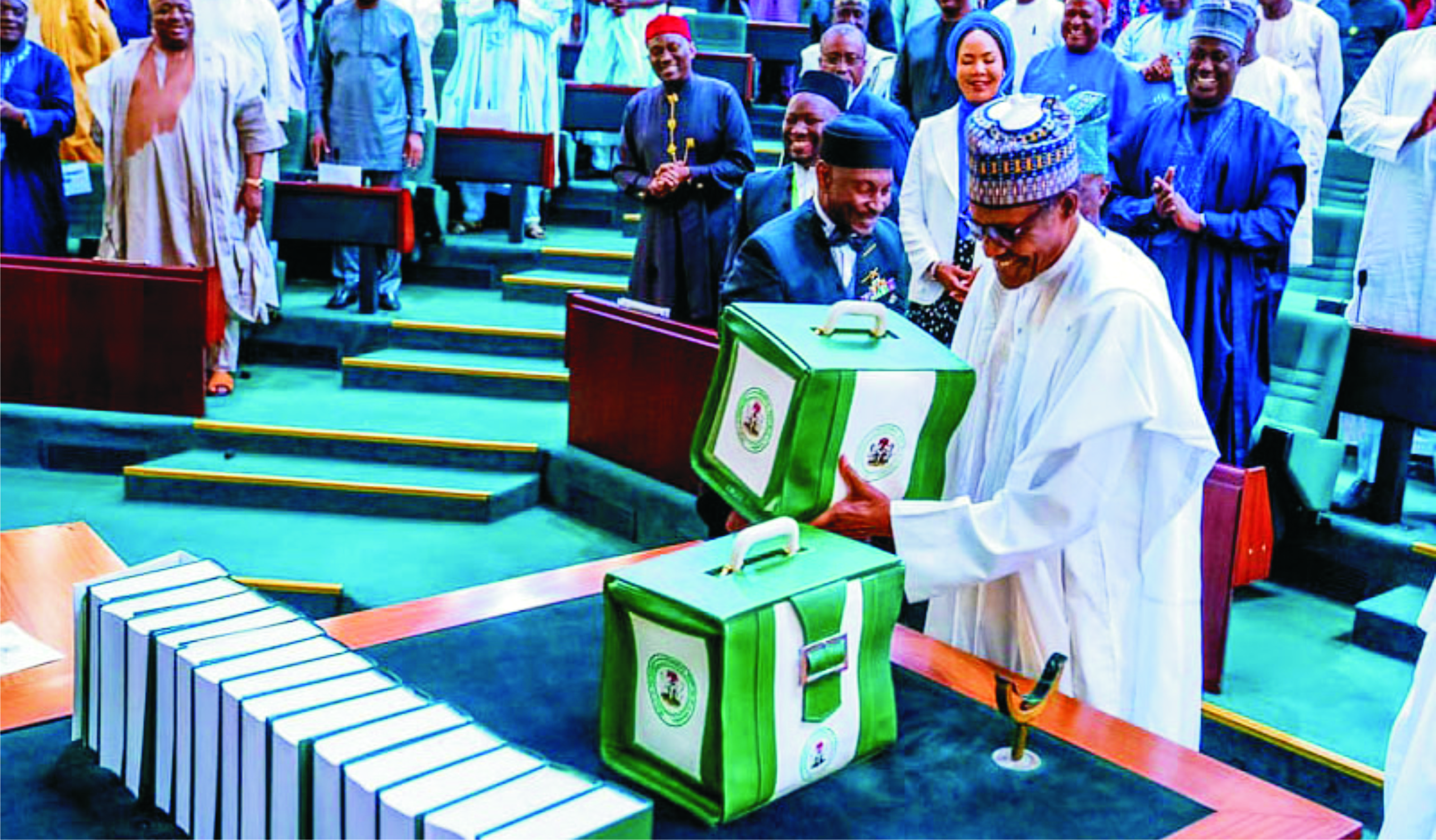
After two days of debate, the House of Representatives has passed the 2020 budget for second reading.
The bill was extensively debated by members of the House for straight two days, and when it was put to vote by the presiding officer, Deputy Speaker Idris Wase, the “ayes” had it.
Wase subsequently referred the bill to the committee on appropriation and other relevant standing committees of the House.
The N10.3trillion bill was submitted, last Tuesday by President Muhammadu Buhari.
While debating the budget, the House of Representatives said that the N48billion capital budgetary allocation for education in the 2020 appropriation was poor.
This followed a unanimous adoption of a motion moved by Rep. Babajide Benson (APC-Lagos) in commemoration of World Teachers’ Day at plenary presided over by the Speaker of the House, Hon Femi Gbajabiamila, yesterday.
Education, however, got an additional N112billion allocation under Universal Basic Education Commission.
There is also TETFUND, which has a budget in three figure billions.
Nevertheless, the House stressed on the need for an increase in the budgetary allocation to the Education sector in the 2020 appropriation bill to better equip teachers with the required training and adequate facilities in schools.
It also expressed concern that teachers in the country were overworked and remained among the worst paid in the world with poor welfare packages and teaching environments in spite of their contributions to societal development.
The green chamber also urged the Federal Government to improve on the welfare and support schemes for teachers.
It called for more training for teachers using the Science, Technology, Engineering and Mathematics (STEM) approach to address education policy and curriculum choices in schools.
The legislature emphasised that the training would improve competitiveness in science and technology development in the country.
The green chamber also called for the employment of more teachers to address the issue of inadequate staffing and low productivity within the education sector.
The House further mandated the committees on Tertiary Education and Services, and Basic Education and Service to ensure implementation.
The legislature, however, recognised and honoured the best teacher and principal in Nigeria to appreciate and show support for their selfless sacrifices towards societal development.
However, senators belonging to the All Progressives Congress (APC) and Peoples’ Democratic Party (PDP), yesterday, commended President Muhammadu Buhari for adhering strictly to the provisions of the Fiscal Responsibility Act by ensuring the timely submission of the 2020 Appropriation Bill to the National Assembly.
The lawmakers, during the second day of debate on the 2020 Budget estimates, said the early submission of the appropriation bill will facilitate its quick passage by the National Assembly, as well as return the country’s budget cycle to the January-December timeline as provided by Constitution.
Senator Matthew Urhoghide (PDP, Edo South) applauded Buhari over his determination to reverse the poor annual budgetary practice that characterised late submission of the appropriation bill to the National Assembly.
He said: “What President Buhari did this year, is a complete deviation from what we have been seeing in terms of procedure in the presentation of our annual budget estimates to the National Assembly.
“For the first time, the provisions of the Fiscal Responsibility Act (FRA) were strictly adhered to. Last year, we had the budget presented to the National Assembly before the MTEF/FSP came.
“We know the Act states very clearly that MTEF/FSP must come first, and the National Assembly must pass it, before the budget estimates come.
“This is the first time we are adhering strictly to this procedure. It is commendable on the path of President Buhari and the leadership of the National Assembly.”
Urhoghide, while calling on the Federal Government to ensure that capital expenditure in the 2020 budget benefits Nigerians, added that “the provisions of the FRA as regards the budgetary execution and meeting of targets must be adhered to.”
“It is the responsibility of the Finance Minister to meet with the joint Committee of Finance of the Senate and House of Representatives, so that there is a quarterly briefing of releases and distribution of funds. This is lacking, that is why there are mistakes in the execution of the budget,” Urhoghide said.
Another lawmaker, Senator Bassey Akpan (PDP, Akwa-Ibom North-East), also commended Buhari for throwing his weight behind the amendment of the Deep Offshore Inland Revenue Act.
According to the lawmaker, Nigeria stands to benefit “an additional N400billion for this year” with an amendment to the Act.
He, however, stressed that the Committees on Appropriation and Finance of the National Assembly have a task to balance the submission of the President.
“What we do as a National Assembly must reflect equitable distribution of available resources to the good of all Nigerians,” Akpan said.
Senator Clifford Ordia (PDP, Edo Central), while lending his voice to the debate of the budget estimates, said “this budget of growth and job creation is apt at this point in time in the history of our national development because when fully implemented, it will go a long way in removing our youths from the streets.”
He added: “The infrastructural development of this country needs to be handled holistically with timelines. This is the only way we can be able to attract investors to this country.”
While commending Buhari for providing N296billion sinking fund for payment of local contractors, Ordia urged the Federal Government to ensure that those owed over a period of time are duly paid.
Speaking on the manufacturing sector, the lawmaker said “It is supposed to be one of the major sectors contributing to our GDP. Unfortunately, this is not the case.
“Presently, the manufacturing sector and in fact the private sector only contribute about nine percent to our GDP.
“This will not create the right environment that would create jobs for our young school leavers,” Ordia added.
Senator Ayo Akinyelure (PDP, Ondo Central) bemoaned the high level of unaccountability by Ministries, Departments and Agencies (MDAs) of government charged with the responsibility of revenue generation.
According to him, revenues accruable to agencies such as the Nigerian National Petroleum Corporation (NNPC), Nigeria Immigration Service (NIS) and Federal Inland Revenue Service (FIRS) if accounted for, are sufficient to fund the Nigeria’s annual budget.
He said: “Not much emphasis is made in the revenue of government. The revenue of NNPC if accounted for can fund the national budget.
“The internal revenue of the immigration is not accounted for. They are made away with by contractors.
“When we talk about increase in VAT, the Federal Inland Revenue must double its efforts when it comes to remittance of revenues.”
Akinyelure, however, advised that if revenues accruable to government are properly allocated to several projects, same would go a long way in bringing about the much desired development expected by Nigerians.
The Senate adjourned debate on the 2020 budget estimates till next week Tuesday.
Meanwhile, a senior lawyer, Dr Olisa Agbakoba has written to President Muhammadu Buhari on issues surrounding the 2020 appropriation bill laid before the joint session of the National Assembly, last Tuesday.
In the letter, a copy of which was made available to newsmen, yesterday, the Senior Advocate of Nigeria (SAN), applauded the President for laying the budget estimate in good time. He, however, drew the president’s attention to salient issues regarding the budget and made some recommendations.
The letter reads, “I applaud the unusual departure of the Government of Nigeria by laying the budget estimates in good time and the reciprocity of the National Assembly to pass the estimates in 2019! This is record-breaking, but alas, this is only as good as can be said of the budget estimates.
“In a country of 200 million and 50 per cent living in poverty, the budget reflects many missing fundamentals. The starting point with this budget is a diagnosis of our condition. I would diagnose that Nigeria is afflicted with malignant metabolic economic syndrome complicated by high inflation, high interest rates, mass unemployment, weak infrastructure, slow growth, unclear borrowing policy, unaccountable subsidy, etc.
“To turn things around, I like to assume that you have charged the new Economic Advisory Council to give us short and immediate solutions. Working from my diagnosis of Nigeria’s economic disease, we need to work out a macro-economic development framework that lays out a harmonized fiscal, monetary, investment, legal, institutional and regulatory agenda. Fiscal policy or rate at which government spends, must be dramatically expansionary. We cannot have an anaemic budget of N10trillion for 200 million Nigerians, which is equivalent to N50,000 per person, per annum. This will keep us in poverty abysmal when we need double digit growth!
“On the basis of a GDP of $400billion, the baseline annual budget should be 20 per cent which approximates N20-30trillion annual spend rather than the miserly N10trillion budget. Our annual spend is anaemic and we have to infuse large money. For monetary policy, we need urgent quantitative easing, which is easing of all interest rates in particular to slack the heavy burden of high-interest rates on lending afflicting long-suffering Nigerians. We must be very proactive to look for new funds.
“Traditionally, public revenue has depended on tax and oil receipts but there are far too many other sources- the maritime sector is laden with cash, agriculture and the blue ocean, trade, the real sector, and controversial as it may appear, revenue that can be derived from new legislation on immunity from criminal prosecution. Government must consider legislation on criminal immunity to those who have plundered us, and we will likely see massive inflows of our money in foreign banks back to us. At present, the money is out of our reach anyway! I estimate $100billion will flow back if we grant immunity from criminal prosecutions but with civil sanctions.
“Engagement of the private sector in partnerships will yield a massive stock of revenue. We need our Dangotes, Jim Ovias, Mike Adenugas, Innosons to be involved, just like the Chaebols of South Korea. I know that the Onitsha-Nnewi-Ogidi market axis can generate up to N10trillion if the proper incentives are offered.
“Foreign and domestic investments in infrastructure is possible if the proper legal institutional and regulatory environment is established. Public revenue will be enhanced by, at least, N3trillion if we rebase foreign exchange rates from N305 to N360 and remove fuel subsidy at once.
“Additionally, we must review public expenditure. Far too much money is consumed by recurrent receipts. Downsizing government is a task that needs immediate attention by implementation of the Oronsaye report. Our public sector borrowing requirement needs review so that our revenue to debt ratio is less than 30 per cent. Banks must focus on their primary function of lending not trading as we have seen in purchase of Treasury bills in excess of N400billion. Tax collection efficiency and not increase should be the policy and chairman of FIRS, Fowler, and Godwin Emefiele, CBN governor are two public servants deserving special mention for their innovation.
“As an expert in shipping and hydrocarbons, I query why government only sees dollars from a barrel of crude when the value chain has at least 34 soft and hard by-products other than crude oil. In my field, there is banking, shipping, legal and insurance, but very little of the cash from this value chain from crude oil stays in our economy. We need to reset the clock. I will assume that that the budget estimates is just the start of a turnaround process of economic transformation.
“Having held their meeting with you, can the Economic Advisory Council give us a short turnaround plan to create jobs, opportunities and double digit growth? A good plan can create 10 million jobs annually, open the economy, expand local production and put the economy into double digits and pull millions out of poverty in addition to good education and healthcare.”



Nigeria’s crude oil production has surged to an 11-month high in May, 2026, with the country exceeding its Organisation of the Petroleum Exporting Countries (OPEC) production quota.
The average crude oil production recorded during the month of May represents 102 per cent of Nigeria’s 1.5mbpd of production quota allocated by the OPEC.
The production report released by the Nigerian Upstream Petroleum Regulatory Commission (NUPRC), yesterday, disclosed that Nigeria’s oil production averages 1,530,354 barrels of crude oil and 170,446 barrels of condensates per day (bpd).
According to the report, this brings the total combined production to 1, 700, 800 barrels per day and consolidating Nigeria’s position as Africa’s largest oil producer.
The report said the production performance during the review period remained robust, with combined crude oil and condensate output ranging between a low of 1.51 million bpd and a peak of 1.86 million bpd.
It said the May 2026 production figures represented the highest recorded by Nigeria since July 2025, when output surged to 1,712,282.
“In strict crude oil terms (excluding condensates), the 1.53 million barrels recorded in May 2026 represents the highest Nigeria has witnessed since January 2025 when crude oil production hit 1.538mbpd.
“The latest crude oil production statistics thus represents a 15-month high on a month on month basis, production rose by 2.77 per cent in May 2026 as against 1.48mbpd in April,” it said.
The report said the broader production trend over the last five months had also remained positive.
It said combined crude oil and condensate output increased from 1.48 million bpd in February to 1.54 million bpd in March, 1.66 million bpd in April, and then 1.7 million bpd in May, underscoring sustained growth in Nigeria’s hydrocarbon production levels.
According to the report, among production streams, Bonny Terminal led the pack with a total blend of 293,870 bpd, closely followed by Forcados Terminal at 289,900 bpd, Qua Iboe ranked third with 173,360 bpd, while Escravos Oil Terminal contributed 135,470 bpd.
It said the Odudu (Amenam Blend) completed the top five production streams, accounting for 63,250 bpd during the month under review.
The NUPRC attributes the rise in production to a sustained positive momentum as operations remained stable throughout the reporting period with no significant pipeline or facility outages recorded.
Additionally, all previously scheduled turnaround maintenance activities had been successfully completed, contributing to improved operational reliability and production efficiency.
The House of Representatives, yesterday passed a landmark constitutional amendment bill to establish state police nationwide, marking a significant milestone in Nigeria’s decades-long debate over decentralising policing and strengthening internal security.
The bill, titled “A Bill for an Act to Alter the Constitution of the Federal Republic of Nigeria, 1999 to Provide for the Establishment of State Police and for Related Matters (Sixth Alteration) Bill, 2026,” was approved during consideration at the Committee of the Whole, presided over by Speaker of the House, Rt. Hon. Tajudeen Abbas.
Voting commenced after the Deputy Speaker and Chairman of the House Committee on Constitution Review, Hon. Benjamin Kalu, presented the report on the proposal and canvassed support from lawmakers, stressing the need for a more decentralised policing framework to effectively address the country’s growing security challenges.
The exercise was conducted manually, with members raising their hands to indicate their positions. At the end of the voting, 289 lawmakers voted in support of the bill, one member abstained, while none voted against it, reflecting overwhelming bipartisan backing for the far-reaching reform.
The proposed amendment seeks to fundamentally restructure Nigeria’s policing architecture by creating both Federal and State Police formations.
One of the bill’s key provisions amends Section 214 of the 1999 Constitution to formally establish the Federal Police and the State Police. Under the proposal, the National Assembly would be empowered to prescribe the structure, organisation, administration and powers of the Federal Police, while also providing the legal framework and minimum standards for the establishment and operation of state police services.
The bill stipulates that no state police formation shall commence operations unless it is established by a law enacted by the relevant State House of Assembly and certified as complying with national minimum standards prescribed by an Act of the National Assembly.
It further provides that until a state police force becomes operational, the Federal Police shall continue to exercise policing powers and responsibilities within such states.
In a bid to preserve the autonomy of state police formations and prevent undue federal interference, the bill limits federal intervention in states’ internal security affairs. Under the proposal, the Federal Police may intervene only where there is a complete breakdown of law and order, upon the request of a governor or where a state police force becomes unable to function due to administrative, financial or other operational challenges.
The amendment also proposes significant changes to the police’s appointment and command structure.
Under the amended Section 215 of the Constitution, the Inspector-General of Police would be appointed by the President on the advice of the Nigeria Police Council from among serving members of the Federal Police, subject to confirmation by the National Assembly.
Similarly, a State Commissioner of Police would be appointed by a governor on the advice of the Nigeria Police Council from among serving officers of the State Police, subject to confirmation by the respective State House of Assembly.
The bill empowers governors to issue lawful directives to State Commissioners of Police on matters relating to public safety and the maintenance of law and order. However, where a commissioner considers such directives unlawful or inconsistent with accepted policing standards, the matter may be referred to the Nigeria Police Council, whose decision shall be final.
The proposal also amends Section 84 of the Constitution by replacing references to the “National Police Council and the Federal Police Service Commission” with the “Nigeria Police Council and the Police Service Commission.”
The passage of the bill by the House represents one of the most far-reaching security reforms contemplated since the return to democratic rule in 1999 and is expected to rekindle nationwide debate on issues relating to funding, accountability, operational control and safeguards against abuse.
With the House’s approval, the constitutional amendment bill will now proceed to the Senate for concurrence. Thereafter, it must secure the endorsement of at least two-thirds of the State Houses of Assembly and receive presidential assent before becoming part of the Constitution of the Federal Republic of Nigeria.
If eventually enacted, the legislation would usher in a new era of multi-layered policing in Nigeria and could redefine the country’s approach to tackling banditry, terrorism, kidnapping and other forms of violent crimes through a more localised security architecture.
The Federal Government has declared today, public holiday to commemorate Nigeria’s 27 years of unbroken democratic rule.
This is contained in a statement in Abuja, by the Permanent Secretary, Ministry of Interior, Magdalene Ajani.
Ajani said that the Minister of Interior, Dr Olubunmi Tunji-Ojo, made the declaration on behalf of the federal government.
Tunji-Ojo reaffirmed the federal government’s commitment to the preservation of democratic ideals, rule of law, transparency, accountability and inclusive governance.
He assured that the ministry in collaboration with relevant security agencies woulsd continue to take appropriate measures in maintaining and strengthening Nigeria’s internal security.
The minister noted that a secured and stable environment was essential to democracy and national development.
He urged Nigerians to see the holiday as an opportunity for civic reflection.
“As we mark this historic day, every Nigerian is encouraged to remain law-abiding, uphold the institutions that sustain our democracy, and remember that the strength of any democracy lies ultimately in the character of its citizens,” he said.
He also said that June 12 every year remained a significant day in Nigeria’s history in honour of the courage, resilience and sacrifices of Nigerians whose efforts made democratic governance possible.
“Their legacies continue to inform the values and responsibilities of the Nigerian state,”Tunji-Ojo added.
-
Nation1 day ago
Asarama Kingdom Condemns Gruesome Murder of A Commercial Vehicle Driver
-
Politics5 days ago
I DIDN’T PROMISE YOU TICKETS, AKPABIO TELLS APC SENATORS WHO FAILED PRIMARIES
-
Rivers1 day ago
Monarch Raises Alarm Over Defamatory Politics … Urges For Unity In Ogoni
-
News24 hours ago
Nigeria, Ethiopia Seal Agreement To Transfer 100 Nigerian Prisoners
-
News24 hours ago
Nigeria No Longer Safe For Drug Cartels – Marwa
-
News24 hours ago
Xenophobia: 268 Nigerian Returnees Arrive In Lagos From S’Africa
-
 News23 hours ago
FG Declares Today Public Holiday To Mark Democracy Day
-
Politics5 days ago
POST PRIMARIES: IKWERRE MONARCHS ADVOCATE ISSUES-BASED POLITICS IN RIVERS