
Business
Boosting Development In Africa Via AfDB’s Investment Forum

The African Development Bank (AfDB), put the financial outlay to finance Africa’s development needs at between 600 to 700 billion US dollars annually.
Of this amount, about 130-170 billion US dollars, was needed annually to address infrastructural deficit.
In order to get the needed funds to address the numerous development challenges in Africa, the AfDB launched the African Investment Forum (AIF).
The AIF is a platform to mobilise private equity funds, sovereign wealth funds and the private sector to facilitate infrastructure projects with the capacity to transform the continent.
The inaugural edition of the AIF was held in South Africa, while the second edition was also scheduled to hold in Johannesburg, South Africa, from November 11 to November 13.
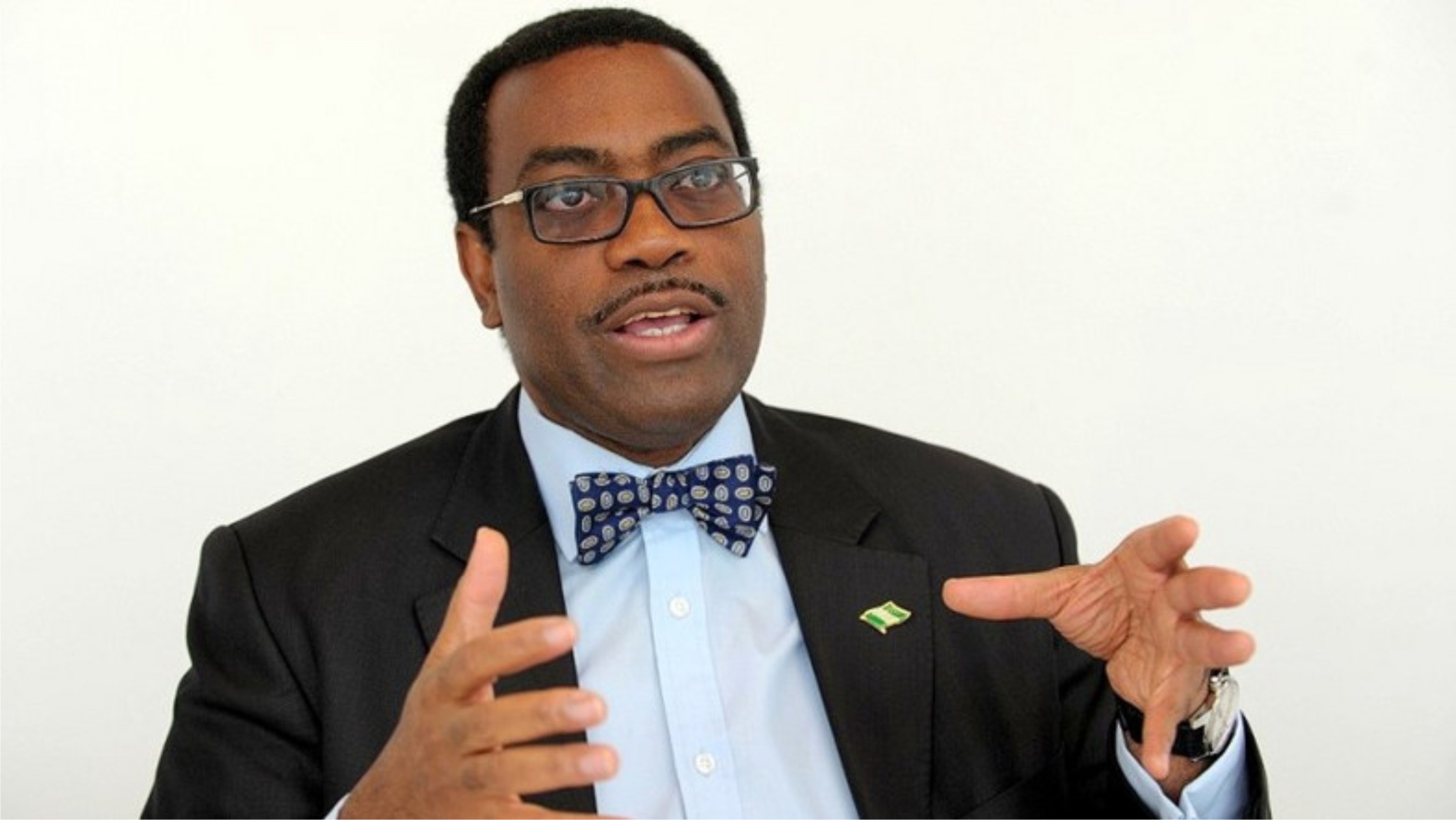
Ahead of the November meeting, AfDB President, Dr Akinwumi Adesina, has appealed to investors to attend the bank’s 2019 AIF.
He spoke at Africa 50 General Shareholders meeting, held recently in Kigali, Rwanda.
Adesina said that Africa was ready for massive investments and offered an attractive investment destination.
He said that AIF, will bring together members with vested interest in Africa’s growth and development
“If you are an investor, do not miss Africa Investment Forum 2019, Africa is ready for massive investments and the environment is getting more attractive for investors.
“One such investment is the construction of the bridge that will connect the Democratic Republic of Congo and the Republic of Congo, a 550 million dollar transaction being led by Africa 50 in partnership with AfDB,” he said.
Adesina emphasised that the recently launched African Continental Free Trade Area (AfCFTA) had opened possibilities for an integrated single market for Africa.
He, however, pointed out that the continent needed to be connected through roads, rail, ports, airports, ICT backbones and energy corridors in order to enjoy the full benefits of the agreement.
Africa 50 is an innovative fund for developing and financing infrastructure in Africa, funded by AfDB, African governments, private and institutional investors.
“Africa 50 is on track to launch a private sector third party fund to leverage one billion dollar from private sector institutional investors.
“I encourage countries that have not yet joined Africa50 to do so.
“Join us as we move towards a future of great promise for Africa. Join us as we lay the foundation for a more prosperous Africa,” Adesina said.
Nigeria Country Department of AfDB, in collaboration with Africa Finance Corporation, recently organised a road show in Abuja, to sensitise stakeholders on gains of the AIF.
Ekiti governor, Dr Kayode Fayemi, who spoke at the event, emphasised the role of private capital to deliver the infrastructure required to grow Nigeria’s economy.
While expressing hope that Nigeria and other African countries would record significant investments that will boost the economy, Fayemi said that private investments are critical in providing jobs for millions of young Nigerians.
According to him, with the support of AfDB, African Finance Corporation and the quality of investors that attended the inaugural edition, the second edition would be successful.
“I am confident that if we put our best foot forward, we will receive significant funding commitment for investments across Nigeria and Africa,’’ the governor said.
Senior Bank Director, Nigeria Country Office, of AfDB, Mr Ebrima Faal, highlighted Nigeria’s prominence during the 2018 forum.
He pointed out that Nigeria was very visible and urged industry players and policy makers to maximise opportunities that the 2019 forum would provide.
Faal urged them to connect, engage and close high-impact deals.
He further recounted that last year’s edition of AIF held in South Africa recorded attendance of 2000 participants, representing 87 countries, including eight heads of government.
“Deals worth 46.9 billion dollars were discussed with 49 deals valued at 38.7 billion dollars secured.
“These figures are not just impressive for an attempt at something that has never been done on the continent, but phenomenal.
“The AfDB and its partners are excited to present you with the only platform that allows you to instantly pitch and close monumental deals on the spot.
“We encourage you to engage early and wholesomely to be part of re-writing Africa’s economic history,’’ Faal said.
According to Africa Finance Corporation Senior Director, Mr Taiwo Adeniji, “building on the success recorded in 2018, it is expected that Nigeria will be a major participant at the 2019 forum.
“The Africa Finance Corporation is keen to support Nigerian businesses across sectors to ensure effective project implementation to boost economic development.
“We are now seeing positive momentum in building transparent and durable institutions to anchor the political economy, promote and support development of the private sector.
“This is in order to increase the pace, depth and spread of economic growth in Africa,’’ Adeniji said.
On his part, a former Minister of Information and Communications, Mr Frank Nweke, identified early preparations as crucial in positioning Nigeria to meet international business and social impact investors eager to invest in Africa.
“Early preparation is also key, not only to prepare for the deals but being able to present them to a wide range of global investors.
“These investors are coming from different classes.
“We are talking about pension funds, sovereign wealth funds globally and in the continent, asset managers, commercial investment bankers so it is a wide array of investors that we are looking at.
“So we need to showcase very high transactions; we need to prepare projects and this is essential,’’ Nweke said.
Similarly, former Minister of Finance, Mrs Zainab Ahmed, urged the federal government to support the preparation.
“Ministries, Departments and Agencies (MDAs) must sit down to discuss what we expect.
“This preparation has to be done every time we are going to a forum.
“So when they go, they come into contact with investors and they will be interested in what is being presented.
“The potential investor wants to see where you are coming from, from the beginning to the end, they want to see their way through,’’ she said.
The Head, Private Sector Investment Operations, AIF/AfDB, Mr Odiogo Ezekiel, stressed that getting the projects bankable is also critical.
With the awareness raised through the road show, stakeholders say Nigeria will record more investment opportunities after the 2019 AIF.
Uwadileke writes for News Agency of Nigeria (NAN)
Ikenna Uwadileke



Business
Jonathan, Diri, Others Laud Firm’s Milestone in Bayelsa …Says Project Will Drive Industrialisation, Create Jobs



-

 News3 days ago
RSG Targets Nine Million Residents in Mosquito Net Distribution Campaign
-

 Oil & Energy3 days ago
Aiyedatiwa Signs New Electricity Bill
-

 Oil & Energy3 days ago
NLNG Commissions Research And Innovation Centre In RSU
-

 Maritime3 days ago
Marine Minister Commends President Tinubu On NPERA Bill Assent
-

 News3 days ago
KenPoly Holds Eight Convocations, August 29
-

 News3 days ago
RSG Begins Another Phase of Projects Commissioning Today
-

 News3 days ago
RMAFC Completes Revenue Sharing Review, Proposes New Pay
-

 Maritime3 days ago
NAGAFF Petitions IGP Over Alleged Maritime Police Harassment