
Politics
Final Call Stills Okara’s Waves

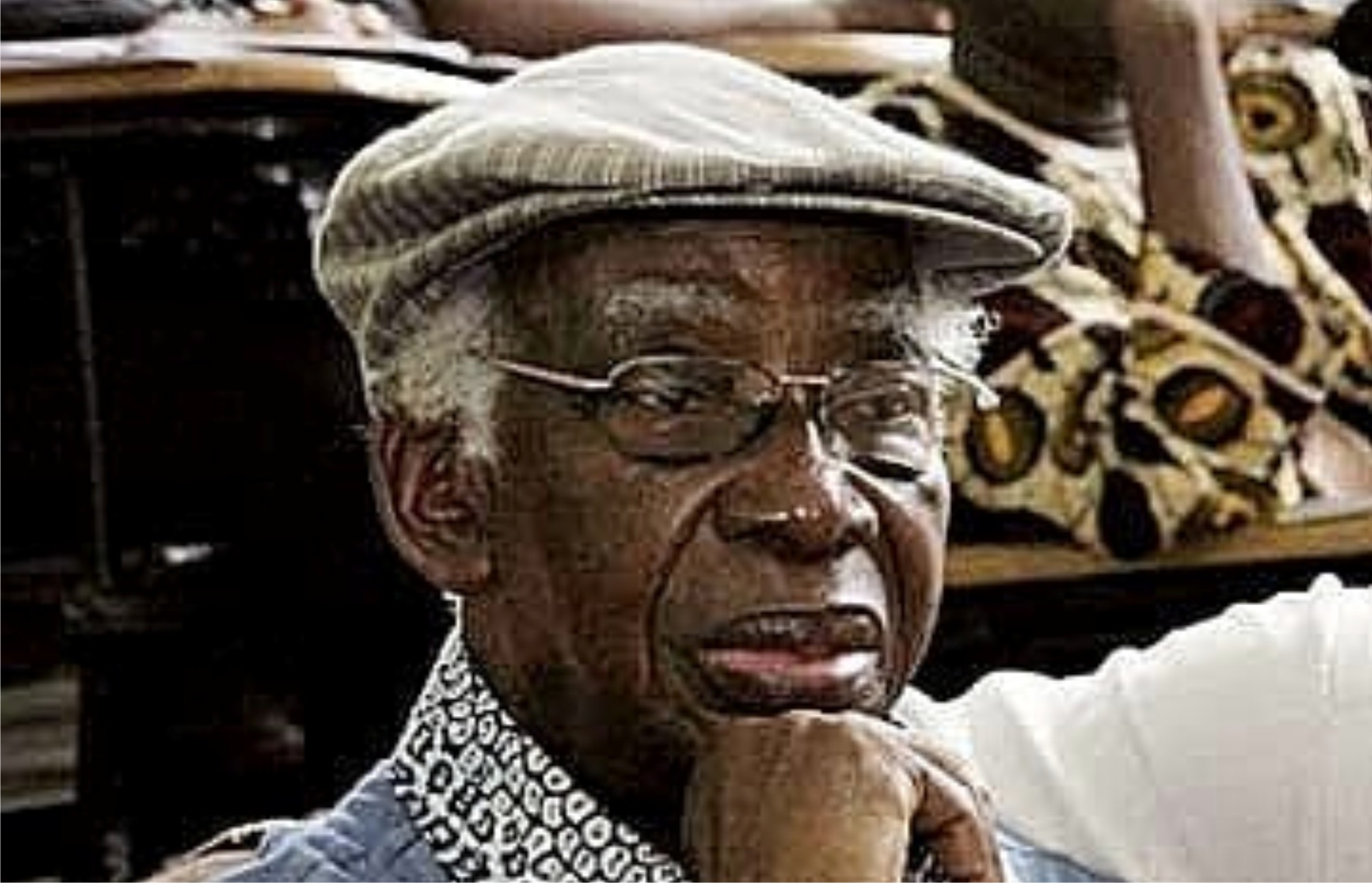
Gabriel Okara, a Nigerian poet and novelist, has often been described as the first Modernist Poet of Anglophone Africa.
Okara, who incorporated African thought, religion, folklore and imagery into both his verse and prose, had had his works translated into several languages.
The literati and those who appreciate literature, especially poetry, believe that “Call of the River Nun’’ was Gabriel Okara’s, most memorable poem.
“……My river’s calling too!
Its ceaseless flow impels
my found’ring canoe down
its inevitable course.
And each dying year
brings near the sea-bird call,
the final call that stills the crested waves
and breaks in two the curtain
of silence of my upturned canoe.
O incomprehensible God!
Shall my pilot be
my inborn stars to that
final call to Thee.
O my river’s complex course?”
(Culled from “Call of the River Nun’’)
So, were nostalgic memories and sadness that followed the news of his demise in the early hours of Sunday, March 24, 2019, at his home in Yenagoa, Bayelsa State.
He was confirmed dead at the Federal Medical Centre in Yenagoa; Okara had breathed his last exactly four weeks to his 98th birthday.
Okara, whose remains would be laid to rest on June 22, 2019 was born Gabriel Imomotimi Okara on April 24, 1921 in Bumoundi, Bayelsa.
The poet and novelist had his secondary school education at the renowned Government College, Umuahia; the same school that groomed other renowned Nigerian literary icons, including Chinua Achebe, Christopher Okigbo, Elechi Amadi, Chike Momah, Obi Nwakanma, Chukwuemeka Ike and Ken Saro-Wiwa.
Okara, who had also worked as a civil servant, authored “The Call of the River Nun,” as his first poem and it won an award at the Nigerian Festival of Arts in 1953.
His other works included The Fisherman’s Invocation (1978), published two collections of children’s poetry, Little Snake and Little Frog (1992) and An Adventure to Juju Island (1992) and, several other poems featured in the Nigerian literary journal Black Orpheus.
In his poetry, Okara draws from Nigerian folklore and religion while exploring extremes within daily life through secular patterns.
The Britannica, commends his first novel, The Voice (1964), as “a remarkable linguistic experiment in which Okara translated directly from the `Ijo’ (Ijaw) language, imposing Ijo syntax onto English in order to give literal expression to African ideas and imagery.’’
Dr Eugene Ibe, representing Government College Umuahia Old Boys Association, spoke to the News Agency of Nigeria (NAN) and also wrote as his tribute on Okara’s life at the Government College and how the experience shaped his later life.
“Every time I met Okara, he never got tired of telling me stories of his life at Umuahia, a school where all students were treated equally no matter whether your father was a fisherman, or a farmer or a politician like Zik.
“Okara took the entrance exams into Govt. College in the year 1934 from Kaiama and went to Umuahia for interviews.
“ In 1934, there were no speed boats but dugout canoes; roads rarely existed but the Port Harcourt to Umuahia to Enugu rail line was operating mainly for carrying coal from Enugu to Port Harcourt.
“The poor boy had to travel in a paddled dugout canoe to Onitsha and then go by road from Onitsha to Umuahia, a three-day journey.’’
According to Ibe, Okara said he was interviewed by Rev. Robert Fisher, the Founder and Principal of Government College, Umuahia in 1934.
“He must have done extremely well to be awarded a full scholarship (for the best five entrants) to study at the college which he entered in January 1935.
“As a `fresher’, he was immediately pounced upon by the Class II boys who tried to `show him pepper’.
“When he ran to a teacher from Nembe, Mr W. E. Alagoa, he refused to protect him, especially as he spoke in Ijaw vernacular, a punishable offence in Umuahia.
He was so miserable that he felt like returning to his parents, Samson and Martha Okara, but when he remembered the three-day journey he opted to endure and eventually adjusted.
However, he was liked by his juniors like late Dr Melford Douglas, late Dr J.O.J. Okezie, a one-time Federal Minister of Agriculture, late Justice Charles Daddy Onyeama of the International Court at The Hague.
“Okara was good in sports being lanky and tall; he specialised in long distances.’’
On Okara’s experiences in class, he said: “He was taught mainly by Europeans, including Fisher, A.J. Carpenter, the author of West African Nature Study and a few Nigerians like Mr W.E. Alagoa and Mr Jumbo.
“His classmates at Umuahia included late Dr Ernest Green, late Barrister Young Harry, late Police Commissioner Franklyn Okujagu and late Dr G.C. Mbanugo, ex-parliamentary secretary to Nnamdi Azikiwe.
“His interest in Arts and Humanities was encouraged by the English teachers.
On the private life of this great literary icon, his nephew, Emmanuel Okara told NAN that the poet was jovial in his own way, an “English gentleman’’ and a lover of tradition as well as Christian Science.
According to him, he also played the piano very well.
“Uncle Gabriel was such a delight to be with and he would usually regale you with anecdotes and rib cracking jokes, some of which I am chuckling at as I am writing this tribute.
“ Uncle loved his tea; not just any tea; quality tea like `Earl Grey’ or `PG Tips’, I remember how once when he was a guest in my house in Lagos en route the United States of America, he asked for tea and I brought a mug alongside the stuffs for him to have his tea.
“Uncle pointedly told me that tea was usually taken in a proper tea cup and a saucer which, because of the size, retained the same temperature to the end, unlike the mug where the tea got cold before you are through with it.
“And the next time he asked for tea; I duly complied with the full paraphernalia that goes with tea drinking.’’
So notable was Okara that President Muhammadu Buhari, in his condolence message ,extolled the “great story-teller whose powerful use of imagery and symbolism in his literary writings helped the world to appreciate and understand the richness, complexities and uniqueness of the African heritage and culture.’’
The president believed that Okara, who was deservedly known as the “founder of Modern African literature’’ would be fondly remembered for his immense contributions to the development of African literature, drawing on experience from his native Ijaw language.
Similarly, the Bayelsa State Governor, Hon. Seriake Dickson, described Okara’s demise as a great loss to the state and Nigeria; he commended the late Okara’s contribution to the educational policies of Bayelsa, especially his administration.
He said that the late Okara would be greatly missed by all lovers of literature and intellectualism, especially the young and up and coming writers.
A former Governor of Bayelsa, Chief Timipre Sylva, said that as a keen fan, admirer and friend of Gabriel Okara, he studied the poems of the Nigerian Negritudist (As termed by literary scholars) in his undergraduate years and beyond.
“Okara’s passing is not one to mourn, it is for celebration and for pride and for the marking of a platinum point in cultural mileage,’’ he said.
Jumoke Verrissimo, a poet and author of “I am Memory’’, said Okara’s works greatly influenced many writers, especially those who were interested in evoking the folklores, music and religion in their poetry.
The Association of Nigerian Authors (ANA), Bayelsa State Chapter, through its Chairman, Mrs Bina Ilagha, said the association was saddened by the news of his passing on.
“The Association is ruffled by the news because it came at a time when preparations are in top gear to celebrate his masterpiece, `The Voice’ at 55.
“We are saddened by the news but are consoled that he left behind lofty legacies; Pa Okara, through his literary exploits put Bayelsa in the map of literary excellence.’’
The Acting Managing Director of the Niger Delta Development Commission (NDDC), Prof. Nelson Brambaifa, described late Dr Gabriel Okara as a deity of African literature whose voice could not be stilled.
According to Brambaifa, Okara’s accomplishments have ensured that his name will never be forgotten.
For James Tar Tsaaior, a professor of Media and Cultural Communications, and Alexander von Humboldt, experienced research fellow at the University of Potsdam, Germany, Okara is a patriarch of Nigerian/African literature.
“I met Pa Gabriel Okara only once, in Port Harcourt, in 2004, during the birthday celebration of another writer.
“During our Port Harcourt meeting, I found him a decent, personable and collected man whose presence was contagious and reassuring.
“Indeed, he infected me with his artful smiles and noble carriage.
“One thing peaked significantly for me; this accomplished and celebrated writer was truly easy-going and constructed a horizontal relationship, not a vertical one, with others around him.
“It was for that reason that I took a picture with him. That picture has today survived him and a memorabilia which I will continue to cherish.’’
On his works, Tsaaior said: “Later on, I was to read his powerfully encoded novel, The Voice; I found it a supremely resonant literary offering, rich in vernacular traditions.
“The peculiarity of the idiom Okara mobilised in moulding the integral universe of the novel foregrounded his rearing and rootedness in Ijaw cultural traditions and cosmologies.
“He remains a gadfly, a beacon and touch-bearer whose towering achievements will continue to announce him to the whole world.
“ He will continue to live in our hearts as the noble and illustrious citizen of the republic of letters.
“When the mother mushroom yields to the elements and dies, an heir in a new mushroom germinates in its place to continue its progeny.
“ Okara still lives on. His voice is still alive and accented and will travel and reverberate beyond the Delta creeks, mangroves and estuaries to the boulevards of the world,’’ Tsaaior concluded.
Ihechu writes for the News Agency of Nigeria.
Vivian Ihechu


The Senate yesterday urged President Bola Tinubu to remove the Registrar-General of the Corporate Affairs Commission, Hussaini Magaji, over what lawmakers described as a persistent refusal to appear before its Committee on Finance.
The resolution followed a motion raised by Senator Orji Uzor Kalu during a session where members of the President’s economic team were present for engagement with the committee.
Tension rose at the commencement of the meeting when agency heads were introduced and senators observed the absence of the CAC Registrar-General, who had been invited to account for the commission’s activities, particularly on revenue matters.
Moving the motion, Kalu expressed anger over what he termed repeated disregard for legislative oversight, accusing the CAC boss of consistently avoiding invitations to appear before the committee.
He said, “Since I came to the Senate, this CAC man has always given excuses that he is in the Villa or going to London. He is not above the law. This man is not coming to the Senate. Look at the ministers of finance and budget. They are both here. We summoned them and they came.
“But this man thinks he’s bigger than the Senate. We’re not going to take that rubbish again. He had refused on so many occasions to honour our invitation to appear before this committee. We have issues with the reconciliation of the revenue of CAC.
“I move a motion that the man should be reported to Mr President and ask for immediate removal because we cannot continue with him. Is that what we’re doing here? He should come and give us an account of what he had done.”
The Chairman of the Senate Committee on Finance, Senator Sani Musa, corroborated the concerns, pointing to unresolved discrepancies in the reconciliation of the commission’s revenues.
He noted that despite several invitations, the registrar-general had failed to show up to address the issues raised by senators.
“The registrar-general of the Corporate Affairs Commission has refused on so many occasions to honour the calls, invitations or summons of this most important committee.
“There are only about three committees that are in the constitution of the Federal Republic of Nigeria and the Committee of Finance is one of those committees. Sections 88, and 89 have given us these powers.
“And as registrar-general, we have issues with the reconciliation of their revenue. Anytime he is invited, he will give us one reason or another, and he will send junior officers to come and talk to the Senate. That cannot be accepted,” he said.
In a further show of frustration, Senator Adams Oshiomhole proposed that the Senate escalate the matter by withholding approval of the CAC’s 2026 budget pending the registrar-general’s personal appearance before the committee.
Oshiomhole also suggested that the commission be restrained from spending its internally generated revenue without prior approval of the national assembly.
“This senate should decline to appropriate anything in the 2026 budget until we are satisfied that he has accounted for previous money and spending properly.
“And should he spend money that is not appropriated, he should be heading to Kuje prison,” Oshiomhole said.
The motion urging the President to remove the CAC Registrar-General was subsequently put to a voice vote and adopted.
The development underscores renewed assertiveness by the Senate in exercising its constitutional oversight functions, particularly over revenue-generating agencies.
The Corporate Affairs Commission, which regulates companies and business registrations in Nigeria, is a key contributor to non-oil revenue, making accountability and transparency central to its operations.

President Bola Tinubu has appealed to the leadership of the 10th Senate to amend the constitution to provide a legal framework for the establishment of State Police to tackle insecurity nationwide.
President Tinubu made the appeal during an interfaith breakfast with senators at the Presidential Villa in Abuja, yesterday.
The president said that the creation of State Police has become urgent to address Nigeria’s evolving security challenges, strengthen grassroots policing, and enhance states’ capacity to respond swiftly to threats within their jurisdictions.
He noted that a decentralised policing structure would complement existing federal security architecture and promote intelligence-led, community-focused law enforcement.
“We are facing terrorism, banditry, and insurgency. But we will never fail to make a right response to this cause. What I will ask for tonight is for you (Senators) to start thinking how best to amend the constitution to incorporate the State Police for us to secure our country, take over our forests from marauders, and free our children from fear,” he said.
The president commended the cordial relationship between the Executive and the Senate, saying that unity is needed to defeat terrorism and banditry in the country.
“It is a good thing that we are working in harmony, we are looking forward to a country that evolves, a country that takes care of its citizens and protects all.
Tinubu thanked the Senate for its unflinching support towards achieving various economic reforms of his administration, especially the fuel subsidy removal and tax reform policy.
“I have a lot of credit for bold reforms. Without your collaboration and inspiration, those reforms would not be possible. We are reformists together. What we gave up and what we stopped is monumental corruption in the subsidy system. We don’t want to participate in monumental corruption and arbitrage foreign exchange.
You don’t have to chase me for dollars; you could see what Nigeria is today. You should be proud, and I am glad you are. What we are enjoying is a stable economy, and prosperity is beckoning us. We need to work hard, and this attendance means a lot to me,” the president said.
President of the Senate, Godswill Akpabio, commended the president for hosting the leadership of the Senate to the Interfaith breaking of fast.
He commended President Tinubu for providing the visionary leadership the nation needs at this critical time, stating that the administration’s bold reforms have now brought more revenue to governors at the sub-national level for the development of critical infrastructure.
The Senate President prayed for the administration, and for the nation’s peace and prosperity.

Alhaji Mohammed Kasim, the candidate of the Peoples Democratic Party (PDP), has won the Gwagwalada Area Council chairmanship election in the Federal Capital Territory (FCT).
Philip Akpeni, the Returning Officer of the Independent National Electoral Commission (INEC), announced the results on Sunday morning.
Alhaji Kasim polled 22,165 votes to defeat Alhaji Yahaya Shehu of the All Progressives Congress (APC), who polled 17,788 votes.
Alhaji Biko Umar of the All Progressives Grand Alliance (APGA) scored 1, 687 to come in third place.
“I am the returning officer for the 2026 FCT Area Council, Gwagwalada chairmanship held on Feb. 21, 2026,” Akpeni said.
“That Mohammed Kasim of PDP, having certified the requirements of the law, is hereby declared the winner and is returned elected.”
In the Abuja Municipal Area Council (AMAC), Hon. Christopher Maikalangu, the APC candidate, was declared the winner of the chairmanship poll with 40,295 votes.
Andrew Abue, the Collation Officer for AMAC, said Hon. Maikalangu, who is the incumbent AMAC chairman, was returned elected having scored the highest number of votes cast.
The African Democratic Congress (ADC) came second with 12,109 votes, while the Peoples Democratic Party (PDP) polled 3,398 votes.
According to Abue, the total number of valid votes in the chairmanship poll was 62,861, while the total votes cast stood at 65,197.
He added that the number of registered voters in AMAC was 837,338, while the total number of accredited voters was 65,676.
Meanwhile, the Independent National Electoral Commission (INEC) has declared Mr. Joshua Ishaku of the All Progressives Congress (APC) as the winner of the Bwari Area Council Chairmanship election.
Announcing the result on Sunday in Bwari, the Returning Officer for the election, Prof. Mohammed Nurudeen, stated that Ishaku polled a total of 18,466 votes to emerge victorious in the February 21, 2026 poll.
“I am the Returning Officer for the 2026 FCT Area Council, Bwari chairmanship held on Feb. 21, 2026. That Joshua Ishaku, having satisfied the requirements of the law, is hereby declared the winner and is returned elected,” Nurudeen said.
According to the results declared, the candidate of the African Democratic Congress (ADC) secured 4,254 votes, while the Zenith Labour Party (ZLP) polled 3,515 votes to place second and third respectively.
The declaration adds to the series of results emerging from the 2026 FCT Area Council elections, as political parties assess their performance ahead of future contests.
INEC UPLOADS 2,602 OF 2,822 FCT CHAIRMANSHIP RESULTS ON IReV
The Independent National Electoral Commission (INEC) had uploaded 2,602 out of the 2,822 expected polling unit results from Saturday’s chairmanship elections in the Federal Capital Territory (FCT) as at 5:55am on Sunday, data retrieved from its Result Viewing Portal (IReV) showed.
According to The Tide source, the figure represents an overall upload rate of about 92.2 per cent across the six area councils of the territory.
A council-by-council breakdown indicates that Municipal Area Council recorded the highest number of submissions in absolute terms, with 1,309 of 1,401 polling unit results uploaded, representing 93.43 per cent.
In Gwagwalada Area Council, 330 of the expected 338 polling unit results had been uploaded, representing 97.63 per cent — the highest upload rate among the six councils.
In Bwari Area Council, INEC uploaded 463 of 485 polling unit results, translating to 95.46 per cent.
In Abaji Area Council, 129 of 135 polling unit results had been uploaded as at 5:55am, representing 95.56 per cent.
In Kwali Area Council, 164 of the expected 201 polling unit results were available on the portal, representing 81.59 per cent.
In Kuje Area Council, 207 of 262 polling unit results had been uploaded, representing 79.01 per cent — the lowest rate among the six councils as at the time of review.
-
Maritime5 days ago
Nigeria To Pilot Regional Fishing Vessels Register In Gulf Of Guinea —Oyetola
-

 Sports5 days ago
Gombe-Gara Rejects Chelle $130,000 monthly salary
-
Maritime5 days ago
Customs Declares War Against Narcotics Baron At Idiroko Border
-

 Sports5 days ago
TEAM RIVERS SET TO WIN 4×400 ” MORROW” …Wins Triple jump Silver
-

 Sports5 days ago
NPFL Drops To 91st In Global League Rankings
-

 Sports5 days ago
NIGER DELTA GAMES PANACEA TO YOUTH DEV”
-
Maritime5 days ago
NIMASA,NAF Boost Unmanned Aerial Surveillance For Maritime Security
-

 Sports5 days ago
NPFL Impose Fines On Kwara United Over Fans Misconduct