
Business
PSN Faults FG’s 2% Economic Growth

The President, Pharmaceutical Society of Nigeria (PSN), Mazi Sam Ohuabunwa, has said the present two per cent economic development being pursued by the Federal Government would not engender an economic growth the country so desired.
Ohuabunwa made the comment in an interview with newsmen on the sidelines of his public lecture delivered at the Crawford University, Igbesa.
The 6th public lecture delivered at the multipurpose hall of the Faith-based University was entitled “When Will Nigeria Become a First Nation.’’
Ohuabunwa, the Guest Speaker at the public lecture, said that the economic policy should be one that would be ahead of the population and not the one behind the population growth.
“The economic policy which we have now is not sustainable although it has helped to take us out of recession, but more than that we need the one that will be incremental.
“Right now our economic projection is to grow by two per cent which we are struggling to keep but the population is growing by three to four per cent.
“Until we grow above that projection, there will be no economic growth because what this is literally telling us is that we are sharing what one person should have for three people.
“We need to understand where we are getting it wrong because economy cannot be growing at two per cent, while the population is growing by four per cent, such cannot work,’’ he said.
Ohuabunwa advised the government to look into creating investment opportunities, a panacea to creating wealth among the populace and thus reducing poverty.
“Nigeria should be growing its population more by than four per cent, and what we need to do simply is to get the responses from the economy and push towards investments.
“We need to create more investments because it engenders enterprise, while that will lead to job creation and then poverty will be swept away from our society.
“We need to look into our population and see how we can make it productive, we should invest in it and do away with policy somersaults; we need a consistent policy.
“Nigeria’s population is enough to service the world, so I wonder why we are not using our strength,’’ he said.
Ohuabunwa said that good economic policy was one that would make the country to look away from the earnings from oil and focus on investment.
“Each person in Nigeria needs to contribute to the economy and not dependent on it, if people cannot work for another person they should work for themselves, that is productivity.
“Let Nigeria seek to export her products abroad; we have people who really want to work but no tools and financial backbone to achieve that; this is where government should come in.



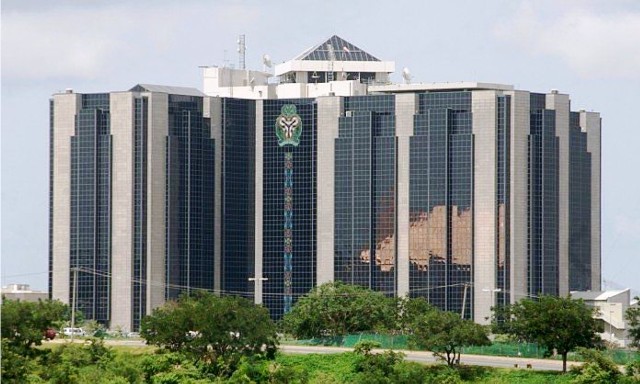
The Central Bank of Nigeria (CBN) has revised its cash withdrawal rules, discontinuing the special authorisation previously permitting individuals to withdraw N5 million and corporates N10 million once monthly, with effect from January 2026.
In a circular released Tuesday, December 2, 2025, and signed by the Director, Financial Policy & Regulation Department, FIRS, Dr. Rita I. Sike, the apex bank explained that previous cash policies had been introduced over the years in response to evolving circumstances.
However, with time, the need has arisen to streamline these provisions to reflect present-day realities.
“These policies, issued over the years in response to evolving circumstances in cash management, sought to reduce cash usage and encourage accelerated adoption of other payment options, particularly electronic payment channels.
“Effective January 1, 2026, individuals will be allowed to withdraw up to N500,000 weekly across all channels, while corporate entities will be limited to N5 million”, it said.
According to the statement, withdrawals above these thresholds would attract excess withdrawal fees of three percent for individuals and five percent for corporates, with the charges shared between the CBN and the financial institutions.
Deposit Money Banks are required to submit monthly reports on cash withdrawals above the specified limits, as well as on cash deposits, to the relevant supervisory departments.
They must also create separate accounts to warehouse processing charges collected on excess withdrawals.
Exemptions and superseding provisions
Revenue-generating accounts of federal, state, and local governments, along with accounts of microfinance banks and primary mortgage banks with commercial and non-interest banks, are exempted from the new withdrawal limits and excess withdrawal fees.
However, exemptions previously granted to embassies, diplomatic missions, and aid-donor agencies have been withdrawn.
The CBN clarified that the circular is without prejudice to the provisions of certain earlier directives but supersedes others, as detailed in its appendices.
-
Business3 days ago
CBN Revises Cash Withdrawal Rules January 2026, Ends Special Authorisation
-
Business3 days ago
Shippers Council Vows Commitment To Security At Nigerian Ports
-

 Business3 days ago
Nigeria Risks Talents Exodus In Oil And Gas Sector – PENGASSAN
-

 Business3 days ago
FIRS Clarifies New Tax Laws, Debunks Levy Misconceptions
-
Business3 days ago
NCDMB, Others Task Youths On Skills Acquisition, Peace
-

 Politics3 days ago
Tinubu Increases Ambassador-nominees to 65, Seeks Senate’s Confirmation
-
Sports3 days ago
Obagi Emerges OML 58 Football Cup Champions
-

 News3 days ago
Tinubu Swears In Christopher Musa As Defence Minister