
Nation
THE STATES

Abuja
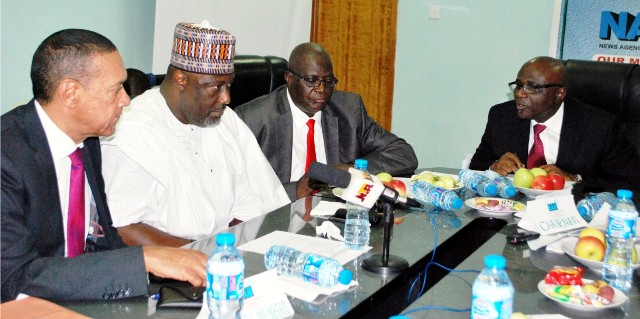
Motor Mechanic and Technicians Association of Nigeria (MOMTAN) has advised the Federal Government to intensify efforts toward globalisation by implementing relevant policies.
Globalisation is the free movement of goods, capital, services, people, technology and information.
It is the process by which the world is becoming increasingly interconnected as a result of massively increased trade and cultural exchange.
MOMTAN’s National President, Dr Oseni Suleiman, made the call during an interview with newsmen in Abuja in Abuja.
According to him, unbiased domestic policies can unleash the full force of agglomeration economies and giving rise to industrial clusters to emerge in metropolitan regions.
Jigawa
Executive Secretary, Jigawa Emergency Management Agency (SEMA), Alhaji Sani Babura, says the state government has disbursed N2.26 million to victims of Marmara farmers/herdsmen clash in Guri Local Government Area.
Babura made this known in an interview with newsmen in Dutse recently.
He said the amount was given to 60 people who lost their farm products and personal items as a result of the clash.
The SEMA boss stated that one person died, while houses and property worth millions of naira were destroyed during the incident.
Babura expressed sadness over the persistent clashes between farmers and herdsmen at Guri Local Government Area and some parts of the state.
Kaduna
A Consultant Haematologist at Ahmadu Bello University Teaching Hospital (ABUTH), Prof. Haruna Muktar, has urged the National Assembly to quickly pass the National Blood Transfusion Bill currently before it.
The consultant made the appeal in an interview with newsmen after a rally to commemorate World Blood Donor Day held at the main campus of Ahmadu Bello University, Zaria, Kaduna State last Wednesday.
Muktar said, when passed, the law would guide the operations of blood transfusion services in Nigeria, thereby, saving the lives of millions of Nigerians requiring blood transfusion.
The consultant said the essence of the rally was to celebrate the day and encourage people to donate blood.
Kano
The Kano State Government has fed over 930,000 fasting Muslims, from first day of the month of Ramadan to date.
The Chairman of the Committee on Ramadan Feeding and Commissioner for Information, Malam Muhammad Garba disclosed this while briefing newsmen at the Government House, Kano recently.
He said that 250 people each from 186 centres across the state received food daily to break their fast.
“Feeding 250 people from each of the 186 centres will give their numbers to 46,500 daily, and if multiplied by 30 days of the month of Ramadan, the number rises to over 1.395 million people,” he said.
Garba also commended the state Governor, Dr Abdullahi Ganduje for sustaining the yearly Ramadan feeding, despite the present paucity of fund.
Kebbi
Rice farmers and paddy rice dealers in Kebbi State have appealed to the government at all levels to tackle the menace of rice smuggling, saying, it is negatively affecting their businesses.
Some of the traders in Zuru paddy rice market told newsmen last Friday in Zuru that rice smuggling would hamper the country’s efforts to attain self-sufficiency in rice production.
A paddy rice seller in Zuru from Kano State, Malam Hashimu Salisu, who commended the efforts of President Muhammadu Buhari’s administration to boost agricultural production, said that rice smuggling was discouraging both rice farmers and traders.
“Before now, we were selling a 80kg bag of paddy for between N6,000 and N7,000 but now, it goes for between N9,500 and N12, 000.
Kwara
Some irate youths last Tuesday disrupted activities at the secretariat of Baruten Local Government Council of Kwara State over the composition of its new Transitional Implementation Committee (TIC).
The youths, who were mainly from Kosubosu, the council’s headquarters, had marched to the secretariat and chased away workers before locking up offices.
The Tide reports that the youths also lit a bonfire on the express way leading to the border with Benin Republic.
We learnt that the youths were dissatisfied with the reported substitution of one Umar Galadima who was in May appointed as a members of the TIC.
Lagos
A tenant, Patrick Ezenwa, 47, last Friday appeared in an Ikeja Magistrates’ Court for allegedly damaging his landlord’s property worth N350,000 after being told to quit.
The accused, who resides at Shomide Street, Agege, Ikeja, is facing a charge of wilful damage to property.
The Prosecutor, Sgt. Rosemary Ehemegbe, told the court that the accused committed the offence on May 18 at the residence.
She said that the accused intentionally damaged the doors, windows, toilet and bathroom before moving out of the house.
Ehemegbe said that the landlord, one Destiny Emeka, who is the complainant, had asked the accused to move out because he refused to pay rent for a whole year.
Nasarawa
The Nasarawa State command of the Nigeria Security and Civil Defence Corps (NSCDC) alleged recently that Principals of two secondary schools had diverted NECO fees paid by students.
Its Commandant, Lawan Bashir, told newsmen in Lafia that students of the affected schools – Government Secondary School (GSS) Wakama and GSS Shekkina – did not realise that their fees had been diverted until the examination started.
“It was after the examination started that the candidates knew that they had not been registered.
“Their parents promptly reported the diversion to the Area Inspectorate Offices of Education in the affected locations, who brought the matter to us,” he said.
Ogun
A 21-year-old man, Adeleke Tunde State, was last Friday charged before an Ota Magistrates’ Court in Ogun for allegedly breaking into a house and attempted to steal.
Tunde, who lives at No. 26, Damola St., Atan, Ota, is facing a two-count of burglary and attempting to steal.
The Prosecutor, Sgt. Chudu Gbesi, told the court that the accused committed the offences on June 7, at about 4.50 p.m. at Akari Estate, Atan, Ota.
Gbesi said that the accused was caught by residents in the area breaking into the house of one Funke Oyeneye, with the intention to steal.
Ondo
An Okitipupa Magistrates’ Court in Ondo State, last Friday ordered the remand of two men for allegedly stealing an unregistered Hajoue Suzuki motorcycle valued at N200, 000.
The defendants- Segun Akintudire, 22, a radio mechanic, and Kehinde Olufemi, 26, a welder are of no fixed addresses, denied committing the offence.
They were docked on a two-count charge of felony and stealing.
The Magistrate, Mr Banji Ayeomoni, ordered that the accused persons be remanded in prison and adjourned the matter until June 23, for hearing of their bail application.
A tailor, Monsuru Sabitu, 26, who bought the motorcycle from the two defendants was also arraigned in court.
Sabitu pleaded not guilty to the charge of receiving a stolen item, and was granted N200, 000 bail, with a surety in like sum.
Plateau
A Jos Magistrates’ Court last Tuesday sentenced a 73-year-old man, Gabriel Kehen to two years imprisonment for attempting to rape an eight-year-old boy.
Kehen was charged with attempting to have canal knowledge of the boy through an unnatural means.
Magistrate Yahaya Mohammed, who sentenced the convict after he pleaded guilty and begged for leniency, did not give him an option of fine.
The Presecutor, U.L. Ocho, had told the court that the incident occurred on April 26.
Ocho said Angela Bakun of Tudunwada reported that the septuagenarian lured her grandson, into his house to rape him.
Sokoto
The Sokoto State Government, has released N422 million for the payment of tuition fees of its indigenes, studying at some local and foreign institutions.
This information is contained in a statement signed by the Information Officer, Nura Maikwanci, Ministry of Higher Education and issued to newsmen in Sokoto last Friday.
It said that students at Baze University, Abuja, got N118 million while N257 million was paid for the 2015/2016 academic session to students studying in various institutions in Sudan.
In the same vein, the statement said N47 million was paid as tuition and upkeep allowance for students studying in Uganda.
According to the statement, the gesture is in view of the State Government’s commitment to encourage the state indigenes to pursue higher education in various fields within and outside Nigeria.
“It is imperative for the benefiting students to concentrate more on their studies; to justify the huge resources being expended on them by the government”.



Rivers State University and the Otonti Nduka Foundation for Values Education jointly hosted a two-day National Conference on 8 and 9 May 2026 to examine the state of values in Nigeria.
The two days conference held at Rivers State University convocation arena brought together academics, policymakers, legal experts and education leaders under the theme _“Trends and Challenges in Upholding Values in Nigeria.”_
The gathering focused on policy gaps, curriculum reform, and the role of ethics in public service and education.
The event opened on Friday with remarks from Vice Chancellor Prof. Chief Isaac Zeb-Obipi, who stressed the need to address declining moral and civic values across Nigeria’s education and public sectors. A book of abstracts for the plenary sessions was also presented to participants.
Key speakers included former Attorney General Chief Dr Kanu Agabi, SAN; NERDC Executive Secretary Prof. Shehu Salisu; Prof. Hauwa Imam, FNAE, of the University of Abuja; former Rivers SUBEB Chairman Ven Dr Fyneface Akah, ; former NIMASA DG Dr Hon. Dakuku Adol-Peterside; and RSU Director of ICT Prof. Sunny Orike.
Discussions centered on integrating values education into schools, tertiary institutions and public institutions, alongside the impact of technology on moral development among young Nigerians. Panel and plenary sessions produced practical recommendations for curriculum and policy reform.
On Saturday, the foundation marked its centenary with the unveiling of the book _Otonti Nduka in History_, launched by Chief Engr. Grant Offor, FNSE. The Nigerian Academy of Education held a ceremonial procession led by its President Prof. Olu Jegede and the Ikwerre Professors Forum.
In a communiqué, participants called for stronger collaboration between government, civil society and academia to mainstream values education nationwide. They recommended reviewing teacher training curricula and expanding digital platforms to promote ethical civic engagement, with the foundation pledging to share the outcomes with education authorities for implementation.
Dignitaries present included Ogbakor Ikwerre Worldwide as Chief Host, Prof. Emeritus Chief T. Uzodimma Nwala, the Ikenga 1 of Mbaise and first philosophy student of Prof. Otonti Nduka, alongside scholars and community leaders.
Amadi Akujobi

The Shell Nigeria Gas Limited, in partnership with the Manufacturers Association of Nigeria, has reaffirmed support for efforts to expand gas distribution infrastructure in Rivers State as part of initiatives aimed at improving access to affordable, cleaner and more reliable energy for industries across the South-South region.
The commitment was highlighted during the SNG–MAN Business Forum held in Port Harcourt, where stakeholders from the industrial and public sectors examined the role of natural gas in driving industrialisation, boosting local production and strengthening energy security.
Speaking at the forum on behalf of the Managing Director of Shell Nigeria Gas Limited, the company’s Head of Gas Distribution, Mr. Chukwuka Amos Ejesi, described natural gas as a critical component of Nigeria’s energy mix and a key driver of sustainable industrial growth.
According to him, Nigeria’s gas development agenda has reached a stage where policy direction must be matched with practical implementation capable of addressing the energy challenges confronting manufacturers.
He noted that pipeline gas offers industries a cleaner, more dependable and cost-effective energy alternative capable of supporting uninterrupted operations, reducing emissions and improving production efficiency.
“Gas is the backbone of manufacturing, and we are encouraged by the growing recognition among stakeholders of the need for cleaner and more reliable energy solutions,” he said.
Ejesi stressed the need for sustained collaboration among energy providers, government institutions and industrial stakeholders to maximise the country’s gas resources for economic development.
He added that improved gas infrastructure would strengthen manufacturing value chains, enhance productivity and promote more competitive industrial operations across Rivers State and the wider South-South region.
Participants at the forum also emphasised the importance of expanding energy infrastructure as a pathway to unlocking industrial capacity, reducing operating costs and promoting sustainable industrial development.
Representing Governor Siminalayi Fubara, the Director-General of the Rivers State Investment Promotion Agency, Dr. Chamberlain Peterside, reaffirmed the state government’s commitment to partnering with private sector investors to revitalise industrial activities in the state.
He identified key projects targeted under the initiative to include the revival of the Ahoada Industrial Park, the New Port City project and the proposed Bonny Industrial Park, all aimed at stimulating economic growth and expanding industrial opportunities along the Bonny corridor.
According to the governor, the long-term vision is to position Rivers State as a leading manufacturing hub in Southern Nigeria through strategic public-private partnerships.
Governor Fubara also commended Shell Nigeria Gas and MAN for sustaining engagements geared towards improving industrial energy access, noting that gas infrastructure development remains central to the state’s economic recovery plans.
He further observed that the gas sector presents enormous opportunities for economic growth, especially as global energy systems continue to shift towards cleaner energy sources.
The governor called on stakeholders to work collectively towards developing a practical and sustainable gas framework capable of supporting the state’s industrial and energy development objectives.
Chairman of MAN, Rivers and Bayelsa Branch, Elder Vincent Okuku, described gas as indispensable to industrial operations, noting that many manufacturers continue to struggle with the high cost of alternative energy sources.
Similarly, President of the Port Harcourt Chamber of Commerce, Industry, Mines and Agriculture, Dr. Chinyere Ngozi Nwoga, said the transition to natural gas had become increasingly necessary for businesses seeking stable and cost-efficient operations.
“Pipeline natural gas provides a more cost-effective and reliable source of energy for industries,” she stated.
Also speaking, former Chairman of MAN in Rivers and Bayelsa States, Mrs. Emilia Akpan, stressed the need to align energy infrastructure development with investment in human capacity.
She maintained that rebuilding the state’s economy would require not only reliable energy supply but also the development of technical skills needed to support long-term industrial growth.
By Kevin Nengia

The City Boy Movement in Etche Local Government Area of Rivers state has commended Senator Allwell Onyesoh on his victory in the APC primary election for Rivers East Senatorial District.
Chairman of the group in Etche, Dr. Fortune Uchenna Obi, spoke to journalists in Okehi Ward after participating in Monday’s direct primary. He described Onyesoh’s emergence as the party’s candidate for the 2027 senatorial election as a reflection of the people’s will.
Dr. Obi said the senator has performed well during his first term and deserves re-election. He also thanked FCT Minister Nyesom Wike, leader of the Renewed Hope Agenda and Rainbow Coalition in Rivers State, for supporting Onyesoh’s candidacy. According to him, Wike’s backing was instrumental to the senator’s nomination, clearance, and victory at the primary.
He further praised voters in Etche and across Rivers East for turning out in large numbers at ward centers and urged them to sustain the support to ensure Onyesoh’s success in the January 2027 general election.