
Opinion
Dangers Of Carbonated Drinks

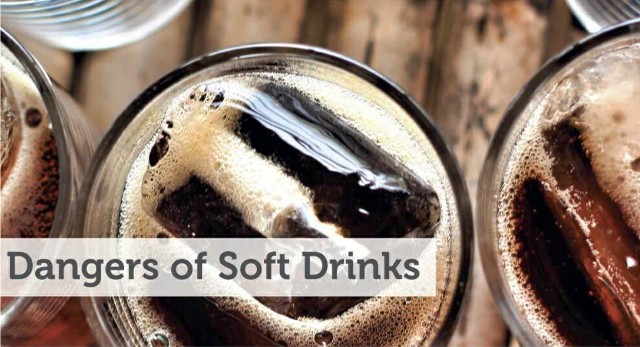
Meetings, birthday parties, anniversary celebrations and most other gatherings, including house openings are incomplete without them. Refrigerators, deep freezers and coolers are empty without them. They come in different colours and flavours: cola, orange, lemon, pine-apple, cream soda, bitter lemon, ginger, peach, etc. Some are sold in glass bottles of various shapes and sizes; yet others come in cans, tetrapacs and plastic bottles. They are labelled soft drinks.
They are predominantly flavoured to be sweet. Some are fortified with malt. Soft drinks are heavily consumed partly because companies promote them vigorously and market them everywhere in stores, restaurants, fuel stations, markets; etc. Companies spend hundreds of millions of naira on media advertising them and other promotional activities, which may involve sports, music, road and street shows, among others.
One worrisome scenario is that companies have cashed in on the fact that Nigerians are gullible and poverty has driven many to gamble and greed to put up false promotional activities. It remains possible that the correlation is due to a third factor: people who lead unhealthy lifestyles might consume more soft drinks. If so, then the association between soft drinks consumption and weight gain could reflect the consequences of consuming soft drinks.
It is interesting to note that experimental evidence to establish the causal role of soft drinks consumption in most examined deteriorating health conditions may suffice. In fact, reviews of experimental evidence suggest that soft drinks consumption does cause weight gain but the microbial effect is often insignificant except for overweight individuals.
Let me cite some few cases. Indeed, there have been a handful of published reports linking individuals with severe hypokalemia (low potassium levels) to chronic extreme consumption of colas. In recent years, debate on whether high calorie soft drink vending machines should be allowed in schools has been on the rise. Opponents of the soft drink vending machines believe that soft drinks are a significant contributor to so many ailments and weak health conditions. They, in fact, argue that schools have a responsibility to take care of children’s penchant for soft drinks, saying that allowing them easy access to soft drinks within their premises violates that responsibility and social contract with parents.
It is particularly evident that soft drinks taken three times a week can raise the chances of kidney stones. Most importantly, the ingredients used in soft drinks production seldom meet agreed specifications on all major parameters. Even the functional parameters fall short of the minimum requirements, that is, the level of impurities. This has to do with the microbiological status and physical parameters such as colour, particle and size, among others. Perhaps, it would be more easily understood with a few other explanations.
A recent report has demonstrated that some soft drinks contain measurable amounts of alcohol. In fact, in some older preparations, these results from natural fermentation used to build the carbonation. However, modem processes introduce carbon dioxide for carbonation. Even at this, there are still speculations that alcohol might result from the fermentation of sugar in an unsterile environment. It has nonetheless been proven that the consumption of sugar-sweetened soft drinks is associated with obesity, type 2 diabetes, dental cavities and low nutrient levels.
Even some experimental studies support a causal role for sugar-sweetened soft drinks in these ailments. Though these have also been challenged by other researchers, the health effects of artificial sweeteners (sodium benzonate) have been researched as a possible cause of DNA damage and hyper-activity. Other substances have further been said to have negative health effects but are present in such small quantities that are unlikely to pose any substantial health risk.
Moreover, the consumption of sugar-sweetened beverage is associated with weight gain and obesity, and changes in behaviour occasioning reduced consumption have proven to help shed weight. Obviously, each soft drink that a child adds to his or her daily consumption is accompanied by an increase in BMI of 0.24kglm2.
It is disheartening to note that in a bid to make more profit, manufacturers of soft drinks have devised several means and ways of pushing people to drink more and more. To this end, they have introduced various methods of encouraging people to be addicted to their products. Some ask people to drink more to enable them win flashy cars, motorcycles, LCD TV sets, generators, etc. including sponsoring them abroad to watch major sporting events such as the World Cup, Premier League matches, and so on. All these are aimed at maximizing profit to the detriment of the gullible people’s health.
Let me point out that fizzy drinks, as carbonated drinks are called, are produced by injecting carbon dioxide into the drink at high pressures, usually to help dissolve the carbon ingredients. This high pressure is amassed to help dissolve the large volume of gas in the constituent ingredients, forming too much carbonic acid.
Fizzy drinks are not good for human health as they are highly loaded with empty calories coming from refined can sugar or high fructose com syrup. Many soft drinks are known to contain more than 10 tablespoons of sugar, unless they are fortified. However, most of them do not contain additives such as food coloring, artificial flavoring and preservatives, which some authorities find objectionable.
I believe that children who drink soft drinks flavored with sugar tend to eat much food than those who avoid soft drinks. The reason for this is that sugared drinks cause a rise in insulin that makes adolescents hungrier, fatter and more likely to develop diabetes.
A large number of soft drinks are acidic and some have a PH 3.0 or even lower. This is why dental experts continue to urge people to drink less soft drink, especially between meals to prevent both tooth decay due to excess sugar and dental erosion mainly caused by the acids soft drinks contain.
To avoid these efforts, dentists advise using straw to ensure lack of contact with the teeth. Experts have also warned that frequent consumption of soft drinks put victims at higher risk of kidney stones. This is because phosphoric acid which is a major component of soft drinks reduces citrate content in the urine which the body needs to protect itself from kidney stones formation, and some also contain caffeine, particularly the colas.
Methinks that although carbonated soft drinks may taste sweet in the mouth, consumers are advised to drink less of these products, for the sake of their health. I think the carbonated soft drinks are a curse and not a blessing as some are wont to believe.
Akah wrote from Port Harcourt .
Fortune Akah




Quote “Professor Kamene Okonjo
Some women leave behind more t
Yet, to remember Professor Kam
Professor Okonjo was the belov
one of the most dramatic chapt
On December 14, 2012, the then
She leaves behind children, gr
Professor Kamene Okonjo deserv
By: Sylvia ThankGod-Amadi

Quote: An African who invokes
This is the concluding part
… Given the fact that I was
At the end of the visit by the
Back to my apartment, at abo
Under normal circumstances, yo
That all she asks is that Chie
For some reason that I do not
I believe that everyone in hu
Our ancestors have not gone fa
By: Jason Osai
The Federal Government’s approval of a N70,000 monthly transport intervention for public service workers for six months, beginning in November 2026, offers hope to employees struggling with the rising cost of living. The agreement with the Nigeria Labour Congress (NLC), reached at a conciliation meeting in Abuja on October 27, is intended to cushion transport costs and ease pressure on workers’ incomes. But for public servants in Rivers State, it raises a familiar question: will the State Government key into the intervention and ensure that its workers benefit? The agreement provides for N70,000 monthly across all levels, for six months. The Federal Government also approved peculiar allowance arrears effective from May 1, 2026, to be paid in three equal instalments beginning in November.
The parties agreed to reconvene after one month to assess implementation. Ultimately, the value of these resolutions will be measured not by announcements but by whether eligible workers receive the money. Transport costs consume a substantial share of many civil servants’ earnings before they can meet household needs. Support for commuting is therefore not a luxury or political favour; it is temporary assistance to help workers remain at their jobs without sinking further into hardship. For lower-paid employees, transport costs can turn modest salaries into a daily exercise in difficult choices and sacrifice.
The agreement also urges State and Local Governments to participate and unions to press for implementation. The federal agreement does not automatically guarantee that every State and Local Government employee will receive the support. State authorities must clarify how it will apply to their workforce, make the necessary arrangements and publish a payment timetable. Rivers State must approach the arrangement with urgency and transparency. The Government should State whether it will implement the intervention and when payments will begin. Any administrative or financial question should be addressed promptly with organised labour, not allowed to become excuses for delay.
The concern is sharpened by the earlier N35,000 monthly wage award introduced by the Federal Government in 2023 after petrol subsidy removal. It was intended as temporary relief pending a new national minimum wage. While several States negotiated and paid wage awards or related sums, implementation nationwide was uneven. Reports in 2024 indicated that many States had failed to pay the federal award, while others provided different amounts. In Rivers, labour and media reports raised concerns about implementation of the N35,000 award for State workers, amid separate announcements and arrangements concerning Local Government employees.
The wage award was meant to ease the immediate effects of subsidy removal, yet workers faced uncertainty over whether the promised relief would reach them. In February 2024, the Rivers State Government announced approval of the N35,000 award for local government workers, but subsequent reports showed that implementation across worker categories remained a concern. The lesson is clear: approval and implementation are not the same. A declaration at a meeting offers little comfort to a worker whose account does not reflect the promised payment. For workers who travel to their offices daily, the implications of delayed support are significant. Transportation expenses compete with food, rent, school fees, healthcare and other essential household needs.
As fares rise, employees may be forced to reduce spending on necessities or borrow to sustain their families. A timely transport intervention would therefore provide practical relief and demonstrate that government understands the economic pressures confronting its workforce. Its temporary nature makes prompt implementation even more important. It is fair to acknowledge that this transport intervention is a new agreement and that its administrative details may require clarification. Rivers State should not be condemned in advance for a failure that has not occurred. Nevertheless, the earlier experience gives workers legitimate grounds to seek assurances before the November commencement date. The State should avoid allowing uncertainty to persist until workers begin asking why the promised assistance has not arrived.
The NLC and unions in Rivers State should engage the State Government immediately and seek a written commitment, an implementation plan and a process for reporting missed payments. If clarification from the Federal Government is needed, the State should seek it without abandoning the goal of providing relief. Labour leaders must also keep members informed about progress and insist that any agreed arrangements are applied fairly and transparently. The Rivers State Government should treat this intervention as an opportunity to rebuild confidence. Timely support would show that workers’ welfare is more than a talking point and that the State recognises the economic realities confronting its employees.
Silence, delay or selective implementation, by contrast, would revive frustration over earlier relief measures and weaken trust between government and labour. Every month lost to administrative delay leaves workers facing the same transport burden without the intended assistance. The State should consult labour, publish arrangements and pay eligible workers on time. Rivers workers should not have to wonder whether federal relief will reach them. The Federal Government has announced the support; now the State must make its position clear. We hope the N70,000 monthly transport intervention will not follow the troubling path of the earlier wage award. Rivers State should learn from that experience and ensure that this time, relief is not merely promised but delivered.
Sylvia ThankGod-Amadi
-
Opinion4 days ago
Ancestorial Worship: My Take (1)
-

 Education22 hours ago
PAMO MEDICAL UNIVERSITY -Nullifies Arrest warrant on VC
-
Niger Delta22 hours ago
PANDEF Seeks 50% Oil Derivation Allocation Increase
-
Rivers21 hours ago
Don Seeks Repositioning Of Tech Education For Dev
-

 Education22 hours ago
IAUE MOVES TO END GHOST WORKERS SYNDROME AS 400 NEW NON-TEACHING STAFF UNDERGO MANDATORY ETHICS TRAINING
-

 News23 hours ago
Fresh Ebola Scare As NCDC Records Two Cases
-
News23 hours ago
Customs Partners EFCC, NDLEA, Others To Tackle Money Laundering, Terrorism Financing
-

 News4 days ago
FG Must Address Nigerians’ Concerns On Reforms -Shettima …Warns Against Misuse of AI, Social Media