
Politics
INEC And The Burden Of Credible Elections

Waking up with a big
burden could be quite uncomfortable. The burden, as it were, was not personal but concerns the task ahead of the Independent National Electoral Commission (INEC) in next month’s general elections in Nigeria.
Reflecting on the burden of INEC, there are more questions begging for answers. Have the electoral body learnt any lesson from her previous outings? Can INEC make the 2015 elections the best in its performance? Will the Attahiru Jega-led INEC conduct election that will herald the formation of a parallel government? Or will the 2015 polls mark the end of Nigeria’s corporate unity? Even more, is it not possible that INEC can disappoint all prophets of doom and failure concerning its conduct of the February polls? What do Nigeria and Nigerians stand to gain if INEC fails in this national assignment?
Emerging from those questions, is the realisation of how great the burden before the electoral body is to conduct a free, fair, non-violent and credible elections. To accomplish this task, INEC says it has planned and believed it will work. One of the INEC’s plans is the distribution of the permanent voter cards (PVCs) to eligible electorate. Less than four weeks to the February polls, reports say about 25 per cent of Nigerians are yet to collect their PVCs.
According to a coalition of 100 non-governmental organisations (NGOs) under the aegis of Love Your Country Initiative, the complaints over inadequate distribution of permanent voter cards will make the forthcoming elections less credible.
In a statement by its Chairman and Life Patron, Eze Maxwell Kanu and Vice Chairman, Mr Funmi Omosule, the 100 NGOs said about two states in the North and many people across the country have not collected their PVCs less than a month to the election, wondering what magic INEC would perform.
The concern of the 100 NGOs is that “if INEC could only distribute 75 per cent of the PVCs in more than one year, certainly INEC will not be able to distribute the remaining 25 per cent in just three weeks”. The fear is genuine, though it is not enough to justify the demand by the coalition on INEC to shift the February 14 general election by 30 days. Rather than solve the problem of what it called the “kangaroo election”, the poll shift by 30 days will not only justify the claim by the opposition party, the All Progressives Congress (APC) that the Peoples Democratic Party-led federal government plans to shift the electoral date for fear of losing the poll, but also heat up the polity, the consequences of which is unpredictable.
“Section 25 (6) of the Electoral Act 2010 states that any election to the office of the President shall be held on a date not earlier than 150 days and not later than 30 days before the expiration of the term of the office of the last holder of the office”. The section therefore makes it clear and possible for election to be held between 30 and 150 days before the swearing in of the next administration.
From all indications, the provisions of the Electoral Act on the subject matter is unambiqious, but attempt to shift the scheduled election dates will certainly cast doubt in the ability of INEC to conduct free, fair and credible polls. To avoid the fear of the unknown, INEC should work round the clock in ensuring that all eligible voters that are registered get their PVCs before the D-Day.
Equally worrisome is the reports of names of registered voters allegedly omitted from the accreditation list. A situation where registered voters can not find their names on the accreditation list or wrongly misplaced from one polling unit to another as recorded in previous elections is not healthy enough. Such cases are most likely to disenfranchise legitimate voters from exercising their civic responsibilities.
Although every election has its challenges, on the accreditation list or misplacement of voter names, it is expected that the electoral body would have learnt its lesson from previous conduct of elections and garnered enough experiences to right the wrong of the past. Attahiru Jega and his team at the INEC should not waste time in rectifying the problems of for hitch-free elections.
One crop of individuals who services are indispensible in the conduct of the elections are members of the National Youths Service Corps (NYSC). Cases are bound where priority attention were not given to the welfare of the corp members recruited for the elections. To leave the welfare of NYSC members involved in the elections in the hands of the political parties and their candidates make them (corp members) vulnerable to corrupt practices, which if not checked could mar the outcome of the polls.
It becomes necessary therefore that INEC must make adequate arrangement for the welfare of NYSC members and other ad-hoc staff for the election. Also important is the need for the electoral body to streamline properly the remuneration, the process of payment and the office(s) responsible for the welfare of the NYSC members so that they can be held accountable if they do not live up to expectation in the discharge of duties.
Getting the election well invariably starts with adequate welfare of the personnel involved in the polls, and that is why INEC should not only recruit credible hands from the NYSC fold but also be committed in catering for their welfare and security before and after the polls.
INEC cannot forget in a hurry the embarrassment it faced when the printing vendor(s) failed to deliver as at when due. Opinions may be divided that INEC suffered such fate because the process of awarding the printing contracts was not transparent or the electoral body failed to meet its side of the bargain.
Whatever the reason for the inability of the printing vendor(s) not to deliver on time in the past, Nigerians, this time around, would not accept any blame game in event of failure to deliver sensitive materials meant for the elections. Both the commission and the printing vendor(s) should work in synergy to rectify relevant issues on printing of sensitive election materials on time.
Another aspect of logistics that have given bad name to INEC is inadequate ballot papers at the polling units; late arrival of vote materials at some polling units; errors in the printing of some ballot papers where in some cases, some party logos were either omitted or blurred etc. INEC, in a manner that suggest that it is determined to raise its credibility status, should put all logistics in place now.
However, INEC could create, if it has not done so, a special information technology platform through SMS whereby Nigerians could communicate challenge(s) faced in any given polling unit for INEC to address speedily as the need arises. Interestingly, the mobile (social media) has become a critical technology for election monitoring and coordination.
For instances, the creation of Ushahidi-com in Kenya, a social media platform eventually became a crisis reporting platform for the public to contribute information and comments on unfolding crisis in the land. Since the inception of Ushahidi.com in 1982, the platform has become a critical component in monitoring elections and other challenges in Kenya.
In Nigeria, the nation’s network operators therefore have critical role to play in the success of the elections. A lot good will come the way of election stakeholders if they are able to communicate freely during the election period.
The problem of poor funding of INEC remains a source of concern. It is not clear how much funds have been made available to the commission ahead of next month’s general elections, going by previous experience and coupled with the downturn in the economy.
Of course, the problem of bad eggs in INEC has often questioned the integrity of the electoral body to conduct credible polls. In some cases, INEC has demonstrated enough courage to weed out bad elements in its rank.
But “merely transferring crooks within its ranks from one state to another as had been the practice does not solve the problem, rather it lends credence to the argument that INEC colludes with certain persons to influence election results especially in favour of the highest bidders. INEC’s determination to identify all the bad eggs in her system and weed them out will send a good signal that it is no longer business as usual in the work of the commission.
The INEC chairman admitted the myriads of problems including insecurity, poor funding, attitude of the political class and parties, apathetic and inactive citizenry, police complicity in fraudent elections, prosecution of electoral offenders etc facing his commission. “These challenges are not insurmountable and we will spare no efforts to ensure that the aspirations of Nigerians for fee, fair, credible and peaceful elections are actualised in 2015, “Jaga assured.
While many may doubt the sincerity of Jega’s INEC to live up to expectations in the conduct of a credible elections, it stands to reason that the commission’s credibility is about to be put to text once more. Apart from the commission, political parties and their supporters, security agents, the judiciary, the media and of course the electorate have enormous role to play to assist INEC raise its peformance score card in the conduct of free, fair, peaceful and credible elections in Nigeria.
Samuel Eleonu
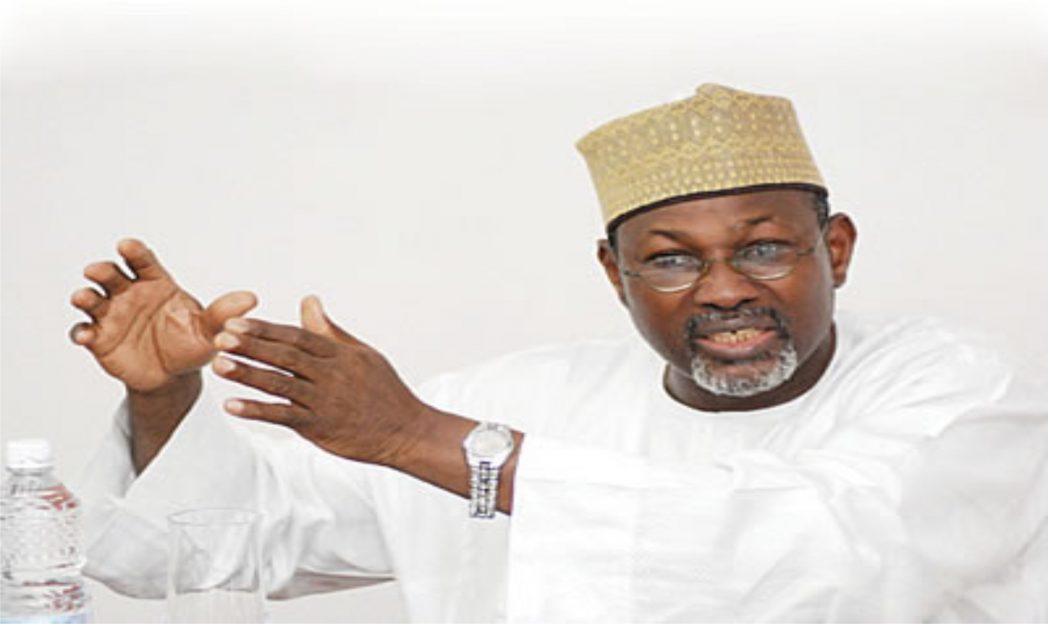
Prof. Attahiru Jega, INEC Chairman



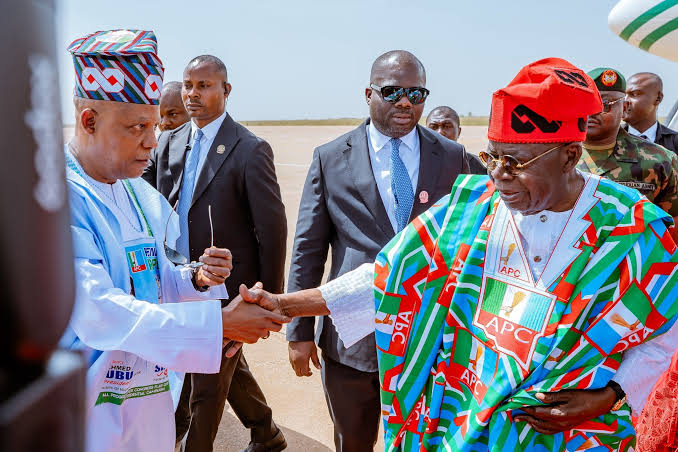
The campaign rally, held at the Kaduna Township Stadium, attracted Vice-President Kashim Shettima, APC governors, party leaders, federal and state lawmakers, political stakeholders and supporters from across the country.
The flag-off marks the beginning of the APC’s drive to secure a second presidential term for President Tinubu, with the party expected to promote its achievements, defend its economic reforms and outline its policy priorities under the proposed Renewed Hope 2.0 agenda.
Kaduna’s selection for the campaign launch underscores the strategic importance of the North-West, a region with a substantial voting population and considerable influence on presidential election outcomes.
The APC faces a significant challenge in Kaduna, where the Peoples Democratic Party’s presidential candidate, Alhaji Atiku Abubakar, defeated President Tinubu in the 2023 election. The rally therefore provides the ruling party an opportunity to strengthen its grassroots structures and regain electoral support in the state.
Addressing supporters, Vice-President Shettima appealed to Northern voters, highlighting President Tinubu’s political relationships with prominent Northern leaders, including Alhaji Abubakar, Mallam Nuhu Ribadu and the late President Muhammadu Buhari.
The Vice-President’s appeal reflects the APC’s determination to consolidate its support in the North as the party intensifies preparations for the presidential contest.
The Renewed Hope 2.0 agenda is expected to feature prominently in the campaign, providing a platform for President Tinubu to explain his administration’s economic policies and outline plans for another term.
However, the President’s record on economic reforms, rising living costs, petrol prices, employment, infrastructure and insecurity is expected to attract considerable scrutiny during the electioneering period.
-

 Niger Delta9 hours ago
Diri Restates Stance On Lagos-Calabar Coastal Highway
-

 Niger Delta9 hours ago
C’River, NUJ Pay Tribute To Late Guardian Editor
-

 News10 hours ago
NDLEA Recovers Tons Of Illicit Drug Consignments In Nine States
-

 Opinion9 hours ago
Checking Voter Apathy In Nigeria’s Electoral Process
-

 Sports6 hours ago
Nigerian Trio Target Titles At PFL Africa Finals
-

 Education7 hours ago
FCE Yola Graduates 3,555 Teachers , Seeks Upgrade to University
-

 Politics6 hours ago
2027: DICKSON’S EX-ALLY VOWS TO WORK AGAINST NDC INTEREST IN BAYELSA
-

 Politics6 hours ago
2027: GROUP PLEDGES 40,000 SUPPORTERS FOR COALITION CANDIDATES IN RIVERS