
Politics
Contradictions Of Nation’s Democratic Experience

One of the fallouts of Ekiti
and Osun gubernatorial elections was the issue of the militarisation of the polls by the federal government that earned it knocks for alleged intimidation of the voters with heavy security and military presence before and during the polling days. The main opposition party, the All Progressives Congress (APC) argued that the militarization of polls created voters’ apathy and a threat to the nation’s democratic process.
Government’s response to the accusation of using high security and military presence to intimidate and disfranchise many voters at polling days was not without a valued point. According to it, “it is better to have a militarized polls where votes would count and the peace of the people is guaranteed in the electoral process than bloody and violent elections.” In the governorship poll of Ekiti, power changed hands from the APC-led government to the Peoples Democratic Party (PDP), while PDP failed to unseat the APC government in Osun State.
Both Ekiti and Osun elections represented litmus test for the Independent National Electoral Commission as the commission prepares for the 2015 general polls. Nigerian’s democratic experience has witnessed many events that tended to question her march to democratic growth. The recent commotion at the National Assembly where the police reportedly tear-gased members of the House of Representatives, no doubt, represents contradiction to democratic experience and learning.
Sad as the action of the police was, members of the lower chamber had reconvened from its break to address a matter of urgent national concern bordering on the extension of the state of emergency in North East states of Adamawa, Borno and Yobe as requested by President Jonathan in his letter to National Assembly. But the action of the police, however, not only prevented the lawmakers from gaining access to the premises of the National Assembly, but also placed them “under siege”.
Police action and what it intended to achieve eventually became a tissue of concern to the All Progressives Congress (APC), the Nigeria Bar Association (NBA) and some civil society groups. While the APC, NBA and the civil society group saw the invasion of the National Assembly by the police as a “threat to democracy,” leadership of the Nigerian police, defended the police action, claiming that the police acted based on the alleged “security reports.”
The NBA, for instance, said “the selective manner in which some persons were allowed into the National Assembly Complex, while others were shut out, raises doubt in respect of the authenticity of the alleged “security reports.” The NBA also condemned in strong terms the acts of members of the National Assembly, who in a manner unexpected of honourable members scaled the gates leading to the assembly complex to gain access to the complex. The Senate leader, Victor Ndoma-Egba argues that the precincts of every parliament of the world are supposed to be sacred, yet, he said that there is no law that prevents one from scaling the fence to enter ones place. In the absence of law, where is the place of morality in the affairs of men?
The reaction of Governor Chibuike Rotimi Amaechi of Rivers State, however, added another twist to the scenario when he said “we don’t have democracy in Nigeria yet. What we have is diarchy.
… Diarchy is dictatorship”.
Apart from accusing the federal government of appropriating the police as its personal property, Amaechi was also vocal that his party (APC) would not go to court if the PDP decides to rig the 2015 presidential election, but instead would form a parallel government.
In his words, “if you rig us out, we would rig ourselves in. Which means if you think you can rig us out in 2015, we will form our own government. We have met on that and we have agreed on that. We will install our own government and there would be two governments. The only way to avoid a parallel government is to have a free and fair election.”
Amaechi’s presentation can be examined under two areas namely: the issue of no democracy yet in Nigeria and secondly, that APC will form a parallel government if PDP rigs the 2015 presidential election. From several perspectives, the two issues raised by Governor Amaechi represent some of the contradictions of the nation’s democratic experience.
Records show that Amaechi was in the Rivers State House of Assembly as member and speaker for eight years and from the Assembly platform, Amaechi gained entrance into Brick House as governor. Even Amaechi’s ride to Rivers Brick House was truncated by human error, it took another human rationality through court process to correct the error. Today, the governor is at the eve of his eight-year tenure. Yet Amaechi believes there is no democracy in Nigeria.
Point two. While it is a fact that freedom of expression is an attribute of democracy, that expression must find its whole within the ambits of the law of the land. The call for “parallel government, if PDP rigs the 2015 presidential election” by Amaechi and his party, many argue, “is a sad commentary by politicians who will like to collapse a system because such system was not favourable to their line of aspiration.” If some politicians appeared to be losing faith in democratic principles and strengths, is the judiciary not alive in raising hope in a workable system of which some politicians have benefited from?
Another contradiction in democratic growth is the state of the legislature in some states. While in Edo and Rivers States, it is on records that governments have shifted the sitting of Assembly members to Government Houses following crises that rocked both Assemblies, seven PDP lawmakers in Ekiti State, in a twist to the unfolding events in the state had reportedly removed Ekiti speaker, deputy and also approved commissioner nominees sent in by Governor, Ayodele Fayose.
Recently, Governor Adams Oshiomhole of Edo State and his Ekiti counterpart, Fayose had exchanged hot words over the state of the legislature in their respective states. Oshiomhole had told Fayose, in a statement by his chief press secretary, Peter Okhiria, that there was no crisis in Edo Assembly and that Fayose should not drag his name (Oshiomhole) into the “political gansterism that has become peculiar with the Ekiti State government”.
But Fayose fired back, saying Oshiomhole lacked the moral right to question developments in Ekiti when he had not managed well the crisis in his state legislature. No matter how hard Oshiomhole and his aides may try to convince the public that all is well with the state assembly, political observers believe that both Oshiomhole and his aides are economical with the truth.
Is it proper for a state House Assembly to sit in the Government House where the governor, his wife and children reside? What legislation will emanate from a legislature that is sitting exclusively at the comfort zone of the governor at Government House? There are fundamental questions that are begging for answers.
Those who may argue that there is no illegality for lawmakers to hold sessions inside Government Houses may be right, but they should also be reminded that it may not be laughable afferall if President Jonathan moves the sittings of the National Assembly to Aso Rock.
Fayose’s media spokesman, Lere Olayinka, while arguing that the lawmakers cannot sit anywhere else apart from the state House of Assembly, also raised concern whether actions taken at the sitting of a House of Assembly held inside Edo Government House can be said to have “stamp of legality.
Threat to democracy should not only been seen in crude method, siege to legislative assembly or disobedience to rule of law, but also in shifting the goalpost of legislative houses and democratic principles for selfish interests of those calling the shots.
There is also democratic sacrilege when the executive arm of government pockets another arms, the legislature for instance. What signals are Nigerians sending to the world about the health status of Nigerian democracy when judges and judicial officers are beaten and desecrated at the court chambers by men suspected to be party thugs.
However, the All Progressives Congress recently asked the Federal High Court, Abuja to declare the seats of Ekiti six lawmakers vacant, for defecting to the Peoples Democratic Party. APC also prayed the court to order a bye-election to fill their seats in accordance with the 1999 constitution. The affected Ekiti assembly members are Dele Olugbemi (the factional speaker); Alex Ade Ojo; Israel Olowo, Adeyinka Adeloye and Ayoka Fatumbi and the lawmakers are joined with the PDP and the Independent National Electoral Commission as defendants in the action.
The plaintiff (APC), in originating sermons had asked the court to determine “where upon proper construction of the provisions of Section 109(1)(g) of the constitution of the Federal Republic of Nigeria, 1999 as amended, defendants being persons whose elections to the House of Assembly was sponsored by the ACN, now the APC, can continue to retain their seats in the said house having become members of another political party, the Peoples Democratic Party since October 16, 2014 before the expiration of the period for which the House was elected.”
Outside the realm of making comment on the issue before the court, one sticking concern is that while APC is not losing sleep to protect its house members from being poached by the PDP, the same APC is committed in poaching the territory of the former, and would stop at nothing in defending the actions of defectors to its fold. The case of the speaker, House of Representatives, Aminu Tambuwal, who dumped the PDP for the APC and since fighting a political battle to retain its status at the house at the hands of the PDP-led federal government, is a typical example of the irony of the nation’s democratic experience.
The political reality is that when it suits or favours one party, it glorifies that “our God is good” but cry to high heavens about impunity and lawlessness on the part of opponent when it is disfavoured in the political chess game.
The recent protests on the streets of Port Harcourt by Ogoni youths over the adoption of Dakuku Peterside, member, House of Representatives as the APC consensus aspirant for the Rivers governorship election over and above their son, Senator Magnus Abe, further suggests that more than ever before, there are hazards arising from the nation’s developing democracy. Democracy itself entails participation in the affairs of men and where participation is shut out, it can rock the boat.
That the nation has practiced 15 years of unbroken democracy is not in doubt.
But how has the democracy impacted on the lives of the people? True, the nation has not had the best of its times in democracy, but that is not to write off the nation’s democracy. The bedrock for development and modernizing change is to strengthen democratic institutions that will enforce standard and quality in growth.
Unfortunately, some persons lower standard to suit their landing and such practice spell trouble for the system to work well. Every attempt at putting a shine on the nation’s democracy should not be left for politicians alone. Even more important is that prevailing contradictions in democratic growth should not deter the people to work for democracy to blossom in the land. Afterall, the gains of democracy is not accidential.
Samuel Eleonu
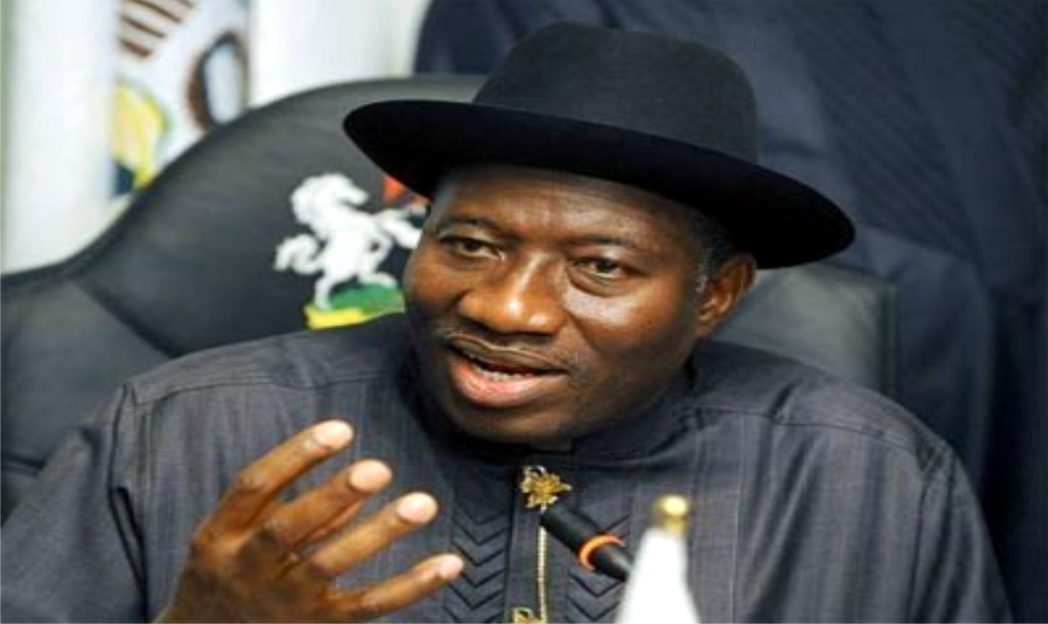
President Jonathan


Rt Hon. Abbas secured the party’s ticket through an affirmation exercise conducted across the 13 electoral wards in the constituency.
The wards involved include Kwarbai A, Kwarbai B, Limancin-Kona, Unguwar Fatika, Unguwar Juma, Dutsen Abba, Gyallesu, Kufena, Dambo, Wuchichiri, Tudun Wada, Tukur-Tukur, and Kaura.
The exercise, which began simultaneously in all wards at about 10 a.m., recorded large turnout of APC members who gathered at various party offices across the constituency.
At Kwarbai B Ward, the Speaker’s ward, the process was conducted peacefully under the supervision of the ward APC Returning Officer, Malam Iliyasu Muhammad Balarabe, in the presence of Rt Hon. Abbas.
According to the ward APC secretary, Nafiu Sabo, the ward has over 10,000 registered members, but 220 members were accredited for the exercise.
Before the affirmation, Mallam Balarabe informed members that Rt Hon Abbas was the only aspirant who purchased nomination forms, underwent screening, and was cleared by the APC national leadership to contest the Zaria Federal Constituency seat.
Following a voice vote by accredited members, the Speaker was affirmed as the party’s candidate in the ward, a process replicated across the remaining 12 wards.
At the constituency collation centre, the APC Returning Officer for the House of Representatives primary in Zaria Federal Constituency, Dr. Hamisu Ibrahim Kubau, announced that 1,376 APC members across the 13 wards endorsed Rt Hon. Abbas as the party’s flag bearer.
He explained that although thousands of party members participated in the exercise, only accredited delegates were allowed to vote.
Dr. Kubau declared: “There are 13 wards in Zaria Federal Constituency, and only one aspirant purchased a form, was screened, and cleared. He is Rt. Hon. Abbas Tajudeen. After due process, we conducted affirmations across all wards.”
He added that the process was peaceful and monitored by officials of the Independent National Electoral Commission (INEC) and party representatives.
Chairman of the APC House of Representatives Primary Elections in Kaduna State, Senator Yakubu Oseni, described the outcome as a reflection of the Speaker’s popularity and acceptance among constituents.
He expressed confidence that Rt Hon Abbas would secure victory in the 2027 general elections.
Speaking after his declaration, Rt Hon. Abbas expressed appreciation to APC members for reaffirming their confidence in him.
The incumbent Reps including Emily Inyang and Godwin Offionio, in separate interviews
protested the handling of the primaries conducted by the leadership of the party in the state, saying it was skewed against them.
The aspirants further described the primaries as a charade and an embarrassment to the state.
According to them, the House of Representatives primaries fell short of the provisions of both the Electoral Act as amended in 2026 and the party’s constitution.
They accused the leadership of the party in the state, backed by Governor Bassey Otu, of violating the party’s constitution in the conduct of the House of Representatives primaries across the state on Saturday.
Hon. Godwin Offiono, representing Ogoja/Yala Federal Constituency, particularly expressed disappointment with the primary that allegedly disenfranchised registered members of the party in his constituency.
Hon. Offiono asserted that having failed to arrive at a consensus, the party leadership opted for a direct primary to decide the candidate for the 2027 election.
“But what I witnessed today was not only alarming, but quite disheartening that our electoral system have not shown any improvement, especially now that we have a man of God in the person of the governor as the leader of the party.
“How do you declare a result by 9:00am even when the electoral materials were yet to arrive at Yala.
“As an aspirant, I couldn’t even vote or see the materials for my own primary at my Okuku ward in Yala Local Government Area, where I come from. But no matter what happens I am still in the race and have not stepped down for anybody.
“The governor had all the time in the world to drive the process of consensus but he never did. As a representative, I cannot even see my governor. I called, no response. I sent text no reply. I am treated as an out cast,” he lamented.
In an emotion laden tone during a telephone interview, Hon. Offiono further said: “I could not believe that first term NASS members like me can be treated in this shoddy manner even when I don’t know my offence.
“I have been a loyal party man. I appeal to the governor to do the right thing, follow the Electoral Act and party constitution in electing representatives.”
Similarly, Hon. Emil Inyang of Akamkpa/Biase Federal Constituency said he still remained in the race and had not stepped down for anybody.
According to him, “If this shenanigan called primary is allowed to stand, it would affect the party’s fortune in the general elections.
“My appeal to the governor is to allow the people to decide. And if they so voted against me, I will rest and not fight over anything.
“There was no stakeholders meeting held to decide on anything before now, and someone can not be unilaterally imposed on us all in the name of compromised primary,” he stated.
A coalition of support groups within the All Progressives Congress (APC) has protested the disqualification of former presidential aspirant, Mr Tein Jack-Rich, from the Rivers West Senatorial race ahead of the party’s primaries for the 2027 general elections.
The groups, in a statement issued on Saturday morning in Abuja, described the action of the party’s screening committee as unjust and capable of worsening internal divisions within the APC in Rivers State.
The statement, signed by the coalition’s National Coordinator, Dr. Bilal Galadima, and General Secretary, Hon. James Ogenyi, accused the party leadership in Rivers State of favouring politicians loyal to the Minister of the Federal Capital Territory, Chief Nyesom Wike, while sidelining long-standing members of the APC.
The coalition alleged that only aspirants aligned with Chief Wike were cleared to contest for elective positions in the state.
“How can our party allow only one man who is not a member of our party to make decisions or dictate the direction of our party?”, the group queried.
The coalition specifically faulted the exclusion of Mr Jack-Rich, describing him as a loyal party member who had supported the APC for more than 13 years and previously contested the party’s presidential ticket.
It also questioned the alleged clearance of Chief Felix Obua, whom it described as a recent entrant into the party and an ally of Chief Wike.
“How can our party disqualify Jack-Rich, a former presidential aspirant who has been loyal and supported our party for the last 13 years, only for our party to choose Felix Obua, a Wike loyalist who only joined the party three months ago?”, the statement read.
The group warned that failure by the APC leadership and National Working Committee (NWC) to address the matter as it could weaken the party’s structure in Rivers State ahead of the 2027 elections.
It called on party leaders to uphold internal democracy, reward loyalty and ensure a level playing field for all aspirants.
INEC TO BEGIN MEMBERSHIP VERIFICATION AS POLITICAL PARTIES SUBMIT REGISTER
All 22 registered political parties have successfully submitted their membership registers to the Independent National Electoral Commission (INEC) in compliance with the Electoral Act 2026, the Commission has said.
In a statement issued on Friday, Chairman, Information and Voter Education Committee, Mr Mohammed Haruna, said the submission followed the extension granted by the Commission after political parties raised concerns during a meeting on Tuesday, March 24, 2026, regarding the timeline provided in the Revised Timetable and Schedule of Activities for the 2027 general elections.
He said, “The Commission is pleased to note that all registered parties submitted their registers as of 8th May 2026, two days before the extended deadline.”
He recalled that following a meeting with political parties, the Commission, in a statement issued on the 27th of March, 2026, adjusted the deadline for the submission of party registers from 21st April 2026 to 10th May 2026 to align with the provisions of Section 77(4) of the Electoral Act 2026 and the actual dates fixed by political parties for their primaries.
Mr Haruna noted that political parties were accordingly allowed to conduct their primaries within the approved period from 23rd April 2026 to 30th May 2026, while the register of party members was required to be submitted to the Commission not later than 21 days before the conduct of their respective primaries.
He added, “INEC wishes to state that all registered political parties complied with the requirement within the extended timeframe and will subject the submitted registers to the necessary verification processes in line with the law.”
The Commission restated its commitment to the conduct of free, fair, credible and inclusive elections.