
Opinion
Amaechi’s Legal And Political Battles (II)

Hours after the suspension was announced, the party
at a press conference said that it had constituted a committee headed by Mr. Joe Gadzama, SAN, to probe allegations raised against Amaechi. Other members of the committee were PDP National Legal Adviser, Victor Kwon; Inalegwu Onche, Friday Nwosu, Udorji Amedu, Ola Kukuyi, Wakil Mohammed, Yusuf Jangwe, Mrs. Bola Doherty, Mr. Tanimu Adamson and Anicho Okoro as Secretary.
Reacting to his suspension during an interactive session with youths of the state, Amaechi asked: “Who has power to suspend Obio/Akpor council? Now you see political witch-hunting; it is so ridiculous, my party must rise above political witch-hunting. The Governor did not suspend Obio/Akpor council, I hope you know. My power is to dissolve and remit it to the House of Assembly, but I have not done that yet, what the Assembly has said is ‘we are investigating corruption’ then the party says we should not investigate corruption, is that fair?” He went further to state that the NWC issued a press statement to suspend me without any invitation and fair hearing. His words: “I was not invited by the National Working Committee of PDP, I was not given fair hearing. What I heard was ‘why did I refuse to reinstate the suspended Obio/Akpor Council executive? Who suspended them?’ His questions received the enthusiastic response of the youths who chorused: “The Rivers State House of Assembly.” Again the governor asked, ‘who has the power to investigate Obio/Akpor council executive?” The youths again replied: “The State Assembly.”
Why and How Amaechi joined APC
This unfortunate and wicked step by the PDP Leadership led to the departure of Governor Amaechi and six other PDP Governors to form the New PDP, with five of them later joining the mega opposition political party, APC.
Explaining why he joined APC, Governor Amaechi said: “Unfortunately, recent events within the PDP have given me reason to reconsider our collective interest as people of the South South and indeed as Rivers people. At various times, as the one whom you had gave your mandate, I had cause to complain about the marginalisation of our state and our people despite our huge contribution to the national coffers and our unflinching commitment and support for the ruling PDP. While the political and economic importance of Rivers State cannot be contested, we continue to hold the shorter end of the stick.
“A few instances may suffice: •Our demand that the Federal Government return oil wells belonging to Rivers State to us has gone unheeded and been treated with levity under this administration. Rather, our oil wells have been ceded to Bayelsa, Abia and Akwa Ibom states. Even after we got a judgment that the oil wells were wrongly ceded to Akwa Ibom State and should be returned to us, only dry wells that were no longer producing oil were returned.
“In the specific case of the Soku oil wells, despite a decision reached that the monies should remain in an escrow account till all matters concerning it are resolved, the Federal government continues to pay neighbouring Bayelsa State the revenues meant for Rivers State in a classic case of robbing Peter to pay Paul. It is indeed noteworthy that we have made several representations formally and informally on this matter.
“A second instance is the total absence of federal presence in Rivers State. The ‘National Good Governance Tour’ provided a good opportunity for the Federal Government to showcase its presence in Rivers State. The tour, if nothing else, was evident that there was not much to show for in a state that is the cash cow of the federation. The East-West road remains abandoned, work has been deliberately slow on the Port Harcourt International Airport, the third busiest airport in the country, while all airports started along with it have long been completed and commissioned. The Bonny-Bomu road that leads to the only functional liquefied natural gas project remains uncompleted. In the midst of all these, our administration went ahead to fix federal roads to the tune of N103 billion. Several representations and letters after, not one kobo has been repaid. The Federal Government is actively discouraging investments in Rivers State.
4. Amaechi Heads for the Supreme Court over Governorship Tenure
At a point it was becoming very obvious that PDP under the watch of President Jonathan intended to accord Governor Amaechi the type of treatment they accorded Governor Timpire Sylva of Bayelsa when they refused him the ticket of the party at the eleventh hour in his quest for a second tenure. Governor Amaechi in order to beat them at their own game decided to go to court to ask for the interpretation of when his tenure should end – whether on the 29th May, 2011 or 25th October, 2011 – four years after the Supreme Court declared him the Governor of Rivers State, instead of his cousin, Sir Celestine Omehia, who was mistakenly sworn-in as the Governor of Rivers State in his stead on 29th May, 2007.
The PDP Leadership had thought that the Court would rule that his tenure ended on 25th, October 2011 to enable them to ensure that the gubernatorial election in Rivers State is repeated so that he will be denied the ticket of the party to fly her flag in the illusory repeated gubernatorial election if it was to hold. All these were one of the ploys and plots to oust him from office before the expiration of his tenure. Again, Governor Amaechi floored these undemocratic minded false democrats in PDP when a Federal High Court Judge in Abuja through Justice Ibrahim Auta, ruled that Amaechi must leave the position of governor on May 29, 2011 and not 25th October, 2011 as envisaged by the PDP bigwigs. This judgement is another feat by Governor Amaechi to shame his detractors and political opponents who will prefer him out of the Government House before the end of his tenure.
Eze is a PH based media consultant.
Reacting to this epochal judgement, the New Peoples Democratic Party (nPDP) said it received with joy the news of the Supreme Court’s dismissal of the suit instituted by Sir Celestine Omehia, seeking the ouster of Rivers State Governor Chibuike Rotimi Amaechi. According to the faction, “Omehia has been in court since the Supreme Court removed him shortly after he erroneously assumed office as Rivers State Governor in 2007, declaring Amaechi to be the rightful occupant of the Brick House Government House. Strangely, Omehia has refused to end the litigation process despite Amaechi having finished that tenure and winning a re-election thereafter.” Continuing, the splinter PDP in a release said: “We are, however, not surprised by his attitude, for apart from being desperate for power, Omehia has allowed himself to become a tool in the hands of the acting Minister of Education, Chief Nyesom Wike, who has devoted enormous resources towards the destabilization of the Amaechi administration just to please his paymasters in Abuja.”
5. THE INTRIGUES IN THE APPOINTMENT OF JUSTICE AGUMAGU AS THE CHIEF JUDGE OF RIVERS STATE
The indefatigable and indomitable Rt. Hon. Chibuike Rotimi Amaechi recently started another legal battle but this time with the National Judicial Council (NJC). Like other cases involving Governor Amaechi, this case is unprecedented in the annals of judicial adjudication and Nigerians are watching with keen interest on how he survives this.
Based on the Federal High Court ruling approving Justice Peter Nwoke Chukwuma Agumagu as the Chief Judge of Rivers State, Amaechi supervised his formal swearing-in ceremony. However, after few days, the NJC came up with a verdict suspending the newly appointed Chief Judge, this again is unprecedented in the history of appointment of Chief Judges in any other State in Nigeria.
Before his appointment as the State’s new Chief Judge, Justice P. N. C. Agumagu was the first ever President of the Rivers State Customary Court of Appeal. He is an administrator, a former state High Court Judge and the seventh the new Chief Judge of Rivers State.
On 27th March, 2014 to the shock of both the Governor and close watchers of events in Rivers State, the NJC suspended Justice P. N. C. Agumagu, from office, and directed that he should, within four days, explain in writing why he should not be sacked as a judicial officer. The Council, which took the decision at the end of an emergency meeting in Abuja, said it suspended the Rivers CJ over his failure to abide by the Oath of Office he took to uphold the Constitution and Laws of the Federal Republic of Nigeria.
According to Acting Director of Information at the NJC, Mr. Soji Oye, in a press statement: “At its 10th Emergency Meeting, which was held on March 26, 2014, the National Judicial Council under the Chairmanship of the Chief Justice of Nigeria, Hon. Justice Aloma Mariam Muktar (GCON), considered the purported appointment, confirmation and swearing-in of Hon. Justice P. N. C. Agumagu as the substantive Chief Judge of Rivers State on March 18, 2014.
“In the meantime, Council in exercise of its powers under Paragraph 21 (d) of Part 1 of the Third Schedule of the 1999 Constitution has suspended Justice Agumagu from office as a judicial officer with immediate effect.”
Reacting to all the brouhaha, a UK-based Social Commentator, Emeka Reuben Okala, stated, and I quote: “I join other Nigerians to congratulate the articulate Governor of Rivers State, Rt. Hon. Chibuike Rotimi Amaechi, on the battle well fought and job well done on this issue. In all of these, Amaechi clearly stands on the pedestal of truth and that’s the magic behind his countless victories. Keep the flag flying, Mr. Governor, you are clearly on the right side of history. Kudos! To Justice PNC Agumagu, I say congratulations! Your appointment as the Chief Judge of Rivers State is richly deserved. Knowing you as I do, the Judiciary under your leadership will have a lot to benefit. We look forward to your good services.”
On his part, Nebukadineze Adiele, a well respected online Social Commentator, stated as follows: “The idea that a customary court judge could not be appointed a Chief Judge of a state was thoughtlessness taken too far. The NJC shamed itself by practically dictating to the governor as to who to appoint CJ. Kudos to Amaechi for standing firm on his belief and for trusting the judiciary into resolving this matter. His tenacity over this matter is a public service to other governors and future governors. A timid governor would have buckled when pressured from all angles to not appoint Justice Agumagu as Chief Judge of Rivers state. I am both a fan and a critic of Chibuike Amaechi – I support him when he gets things right and I get on his case when he goofs. On the appointment of Justice Agumagu as Rivers state Chief Judge, Governor Chibuike Amaechi showed tremendous courage under fire and his action will remain as revolutionary (over judicial appointments in Nigeria) as the circumstances he overcame in becoming governor. That the most senior judge in the state should have been denied appointment into the Chief Judgeship, simply because he was a customary court judge, would have been blatantly discriminatory, stupid, and legally not justifiable. There are instances when one cannot help but admire Chibuike Amaechi’s confidence and convictions. This is one such instance.”
6. Challenge on the Transfer of Rivers State Oil Wells to Akwa Ibom State
As the serving Governor of Rivers State, Amaechi caused his Attorney-General to challenge the transfer of some oil wells from Rivers State to Akwa Ibom State. The Supreme Court eventually ruled in favour of Rivers State in that case.
7. The most celebrated Supreme Court ruling on Governor Amaechi
A lot of articles and statements were written following the K-legged episode that was the outright hijack of the 2007 PDP gubernatorial ticket from Rt. Hon. Chibuike Rotimi Amaechi ahead of the 14th April, 2007 election in Rivers State. This occurred despite his landslide victory at the primaries where he clinched 6,527 of the 6,575 possible votes while seven other aspirants that included political heavyweights like Hon. Chief Austin Okpara, a former Deputy Speaker of the Federal House of Representatives; late Senator Martin Yellowe; Pawariso Horsfall; and Mr. Chris Orji shared the remaining 48 votes amongst themselves. Amaechi’s name was subsequently forwarded to the Independent National Electoral Commission on December 14, 2006 in compliance with Section 32(1) & (2) of the Electoral Act 2006. INEC then duly published Amaechi’s name as the gubernatorial candidate of the Peoples Democratic Party in Rivers State.
The story however took a different turn when, speaking at the presentation of the party flag to its gubernatorial candidate at the Liberation Stadium, Port Harcourt, former President and then “Emperor” of PDP, Chief Olusegun Obasanjo, declared that Amaechi’s candidacy had “k-leg”. Following this outright abuse of office, the dreaded bulldog that was the Nuhu Ribadu-led Economic and Financial Crimes Commission (EFCC) was let loose on Rt. Hon. Chibuike Amaechi, resulting in his decision to seek legal redress for his travails. Suffice it to say, Amaechi went on self exile to Ghana and the powers that be further showed their contempt for him by selecting his cousin, Sir Celestine Omehia, who neither purchased nor filled a form, as PDP flagbearer in his stead.
Amaechi’s vindication came with the 25th October, 2007 landmark ruling by the Nigerian Supreme Court declaring him as not only the authentic flag-bearer of PDP but also ording that he be sworn-in immediately to replace Omehia, who had previously been sworn-in on May 29, 2007 as the Governor of Rivers State. Thus, Amaechi became the first person to occupy the office of governor in the country without standing for election. In explaining the ruling, the Supreme Court has since stated that it is the party that contests elections and that the PDP won the gubernatorial elections, and that, consequently, Amaechi, being the rightful candidate, should assume power as governor.
This epochal feat stands as Amaechi’s greatest input towards the growth of judiciary in the political life of Nigeria as it has become a reference case in determining similar cases in Nigeria today.
Conclusion
Governor Amaechi is, undoubtedly, one of the most visible governors in Nigeria today. His long-running feud with President Jonathan and his wife, Dame Patience, has earned him national and international media visibility. However, it is not just the poignant quarrel and concentrated animosity that exist between him and the First Family that have made him such a popular governor.
Governor Amaechi’s media visibility is essentially because of his statements and actions. In his own words: “If you know Baba very well, you will know that I am a smaller version of Baba”, situating himself and former President Olusegun Obasanjo who is also acclaimed for his no-holds-barred statements as well as the natural instincts that drive Obasanjo’s physical reactions which are most times suffused with comical dimensions.
To conclude this thesis, let me title the conclusion, “THE JUDICIARY AND INPUTS OF GOVERNOR AMAECHI”. My good friend, Ken O. Olumati, a legal counsel based in Port Harcourt, in an article he titled ‘Ameachi’s Debt to the Law’ captured what Amaechi has done to improve the judiciary. He stated that, “It is also noteworthy that the various decisions of the Supreme Court and Court of Appeal in Governor Amaechi’s case were reported in Parts 1040 and 1065 of the Nigeria Weekly Law Reports. In Part 1065 alone contains six decisions on Amaechi’s case; three by the Supreme Court and three by the Court of Appeal. This in itself underscores the significance of Amaechi’s battles through the courts. Few cases have enjoyed similar attention in the annals of Nigeria’s legal history. Some of them include the case between Amodu Tijani V Secretary, Southern Nigeria, the late Oba Oyekan’s legal battle for the Obaship of Lagos in the 1950’s, which went as far as Her Majesty’s Privy Council before a clear winner was installed. In recent memory, the case of the late Chief Gani Fawehinmi against the Nigeria Bar Association as well as his numerous court battles against the Military Government of former President Ibrahim Badamasi Babangida.
Eze Chukwuemeka Eze is a Media Consultant based in Port Harcourt in Rivers State.
Eze Chukwuemeka Eze



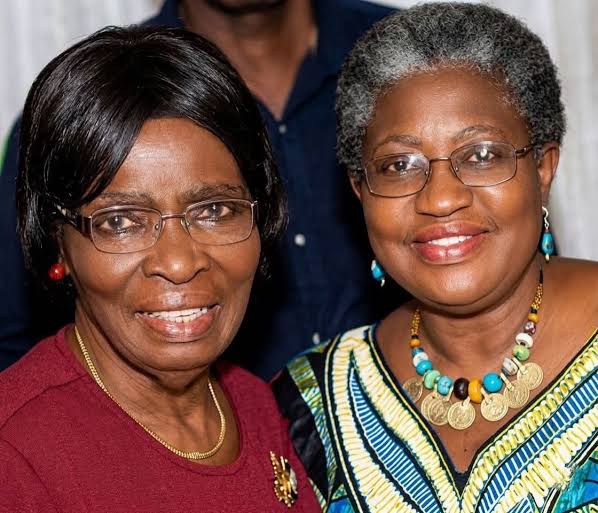
Quote “Professor Kamene Okonjo
Some women leave behind more t
Yet, to remember Professor Kam
Professor Okonjo was the belov
one of the most dramatic chapt
On December 14, 2012, the then
She leaves behind children, gr
Professor Kamene Okonjo deserv
By: Sylvia ThankGod-Amadi

Quote: An African who invokes
This is the concluding part
… Given the fact that I was
At the end of the visit by the
Back to my apartment, at abo
Under normal circumstances, yo
That all she asks is that Chie
For some reason that I do not
I believe that everyone in hu
Our ancestors have not gone fa
By: Jason Osai
The Federal Government’s approval of a N70,000 monthly transport intervention for public service workers for six months, beginning in November 2026, offers hope to employees struggling with the rising cost of living. The agreement with the Nigeria Labour Congress (NLC), reached at a conciliation meeting in Abuja on October 27, is intended to cushion transport costs and ease pressure on workers’ incomes. But for public servants in Rivers State, it raises a familiar question: will the State Government key into the intervention and ensure that its workers benefit? The agreement provides for N70,000 monthly across all levels, for six months. The Federal Government also approved peculiar allowance arrears effective from May 1, 2026, to be paid in three equal instalments beginning in November.
The parties agreed to reconvene after one month to assess implementation. Ultimately, the value of these resolutions will be measured not by announcements but by whether eligible workers receive the money. Transport costs consume a substantial share of many civil servants’ earnings before they can meet household needs. Support for commuting is therefore not a luxury or political favour; it is temporary assistance to help workers remain at their jobs without sinking further into hardship. For lower-paid employees, transport costs can turn modest salaries into a daily exercise in difficult choices and sacrifice.
The agreement also urges State and Local Governments to participate and unions to press for implementation. The federal agreement does not automatically guarantee that every State and Local Government employee will receive the support. State authorities must clarify how it will apply to their workforce, make the necessary arrangements and publish a payment timetable. Rivers State must approach the arrangement with urgency and transparency. The Government should State whether it will implement the intervention and when payments will begin. Any administrative or financial question should be addressed promptly with organised labour, not allowed to become excuses for delay.
The concern is sharpened by the earlier N35,000 monthly wage award introduced by the Federal Government in 2023 after petrol subsidy removal. It was intended as temporary relief pending a new national minimum wage. While several States negotiated and paid wage awards or related sums, implementation nationwide was uneven. Reports in 2024 indicated that many States had failed to pay the federal award, while others provided different amounts. In Rivers, labour and media reports raised concerns about implementation of the N35,000 award for State workers, amid separate announcements and arrangements concerning Local Government employees.
The wage award was meant to ease the immediate effects of subsidy removal, yet workers faced uncertainty over whether the promised relief would reach them. In February 2024, the Rivers State Government announced approval of the N35,000 award for local government workers, but subsequent reports showed that implementation across worker categories remained a concern. The lesson is clear: approval and implementation are not the same. A declaration at a meeting offers little comfort to a worker whose account does not reflect the promised payment. For workers who travel to their offices daily, the implications of delayed support are significant. Transportation expenses compete with food, rent, school fees, healthcare and other essential household needs.
As fares rise, employees may be forced to reduce spending on necessities or borrow to sustain their families. A timely transport intervention would therefore provide practical relief and demonstrate that government understands the economic pressures confronting its workforce. Its temporary nature makes prompt implementation even more important. It is fair to acknowledge that this transport intervention is a new agreement and that its administrative details may require clarification. Rivers State should not be condemned in advance for a failure that has not occurred. Nevertheless, the earlier experience gives workers legitimate grounds to seek assurances before the November commencement date. The State should avoid allowing uncertainty to persist until workers begin asking why the promised assistance has not arrived.
The NLC and unions in Rivers State should engage the State Government immediately and seek a written commitment, an implementation plan and a process for reporting missed payments. If clarification from the Federal Government is needed, the State should seek it without abandoning the goal of providing relief. Labour leaders must also keep members informed about progress and insist that any agreed arrangements are applied fairly and transparently. The Rivers State Government should treat this intervention as an opportunity to rebuild confidence. Timely support would show that workers’ welfare is more than a talking point and that the State recognises the economic realities confronting its employees.
Silence, delay or selective implementation, by contrast, would revive frustration over earlier relief measures and weaken trust between government and labour. Every month lost to administrative delay leaves workers facing the same transport burden without the intended assistance. The State should consult labour, publish arrangements and pay eligible workers on time. Rivers workers should not have to wonder whether federal relief will reach them. The Federal Government has announced the support; now the State must make its position clear. We hope the N70,000 monthly transport intervention will not follow the troubling path of the earlier wage award. Rivers State should learn from that experience and ensure that this time, relief is not merely promised but delivered.
Sylvia ThankGod-Amadi
-
Rivers4 days ago
Don Seeks Repositioning Of Tech Education For Dev
-

 Education4 days ago
PAMO MEDICAL UNIVERSITY -Nullifies Arrest warrant on VC
-
Niger Delta4 days ago
PANDEF Seeks 50% Oil Derivation Allocation Increase
-

 Education4 days ago
IAUE MOVES TO END GHOST WORKERS SYNDROME AS 400 NEW NON-TEACHING STAFF UNDERGO MANDATORY ETHICS TRAINING
-

 News4 days ago
Fresh Ebola Scare As NCDC Records Two Cases
-
News4 days ago
Customs Partners EFCC, NDLEA, Others To Tackle Money Laundering, Terrorism Financing
-

 Politics4 days ago
2027: RIVERS GUBER CANDIDATES SIGN CHARTER TO PRIORITIZE CITIZENS’ DEMANDS
-
 Politics4 days ago
2027: South-East Govs Insist On Tinubu’s Re-election