
Politics
Nigeria: Towards A Workable Constitution

The House of Representatives Committee on Constitution Review made a bold attempt, penultimate week, to commence an innovative discourse with the people in 360 centres spread across the federal constituencies. The move, believed to be coming rather late, is aimed at addressing the disconnect between Nigerians and the 1999 Constitution decreed by the last military dictatorship.
This process of public participation is sequel to the ad hoc committee of the National Assembly which had collated more than 200 contents of the memoranda submitted by individuals, groups and organisations.
Some of the issues that constituted the agenda for the public discourse include zonal configuration, controversial immunity clause, state police, power sharing, five, six or seven-year single tenure for the executive arm of government, creation of more states, independent candidacy, voting age, women representation, unicameral legislature, presidential or parliamentary system of government, status of traditional rulers and further electoral reforms.
Stakeholders at both local and state levels had fresh opportunities to make further inputs into the constitution review process at the public sessions held across the country. More importantly, all mass-based groups, including professional bodies like the Academic Staff Union of Nigerian Universities (ASUU), Nigeria Union of Teachers, (NUT), Nigeria Union of Journalists (NUJ), Nigeria labour Congress (NLC) and Nigerian Bar Association (NBA) played crucial roles at the sessions put together by an independent steering committee of stakeholders, including house member organisations representing the constituency as the facilitator.
Similarly, other stakeholders in the Nigerian project such as ethnic nationalities, women, youths, students, town unions, traditional institutions, political parties and artisans, and The Nigerian Governors Forum (NGF) made inputs in expectation of an enduring document that will actually define an egalitarian nation.
Determined to bring in their wealth of experience as captains of the ship of the 36 States,to bear on the very fundamental document that will direct the affairs of Nigeria in the next dispensation, the Nigerian Governors Forum (NGF) constituted various committees last month to look into the review of the 1999 constitution.
Chairman of the Forum, Chibuike Amaechi, while briefing newsmen in Abuja, said the NGF, after meeting with the Senate Committee vested with the responsibility to review the constitution, resolved to set up a committee consisting of the Governors of Rivers, Jigawa, Bauchi, Lagos, Niger, Anambra and Akwa-Ibom states, to liaise with the Deputy Senate President-led Constitution Review Committee to advise on issues that are of collective interest to them.
The Rivers State Governor said: “Forum held an exploratory meeting with the Senate Committee on 1999 Constitutional Review led by the Chairman and Deputy Senate President, Ike Ekweremadu, and constituted a seven-man committee to engage and collaborate with the National Assembly on the constitution review process.”
But indications are that a few of the membership of the forum hold different opinion of what should actually be. Few days after the NGF announced the formation of the committee, Governor Aliyu Wamako of Sokoto State, at the presentation of the 2012 merit award on leadership and administration of peace on the governors of the North West states by the Raymond Dokpesi Centre for Media Development in Abuja, took a swipe at plans by the National Assembly to set in motion the review of the constitution, noting that what the country needs at present was not constitution review or creation of new states.
He stressed that Nigeria’s problem has gone beyond the proliferation of states but the sustenance of the existing ones, contending that Nigerian leaders should at this stage, which he described as the most critical, unite to examine measures that will lift the country from its present predicaments.
Wamako’s outburst seems to have introduced a new dimension into the collective position expected to come from the NGF whose individual member view is expected to be harmonised and presented to the National Assembly in a memorandum before the commencement of the public hearing.
The Sokoto State Governor is not alone in the expression of a divergent view on the review of the Constitution, his Kano State counterpart, Rabiu Kwankwanso is totally displeased with the entire process, openly accusing the Deputy President of the Senate, Senator Ike Ekweremadu and the Deputy Speaker of the House of Representatives, Rep. Emeka Ihedioha of collaborating to foist an Igbo agenda on their colleagues. “It’s Igbo agenda”, Kwankwanso alleges.
Speaking with reporters in Kano, Kwankwanso said that the “process is designed to achieve a predetermined goal and the principal officers of the committee are pursuing an agenda under an agenda”. Senate President, David Mark, in a retort absolved the National Assembly of having a hidden agenda saying the National Assembly would be guided by the views of the majority of Nigerians.
However, while some Governors express reservations on the process, others are optimistic. One of those foreseeing positive outcome of the exercise is Governor Chibuike Amaechi of Rivers State. He believes Nigeria will come out sronger if the National Assembly remains faithful and allows popular views to prevail in the on-going constitution review exercise.
Speaking at the People’s public session of the 1999 Constitution review forum organised by the three senators representing the state in the National Assembly, in Port Harcourt, Amaechi said, “it is important that the National Assembly carry us along in the process”.
Amaechi advocated for fiscal federalism, “we believe that if they move some of the funds to state governments, the citizens will be well protected”, arguing that though agitation for state creation was not bad, that some states were not viable and disclosed that the position of the Nigerian Governors Forum (NGF) on some burning issues would be made public after their forthcoming meeting.
On his part, Governor Babatunde Fashola (SAN) of Lagos State sought a special status for the state because of its strategic importance to the nation. “If Lagos does not prosper, prosperity will be difficult for other parts of Nigeria,” Fashola said.
He also advocated that states should have their own police and be allowed a total control, management and creation of local government areas. Fashola, however, noted that the constitution itself was not an end, but a means to an end. “What Nigerians really want is not just a better document but a better life.”
Fashola said there should be true federalism, and that each state should be allowed to develop, based on its resources and ability, adding that the eventual overall prosperity of all the states will be the prosperity of the entire country. He reiterated the call for state police, noting that the current federal police structure lacked the capacity to effectively secure the entire country.
The governor of Osun State, Mr Rauf Aregbesola at one of the public hearings, said that the nation’s constitution was counterfeit and woven with fraudulent clauses that could not guarantee healthy development of Nigeria.
He observed that with the contents of the 1999 Constitution and its legal implications, true federalism and financial autonomy of federating units were being jettisoned, thus retarding socio-economic and political emancipation in the country.
Aregbesola, said in Osogbo, while addressing a cross section of people, civil society organisations and other stakeholders at the constitution amendment meeting, that the resolve of the House of Representatives to organise the interactive session was an afterthought.
Governor Umaru Tanko Al-Makura of Nasarawa State, in his contribution in Lafia called for the total abolition of joint state/local governments account and the state police from the proposed review of 1999 Constitution. He based his argument on the belief that it would ensure effective implementation of development projects at the grassroots level.
Similarly, the Borno State governor, Kashim Shettima, in Maiduguri, called for the review of the federal revanue allocation in favour of the state and local governments, as the governments were closest to the people.
He said “the constitutional provision under section 162(2) should be amended so as to allow flexibility to take care of political, economic and social forces and changes in the country.”
Shettima also called for the inclusion of defined roles for traditional rulers in the new constitution. He called for the recognition of the roles of traditional rulers in the Constitution for the development of the society. “If we feel our traditional rulers are not that important to government, why do we use them to help us in our campaigns against polio and other health challenges.
Why do we need their intervention on security issue, why should we consult them on governance and maintenance of peace and order in their domains?” Shettima queried. He said traditional institution had played prominent roles before and during colonial administration of their communities, recalling that “they were highly respected mobilisers of the people in support of government programmes and policies.”
The governor wondered why the traditional institution was given roles in the 1979 Constitution but omitted in the 1999 Constitution. Gov Shettima noted that traditional rulers had made immense contributions to the emergence of a united Nigeria socially, economically and politically. “Presently, traditional rulers and emirate councils are involved in security, tax collection, publicity and enlightenment campaigns in their areas of jurisdiction,” he disclosed even as he proposed that the funding of the traditional institution should come directly from the federation account.
In his submission, Governor Kayode Fayemi simply said he had no pre-stated position as the position of Ekiti people was his position. However, he said in the alternative to a sovereign national conference which has been the desire of many Nigerians, the peoples’ forum was an inevitable alternative.
Governor Fayemi said the people would have preferred a referendum but added that “since there is no provision for that (sovereign national conference) in the constitution, we’ll make do with what the National Assembly has given us.”
Amieyeofori Ibim

Politics
Alleged Coup: Protests Rock N’Assembly As Detained Officers’ Children, Wives Demand Justice

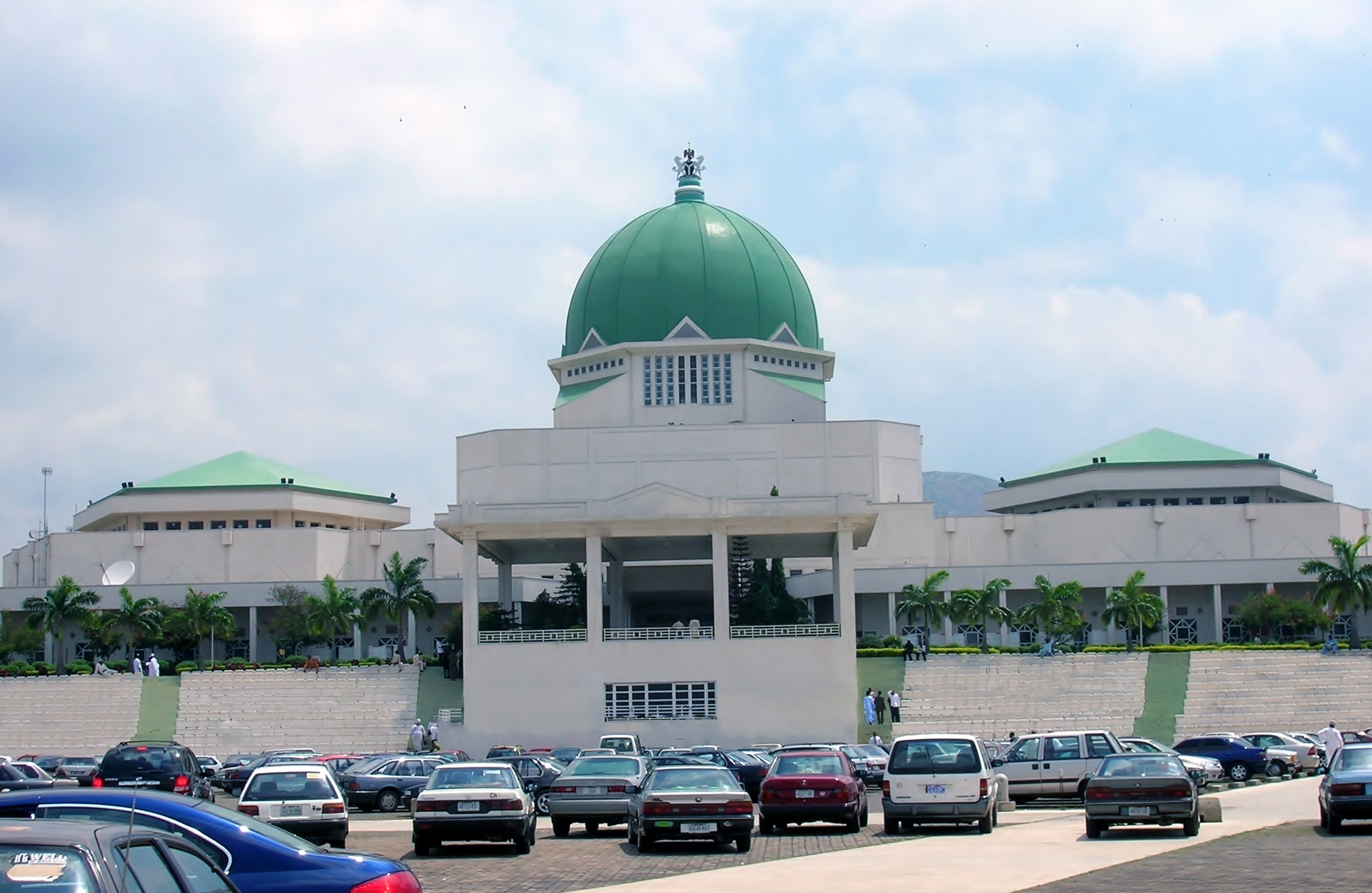
Scores of children and wives of military officers detained over an alleged coup plot yesterday staged a peaceful protest at the National Assembly, demanding a speedy trial and the release of the accused officials.
The protesters who gathered at the entrance of the National Assembly complex, moved in a slow procession while clutching placards with inscriptions such as “Don’t Kill Our Daddies,” “Detention Without Trial is Injustice,” and “Six Months of Torture: Enough Is Enough.”
Amid tears and trembling voices, the children appealed for justice and access to their detained fathers, many of whom they said they had not seen for months.
The appeal was made during a press briefing in Abuja attended by no fewer than 20 wives and several children of the detained officers, including a two-month-old baby.
The families were accompanied by human rights lawyer, Deji Adeyanju and activist Omoyele Sowore.
At the briefing, the families lamented that the officers had been held for over 160 days without trial or contact with their relatives, describing the situation as a violation of their fundamental rights.
Speaking on behalf of the families, Memuna Bashiru said the prolonged detention had thrown their households into uncertainty and emotional distress, noting that while allegations had been widely publicised, families remained in the dark about the fate of their loved ones.
The arrest of the indicted officers was first announced on October 4, 2025, by the then Director of Defense Information, Brigadier General Tukur Gusau, who disclosed that 16 officers were taken into custody for alleged breaches of military regulations and acts of indiscipline.
However, an interim investigation later suggested the existence of a clandestine network of officers, allegedly coordinated by a senior Army officer, which had begun preliminary planning for a coup.
According to the report, the alleged plot involved surveillance of key national assets, including the Presidential Villa, Armed Forces Complex, Niger Barracks in Abuja, and major international airports, with October 25, 2025, cited as the planned date for the operation.
Those reportedly in custody include Brig Gen M. A. Sadiq, Col M. A. Maaji, Lt Col S. Bappah, Lt Col A. A. Hayatu, Lt Col P. Dangnap, Lt Col M. Almakura, Maj A. J. Ibrahim, Maj M. M. Jiddah, Maj M. A. Usman, Maj D. Yusuf, Capt I. Bello, Capt A. A. Yusuf, Lt S. S. Felix, Lt Cdr D. B. Abdullahi, Sqn Ldr S. B. Adamu and Maj I. Dauda.
The alleged plot, according to findings, targeted senior government officials, including President Tinubu and Vice President Kashim Shettima.

In a statement issued yesterday, the party’s National Publicity Secretary, Mr Felix Morka, said the exercise would take place in all wards and designated centres nationwide.
He called on existing members to update their records, while encouraging new entrants to join the party through the digital platform.
“As the electronic membership registration exercise resumes in all wards and designated locations nationwide, we urge existing members to validate their membership while new members are encouraged to register and join the progressive family,” Mr Morka said.
According to him, eligibility for registration is limited to individuals aged 18 and above who possess a valid National Identification Number (NIN).
The party said the initiative is part of efforts to modernise its operations by transitioning to a digital database that would enhance record accuracy and accessibility.
Mr Morka noted that the e-registration would “digitise the party’s membership register, ensure the integrity of records, and enhance efficient access to membership data for planning and management decisions.”
He added that the move is also aimed at promoting internal democracy within the party and strengthening its commitment to democratic innovation.
The APC had previously introduced electronic registration as part of broader reforms to streamline its membership system and improve organisational efficiency.
-
 Editorial4 days ago
Domesticate FG’s Exit Benefit Scheme
-

 News4 days ago
RSU Unveils Five-Year Strategic Dev Plan …Calls For Collective Commitment To Institutional Excellence
-
 News4 days ago
DHQ Confirms Deaths Of Terrorists, Soldiers In Borno Attack
-

 News4 days ago
Tinubu Commissions Bayelsa Gas Turbine, Other Projects Today
-
Business4 days ago
Niger Delta Investment Summit Targets $5bn Inflows, 500,000 Jobs
-
Sports4 days ago
Full Draw For 2026 U-17 AFCON
-
Nation4 days ago
Rumuji Youth Leader Condemns Protest, Disowns Alleged Government Empowerment Claim
-

 Nation4 days ago
Haniel Jack Foundation Awards Five Rivers Indigenes Scholarship