
Opinion
Empty Rhetorics: Bane Of Modern Politicking

Our pre-colonial politicians made us very proud. Even in the face of political turmoil, adversity and imbroglio, their public utterances were seasoned with intellectual prowess, dexterity and aptitude. Their speeches came out clean though with some lapses in between the lines. The likes of late Dr. Nnamdi Azikiwe (The great Zik of Africa, Alvan Ikoku, Herbert Macauley, Sir Ahmadu Bello(the Sadauna of Sokoto), Chief Mbonu Ojike, etc, were astute wordsmiths of no mean repute who not only succeeded to bail Nigeria out from imperialism, but dazzled those white imperialists with spell-binding rhetoric(s). This hastened the speedy attainment of self-determination and eventual independence. This was in just about 50 years ago when Nigerian politicians were worth their onions in terms of scholastic public speaking and speech delivery. It was also a period of learning for them. Regrettably these days what we have is a hog wash of misapplied syntax and muffled phonology and incredible phonemics.
Good public speaking is a timeless asset. It is indeed crucial to achieving the ideals of democracy and a capitalist society. The ability of an individual; organisation or group (through their media representatives) in contemporary society to argue effectively in public, to think and speak persuasively, to debate logically and to form sound ethical judgments, are essential skills for becoming not just a better citizen, but a better leader of global reckoning.
Rhetoric is the art of influencing an audience through words. It dates back many centuries with its roots in the Greek and Roman periods of history. Before 500B.C.E a teacher and his student, Corax and Tisias, began rhetoric when they taught common citizens of the island of Sicily how to argue effectively for themselves in public forums. This humble work of Corax and Tisias actually inspired several people and led to the early tradition of rhetoric in ancient Greece. In 481 B.C.E., a group of Greek Philosophers emerged.
They called themselves Sophists and began to teach about thinking and speaking persuasively. Though other Greek writers challenged the technicality of these Sophists arguing that they concentrated more on technique and not on the content of a speech, the historical reality proved that they were pioneer speech makers foremost of who is Protagoras who has been widely acclaimed till date as the father of debate. This Protagorian hypothesis, birthed seasoned orators who were groomed on a variety of subjects, who also formed political, social and ethical judgments as statesmen and eloquent public speakers. Plato, one of the most famous Greek writers and Philosophers, advocated dialectic, which is a question and answer process used to examine all sides of an issue in quest or search of the truth. Aristotle also saw logic as essential to understanding any subject; hence, it was him who described systematically a type of persuasion for Western culture based on logic, emotion, and speaker’s credibility. The Roman period was not left out. In the 2nd century B.C.E., Cicero combined rhetoric and philosophy in his writings about public speaking. He so much believed like the Greek, that good speakers needed a well-rounded education.
The elections that brought in the then President Umaru Musa Yar’ Adua and his then Vice, now President Goodluck Jonathan to power was fraught with unpalatable utterances and untrained utterances by the so-called ruling party members, especially at the leadership level. If by reason of caption I am asked to tag it, I will simply say it was full of Empty Rhetorics. Some of the frontline campaigners or politicians were full of certain unguarded words against their political opponents which would not have been the case if they were trained public speakers. Note that in all circumstances, unguarded words are never for the good of the public. They are usually selfish and anachronistically evil in all intentions. Several speeches were made out of stem ambitions. At some point some of the speeches were like rhapsodies of ambiguities and a plethora of inconceivable, and high- falutin words. Such unseemly, grandiose, high-flown and snobbish words on campaign ground must not to continue this time around.
Our public speech makers should endeavour to eschew impulsive and obliterating phraseologies which will only lead to nowhere.
Our politicians should strive to out-do their pre-colonial counterparts who had a powerful literary aura and intellectual command which gave them undeniable access and victory during national and international conferences with the whites. We should be going away from the circumference of empty rhetoric and safe-landing on the pedestal of successful public speaking.
Ojogwu resides in Port Harcourt.
Felix Ojogwu



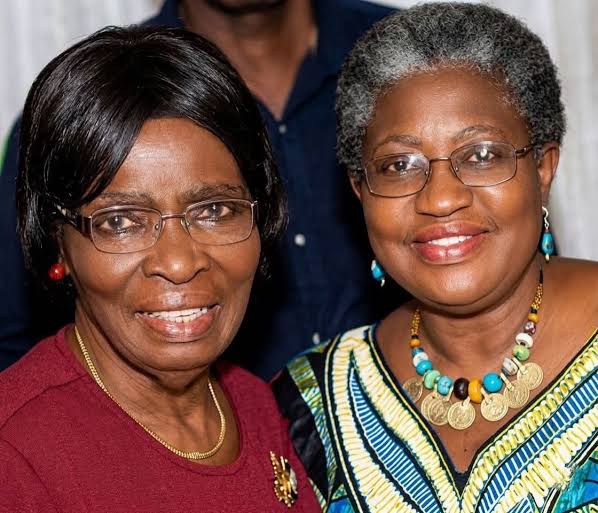
Quote “Professor Kamene Okonjo
Some women leave behind more t
Yet, to remember Professor Kam
Professor Okonjo was the belov
one of the most dramatic chapt
On December 14, 2012, the then
She leaves behind children, gr
Professor Kamene Okonjo deserv
By: Sylvia ThankGod-Amadi

Quote: An African who invokes
This is the concluding part
… Given the fact that I was
At the end of the visit by the
Back to my apartment, at abo
Under normal circumstances, yo
That all she asks is that Chie
For some reason that I do not
I believe that everyone in hu
Our ancestors have not gone fa
By: Jason Osai
The Federal Government’s approval of a N70,000 monthly transport intervention for public service workers for six months, beginning in November 2026, offers hope to employees struggling with the rising cost of living. The agreement with the Nigeria Labour Congress (NLC), reached at a conciliation meeting in Abuja on October 27, is intended to cushion transport costs and ease pressure on workers’ incomes. But for public servants in Rivers State, it raises a familiar question: will the State Government key into the intervention and ensure that its workers benefit? The agreement provides for N70,000 monthly across all levels, for six months. The Federal Government also approved peculiar allowance arrears effective from May 1, 2026, to be paid in three equal instalments beginning in November.
The parties agreed to reconvene after one month to assess implementation. Ultimately, the value of these resolutions will be measured not by announcements but by whether eligible workers receive the money. Transport costs consume a substantial share of many civil servants’ earnings before they can meet household needs. Support for commuting is therefore not a luxury or political favour; it is temporary assistance to help workers remain at their jobs without sinking further into hardship. For lower-paid employees, transport costs can turn modest salaries into a daily exercise in difficult choices and sacrifice.
The agreement also urges State and Local Governments to participate and unions to press for implementation. The federal agreement does not automatically guarantee that every State and Local Government employee will receive the support. State authorities must clarify how it will apply to their workforce, make the necessary arrangements and publish a payment timetable. Rivers State must approach the arrangement with urgency and transparency. The Government should State whether it will implement the intervention and when payments will begin. Any administrative or financial question should be addressed promptly with organised labour, not allowed to become excuses for delay.
The concern is sharpened by the earlier N35,000 monthly wage award introduced by the Federal Government in 2023 after petrol subsidy removal. It was intended as temporary relief pending a new national minimum wage. While several States negotiated and paid wage awards or related sums, implementation nationwide was uneven. Reports in 2024 indicated that many States had failed to pay the federal award, while others provided different amounts. In Rivers, labour and media reports raised concerns about implementation of the N35,000 award for State workers, amid separate announcements and arrangements concerning Local Government employees.
The wage award was meant to ease the immediate effects of subsidy removal, yet workers faced uncertainty over whether the promised relief would reach them. In February 2024, the Rivers State Government announced approval of the N35,000 award for local government workers, but subsequent reports showed that implementation across worker categories remained a concern. The lesson is clear: approval and implementation are not the same. A declaration at a meeting offers little comfort to a worker whose account does not reflect the promised payment. For workers who travel to their offices daily, the implications of delayed support are significant. Transportation expenses compete with food, rent, school fees, healthcare and other essential household needs.
As fares rise, employees may be forced to reduce spending on necessities or borrow to sustain their families. A timely transport intervention would therefore provide practical relief and demonstrate that government understands the economic pressures confronting its workforce. Its temporary nature makes prompt implementation even more important. It is fair to acknowledge that this transport intervention is a new agreement and that its administrative details may require clarification. Rivers State should not be condemned in advance for a failure that has not occurred. Nevertheless, the earlier experience gives workers legitimate grounds to seek assurances before the November commencement date. The State should avoid allowing uncertainty to persist until workers begin asking why the promised assistance has not arrived.
The NLC and unions in Rivers State should engage the State Government immediately and seek a written commitment, an implementation plan and a process for reporting missed payments. If clarification from the Federal Government is needed, the State should seek it without abandoning the goal of providing relief. Labour leaders must also keep members informed about progress and insist that any agreed arrangements are applied fairly and transparently. The Rivers State Government should treat this intervention as an opportunity to rebuild confidence. Timely support would show that workers’ welfare is more than a talking point and that the State recognises the economic realities confronting its employees.
Silence, delay or selective implementation, by contrast, would revive frustration over earlier relief measures and weaken trust between government and labour. Every month lost to administrative delay leaves workers facing the same transport burden without the intended assistance. The State should consult labour, publish arrangements and pay eligible workers on time. Rivers workers should not have to wonder whether federal relief will reach them. The Federal Government has announced the support; now the State must make its position clear. We hope the N70,000 monthly transport intervention will not follow the troubling path of the earlier wage award. Rivers State should learn from that experience and ensure that this time, relief is not merely promised but delivered.
Sylvia ThankGod-Amadi
-
Opinion5 days ago
Ancestorial Worship: My Take (1)
-
Rivers2 days ago
Don Seeks Repositioning Of Tech Education For Dev
-

 Education2 days ago
PAMO MEDICAL UNIVERSITY -Nullifies Arrest warrant on VC
-
Niger Delta2 days ago
PANDEF Seeks 50% Oil Derivation Allocation Increase
-

 Education2 days ago
IAUE MOVES TO END GHOST WORKERS SYNDROME AS 400 NEW NON-TEACHING STAFF UNDERGO MANDATORY ETHICS TRAINING
-

 News2 days ago
Fresh Ebola Scare As NCDC Records Two Cases
-
News2 days ago
Customs Partners EFCC, NDLEA, Others To Tackle Money Laundering, Terrorism Financing
-

 News5 days ago
FG Must Address Nigerians’ Concerns On Reforms -Shettima …Warns Against Misuse of AI, Social Media