
Politics
Electoral Reforms And Political Stability In Africa

In many third world democracies, electoral reforms with the hope of making elections open, free, fair and acceptable to all the key stakeholders remain on top of the public agenda. This paper discusses the topic “Electoral Reforms and Political Stability in Africa”. It uses Zambia as the main case study.
A combination of two reasons suffices as to why most African countries should undertake electoral reforms. The first is that most African States were under British colonial rule and upon independence, adopted the Westminster constitution and the political arrangements that went with it. The electoral systems they adopted were not a product of a broad-based internal debate in which citizens had a chance to make submissions on the kind of system they wanted to see in place in their country. The second reason is that where limited changes have been introduced in the electoral systems, they were hardly ever debated and, in most cases, were partial and cosmetic rather than comprehensive and substantive. The result of these two factors has been political instability in some cases.
It is increasingly becoming a trend in Africa, that, whilst elections are supposed to anchor and ensure sustainable growth in democracies, in some countries elections have become a liability. This, therefore, calls for an amendment in certain African countries, to current electoral processes in order to reflect the present realities in the region as well as to adhere to international best practice standards. A number of African countries have resolved to undertake electoral reforms. A good example is Lesotho. The country adopted the Mixed Member Proportional System (MMPs) after its controversial 1998 elections. The move to the MMP was considered appropriate as the FPTP tended to exclude significant players in Lesotho’s political life.
Broadly, stakeholders must pay particular attention to two key areas· to improve elections in the region, namely election administration and electoral system design.
As an area of reform, election administration has to do with how elections are organised and managed. Election administration is a process which is as critical as the electoral outcome itself. Certain questions need to be asked to determine specific areas of reform and how reforms should proceed. These include: how elections are organised; how they are managed; and what regulatory frameworks are in place to ensure the credibility of the electoral process and the legitimacy of its outcomes.
Another area of reform is electoral system design. Electoral systems are methods of translating votes into seats. There are two main electoral systems used in most parts of Africa; the Single Member Plurality System, or first-past-the-post (FPTP), and the proportional representation (PR) system. The FPTP system is one were electors vote for one candidate in single-member constituencies, and the candidate who wins the most votes is elected, whether or not he or she wins a majority of the votes cast. In the PR system, the commonly used variant is the party list. The party list of candidates is usually equivalent to the number of seats in the House. The winner is determined by a calculation of the total proportional seats of each party relative to the overall valid votes cast. In Southern Africa, Botswana, Malawi, Tanzania, Zambia and Zimbabwe practice the FPTP system whilst Mozambique, South Africa and Namibia have a PR system.
In order to help define the vision and objectives of the electoral reform process, Reynolds, Reilly and Ellis isolated 10 key criteria that could prove useful to guide the process, namely:
Ensuring a representative parliament and inclusive government;
Making elections accessible and meaningful;
Providing incentives for conciliation and constructive management of conflicts;
Facilitating stable, transparent and efficient government;
Holding the government accountable and responsive;
Holding the elected representatives accountable and responsive;
Encouraging “cross-cutting” political parties;
Promoting legislative opposition and oversight;
Making the election process cost-effective and sustainable; and
Taking into account international norms and standards (2005:9-14).
The above criterion is neither meant to be prescriptive nor suggestive. Granted, each African country has its own peculiar historical, socio-economic and political contexts and must decide for itself which of the above factors to include in its reform process.
The Zambian Situation before the era of multipartyism in the 1990s, the election process in the country was managed by the department of elections under the Vice President’s office.
However, some people had a negative perception of the department of elections, viewing it as a compromised entity since it was under the charge -of- the Vice President’s office. In addition, the department was thought to be involved in rigging of elections with the sole purpose of keeping the ruling party in perpetual power.
In 1996, after multi-party politics had been in existence for some time, the Constitution was amended to provide for the creation of an independent electoral commission. Article 76(2) of the Constitution of Zambia, 1996, states that “An Act of Parliament shall provide for the composition and operations of the Electoral Commission appointed by the President under this Article.” This entails that the Parliament of Zambia is empowered by law to determine the operations of the Electoral Commission. According to the Constitution of Zambia, Article 76(1), the operations of the Electoral Commission include “ … to supervise the registration of voters, to conduct Presidential and Parliamentary elections and to review the boundaries of the constituencies into which Zambia is divided for the purposes of elections to the National Assembly.” As can be noted, the Constitution does not provide for the composition, powers and operations of the Commission; these provisions are found in the Electoral Commission Act, No. 24 of 1996 and the Electoral Act.
Section thirteen of the Electoral Act of 1991 provided that in the exercise of its functions under the Constitution, the ECZ shall not be subject to the direction or control of any other person or authority. In addition, the Act provided for the appointment of commissioners and officers as well as the functions of the Commission. The appointment of commissioners was to be scrutinised by a parliamentary Select Committee and ratified by the House. However, the performance of the Electoral Commission of Zambia under Justice Bobby Bwalya during the 2001 elections came under scrutiny as a result of the use of the Nikuv register which majority of Zambians claimed had been used to rig elections. The controversial Nikuv register and general concerns raised during the 2001 – elections Prompted the then president, the late Dr Levy Nwanawasa to make a decision to improve the functions of the Electoral Commission of Zambia in order to safeguard its legitimacy by appointing the Electoral Reforms and Technical Committee (ERTC) to make recommendations for electoral reforms.
In August, 2005, the ERTC submitted its final report containing recommendations which could revolutionise the electoral system and make it relevant to the multiparty political environment in Zambia. Some of the recommendations in the ERTC report include:
1. Electoral System – Zambia should adopt a Mixed Member Proportional System, which combines the FPTP and the PR systems. Under this system, it is proposed to have a 200 Member Parliament, excluding the Speaker. Out of the 200, 40 members should be nominated by various political parties, on the basis of the proportion of votes received in the FPTP Constituency. These seats should consist of women, differently abled persons and young persons;
2.The Electoral Commission of Zambia – the independence of the ECZ should be expressly provided for in the Act. The ECZ Commissioners should be appointed by the President upon the recommendation of the Judicial Service Commission and ratified by Parliament. The ECZ should conduct continuous voter education;
3. Electoral Law – All the laws pertaining to the electoral process be harmonised, rationalised and consolidated; and
4.Government funding of Political Parties and disclosure of source of Funding – political parties which have representation in Parliament or
Local Councils should be funded and that this political party financing should be subjected to efficient Government controls.
In response to the ERTC recommendations, the Government of Zambia introduced very limited legislative changes to electoral procedures in mid-2006, including an electoral code of conduct and limits on politically-motivated donations and handouts, all contained in the Electoral Act No. 12 of 2006 which replaced the Electoral Act of 1991. Majority of the recommendations are yet to be implemented.
Parliament made recommendations to the ERTC with the aim of enhancing Parliament’s representativeness. The following were some of the recommendations: 1. The electoral system must provide for a two round ballot system or runoff, which is important in a presidential system such as exists in Zambia, whereby the top two or three candidates are subjected to a second round of votes to ensure that the eventual winner is elected by more than a 51 percent majority;
2. the Electoral Act should provide for the Electoral Commission to be representative of the major non-governmental institutions in the country. The Act should provide for the President to request different institutions such as Trade Unions, Professional Associations and Church bodies to recommend three individuals from among them to sit on the Commission. The names should then be submitted to the President who should nominate one person from among each of the three recommended by their respective institutions. The nomination of these individuals would then be ratified by Parliament. The Electoral Act should also empower the Commission to hear Electoral petitions which, upon determination, by the Commission can be heard on appeal by the High Court;
Muntanga is a member of the Zambian National Assembly
Request Muntanga


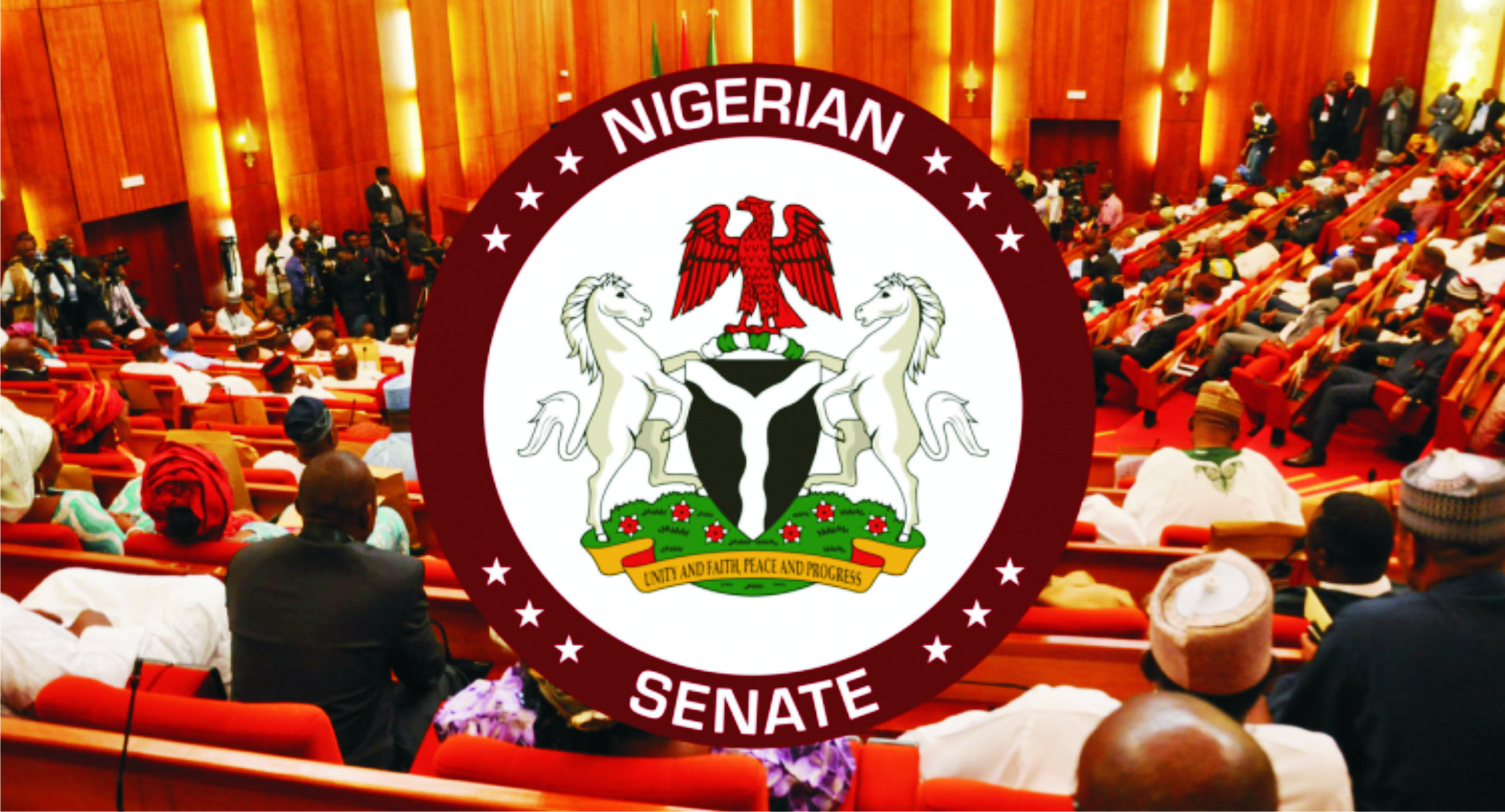
The Senate yesterday urged President Bola Tinubu to remove the Registrar-General of the Corporate Affairs Commission, Hussaini Magaji, over what lawmakers described as a persistent refusal to appear before its Committee on Finance.
The resolution followed a motion raised by Senator Orji Uzor Kalu during a session where members of the President’s economic team were present for engagement with the committee.
Tension rose at the commencement of the meeting when agency heads were introduced and senators observed the absence of the CAC Registrar-General, who had been invited to account for the commission’s activities, particularly on revenue matters.
Moving the motion, Kalu expressed anger over what he termed repeated disregard for legislative oversight, accusing the CAC boss of consistently avoiding invitations to appear before the committee.
He said, “Since I came to the Senate, this CAC man has always given excuses that he is in the Villa or going to London. He is not above the law. This man is not coming to the Senate. Look at the ministers of finance and budget. They are both here. We summoned them and they came.
“But this man thinks he’s bigger than the Senate. We’re not going to take that rubbish again. He had refused on so many occasions to honour our invitation to appear before this committee. We have issues with the reconciliation of the revenue of CAC.
“I move a motion that the man should be reported to Mr President and ask for immediate removal because we cannot continue with him. Is that what we’re doing here? He should come and give us an account of what he had done.”
The Chairman of the Senate Committee on Finance, Senator Sani Musa, corroborated the concerns, pointing to unresolved discrepancies in the reconciliation of the commission’s revenues.
He noted that despite several invitations, the registrar-general had failed to show up to address the issues raised by senators.
“The registrar-general of the Corporate Affairs Commission has refused on so many occasions to honour the calls, invitations or summons of this most important committee.
“There are only about three committees that are in the constitution of the Federal Republic of Nigeria and the Committee of Finance is one of those committees. Sections 88, and 89 have given us these powers.
“And as registrar-general, we have issues with the reconciliation of their revenue. Anytime he is invited, he will give us one reason or another, and he will send junior officers to come and talk to the Senate. That cannot be accepted,” he said.
In a further show of frustration, Senator Adams Oshiomhole proposed that the Senate escalate the matter by withholding approval of the CAC’s 2026 budget pending the registrar-general’s personal appearance before the committee.
Oshiomhole also suggested that the commission be restrained from spending its internally generated revenue without prior approval of the national assembly.
“This senate should decline to appropriate anything in the 2026 budget until we are satisfied that he has accounted for previous money and spending properly.
“And should he spend money that is not appropriated, he should be heading to Kuje prison,” Oshiomhole said.
The motion urging the President to remove the CAC Registrar-General was subsequently put to a voice vote and adopted.
The development underscores renewed assertiveness by the Senate in exercising its constitutional oversight functions, particularly over revenue-generating agencies.
The Corporate Affairs Commission, which regulates companies and business registrations in Nigeria, is a key contributor to non-oil revenue, making accountability and transparency central to its operations.

President Bola Tinubu has appealed to the leadership of the 10th Senate to amend the constitution to provide a legal framework for the establishment of State Police to tackle insecurity nationwide.
President Tinubu made the appeal during an interfaith breakfast with senators at the Presidential Villa in Abuja, yesterday.
The president said that the creation of State Police has become urgent to address Nigeria’s evolving security challenges, strengthen grassroots policing, and enhance states’ capacity to respond swiftly to threats within their jurisdictions.
He noted that a decentralised policing structure would complement existing federal security architecture and promote intelligence-led, community-focused law enforcement.
“We are facing terrorism, banditry, and insurgency. But we will never fail to make a right response to this cause. What I will ask for tonight is for you (Senators) to start thinking how best to amend the constitution to incorporate the State Police for us to secure our country, take over our forests from marauders, and free our children from fear,” he said.
The president commended the cordial relationship between the Executive and the Senate, saying that unity is needed to defeat terrorism and banditry in the country.
“It is a good thing that we are working in harmony, we are looking forward to a country that evolves, a country that takes care of its citizens and protects all.
Tinubu thanked the Senate for its unflinching support towards achieving various economic reforms of his administration, especially the fuel subsidy removal and tax reform policy.
“I have a lot of credit for bold reforms. Without your collaboration and inspiration, those reforms would not be possible. We are reformists together. What we gave up and what we stopped is monumental corruption in the subsidy system. We don’t want to participate in monumental corruption and arbitrage foreign exchange.
You don’t have to chase me for dollars; you could see what Nigeria is today. You should be proud, and I am glad you are. What we are enjoying is a stable economy, and prosperity is beckoning us. We need to work hard, and this attendance means a lot to me,” the president said.
President of the Senate, Godswill Akpabio, commended the president for hosting the leadership of the Senate to the Interfaith breaking of fast.
He commended President Tinubu for providing the visionary leadership the nation needs at this critical time, stating that the administration’s bold reforms have now brought more revenue to governors at the sub-national level for the development of critical infrastructure.
The Senate President prayed for the administration, and for the nation’s peace and prosperity.

Alhaji Mohammed Kasim, the candidate of the Peoples Democratic Party (PDP), has won the Gwagwalada Area Council chairmanship election in the Federal Capital Territory (FCT).
Philip Akpeni, the Returning Officer of the Independent National Electoral Commission (INEC), announced the results on Sunday morning.
Alhaji Kasim polled 22,165 votes to defeat Alhaji Yahaya Shehu of the All Progressives Congress (APC), who polled 17,788 votes.
Alhaji Biko Umar of the All Progressives Grand Alliance (APGA) scored 1, 687 to come in third place.
“I am the returning officer for the 2026 FCT Area Council, Gwagwalada chairmanship held on Feb. 21, 2026,” Akpeni said.
“That Mohammed Kasim of PDP, having certified the requirements of the law, is hereby declared the winner and is returned elected.”
In the Abuja Municipal Area Council (AMAC), Hon. Christopher Maikalangu, the APC candidate, was declared the winner of the chairmanship poll with 40,295 votes.
Andrew Abue, the Collation Officer for AMAC, said Hon. Maikalangu, who is the incumbent AMAC chairman, was returned elected having scored the highest number of votes cast.
The African Democratic Congress (ADC) came second with 12,109 votes, while the Peoples Democratic Party (PDP) polled 3,398 votes.
According to Abue, the total number of valid votes in the chairmanship poll was 62,861, while the total votes cast stood at 65,197.
He added that the number of registered voters in AMAC was 837,338, while the total number of accredited voters was 65,676.
Meanwhile, the Independent National Electoral Commission (INEC) has declared Mr. Joshua Ishaku of the All Progressives Congress (APC) as the winner of the Bwari Area Council Chairmanship election.
Announcing the result on Sunday in Bwari, the Returning Officer for the election, Prof. Mohammed Nurudeen, stated that Ishaku polled a total of 18,466 votes to emerge victorious in the February 21, 2026 poll.
“I am the Returning Officer for the 2026 FCT Area Council, Bwari chairmanship held on Feb. 21, 2026. That Joshua Ishaku, having satisfied the requirements of the law, is hereby declared the winner and is returned elected,” Nurudeen said.
According to the results declared, the candidate of the African Democratic Congress (ADC) secured 4,254 votes, while the Zenith Labour Party (ZLP) polled 3,515 votes to place second and third respectively.
The declaration adds to the series of results emerging from the 2026 FCT Area Council elections, as political parties assess their performance ahead of future contests.
INEC UPLOADS 2,602 OF 2,822 FCT CHAIRMANSHIP RESULTS ON IReV
The Independent National Electoral Commission (INEC) had uploaded 2,602 out of the 2,822 expected polling unit results from Saturday’s chairmanship elections in the Federal Capital Territory (FCT) as at 5:55am on Sunday, data retrieved from its Result Viewing Portal (IReV) showed.
According to The Tide source, the figure represents an overall upload rate of about 92.2 per cent across the six area councils of the territory.
A council-by-council breakdown indicates that Municipal Area Council recorded the highest number of submissions in absolute terms, with 1,309 of 1,401 polling unit results uploaded, representing 93.43 per cent.
In Gwagwalada Area Council, 330 of the expected 338 polling unit results had been uploaded, representing 97.63 per cent — the highest upload rate among the six councils.
In Bwari Area Council, INEC uploaded 463 of 485 polling unit results, translating to 95.46 per cent.
In Abaji Area Council, 129 of 135 polling unit results had been uploaded as at 5:55am, representing 95.56 per cent.
In Kwali Area Council, 164 of the expected 201 polling unit results were available on the portal, representing 81.59 per cent.
In Kuje Area Council, 207 of 262 polling unit results had been uploaded, representing 79.01 per cent — the lowest rate among the six councils as at the time of review.
-
Maritime5 days ago
Nigeria To Pilot Regional Fishing Vessels Register In Gulf Of Guinea —Oyetola
-

 Sports5 days ago
Gombe-Gara Rejects Chelle $130,000 monthly salary
-
Maritime5 days ago
Customs Declares War Against Narcotics Baron At Idiroko Border
-

 Sports5 days ago
TEAM RIVERS SET TO WIN 4×400 ” MORROW” …Wins Triple jump Silver
-

 Sports5 days ago
NPFL Drops To 91st In Global League Rankings
-
Maritime5 days ago
NIMASA,NAF Boost Unmanned Aerial Surveillance For Maritime Security
-

 Sports5 days ago
NIGER DELTA GAMES PANACEA TO YOUTH DEV”
-

 Sports5 days ago
NPFL Impose Fines On Kwara United Over Fans Misconduct