Connect with us

Opinion

Nigeria Under The General’s Command

Published

on

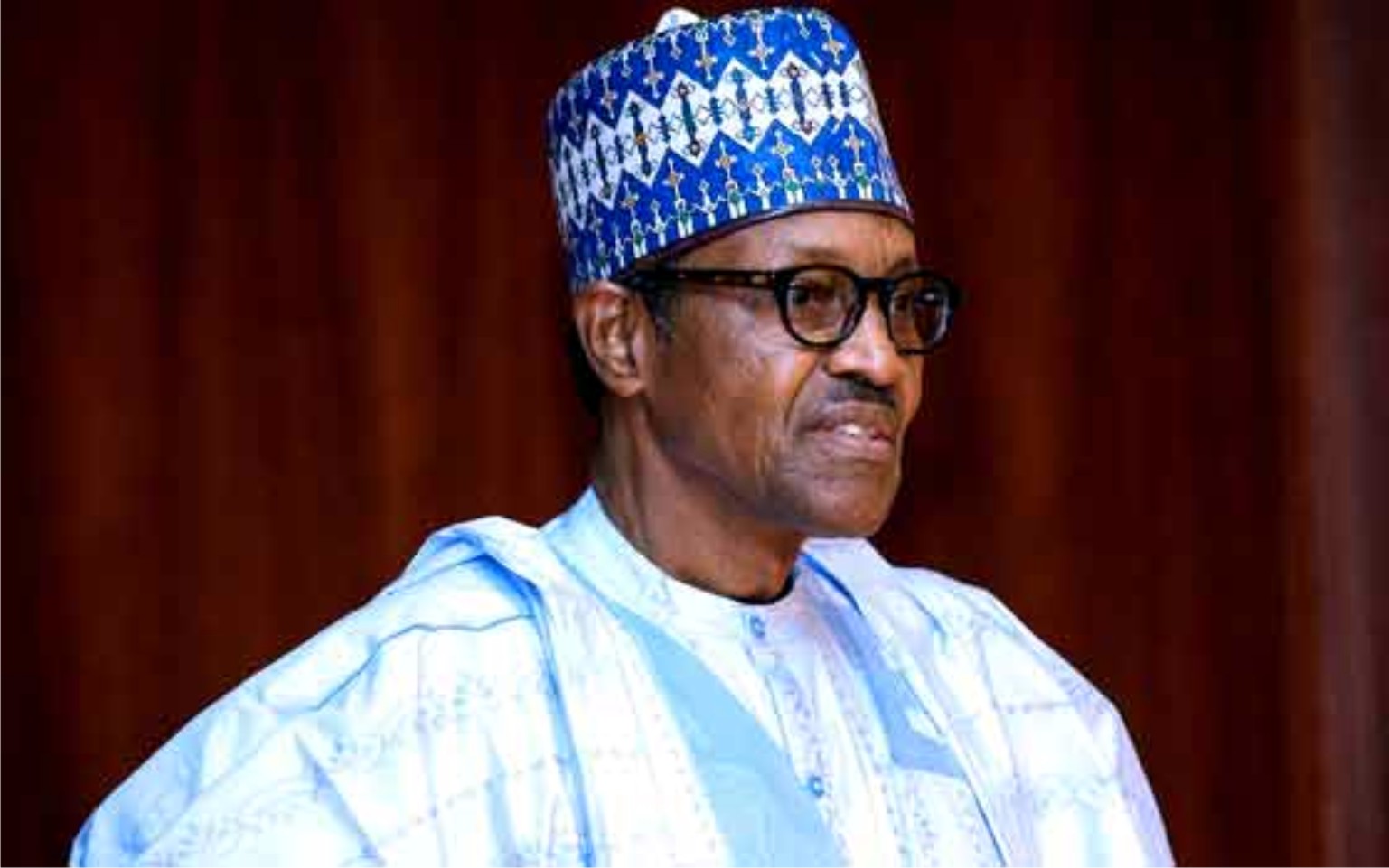
When the PUNCH Newspaper chose to address the current President of the Federal Republic of Nigeria, Muhammadu Buhari, as a Major General, the newspaper’s decision generated a variety of mixed comments and reactions across the country and abroad particularly on the social media with a significant majority backing the newspaper while a minority criticised it.
To those who saw it as a figure of speech, depicting the president’s acts as one not in tandem with democratic norms, it is a subtle way of telling the president that he runs a government which does not observe the rule of law.
Definitely, that may not have been intended as a compliment no matter the spin, but without any untoward suggestion, the decision to prefix Buhari’s name with Major General, the writer suspects, could as well have been adopted to awaken the president’s consciousness to the fact that the nation whose leadership he presides at the moment, acknowledges and recognises him in that regard.
It also expects him to live out such position in the nation’s fight against insurgency. Afterall, the Armed Forces Act and other military conventions state that “once a General is always a General even when no longer in active service.” This goes to explain that Generals are, by experience and training, men of courage. They are hardy perennials; men who have distinguished themselves over the years in the field of battle.
They are military tacticians who devise the ways and means for defeating the enemy. Great Generals fear no foe, even those battle-ready and well-equipped. Suffice it to say that Nigeria is blessed to have a retird ‘General’ presiding over its affairs at such a time as this. The country is thus inexcuseable should it fail to profer solution to this lingering menace of insurgency.
Femi Aribisala of Premìum Times, writing on “ The National And The Government Interest” , September 11, 2018, said “ It is always necessary to remember that, before Buhari became president, he was a general. “As a matter of fact, our dear president has been, for the major part of his life, more general than president.
Therefore, if the popular Nigerian axiom would say that : “once a senator, always a senator;” it becomes even more appropriate to say: “once a General, always a General. President Buhari was, is, and always shall be, a General”, he concluded.
Let us not forget that the ex-army general was propelled to Nigeria’s top job five years ago with promises of fixing pervasive insecurity, his confidence was basically premised on his military background especially having attained the highest echelon of his career as a General.
When he ran for president the fourth time in 2015, he was sold as the experienced war commander who had the magic wand to make Boko Haram terrorists disappear. The All Progressives Congress (APC) and their supporters confidently said that he would end the terrorist attacks in the North -East in three months.
Given his military track record, only very few people could doubt his ability. On this premise, hundreds of thousands of Nigerians thronged the streets of Nigeria to celebrate Muhammadu Buhari’s historic win in the presidential election of 2015, hoping the country’s problems would end soon.
His words few days in office, “Boko Haram will soon know the strength of our collective will, we shall spare no effort until we defeat terrorism,” were signets of war lords, like his title indicated, who had gone, seen and conquered. His initial exhibitions on assumption of office, such as the relocation of the country’s military command from Abuja to Maiduguri, the birthplace of Boko Haram, highlighted him as a General with a sense of direction.
With some gains recorded by the military within a short period, such as the recovery of lost territories, there were high hopes of a timely end to the menace of insurgency. Unfortunately, the honeymoon seemed shortlived, as Boko Haram regrouped, carried out vicious attacks, over ran military bases and killing security operatives.
All these are in addition to herders-farmers clashes erupting across states, leading to the killing of hundreds and displacement of thousands. Till date, a replay of the words of a renowned writer, Nosa Igiebor, reveals that the statistics of innocent Nigerians who suffer violent death, horrible injuries, and mass dislocation and displacement daily are quite numbing.
Yet, the government’s impotence, incoherence and self-inflicted confusion in dealing with the scourge appear damning. This is in spite of an earlier move by the federal government to rev up the fight against Boko Haram terrorists in the North East, in which it procured 30 aircraft and six helicopters for the Nigeria Air Force (NAF).
We were also informed that the federal government has deployed drones to the nation’s borders in the north-east to combat the Boko Haram insurgency. Unfortunately, the Air Force says it could not open fire during the Boko Haram attack in Garkida, a town in Gombi Local Government Area of Adamawa State, for fear of killing innocent people.
The lawmaker representing Gombi constituency in Adamawa State House Of Assembly, Japhet Kefas, has said, “It is true people are fleeing Garkida because they are afraid government is weak and has failed to protect the lives and property of the people. Only five soldiers were stationed in the area used by the insurgents and they killed three of the soldiers.
Like the proverbial unprofitable barber, is it that the scissors is not sharp or the barber not proficient in his job? If with all the weapons of war at our disposal, we still lack the courage to advance in a battle led by a ‘General’, is it under the control of an idle civilian that we can strike?


Sylvia ThankGod-Amadi

Continue Reading

Opinion

Curbing Youth Unemployment In Nigeria

Published

on

Quote: “A nation that fails to empower its youth risks mortgaging its future.”
Youth, generally defined as individuals between the ages of 15 and 35, represent a critical phase of human development—a transition from adolescence to adulthood marked by ambition, energy, and the pursuit of purpose. In Nigeria, this demographic constitutes a significant proportion of the population, making it one of the country’s greatest assets. However, this strength is increasingly undermined by a persistent and troubling challenge: youth unemployment.
Unemployment, the condition of being without gainful employment despite the willingness and ability to work, remains a major global concern. In Nigeria, however, it has reached alarming levels, particularly among young people. With estimates suggesting that a substantial percentage of Nigerian youth are either unemployed or underemployed, the consequences have become deeply embedded in the nation’s social and economic fabric.
The impact of youth unemployment is both widespread and severe. Economically, it leads to increased poverty levels and reduced productivity. Socially, it fuels frustration, hopelessness, and disillusionment among young people. This often manifests in rising rates of crime, cyber fraud, substance abuse, and involvement in political violence. When young people are unable to find legitimate means of livelihood, they may become vulnerable to negative influences, posing a threat not only to themselves but to society at large.
One of the primary drivers of youth unemployment in Nigeria is the inadequacy of the educational system. While many young Nigerians graduate from tertiary institutions each year, a significant number lack the practical and technical skills required in today’s job market. The disconnect between academic curricula and industry demands leaves graduates ill-prepared for employment, thereby widening the gap between education and employability.
Furthermore, Nigeria’s heavy dependence on the oil sector has contributed significantly to the unemployment crisis. Over the years, this reliance has led to the neglect of other critical sectors such as agriculture, manufacturing, and technology—sectors that have the potential to generate large-scale employment. The failure to diversify the economy has limited job opportunities and stifled innovation, leaving many young people without viable career paths.
In addition, rapid population growth continues to put immense pressure on the labor market. Each year, thousands of graduates enter the workforce, but the number of available jobs remains insufficient to absorb them. This imbalance creates intense competition for limited opportunities, leaving many qualified individuals unemployed for extended periods.
Access to finance also remains a major barrier for young Nigerians who wish to venture into entrepreneurship. Despite the creativity and entrepreneurial spirit that many youths possess, the lack of access to credit facilities, mentorship, and business support systems makes it difficult for them to establish and sustain their own enterprises. This challenge is further compounded by infrastructural deficits, such as unreliable power supply and limited access to technology.
Security challenges across various parts of the country have also worsened the situation. In some regions, economic hardship and lack of opportunities have made young people susceptible to recruitment into violent or extremist activities. This not only exacerbates insecurity but also diverts the energy of the youth away from productive engagement.
Addressing youth unemployment in Nigeria requires a comprehensive and collaborative approach. The government must take the lead by implementing policies that promote economic diversification, particularly by investing in agriculture, manufacturing, and the digital economy. These sectors hold immense potential for job creation and can absorb a large portion of the unemployed youth population.
Equally important is the reform of the educational system to emphasize skill acquisition, vocational training, and entrepreneurship. Schools and institutions must align their curricula with market needs, ensuring that graduates are equipped with relevant and practical skills. Public-private partnerships can play a vital role in facilitating internships, apprenticeships, and job placement programs.
The private sector also has a crucial role to play in driving job creation and innovation. By investing in youth-focused initiatives and supporting startups, businesses can help unlock the potential of young Nigerians. Additionally, financial institutions should develop more accessible and youth-friendly credit schemes to support small and medium-sized enterprises.
On an individual level, young people must embrace self-development, adaptability, and continuous learning. In an increasingly competitive and evolving global economy, acquiring digital skills, engaging in vocational training, and exploring entrepreneurial opportunities can significantly improve employability.
In conclusion, youth unemployment remains one of the most pressing challenges facing Nigeria today. However, it is not an insurmountable problem. With deliberate policies, strategic investments, and collective action from government, the private sector, and individuals, Nigeria can transform its youth population into a powerful engine of growth and development. By empowering young people with opportunities, skills, and resources, the nation can secure a more prosperous and stable future.
IVARA Favour Isaac is a student of Pan-African Institute of Management and Technology.
By:  Ivara Favour Isaac
Continue Reading

Opinion

Ozoro Festival: Tradition or Tyranny?

Published

on

Quote:“These images are not merely disturbing; they represent a direct assault on human dignity, bodily autonomy, and the rule of law.”
In recent days, national attention has turned to the small community of Ozoro in Delta State, where what was once described as a cultural fertility rite—the Alue-Do Festival—has become the subject of outrage, grief, and urgent national reflection. According to accounts from notable indigenes of Ozoro and the Isoko ethnic group, the festival was originally conceived as a symbolic ritual intended to bless couples struggling with conception. In theory, it was meant to celebrate life, continuity, and communal identity. However, what reportedly unfolded on March 22 bore no resemblance to any noble cultural ideal. Videos circulating widely on social media show groups of men chasing women, forcibly stripping them, and subjecting them to sexual assault in public spaces. These images are not merely disturbing; they represent a direct assault on human dignity, bodily autonomy, and the rule of law.
They compel us to confront a difficult but necessary question: when does tradition cease to be culture and become tyranny? It is encouraging that prominent voices—including the First Lady, the Minister of Women Affairs, human rights organisations, and women’s advocacy groups—have condemned these barbaric acts. The Delta State Government has since banned the Alue-Do Festival, while law enforcement authorities have reportedly made arrests. Yet beyond the immediate outrage lies a deeper and more uncomfortable conversation—one that communities across the country must confront honestly: the thin line between culture and abuse. “Culture is not static—it evolves, or at least, it should.” Culture is often described as the soul of a people, encompassing traditions, beliefs, and practices passed down through generations. Nigeria is richly endowed with diverse cultural heritage, much of which we rightly celebrate.
 However, when culture becomes a shield for harmful practices, it loses its moral authority. When actions that violate fundamental human rights are justified in the name of tradition, we must ask: whose culture is this, and at what cost? The events in Ozoro illustrate how a practice that may once have held symbolic meaning can devolve into something deeply harmful. Even if the Alue-Do Festival began as a benign fertility rite, its present manifestation—marked by violence and coercion—cannot be defended. “Culture must align with dignity, consent, and respect—anything less is not tradition, but abuse.” One of the most persistent arguments in defence of controversial practices is that they are “part of our heritage” and therefore beyond criticism. Yet harmful practices—child marriage, inhumane widowhood rites, and domestic abuse—have long been justified using this same reasoning. This argument is not only flawed; it is dangerous. No culture is above scrutiny, particularly when it endangers the rights and safety of its people.
History reminds us that many practices once considered “normal” are now widely condemned. Societies progress by questioning and reforming such practices—not by clinging to them. Nigeria is not exempt from this reality. As a nation governed by law and constitutional principles, we cannot afford to tolerate practices that undermine the rights of citizens—especially women. At the heart of the Ozoro incident lies a broader societal issue: the perception of women as objects rather than autonomous individuals. The actions of the perpetrators were not isolated—they were enabled by a mindset that sees women’s bodies as accessible, controllable, and, in some contexts, communal property. “Women are not possessions, prizes, or objects of exploitation—they are individuals with rights, agency, and dignity.” This mindset reflects a deeper systemic problem often described as “rape culture,” visible in victim-blaming narratives, the dismissal of harassment, and the silence that frequently surrounds abuse.
 For meaningful change to occur, this mindset must be confronted directly. Parents, religious institutions, government agencies, and the media all have critical roles to play in reshaping societal attitudes. Traditional institutions also wield significant influence, particularly in rural communities. With that influence comes responsibility—not only to preserve culture but to ensure that cultural practices align with contemporary standards of human rights and decency.The reported denial by the Ovie of Ozoro Kingdom of knowledge of the recent festival raises important questions about oversight and accountability. Community leaders and members alike must rise to their responsibilities. Cultural practices are sustained by collective acceptance. Silence, indifference, or complicity only perpetuate harm. While cultural reform is essential, it must be accompanied by accountability. The arrests made in connection with the incident are a step in the right direction, but they must lead to tangible outcomes. “Justice must not only be done—it must be seen to be done.”
 Allowing perpetrators of sexual violence to go unpunished sends a dangerous message—that such actions are tolerable. This fosters a culture of impunity. The law must be clear and unequivocal: sexual assault, in any form and under any guise, is a crime. It is not a cultural expression—it is a violation.It must be emphasised that calling for the abandonment of harmful cultural practices is not an attack on tradition, but a call to refine it.  Culture, at its best, is dynamic—it adapts while preserving its core values.“Tradition should uplift, not oppress.” Modernising culture does not mean erasing identity. It means ensuring that traditions remain relevant, inclusive, and respectful of human dignity. As Nigeria continues to evolve, it must decide what kind of society it aspires to be: one that hides behind tradition to justify abuse, or one that embraces progress while honouring its heritage responsibly. The outrage over the events in Ozoro is justified—but outrage alone is not enough
. It must translate into action: legal, cultural, and educational. We must state, without ambiguity, that no tradition justifies the violation of human dignity. We must hold perpetrators accountable and challenge the attitudes that enable such acts. True development is measured not only by infrastructure or economic growth, but by how a society treats its most vulnerable members. “If a cultural practice dehumanises, degrades, or endangers, it has no place in a modern society.” Where tradition fails to uphold dignity, it ceases to be culture. It becomes tyranny.
By: Calista Ezeaku
Continue Reading

Opinion

Bazia  EXCO @ One: NUJ Rivers Reawakened

Published

on

Quote: “For the first time in years, Rivers journalists are not just hearing promises—they are seeing a union that works.”
The first year in office of the Paul Bazia-led executive of the Nigeria Union of Journalists (NUJ), has offered something many had almost given up on—renewed confidence in union leadership. For a body as critical as the NUJ, whose responsibility goes beyond professional coordination to include the welfare, protection, and continuous development of journalists, expectations are always high. Unfortunately, past experiences had conditioned many members to expect less—less action, less visibility, and less impact.This is why the past twelve months stand out. Within a relatively short period, the Bazia-led administration has demonstrated a level of drive that distinguishes it from its predecessors. There is a noticeable shift from inertia to activity, from routine administration to purposeful leadership. Initiatives captured in the one-year report point to an executive that understands both the urgency of its mandate and the frustrations of its members.
Particularly commendable is the renewed attention to journalists’  welfare. For too long, welfare issues have lingered without meaningful resolution, leaving many practitioners feeling unsupported. The current leadership’s efforts—through engagement, structured support, and timely interventions—signal a welcome change in priorities. Equally important is the push toward professional development. In an era where journalism is rapidly evolving, capacity building is no longer optional. The administration’s commitment to training and skill enhancement reflects an understanding that a stronger union must be built on more competent and competitive professionals. There is also something to be said about visibility and voice. A vibrant NUJ must not only serve its members internally but also stand as a credible voice in the public space—defending press freedom, promoting ethical standards, and constructively engaging critical issues.
Encouragingly, the current executive appears more present and responsive, giving the union a renewed sense of relevance. Perhaps what resonates most, however, is the sense of movement. For many members, the difference between the present and the immediate past is not subtle—it is clear. Where there was once stagnation, there is now direction. Where there was doubt, there is growing belief. Beyond the visible strides recorded within this first year, what perhaps deserves even greater applause is the restoration of institutional confidence within the Nigeria Union of Journalists. For a long time, many members had grown disenchanted, viewing the union more as a ceremonial body than an active force capable of defending their interests and advancing their welfare. That narrative, however, is gradually changing. The Bazia-led executive has not only initiated programs but has also rekindled a sense of belonging among members.
 Meetings appear more purposeful, engagements more intentional, and decisions more reflective of collective interest. This psychological shift—subtle as it may seem—is one of the most critical achievements of the past year, because a union that its members believe in is already halfway to effectiveness. It is also important to underscore the contrast with the immediate past, not as an exercise in criticism, but as a necessary context for measuring progress. Where previous administrations struggled to translate plans into action, the current leadership has shown a greater bias for execution. Projects that once lingered in discussion stages are now seeing tangible movement, and issues that were previously deferred are receiving attention. This difference in approach—moving from prolonged deliberation to decisive action—has helped reposition the union as a more responsive and relevant institution.
While no administration is without its shortcomings, the willingness to act, even in the face of constraints, marks a significant departure from what members were accustomed to. Looking ahead, the expectations of members—and indeed the wider public—will only grow stronger. With a solid first year behind it, the Bazia-led executive now carries the burden of consistency. Members will expect deeper welfare interventions that go beyond immediate relief to more sustainable support systems. They will look for expanded training opportunities that prepare journalists for the rapidly changing media landscape. They will also expect a firmer, more courageous voice on issues affecting press freedom and professional integrity. Above all, they will demand continuity—assurance that the progress recorded so far is not a fleeting phase but the beginning of a sustained transformation.
Meeting these expectations will not be easy, but it is precisely this challenge that defines enduring leadership. That said, this moment of applause must also serve as a moment of reflection. A strong first year inevitably raises expectations. Journalists in Rivers State will now look beyond initial achievements toward consolidation. Welfare interventions must become more structured and far-reaching. Training programs must be sustained and expanded. Advocacy must become more consistent and impactful. Most importantly, the unity of the union must be strengthened, ensuring that all members feel included and carried along. Transparency will also be key. Continued open communication about finances, decisions, and challenges will deepen trust and set a standard for accountable union leadership. The task ahead is clear: to convert early momentum into lasting institutional progress.
For the Bazia-led executive, the opportunity is significant. It has, within one year, reawakened belief in what the NUJ Rivers State Council can be. The next step is to ensure that this renewed energy does not fade, but instead becomes the foundation of a stronger, more responsive, and more respected union. For the members, the message is equally clear—expect more, demand more, and support what works because in the end, a vibrant union is not built by leadership alone, but by a collective commitment to progress. And for now, under Bazia, that progress has truly begun.
By: Sylvia ThankGod-Amadi
Continue Reading

Trending