
Politics
Youth Petition Assembly Over Marginalization

Last week, the Rivers State House of Assembly resumed from its two-month recess. The House had taken a break few weeks to the State local government elections, as it afforded lawmakers the opportunity to participate in campaigns and consultations with their constituents.
On resumption, the floor was opened with the screening of a commisioner-nominee, Hon. John Bazia, who was a one time House member, and is having his second missionary journey into the State Executive Council.
Though Bazia was asked to take a bow, as a former lawmaker, he spoke to newsmen shortly after leaving the hallowed chambers, assuring that the appointment will afford him an opportunity to contribute to the state and at the same time root for good governance under the able leadership of the Governor, Chief Nyesom Wike.
After the screening of the commissioner-nominee, the House proceeded into the business of the day with the petition from Rumuadaolu Community youth presented by member representing Obio/Akpor Constituency II, Hon. Okechukwu Chinda.
Hon. Chinda argued that the petition was as a result of continuous marginalization of the youths by companies operating in their community stretching from Rumuola to some parts of the Government Reserved Area (GRA) covering Hotel Presidential, Port Harcourt.
The petition signed by Chinedu Aguma and Comrade Okekwu Achizie specifically accused an oil firm, Cylopeg Nigeria Limited of not engaging the youth from the community.
The lawmaker submitted that the attitude of the companies was capable of instigating crisis, but that the youths have remained law-abiding and would not take laws into their hands.
The petition was later sent to the House Committee on Public Petitions for further hearing.
Immediately after the youth petition was heard, the Speaker, Rt. Hon. Ikuinyi Owaji-Ibani called on lawmaker representing Port Harcourt Constituency I, Hon. Victoria Nyeche to present her bill. The bill titled is “Rivers State Thanksgiving Day Bill 2018 (HA 13)”.
According to Hon. Nyeche, the bill was presented as a private member bill to seek a special day set aside for thanking and appreciating God for His mercies on the state.
She recalled that similar days are being celebrated in the United States of America and Canada, where the citizens dedicate their countries to God and appreciate God.
Nyeche proposed 27th May as “Thanksgiving Day” as it falls on the day the state was created. She sought the support of her fellow lawmakers and the general public to ensure the bill is passed into law.
Also last week, member representing Bonny State Constituency, Hon. Blessing Pepple inaugurated sub-publicity committee ahead the planned “State Power Summit” . The summit is to review and chart a course for the state power sector and is expected to witness attendance from industry stakeholders.



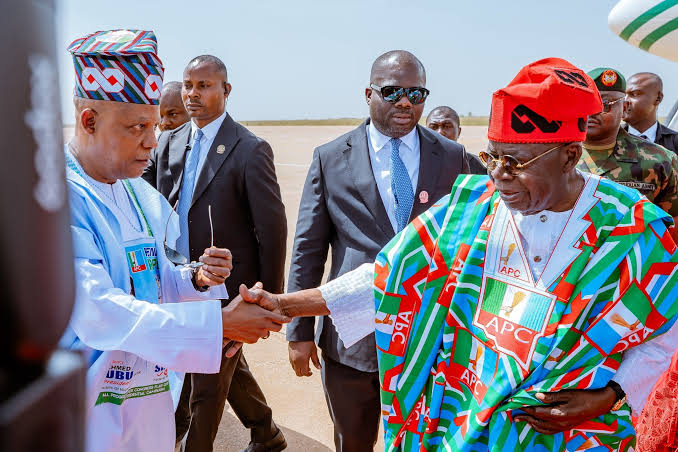
The campaign rally, held at the Kaduna Township Stadium, attracted Vice-President Kashim Shettima, APC governors, party leaders, federal and state lawmakers, political stakeholders and supporters from across the country.
The flag-off marks the beginning of the APC’s drive to secure a second presidential term for President Tinubu, with the party expected to promote its achievements, defend its economic reforms and outline its policy priorities under the proposed Renewed Hope 2.0 agenda.
Kaduna’s selection for the campaign launch underscores the strategic importance of the North-West, a region with a substantial voting population and considerable influence on presidential election outcomes.
The APC faces a significant challenge in Kaduna, where the Peoples Democratic Party’s presidential candidate, Alhaji Atiku Abubakar, defeated President Tinubu in the 2023 election. The rally therefore provides the ruling party an opportunity to strengthen its grassroots structures and regain electoral support in the state.
Addressing supporters, Vice-President Shettima appealed to Northern voters, highlighting President Tinubu’s political relationships with prominent Northern leaders, including Alhaji Abubakar, Mallam Nuhu Ribadu and the late President Muhammadu Buhari.
The Vice-President’s appeal reflects the APC’s determination to consolidate its support in the North as the party intensifies preparations for the presidential contest.
The Renewed Hope 2.0 agenda is expected to feature prominently in the campaign, providing a platform for President Tinubu to explain his administration’s economic policies and outline plans for another term.
However, the President’s record on economic reforms, rising living costs, petrol prices, employment, infrastructure and insecurity is expected to attract considerable scrutiny during the electioneering period.

-

 Education1 day ago
FCE Yola Graduates 3,555 Teachers , Seeks Upgrade to University
-

 Sports1 day ago
Nigerian Trio Target Titles At PFL Africa Finals
-

 Niger Delta1 day ago
Diri Restates Stance On Lagos-Calabar Coastal Highway
-

 Niger Delta1 day ago
C’River, NUJ Pay Tribute To Late Guardian Editor
-

 News1 day ago
NDLEA Recovers Tons Of Illicit Drug Consignments In Nine States
-

 Opinion1 day ago
Checking Voter Apathy In Nigeria’s Electoral Process
-

 Politics1 day ago
2027: DICKSON’S EX-ALLY VOWS TO WORK AGAINST NDC INTEREST IN BAYELSA
-

 Politics1 day ago
2027: GROUP PLEDGES 40,000 SUPPORTERS FOR COALITION CANDIDATES IN RIVERS