
News
RVHA Holds Hearing On PH Poly, Today …TUC Drums Support For RSG

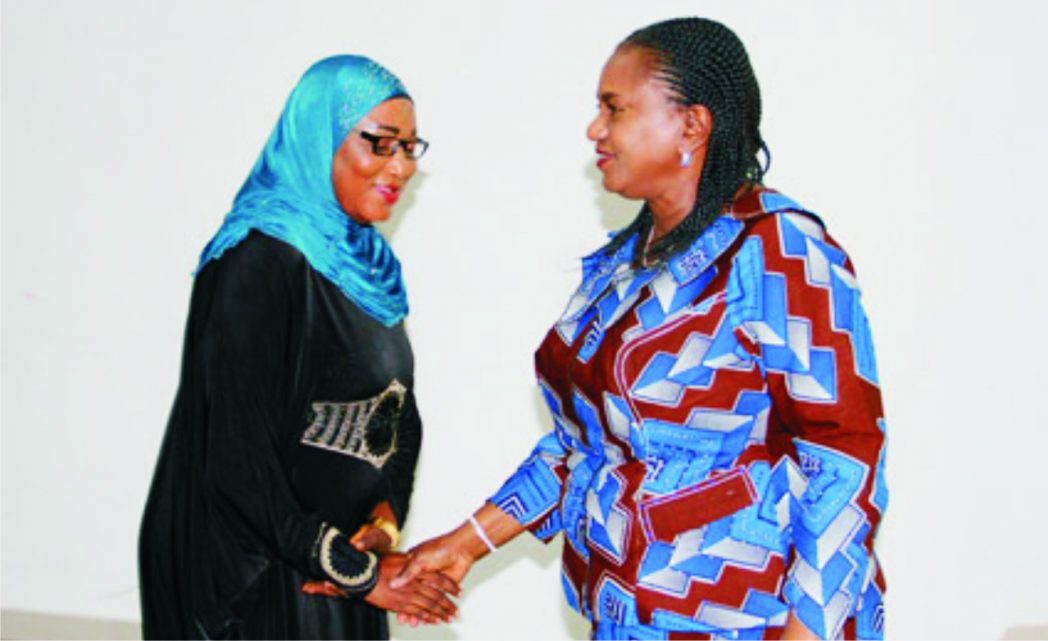
A public hearing on government’s efforts to convert the Rivers State College of Arts and Science (RivCAS) to Port Harcourt Polytechnic, holds today at the State Assembly’s Main auditorium.
The Port Harcourt Polytechnic Bill, 2016, is a bill for a law for the conversion of RivCAS to Port Harcourt Polytechnic, and to transfer the staff and properties of the former and other matters incidental thereto to the Polytechnic.
Leader of the State House of Assembly, who is also Chairman of the House Committee on Education, Hon. Martins Chike-Amaewhule at the weekend invited stakeholders to the public hearing to ensure a qualitative debate and positive outcome.
In a statement in Port Harcourt, the Education Committee advised interested stakeholders to obtain copies and submit memoranda to Room 012 (2nd Floor), Rivers State House of Assembly Complex, Moscow Road, Port Harcourt on or before 10 am, today.
Meanwhile, the RIVCAS Students Union Government and the leadership of National Union of Rivers State Students (NURSS) have in separate reactions, hailed the efforts of the state government to expand the frontiers of higher education in the state.
Both bodies commended the Governor Nyesom Wike-led Rivers State Government for the discretion, and urged it to pursue the scheme to its logical and positive conclusion.
The Tide gathered that the conversion of the RIVCAS to a Polytechnic enjoys tremendous support among Rivers people who believe that it would help reduce the number of out-of-school youth in the state, after every admission season.
Also, the Rivers State chapter of the Trade Union Congress (TUC) has supported the decision of the Rivers State Government to convert the state College of Arts and Science (RIVCAS) into a polytechnic for the purpose of enhancing the state’s capacity to produce technical manpower to support economic and industrial development.
In a statement in Port Harcourt, at the weekend, the state TUC Chairman, Comrade Hyginus Chika Onuegbu, said “it is important to state that there is nothing absolutely wrong with the proposed the conversion of the Rivers State College of Arts and Science to Port Harcourt Polytechnic or even a full-fledged university.
“Consequently, we support the move by the Rivers State Government and the Rivers State House of Assembly to do so”, Onuegbu said.
His reasons for the support include the fact that, “Rivers State needs more institutions of higher learning, and at this very difficult time, it is far cheaper to convert an existing institution than build a brand new one.
“Moreover both the Rivers State University of Science and Technology (RSUST) and Ignatius Ajuru University of Education (IAUA) were similarly converted to their current status,” the TUC chairman noted.
The TUC argued that “from interactions with lecturers in the Rivers State College of Arts and Science,” it was revealed that “the institution has been operating as a polytechnic,” adding that it was “only natural that the government formalises that status.
“We, therefore, support the conversion of the Rivers State College of Arts and Science to Port Harcourt Polytechnic,” he stressed.
The TUC chairman however, urged the Rivers State Government to, upon the conversion, expeditiously ensure that all its programmes are duly accredited by the National Board for Technical Education (NBTE) as a full-fledged polytechnic.
It also called on the State Government to put machinery in motion to attract the establishment of private universities and polytechnics in Rivers State, in line with what obtains in Ogun, Lagos, among others, so as to bridge the huge gap in the number of tertiary educational institutions to meet increasing demands of the rising population of seekers of higher education in Rivers State.



The Federal Government has commenced another phase of mass trials for hundreds of suspected terrorists facing terrorism-related charges in Abuja.
This is as the Attorney-General of the Federation and Minister of Justice, Lateef Fagbemi (SAN), declared that the administration would not treat terrorism with levity.
The prosecution is being led by Fagbemi, while the Director-General of the Legal Aid Council, Aliyu Abubakar, heads the defence team.
The trials, taking place simultaneously in several courtrooms, are expected to last one week.
Some of the judges handling the cases include Justices Binta Nyako, Emeka Nwite, Musa Liman, James Omotosho, Obiora Egwuatu and Ekerete Akpan.
At least 58 suspected terrorists were listed for trial before Justice Nwite on Monday.
Among them are Abba Bukar, Abba Manye, Gujja Mala Bukar, Brem Gonimi, Isa Mohammed, Lawali Dashiri Danke, Yau Tukur (Mai-Auduga), and Bello Liman, also known as Bell Doctor.
The latest proceedings come barely two months after about 500 suspected terrorists were tried between April 7 and April 10 in Abuja.
Speaking with journalists at the commencement of the trials on Monday, Fagbemi said the proceedings demonstrated the Federal Government’s commitment to combating terrorism and ensuring the security of Nigerians.
“The message is clear, direct and straightforward. It is that the present administration is not taking the issue of terrorism with levity. And that is why you see ongoing trials,” he said.
According to him, the current exercise marked the fourth phase of terrorism trials under the administration.
“Since the inception of this administration, this is about the fourth phase that we are undertaking. So the message is that let everybody know that terrorism in whatever form or shape will not be tolerated.
“We will fight with every inch of our blood to ensure that we make Nigeria a safe haven for everybody,” the AGF said.
Fagbemi disclosed that more than 600 suspects would be tried during the current phase.
Providing a breakdown of the figures, he said, “For this phase, the ones we have today, we have about 490. Tomorrow we will have 84. But this 84 does not include the 102 we brought forward from the last phase.
“So in total, we have 600 plus to contend with for this phase, and we have been assured by the honourable judges that they will do their utmost to ensure that they clear this number for this phase.”
The mass trial forms part of the Federal Government’s efforts to prosecute individuals accused of terrorism, insurgency and related offences as part of a broader strategy to tackle insecurity across the country.
Meanwhile, two suspects were convicted and sentenced on Monday after pleading guilty to terrorism-related offences.
Justice Binta Nyako sentenced a 55-year-old farmer from Katara village in Borno State, Ali Mustapha, to 15 years imprisonment for concealing information about the activities of the Boko Haram sect.
The judge convicted him after he pleaded guilty to the charge.
Nyako, however, noted his claim that there were no government officials or security agencies in his remote community to whom he could have reported the activities.
She ordered that the 15-year jail term should take effect from 2013, when he was arrested and detained.
In a separate case, the judge sentenced Isa Isiaka, a father of 11 children and husband of two wives, to 20 years imprisonment for failing to disclose information about Boko Haram activities to the authorities.
Isiaka was convicted after admitting guilt to terrorism charges filed against him by the Attorney-General of the Federation.
Justice Nyako rejected his plea for leniency and sentenced him to 20 years imprisonment without an option of fine.

A Professor of Chemical Engineering, at the Rivers State University Nkpolu/ Oroworukwu, Port Harcourt, has outlined scientific approaches that can help to solve Nigeria’s refinery problems and improve oil sector efficiency.
Prof. Kenneth Kekpugile Dagde, a professor of modeling and simulation of chemical processes at RSU, outlined his ideas during the school’s 133rd inaugural lecture last Wednesday.
The lecture, titled “Milking the cash cow: harnessing mathematical modelling and simulation for sustainable refinery operations in Nigeria,” was held at the university auditorium.
Dagde argued that mathematical modeling and simulation are now essential, not optional, for modern refineries and said that they are central to keeping operations stable and sustainable over time.
Despite Nigeria’s large oil and gas reserves, he noted the country still lacks capacity to refine enough fuel for local use. That gap forces heavy dependence on imported petroleum products.
According to him, refineries only become a real “cash cow” when managed through proper modeling, simulation, control, and optimization. Validated models, he said, help with design, day to day operation, troubleshooting, and overall optimization.
He stressed that the future of Nigeria’s refineries must be data-driven and digitally enabled. Process engineering backed by real data is what will make operations more reliable and efficient.
Dagde also listed the key problems hurting local refineries which include government interference, lack of autonomy, poor maintenance culture, politicians choosing turnaround maintenance contractors, and chronic feedstock shortages.
He explained that crude is exported, leaving refineries without feed. Without feed, equipment sits idle, becomes redundant, and starts failing and suggests that all refineries, public or private, should own oil blocks to secure steady crude supply.
He further recommended that Local refineries should build modeling, simulation, and advanced control into both design and operations. He also called for stronger collaboration between universities and industry, plus better training for engineers.
In his remarks, the Vice Chancellor, Prof. Isaac Zeb-Obipi, who was represented by the Deputy Vice Chancellor Administration, Prof. Blessing Jaja said the the lecture was thought-provoking.
He said that Nigeria had enough crude, but expressed disappointment that daily demand was not met.

The National Drug Law Enforcement Agency (NDLEA) says it realised N6.15bn from the auction of four properties seized from convicted drug traffickers and forfeited to the Federal Government through court orders.
The assets, including a six-floor hotel in Victoria Island, Lagos, were sold through a competitive bidding process conducted at the agency’s headquarters in Abuja.
Announcing the results of the auction, the Head of Asset Recovery and Management Unit of the Federal Ministry of Justice, Tamarantare Ali-Bozi, disclosed that four of the eight listed assets attracted successful bids above their reserved prices, while bids for the remaining four properties failed to meet the required valuation.
NDLEA, in a statement on Monday by the NDLEA spokesman, Femi Babafemi, stated that Ali-Bozi said Tope Ojo and Tunde Olonishakin Estate Firm emerged the successful bidder for the six-floor hotel in Victoria Island with an offer of N5.9bn.
He added that FSS Limited won a property located in Lekki Phase 1, Lagos, with a bid of N219.5m, while A-BNB Global Innovations Limited secured a block of flats in Ejigbo, Lagos, for N104m.
According to him, Fazeen Global Link Limited emerged as the winner of a property located in Akure, Ondo State, with a bid of N29.36m.
The NDLEA Chairman and Chief Executive Officer, Brig Gen Mohamed Buba Marwa (retd.), said the disposal of recovered assets was aimed at strengthening public confidence in the rule of law.
Represented by the agency’s Secretary, Shadrach Haruna, Marwa said, “Public auctions such as this serve a broader national purpose. Beyond generating revenue for the government, they reinforce public confidence in the rule of law, demonstrate accountability in the management of recovered assets, and send a clear message that criminal proceeds will not be allowed to remain in the hands of those who seek to profit from the misery and destruction caused by illicit drugs.”
He assured that the agency would continue to strengthen Nigeria’s asset recovery framework and ensure transparency in the disposal of recovered assets.
“The agency remains steadfast in its determination to strengthen Nigeria’s asset recovery framework and to ensure that recovered assets are managed and disposed of in a manner that is transparent, lawful and beneficial to the public interest,” Marwa said.
He added, “We shall continue to pursue drug traffickers, dismantle criminal networks, recover the proceeds of crime and uphold the rule of law without fear or favour.”
On the integrity of the auction process, the NDLEA boss said representatives of law enforcement agencies, regulatory bodies, civil society groups, the media, bidders and members of the public were invited to witness the exercise.
“To further enhance transparency and public confidence in the process, representatives of sister law enforcement and regulatory agencies, civil society organisations, the media, prospective bidders and members of the public have been invited to witness the bid-opening exercise,” he said.
Marwa explained that bids received for each asset were evaluated against approved reserve prices, adding that successful bidders emerged through an open and transparent process.
He further noted that the auction complied with the provisions of the Proceeds of Crime (Recovery and Management) Act, 2022, the Public Procurement Act, 2007, and other relevant regulations.
According to him, all assets offered for sale were professionally valued by the Federal Ministry of Housing and Urban Development, while extensive due diligence and security screening were conducted on auctioneers pre-qualified by the Bureau of Public Procurement.
“Furthermore, the agency undertook extensive due diligence and security screening of all auctioneers pre-qualified by the Bureau of Public Procurement.
“We are satisfied that none of the auctioneers engaged in this process has any known involvement in drug-related offences or any other criminal activity capable of compromising the objectives of the Proceeds of Crime (Recovery and Management) Act or the integrity of this exercise,” Marwa said.
-
Nation5 days ago
Asarama Kingdom Condemns Gruesome Murder of A Commercial Vehicle Driver
-
Rivers5 days ago
Monarch Raises Alarm Over Defamatory Politics … Urges For Unity In Ogoni
-
News5 days ago
Nigeria, Ethiopia Seal Agreement To Transfer 100 Nigerian Prisoners
-
News5 days ago
Nigeria No Longer Safe For Drug Cartels – Marwa
-
News5 days ago
Xenophobia: 268 Nigerian Returnees Arrive In Lagos From S’Africa
-

 News5 days ago
FG Declares Today Public Holiday To Mark Democracy Day
-
Women5 days ago
Nigerian Women And Dividends Of Democracy
-
Business5 days ago
FG Approves $1 Bn AFCFTA Credit Facility For Nigerian Exporters