Connect with us

Editorial

Nigeria At 100: Congrats, But…

Published

on

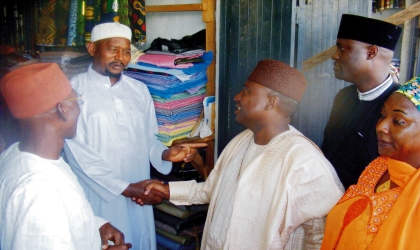
Senator representing Adamawa North Senatorial District of Adamawa State, Senator Bindow Jibrilla (3rd-right), with some traders, during his  visit to Mubi Central Market to console the traders over recent robbery attack tn the market last Thursday. Photo: NAN

Senator representing Adamawa North Senatorial District of Adamawa State, Senator Bindow Jibrilla (3rd-right), with some traders, during his visit to Mubi Central Market to console the traders over recent robbery attack tn the market last Thursday. Photo: NAN

The country with the highest number of black
people, Nigeria is 100 years old this month.
It is believed that one out of every four black persons across the globe is a Nigerian. This was made possible by the amalgamation of the Northern and Southern Protectorates of Nigeria by Lord Fredrick Luggard in 1914.
While the debate over the propriety of the amalgamation may not end too soon, some things have become facts that no one can change. It is a fact that Nigeria is about 54 years old as an independent nation and 100 years as an administrative entity. It is also a fact that Nigeria has survived as a country all these years.
In spite of all the odds, past and present, we feel gratified that Nigeria is able to make it to the legendary age of 100. We are also pleased to join millions and millions of well-meaning persons across the globe to congratulate Nigeria and Nigerians on the feat and to point them to a greater future. To say the least, Nigeria has come too far to break up.
The Tide is surprised that in a country where people celebrate birthdays every year, in some cases, at such great cost, some Nigerians have allowed themselves to argue over the need to celebrate or mark this wonderful epoch in the history of the country and its people.
Knowing the importance of the date and the things the country have gone through, it is only natural that every Nigerian in the land of the living would give thanks to God and pray for a better future. The only progress, we dare say, is for the country to remain united, peaceful and God-fearing.
The other alternative is to break-up into tiny inconsequential countries that cannot influence anything. Such countries will suffer weak currencies, weak defense and even weaker economies. They will become more fragmented along ethnic lines and become the laughing stock of the civilised world. This is what only the devil would wish for Nigeria.
Those who preferred to look at the prediction of a possible disintegration of Nigeria in a positive light have come to the conclusion that the prediction was not done in bad faith, but to warn Nigeria of a possible danger. Without a doubt, given the population and quality of the average Nigerian, a better half of Africa will be in trouble if Nigeria boils.
Those who beat the drums of disunity fail to look at the bigger picture. The people of the country have been so delicately and intricately connected in marriage, business and religion in ways that would make any division merely artificial and of no value. New maps can be drawn, but the people cannot be forced apart.
No one can deny the fact that in the past 100 years all have not been well for Nigeria. There have been coups and counter coups; there have been civil wars and reign of corruption; there have been religious extremities and economic failures; there have been military misadventures and political suicides, but the country has stood strong.
Through the period, the country recorded some changes. Owing to the judgment over the Bakassi Peninsular, Nigeria lost some land areas at the Cross-River State area to the Camerouns and gained some communities in the northern part of the country. The country also moved from being three regions to 36 states and the Federal Capital Territory.
Within the period, the dominant qualities of the Nigerian were discovered. In addition to being mostly patriotic, the Nigerian is greatly resilient, resourceful but painfully gullible. The ordinary people from the ethnic and religious divides get along well, but their politicians constantly engage in imaginary wars.
Some of the conflicts have been caused by the deliberate disregard for the founding dreams. Nigeria is supposed to be a federation that is being run as a unitary system. The concentration of power and wealth at the centre attracted the ants, the vultures and the hyenas.
Thankfully, the nation has decided to have a national dialogue for the constituent ethnic groups. If all the dialogue would achieve is the recognition of each other’s interest, the implementation of true federalism and the enthronement of the rule of law, Nigeria will make a quantum leap towards her destiny. Indeed, the number of states must drop as they were created to draw from the national treasury and not to add.
So far, the reservations over fiscal federalism, state police, autonomy of the constituent units among others have not helped any group. Although Nigeria sees a ready example to follow in the United States of America, a selfless approach would have raised our own brand of democracy that would make the US envious.
It is not an accident that Nigeria is talking about a national dialogue at a time the country is 100. It is not an accident that a person from the minority south would be President at the time. It is no accident that the unity of the country would be under pressure at the time. It only requires that Nigeria takes advantage of this time to plot the path to a glorious future for the country.

Continue Reading

Editorial

Fubara: Celebrating A Leader At 51

Published

on

Today is an exceptional day for Rivers State as it marks the birthday of His Excellency, Sir Siminalayi Joseph Fubara, the governor whose leadership has become synonymous with discipline, vision, and transformative development. Born on January 28, 1975, in Opobo Town, Fubara hails from the Opobo/Nkoro Local Government Area, and his journey from a dedicated civil servant to the helm of state leadership is a story worth emblazoning.
Governor Fubara was born into the loving family of Mr and Mrs Siminayi, the second of five children and the first son of the late Joseph and Love Fubara. His father, a former soldier trained overseas, instilled in him a deep sense of discipline and fortitude, while his mother, a civil servant, impressed upon him the virtues of diligence and perseverance. These early lessons in character laid the foundation for a life devoted to service.
Education was central to Fubara’s development. He attended Opobo Primary School before moving to Comprehensive Secondary School, Opobo. His passion for numbers and structure naturally led him to study Accountancy at the then Rivers State University of Science and Technology, now Rivers State University. He further advanced his knowledge with an MBA and MSc from the University of Port Harcourt in 2013 and 2016, respectively. This commitment to personal growth and excellence foreshadowed the accomplishments that would define his career.
Sim, as he is fondly called, began his professional journey in 2003 as a principal accountant at the Rivers State Senior Secondary Schools Board. Through steadfast dedication, he rose to Director of Finance and Accounts at the Government House in 2015 and eventually became Permanent Secretary in March 2020. His expertise in financial administration earned him the role of Accountant General of Rivers State on December 23, 2020, consolidating a reputation for meticulousness and integrity.
Beyond civil service, Fubara’s professional distinctions are numerous. He is a Fellow of the Nigerian Institute of Management and the Association of National Accountants of Nigeria, as well as a Member of the Chartered Institute of Forensic and Investigative Auditors. These credentials reflect both his technical proficiency and his capacity for leadership in complex financial systems.
Fubara is also a man of faith and community. He is a Knight of St. Christopher (KSC) of the Church of Nigeria Anglican Communion and holds the traditional title of Amaopusenibo of Opobo Kingdom. Married to Valerie Fubara, with whom he shares three children, his personal life reflects the same values of commitment and integrity that guide his public service.
As a leader, Fubara embodies humility, patience, and empathy. Representing a new generation of leadership, he has championed the slogan “Consolidating and Continuity of the New Rivers Vision,” seeking to build on the achievements of his predecessor, Chief Nyesom Wike. His administration has prioritised infrastructure, healthcare, education, security, agriculture, and investment, demonstrating a holistic vision for the state.
One of his notable projects is the Port Harcourt Ring Road, a strategic N200bn contract with Julius Berger spanning six local government areas. This initiative is set to alleviate traffic congestion and stimulate commerce, reflecting the governor’s commitment to transformative, citizen-focused infrastructure development.
Fubara’s administration has also prioritised public welfare. Roads, schools, health facilities, and human capital development projects have been completed across multiple local governments. Security agencies have been engaged to maintain peace, while timely payment of salaries, pensions, and gratuities has bolstered confidence in the state’s governance. Initiatives such as Christmas bonuses of N100,000 to civil servants and the provision of high-end buses for intrastate transport demonstrate a tangible commitment to citizens’ daily welfare.
The governor’s impact extends far beyond the completion of roads or buildings. He embodies a distinctive form of leadership rarely seen in Nigeria: a skilled technocrat who has assumed the mantle of governor, prioritising careful planning, structured governance, and respect for institutional frameworks. In a political arena often defined by theatrics and loud pronouncements, his measured approach, methodical decision-making, and commitment to due process mark him as a model of principled leadership.
At 51, Fubara stands at a stage in life that demands equilibrium. Steering a state as intricate as Rivers requires firmness without inflexibility, allegiance without unquestioning loyalty, and patience combined with timely action. His composed and disciplined style has inspired confidence among citizens who crave stability and meaningful governance over spectacle and empty promises.
Birthdays are also moments to ponder what lies ahead. Rivers people rightly anticipate that the next chapter of Fubara’s tenure will transform restraint into concrete achievements, calm deliberation into lasting reforms, and strategic planning into tangible improvements. True leadership is tested not merely by intention but by results—reliable infrastructure, enduring employment opportunities, and institutions that operate efficiently.
This occasion also provides a moment to foster unity. Effective leadership does not demand uniformity but rather the ability to harmonise diverse interests for collective progress. In a state as politically and socially complex as Rivers, a leader must possess the confidence to bridge divides without weakening authority or vision. Fubara’s measured character equips him to serve as that unifying presence.
His journey from accountant to the highest office in the state underscores the value of competence over spectacle. Throughout his career, he has prioritised legality over coercion, systematic governance over populist gestures, and long-term strategies over immediate gains. These attributes, uncommon in public service, remind us that steadfast principles can endure scrutiny and overcome challenges.
Today, as he celebrates another year, it is appropriate to recognise him as a trailblazer—a leader whose promises are matched by tangible outcomes despite resource constraints and political pressures. His accomplishments have earned admiration, even among sceptics, and set a benchmark for others aspiring to lead with integrity.
In honouring Fubara, we celebrate more than the passing of 51 years. We pay tribute to a statesman who has blended discipline, foresight, and humility to serve his people with distinction. May the lessons of these years deepen his wisdom, fortify his resolve, and guide him in shaping a lasting legacy of progress for Rivers State.
Happy birthday, Governor Fubara. Rivers people look on with anticipation, respect, and optimism for a future shaped by unwavering leadership and transformative action.
Continue Reading

Editorial

Beyond Accessing Bonny By Road

Published

on

The near completion of the Bonny-Bodo Road by the Federal Government is a remarkable and historic achievement that deserves national commendation. For decades, Bonny Island remained physically isolated from the rest of the state, with residents and businesses forced to rely solely on waterways. Today, that narrative has changed. The road is already in active use, and its immediate effect is evident in the drastic reduction in transportation costs, with local transport fares reported to have dropped by more than 40 per cent in some corridors.
As of December 2025, the 37.9-kilometre Bonny-Bodo Road, comprising 11 strategically engineered bridges, was temporarily opened for daily use between 7 am and 7 pm. The transformational and groundbreaking step has eased transit and marked the first-ever land connection between Bonny Island and other parts of the state. According to transport operators, average travel time has reduced from over two hours by water to less than one hour by road, a change that has immediate economic and social benefits for commuters and businesses alike.
It must be noted that the project spanned many years, surviving policy shifts, funding challenges, and technical hurdles. Its near completion is therefore a reflection of political will. Credit must be given to the Federal Government and particularly to the Rivers State Governor, Sir Siminalayi Fubara, under whose tenure the project has reached fruition. This commendable and steadfast leadership has ensured that a long-standing promise to the people is finally being honoured.
The Bonny-Bodo Road stands as a success story of a tripartite agreement involving the Federal Government, Nigeria LNG Limited as the primary funder, and Julius Berger Nigeria Plc as the constructor. The collaborative and strategic partnership demonstrates how public and private sector synergy can deliver complex infrastructure in difficult terrain. NLNG alone reportedly contributed over 60 per cent of the project funding, underscoring the value of corporate responsibility in national development.
For business owners, the newly constructed road offers a vital turning point. Many traders, investors, and service providers had avoided Bonny because of the risks associated with water travel, including accidents and piracy. With this new land route, access is now safer and more predictable. This liberating and empowering development is expected to stimulate commerce, increase market activity, and attract fresh investments into the area to strengthen the local economy.
The Petroleum Products Retail Outlet Owners Association of Nigeria has stated that the commissioning of the Bonny-Bodo Road will improve national energy logistics and likely lead to a reduction in the price of cooking gas. Nigeria currently spends billions of naira annually on inland water transport inefficiencies. The economically and logistically significant road could reduce distribution costs by up to 20 per cent, a benefit that would be felt directly by households across the country.
The road is expected to be fully commissioned in the first quarter of 2026, with 35 kilometres already reported as fully motorable. This progress reflects assuring and measurable commitment to timely delivery. When completed, the road will support heavy-duty vehicles, enhance supply chain reliability, and further cement Bonny’s role as a critical industrial and maritime hub in the Niger Delta.
This achievement also builds on earlier successes. Opobo has already been connected to land through deliberate government intervention. These efforts show that even the most challenging terrains can be conquered with planning and resolve. Such intentional and visionary actions are redefining infrastructure advancement in riverine areas that were once considered unreachable.
The Trans-Kalabari Road is similarly expected to be completed within the year, opening up vital aisles in the Kalabari axis to road transportation. Once operational, it is projected to serve over 500,000 residents directly. The expansive and inclusive approach to development ensures that growth is not concentrated in urban centres alone but spread across communities.
These projects represent an expanding legacy. By 2027, there will be numerous tangible gains to credit the current administration in Rivers State. Improved mobility, increased trade, and enhanced social cohesion are just a few. This forward-looking and progressive trajectory positions the state as a model for infrastructure-led development in Nigeria.
However, with increased road access comes new security considerations. While sea piracy on waterways may reduce, land-based security challenges could emerge. The government must anticipate and address these risks through effective policing and surveillance. A proactive and balanced security framework will be essential to protect lives and investments along the new highways.
There must also be firm determination to ensure that the road does not come with excessive encumbrances. Issues such as illegal tolling, unregulated settlements, and environmental degradation must be prevented. This disciplined and responsible management will preserve the long-term value of the infrastructure.
Beyond the communities already connected, the state government should extend its vision to other difficult terrains. Oceanic areas such as Kula, Abisse, Idama, Ke, and Bille, among others, should be prioritised. Connecting these communities by road would be equitable and transformative, ensuring that no part of the state is left behind in the march towards development.
If every part of Rivers is linked to land transportation, the blue economy will experience a major boost. Fisheries, tourism, marine services, and coastal trade could collectively contribute billions of naira annually to the state’s economy. This sustainable and wealth-generating potential makes further road expansion not just desirable but necessary.
Continue Reading

Editorial

Time For GL 17 In Rivers 

Published

on

Rivers State is indeed fortunate to be led by Governor Siminalayi Fubara, whose remarkable and progressive disposition towards workers has distinguished him from his predecessors since the return to democracy in 1999. His approach to governance reflects empathy, balance and a genuine understanding of the civil service as the engine room of development.
Before his assumption of office, civil servants endured eight excruciating years under the immediate past administration of Chief Nyesom Wike, marked by painful stagnation and systematic neglect. Promotions were withheld, gratuities ignored, annual increments denied and employment processes shrouded in opacity, leaving workers demoralised and disillusioned.
Governor Fubara’s emergence, however, brought a decisive and restorative shift. Long overdue promotions were approved to cover lost years, gratuities were paid and continue to be honoured, while the once suspended Christmas bonus was revived after sixteen years, rekindling hope among public servants.
Even more commendable was the transparent employment process, particularly in the education sector, which injected fresh credibility and renewed confidence into government recruitment. These actions clearly signal a leader determined to rebuild trust between the state and its workforce.
In the same spirit of promoting workers’ welfare, it is both logical and timely to urge the governor to implement the Consolidated Grade Level 17 for civil servants in Rivers State. This call is reasonable and justified, given his proven commitment to labour-friendly reforms.
Grade Level 17 represents a modernised and inclusive salary structure where multiple allowances are consolidated into a single enhanced basic salary. This system simplifies remuneration, rewards seniority and aligns pay with responsibility and service delivery.
In states where this structure is operational, directors are rightly placed on Grade Level 17 rather than 16, ensuring equitable recognition and appropriate compensation. Rivers State should not remain an exception to a standard already accepted nationwide.
It is noteworthy that the Federal Government, many states and even local government councils across the country have implemented this policy. As a former civil servant himself, Governor Fubara possesses a personal and practical understanding of its value and necessity.
Rivers State occupies a strategic and influential position in the federation, economically and politically. Implementing Grade Level 17 would significantly boost morale, reinforce loyalty and inspire greater dedication among civil servants.
The argument that Rivers cannot afford this reform is untenable and unconvincing. It is unacceptable for a state with vast resources to trail behind others that are less financially endowed yet have successfully enforced the policy.
One clear advantage of implementing Grade Level 17 is improved motivation and productivity. A valued workforce is invariably a productive workforce, and fair remuneration directly translates into better service delivery.
Another benefit lies in the retention of experienced professionals who might otherwise seek opportunities elsewhere. Stability, continuity, and expertise are preserved when workers feel respected and adequately rewarded.
The reform would also strengthen institutional capacity and governance, creating a resilient and efficient civil service capable of supporting long-term development goals and policy implementation.
Furthermore, the enforcement of Grade Level 17 will promote a fairer and structured career progression system within the civil service. It will correct long-standing anomalies where officers retire without reaching their deserved peak, despite years of diligent service. Such a reform reassures workers that merit, experience, and dedication are ultimately rewarded.
This is not merely a financial adjustment but a moral and institutional statement about the value Rivers State places on its workforce. By approving Grade Level 17, Fubara will reaffirm his reputation as a compassionate leader and send a clear message that the welfare of civil servants remains central to his administration’s vision for sustainable governance.
Governor Fubara knows firsthand the harsh realities workers face as salaries struggle to meet basic needs. By the end of 2024, over twenty states had adopted the structure, with more joining, making Rivers’ delay increasingly indefensible.
If implemented, this policy will cement Fubara’s place in history as a visionary reformer whose legacy will endure. When the story of the Rivers State civil service is written, his name will be etched in gold, for it is fundamentally unfair for workers to stagnate endlessly on one grade level when a proven solution lies within reach.
Continue Reading

Trending