Connect with us

Editorial

June 12: The Faltering Democratic Journey

Published

on

Nigeria today marks Democracy Day, an occasion set aside to celebrate the country’s democratic journey and reflect on the sacrifices made by citizens in the struggle for representative government. The day is both a celebration and a reminder that democracy is not merely about periodic elections. It is also about freedom, justice, accountability, security, and the welfare of the people.
June 12 occupies a special place in Nigeria’s political history because it commemorates the presidential election of June 12, 1993, widely regarded as the freest, fairest, and most credible election ever conducted in the country. The election was won by late Chief Moshood Kashimawo Olawale Abiola, but the military government of General Ibrahim Babangida annulled the results, plunging the nation into political turmoil and a prolonged struggle for democratic rule.
For many years, Nigeria celebrated Democracy Day on May 29 because that was the date when military rule ended and power was handed over to a democratically elected government in 1999. However, in 2018, the administration of late President Muhammadu Buhari officially moved Democracy Day from May 29 to June 12. The change was intended to honour the sacrifices of those who fought against military dictatorship and to recognise the importance of the annulled 1993 election.
More than two decades after the return to civilian rule, Nigeria’s democratic record presents a mixture of progress and disappointment. The country has maintained uninterrupted civilian government since 1999, making it the longest democratic period in its post-independence history. Yet, the quality of governance and democratic institutions remains a matter of concern.
On political rights, Nigeria has made modest gains. Citizens have the constitutional right to vote and contest elections, and political parties operate freely. However, concerns have always been about voter apathy, political violence, and the influence of money in politics. In the 2023 general election, fewer than 30 per cent of registered voters cast their ballots, highlighting declining public confidence in the electoral process.
Civil liberties have improved compared with the military era, but challenges persist. Citizens enjoy greater freedom to express opinions, organise groups, and participate in public debates. Nevertheless, reports of unlawful arrests, harassment of activists, and restrictions on peaceful protests raise questions about the full protection of civil freedoms.
Electoral integrity has shown some improvement through the deployment of technology by the Independent National Electoral Commission. Yet disputes over election management, vote buying, rigging, logistical failures, and prolonged litigation undermine public trust. Many Nigerians still believe electoral reforms have not gone far enough to guarantee completely transparent elections.
Freedom of expression and association are relatively vibrant. Traditional and social media platforms provide citizens with avenues to criticise government policies and mobilise public opinion. However, journalists, activists, and media organisations occasionally face intimidation, legal pressures, and threats that create concerns about press freedom and democratic openness.
Security is one of Nigeria’s weakest democratic indicators. Insurgency in the North East, banditry in the North West, farmer-herder conflicts in parts of the Middle Belt, separatist tensions in the South-East, and widespread kidnapping have created a climate of fear. Thousands of lives have been lost in violent attacks over the past decade, while many communities live under constant security threats.
The rule of law and judicial independence present a mixed picture. Nigerian courts have delivered landmark judgments that have strengthened democracy and resolved electoral disputes peacefully. Yet allegations of political interference, delays in the justice system, and concerns over selective application of the law affect public confidence in the judiciary.
Protection of individual rights and checks on executive power are among areas requiring improvement. Although constitutional safeguards exist, enforcement is often inconsistent. Institutions responsible for oversight, including the legislature and anti-corruption agencies, sometimes face accusations of weakness or partisanship. Strong democratic systems require institutions that can operate independently of political influence.
On accountability and transparency, Nigeria has made some progress through public procurement reforms, digital financial systems, and increased access to information. Yet corruption remains a major obstacle. Transparency International’s Corruption Perceptions Index has consistently ranked Nigeria among countries facing serious corruption challenges. The misuse of public resources undermines development and public trust.
Citizen participation in governance has expanded through civil society organisations, community groups, and digital engagement. However, many citizens still feel disconnected from decision-making processes. Economically, democracy has not delivered the level of prosperity many expected. Despite being Africa’s most populous nation, Nigeria has been struggling with high inflation, unemployment, poverty, and a rising cost of living. Effective and responsive government remains a challenge as many Nigerians demand better public services, infrastructure, healthcare, and education.
As Nigeria marks Democracy Day, the path forward is clear. Electoral reforms must be strengthened to improve transparency and public confidence. Security agencies must be better equipped and held accountable. Judicial independence should be protected, while anti-corruption institutions must be empowered to act without fear or favour. Governments at all levels should embrace transparency, respect human rights, and prioritise economic policies that create jobs and improve living standards.
Above all, citizens must actively engage in governance. Democracy flourishes not only through elections but also through continuous participation, vigilance, and accountability. The promise of June 12 will be fully realised only when democratic governance delivers freedom, justice, security, and prosperity to all Nigerians.
Continue Reading

Editorial

Champions At Last: Well Done, Flamingos

Published

on

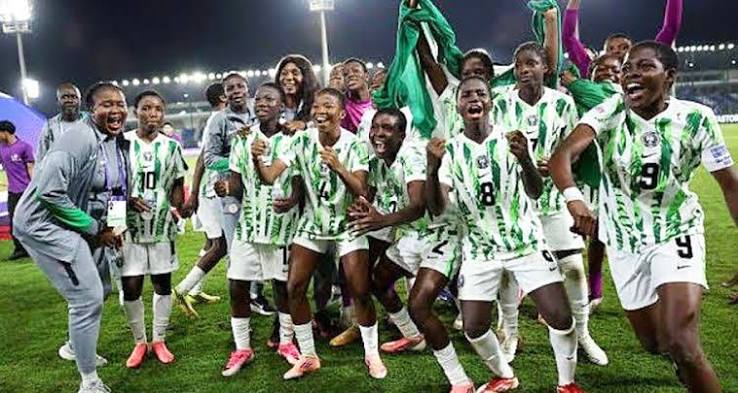
History was made on 7 November in Rabat, Morocco, when Nigeria’s U-17 women’s team, the Flamingos, beat Japan 2-1 to win the FIFA U-17 Women’s World Cup 2026.
Nigeria became the first African women’s team to win a FIFA title at any level, breaking a hierarchy long dominated by Asia and Europe. Before this final, only five nations had lifted the trophy since 2008: North Korea (4), Spain (2), and South Korea, France and Japan (1 each).
Nigeria’s dominance of women’s football in Africa is well established. The Super Falcons have won a record 10 Women’s Africa Cup of Nations titles since 1998, winning all 10 finals they contested. Yet continental supremacy had never translated into a global crown for a women’s side, until now. The Flamingos have bridged that gap.
The manner of victory made it even more impressive. In the semi-final, Nigeria beat Brazil 3-1 to surpass their previous best finish of third in 2022, when they beat Germany on penalties for bronze. The Brazilian coach conceded candidly that the Flamingos were better and stronger. It was merit, not fortune, that carried Nigeria to the final.
This gold was also the fulfilment of a long apprenticeship. The Flamingos had featured in seven of the eight previous editions, reached the quarter-finals five times, and secured Africa’s first podium finish with bronze in 2022. That bronze was a promise; this gold is its fulfilment. Their rise from quarter-finalists to medallists to champions reflects steady maturation, not accidental brilliance.
The triumph arrives at a moment when Nigeria’s senior teams are faltering. When senior sides stumble, confidence wanes and supporters grow cynical. The Flamingos have rekindled belief, reminding the nation that its talent pipeline remains fertile and its place in world football is attainable. Their success is a beacon in a period of gloom.
Kudos to the Flamingos. They have earned a special place in Nigerians’ hearts, not merely because they won, but because they won with courage, discipline and collective spirit. In a nation often divided by ethnicity, politics and economic anxiety, these young women have provided a rare moment of unified jubilation.
Having made the country proud, they deserve tangible recognition, not fleeting applause or empty rhetoric. Other nations honour conquering athletes with national honours, financial rewards, housing and scholarships. Nigeria must not be less generous. A formal reception, befitting remuneration and public celebration would show that sacrifice for the national colours carries reward.
Beyond that, these girls must not be allowed to fade away. Nigeria’s U-17 boys achieved comparable feats, yet many of those players disappeared for want of structure, guidance and continuity. History cautions that a single triumph can become an epitaph rather than a foundation if it is not consolidated. The nation must resist the familiar cycle of euphoria followed by neglect.
If properly tutored and groomed, these players will bring further glory, through a deliberate transition from the U-17s to the U-20s and ultimately to the Super Falcons. That requires structured coaching, competitive exposure, sports science, psychological support and regular international fixtures, rather than sporadic camping before tournaments. The Federal Government must ensure no Flamingo is lost to idleness, injury without care, or migration without a pathway home.
To sustain this success, the authorities must adopt policies to grow the game as other successful nations have done. Spain, twice champions at this level, and Japan, champions in 2014, built their success on school football, licensed academies, professional women’s leagues and long-term technical curricula. North Korea’s four titles reflect systematic, state-supported youth development. Nigeria need not copy every detail, but it must embrace the principle: talent is cultivated, not accidental.
The Nigeria Football Federation, National Sports Commission, state governments, corporate sponsors and schools must, therefore, act in concert. We propose: first, individual development plans and scholarships for every squad member; second, guaranteed progression into the U-20 team and the Nigeria Women Football League; third, a national girls’ football academy system anchored in the six geopolitical zones; and fourth, transparent contracts, medical insurance and mentorship to protect these minors from exploitation. These are not extravagant demands; they are the minimum obligations owed to world champions.
The Flamingos have given Nigeria more than a trophy; they have given the country a template and a testimony. They have shown that with preparation, belief and unity, Nigerian girls can conquer the world. Let the applause be loud, but let the action be louder. If we nurture these champions and sustain the policies that produced them, this golden November in Rabat will be remembered not as an isolated miracle, but as the dawn of Nigeria’s enduring reign in women’s football.
Continue Reading

Editorial

Kula Tragedy, Needless Loss Of Lives

Published

on

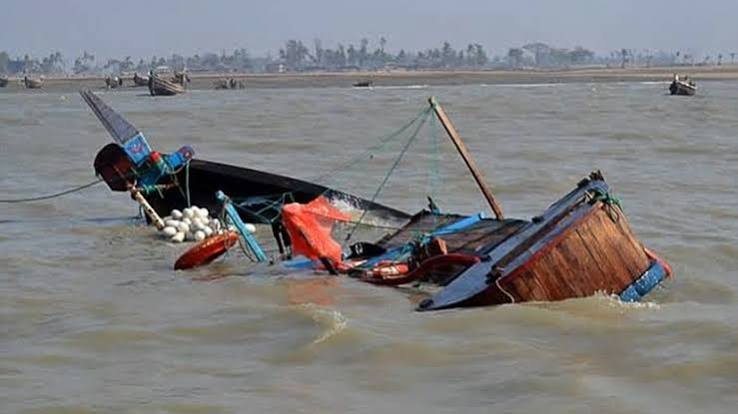
The reported drowning of about ten young men in the creeks of Kula, Akuku-Toru Local Government Area of Rivers State, during an alleged confrontation over an oil spill at OML-55 is an avoidable tragedy. What began as a protest against environmental degradation and demands for remediation and compensation ended in a fatal collision between a community boat and a gunboat operated by personnel in military attire. The incident, which occurred amid efforts to halt a commercial vessel, underscores the persistent tensions between host communities and oil operators in the Niger Delta.
According to community accounts, including those of Chief Anabs Sara-Igbe, a former spokesman of the Pan Niger Delta Forum, residents sought to suspend operations pending cleanup and compensation. The arrival of armed personnel reportedly heightened tensions, resulting in the community boat capsizing. Recovery efforts were ongoing when initial reports emerged, while the Nigerian Army’s 6 Division and the Rivers State Police Command had yet to issue formal statements. Such delays in official communication only deepen public anxiety and suspicion.
This unfortunate situation is not an isolated incident. The National Oil Spill Detection and Response Agency (NOSDRA) recorded 4,184 oil spill incidents in Rivers State between 2015 and July 2025, the highest among Nigeria’s states. Nationally, 589 spills were recorded in 2024, releasing approximately 19,000 barrels of crude. Although sabotage and theft account for many incidents, operational failures remain significant. Since commercial oil production began in the late 1950s, millions of barrels have reportedly polluted the Niger Delta, devastating mangroves, fisheries, and livelihoods.
The conduct of some youths in dealing with oil companies requires sober reflection. While grievances over pollution, inadequate remediation, and unfulfilled obligations are legitimate, physically obstructing vessels or confronting armed security personnel rarely produces constructive results. The Ogoni struggle of the 1990s, associated with Ken Saro-Wiwa, demonstrated the power of organised, non-violent advocacy. Subsequent militant violence, however, exacted devastating costs on communities. Youths must, therefore, prioritise dialogue, petitions, traditional institutions, and lawful complaints over dangerous confrontations.
This tragedy could and should have been prevented. Existing laws provide avenues for addressing community grievances. The Petroleum Industry Act (PIA) 2021, for instance, requires settlors to contribute three per cent of their preceding year’s actual operating expenditure in upstream petroleum operations to Host Communities Development Trusts. These trusts are intended to support infrastructure, education, healthcare, and environmental protection, providing structured mechanisms for handling development deficits and community concerns without risking lives.
Oil operators must equally demonstrate restraint and environmental responsibility. Where pollution occurs, as alleged at OML-55, companies must ensure transparent investigation, remediation, and meaningful engagement with affected communities. Deploying armed personnel at the first sign of resistance often escalates disputes rather than resolves them. Host communities are stakeholders, not adversaries, and legitimate environmental concerns must never be treated as threats warranting intimidation or excessive force.
Both sides must respect the rule of law. Youths should avoid dangerous confrontations with armed operatives, particularly on waterways, where accidents can quickly become fatal. Operators, in turn, must not take unilateral actions that disregard community concerns or environmental obligations. Properly implemented, the PIA’s Host Communities Development Trust framework and applicable environmental regulations offer avenues for resolving disputes and grievances.
Regulators, particularly the Nigerian Upstream Petroleum Regulatory Commission (NUPRC) and NOSDRA, must act more decisively. Effective monitoring, prompt investigation of spills, and strict enforcement of remediation and compensation obligations would help prevent recurring confrontations. Although improvements in spill management are possible, persistent pollution, unrecovered crude, and community alienation demand stronger institutional commitment. Laws are meaningful only when enforcement delivers tangible results to affected populations.
Security agencies must also establish clear protocols for handling disputes between oil operators and host communities. Reports that uniformed personnel allegedly left the scene after the Kula incident raise serious questions requiring investigation. The police and military must establish what happened, under whose authority the personnel acted, and whether failures of judgment or communication contributed to the tragedy. An independent, transparent inquiry is essential to establish accountability, restore public confidence, and prevent recurrence.
Sustainable peace in oil-producing communities depends on mutual respect, environmental justice, and genuine partnership. Youths must pursue organised, peaceful advocacy; oil operators must prioritise remediation and equitable community benefits; and regulators must ensure that existing laws translate into timely action. Above all, the reported Kula tragedy must not be reduced to another statistic or forgotten after public outrage subsides. Only through accountability, restraint, and institutional diligence can the Niger Delta break free from the destructive cycle of pollution, protest, and preventable death.
Continue Reading

Editorial

INEC’s Threat Alert Deserves Urgent Attention

Published

on

The Independent National Electoral Commission’s (INEC) disclosure of an alleged plot to target its ad hoc personnel ahead of the 2027 general elections demand urgent national attention. The reported arrest of suspects, with intelligence support from the Department of State Services (DSS), is encouraging, but must not breed complacency. Any attack on electoral workers threatens not only human lives but also Nigerians’ constitutional right to choose their leaders through credible elections. The alleged conspiracy must be thoroughly investigated, its sponsors identified and all those found culpable prosecuted.
Particularly troubling is the reported targeting of National Youth Service Corps (NYSC) members, who play a vital role in Nigeria’s electoral process. Many serve far from home and undertake sensitive assignments at polling units and other electoral locations. As civilians, they should not be exposed to intimidation, abduction or violence without adequate protection. If election workers are vulnerable, the safety of other officials, observers and voters cannot be guaranteed.
Nigeria’s electoral history offers painful lessons. Human Rights Watch reported in Nigeria’s Post-Election Violence, published in May 2011, that more than 800 people died in the violence following the 2011 general elections. NYSC members serving as electoral officials were among the victims. This tragedy underscores the deadly consequences of political tension, incitement and disputed outcomes. Nigeria must act on the latest warning before another preventable disaster occurs.
INEC deserves recognition for uncovering the alleged plot, while the DSS and other security agencies merit commendation for their reported assistance. However, arrests are only the beginning. Investigators must establish the suspects’ identities, motives, networks and intended targets, ensuring that evidence is admissible in court. The process must remain impartial and free from political interference. Credible public updates are also necessary, provided they do not compromise investigations or operational security.
The authorities must adopt a comprehensive, intelligence-led security strategy for 2027. INEC’s proposed security conference should produce practical measures developed in collaboration with the Inter-Agency Consultative Committee on Election Security (ICCES), the police, the DSS and other relevant agencies. Threat assessments should guide personnel deployment, secure transportation, emergency communications, evacuation procedures and rapid response. Protection must extend beyond polling day to the distribution of sensitive materials, collation centres and the safe return of ad hoc personnel.
Those who provide intelligence must also be protected from retaliation. Confidential reporting channels and appropriate safeguards should be established for informants and others assisting investigations. Equally, security deployments must not intimidate voters or facilitate political repression. Personnel should act professionally, impartially and proportionately, within the law. Clear mechanisms for reporting misconduct and investigating abuses are essential to maintaining public confidence.
The threat also highlights broader concerns about trust in the electoral system. The European Union Election Observation Mission’s June 2023 final report identified shortcomings in transparency and operational implementation during Nigeria’s 2023 general elections, alongside concerns about the legal framework and electoral dispute resolution. Credible elections require more than security; they depend on transparent procedures, accountable officials and consistent enforcement of electoral laws. INEC must demonstrate measurable progress in addressing previously identified weaknesses.
Voter apathy presents another challenge. INEC’s published figures indicate that approximately 25 million people voted in the 2023 presidential election, out of about 93.5 million registered voters, a turnout of roughly 26.7 per cent. Although insecurity is not the sole cause of low participation, threats against electoral personnel can heighten public anxiety and discourage voters from exercising their franchise. INEC should strengthen civic education, improve polling accessibility and communicate procedures clearly. Political parties, civil society and the media must promote peaceful participation and reject electoral intimidation.
Misinformation and manipulated digital content pose additional risks. False reports, fabricated announcements and deepfake videos can inflame tensions, impersonate officials and mislead voters. INEC should establish a well-resourced, rapid-response communication system supported by verified digital channels and timely public statements. Collaboration with credible media organisations and fact-checkers would help counter falsehoods without suppressing legitimate criticism. Clear, consistent communication is indispensable, as administrative confusion and delayed explanations often allow rumours to spread.
Electoral integrity must also begin within INEC itself. The chairman’s warning against partisanship, negligence, extortion and ethical misconduct deserves serious attention. Security measures cannot compensate for officials who abuse their positions or disregard established procedures. INEC should strengthen staff training, ensure transparent recruitment and deployment, provide secure channels for reporting misconduct and enforce disciplinary rules consistently. Allegations of bribery and political interference must be investigated regardless of rank, while ad hoc personnel should receive adequate briefing, support and prompt payment.
The legal framework also requires clarity and consistent enforcement. INEC should explain the precise provisions and applicability of Section 26 of the Electoral Act 2026, including the obligations of electoral officials and security personnel, and publish authoritative guidance on neutrality and professional conduct. Complaints by opposition parties that they have been prevented from campaigning in certain states must likewise be investigated impartially. Any established violations should attract appropriate corrective action. Electoral fairness requires not only impartial polling officials but also lawful campaigning, access to competing viewpoints and freedom from intimidation.
The alleged plot against INEC’s ad hoc personnel is a warning against complacency ahead of the 2027 general election. Governments, security agencies, INEC, political parties and civil society must work together to prevent violence, punish misconduct and protect citizens’ participation. The commission should communicate its security priorities, maintain accessible threat-reporting channels and provide periodic updates on preparedness. Nigeria’s democracy cannot be safeguarded by assurances alone; it requires demonstrable preparation, impartial law enforcement and an unwavering commitment to free, fair and credible elections.

Continue Reading

Trending