
Nation
THE STATES

Adamawa
Disturbed by the nuisance caused by stray domestic animals
on major streets of Yola, the Adamawa Ministry of Environment, has warned of severe penalties
if their owners failed to keep them indoors.
The Commissioner for Environment, Mrs Arziki Sawa, gave the
warning in an interview on in
Yola.
Sawa said that a stiff penalty awaited anyone that failed to
abide by the directive. “We are advising domestic animals owners, especially
those within the state capital, to keep them indoors or face the wrath of the
law. “The ministry will confiscate any animal found wandering on the streets,
or causing destruction to farm produce,” the commissioner said.
She expressed concern over the presence of animals in the
state capital which, had resulted in
serious daily traffic jams, stating that the ministry had embarked on public
enlightenment programme on the need to keep animals indoors.
Ekiti
Governor Kayode
Fayemi of Ekiti State has said that his
administration has no reason to interfere with the dispensation of justice in
the state because of his strong belief in the rule of law.
The governor stated this
at AwoEkiti during a thanksgiving service for the appointment of Justice
Daramola as the Chief Judge of the state.
Fayemi, who spoke on the series of court cases that the
state government lost at the Ado Ekiti High Court, reiterated the commitment of
his administration to upholding the rule of law, adding that he would never do
anything that would undermine it.
He said it was normal for the state government to lose court
cases if the facts on the cases were not well presented before the judges, and
expressed optimism that judges would always attend to cases in fairness and
justice in accordance with the rule of law.
FCT
The Founder of EJAYES Charity Organisation, an NGO, Dr
Ijeoma Nduka, has said that more than
1,000 Nigerians have benefited from the free medical treatment organised by the
group.
Nduka made this known in an interview during a week-long free medical treatment at
Gwagwalada Town Clinic, Abuja.
According to her, the National Poverty Eradication Programme
(NAPEP) in collaboration with the oganisation, were carrying out the exercise
in different rural communities.
She said patients were examined and treated of stroke,
hypertension, diabetes, asthma, arthritis and other common illnesses.
Nduka said majority of the patients diagnosed were not aware
of the diseases in their system.
“Health is not a privilege; it’s a right hence being poor
does not stop one from having quality healthcare,” Nduka said.
Gombe
Governor Ibrahim Dankwambo of Gombe State has approved N22
million for the rehabilitation of victims of the recent flood disaster in the
state capital.
Permanent Secretary of the State Emergency Management Agency
(SEMA), Mr. Kelmi Lazarus, said this in
an interview in Gombe that the flooding claimed four lives and displaced over
200 people in the affected areas.
He explained that the money would be used to provide relief
materials to give succour to the displaced persons.
“The governor gave the approval for the rehabilitation of
the displaced people so that they will bounce back to reckoning. “The gesture
is also to enable them to be reintegrated into society and to have a sense of
belonging,’’ he said.
Kano
The Anti-Bomb disposal unit of the Kano State Police Command
has recovered and defused 996 different calibre of Improvised Explosive Devices
(EIDs) from January 20 to date.
The state Commissioner of Police, Mr Ibrahim Idris, made this
known while briefing newsmen in Kano.
Idris explained that the EIDs, which were recovered from
different parts of the state, were successfully detonated without causing any
injury or damage whatsoever. “If these items had gone off, only God knows the magnitude
of devastation they would have caused in the state,’’ he said.
Idris said after screening of the suspects, 92 were charged
to court while the remaining 16 were released. According to him, the command
has also arrested nine suspected armed robbers within the last two weeks in the
state.
Kebbi
The acute shortage of staff has forced the Kebbi Urban
Development Authority (KUDA) to secure approval for the deployment of prison
inmates to clear blocked drainage canals in the metropolis, an official has said.
A heavy rainfall in Birnin Kebbi a week ago, resulted to
flooding which claimed two lives and destroyed buildings and other household
property. The General Manager of the Authority, Alhaji Babangida Aliyu, said in
Birnin Kebbi that the deployment of the
inmates was aimed at preventing further damage.
Aliyu also said that the organisation had set up
verification, assessment and resettlement committees to proffer solutions to
the problem of flooding.
Kogi
The Police in Kogi have said that only 16 suspects are in
custody over the August 6 killing of 19 worshippers at the Deeper Life Bible
Church and two soldiers at Okene town on August 7.
Public Relations Officer of the state police command, Mr
Simon Ile, who confirmed this to newsmen
on Sunday in Lokoja, said that investigations had commenced to determine the
level of culpability of those arrested.
According to him, those who have nothing to do with the
crisis will be set free. He confirmed that the immediate past Chairman of Okene
Local Government, Mr Yahaya Karaku, was among those being detained but said
that the man was not shot in the leg as rumoured. Karaku currently serves as a special adviser
to Governor IdrisWada.
Also speaking on the security situation in Okene, the
Commandant, Command Army Record, Lokoja, Maj.-Gen. Alphonsus Chukwu, refuted
the allegation of brutality against soldiers on duty in the town.
Kwara
Governor AbdulFatah Ahmed of Kwara State and the Sultan of
Sokoto, Alhaji Saad Abubakar III, are among dignitaries that will grace the
maiden Shaykh Adam Al-Ilory International Conference scheduled for between
August 24 and August 28.
The conference, being organised by the Faculty of Arts,
University of Ilorin, focuses on “ The Life and Works of Shayk Adam Abdullahoi
Al-Ilory.
Briefing newsmen on the programme in Ilorin , the Chairman,
Main Organising Committee, Prof. Charles Bodunde, said participants would be
drawn from Egypt, Kuwait, Germany, Algeria, Saudi Arabia, Sudan and Malaysia.
Bodunde, who is also the Dean of the Faculty of Arts,
described Al-Ilory as an icon for all religions, adding that he stood for faith
and justice. He commended members of the
committee for their commitment and urged them to remain steadfast.
Lagos
The Deeper Life Bible Church said although it was mourning
the Okene masacre victims, it would not be deterred by the enemies of the
gospel of Jesus Christ.
The church secretary, Pastor Jerry Asemota, said this at the combined Sunday
Worship Service of some districts in Lagos held at the International Bible Training
Centre.
The pastor said that “what comes to mind at a time like this
was reprisal”, but added that the church would not do that. He said the church
“will take up the weapons of Truth which is the word of God and the weapons of
prayer that will bring us victory”.
He recalled that the Okene masacre was not the first mass
murder of members of the church, noting that six of its members in Mubi, Borno,
were killed by gunmen in 2011.
Nasarawa
Labour movements in Nasarawa State have issued a one week ultimatum
to the state government to reverse the new tax system, which it recently
introduced in the state or face industrial action.
In a statement jointly signed by the state NLC Chairman, Mr
Asoloko Maku, and his TUC counterpart, Mr Agbashi Gabriel, the unions condemned
the new tax regime.
They also condemned the removal of the names of some civil
servants from the payroll, as well as the demotion of others with effect from
August 2012.
When contacted, the Commissioner of Finance, Mainoma, said
that the tax table in use in the state was not the one approved by the Personal
Income Tax Act 2011.
Plateau
A 25-year-old herbalist, Aliyu Idi, has been arraigned before an Area Court in
Jos for alleged criminal trespass, criminal force and intimidation.
Prosecutor Ashiru Ibrahim told the court that on August 10
Mohammed reported that the accused trespassed into his children’s room and
fought them over some unstated feud.
Ibrahim further said that some neighbours intervened to
separate the fight but the accused followed Alhaji Mohammed to the mosque and
threatened to stab him. “My lord the
accused intimidated the complainant in the mosque during the morning prayers
and that made it difficult for him to concentrate throughout the payer
session,’’ he said.
He said the offence contravened Sections 349, 255 and 390 of
the Penal Code Law. The accused pleaded not guilty to the charge against him
and applied to the court for his bail.
The judge, Malam Mustapha Hassan, refused the application
for bail and ordered the accused to be remanded in prison. He adjourned the
case to September 21 for hearing.
Sokoto
Chairman of Conference of Nigerian Political Parties (
CNPP), Sokoto State chapter, Alhaji Abba Sidi,
has commended the efforts of the state government in tackling security
threat to the state. Sidi said this in an interview in Sokoto.
He said the provision of 60 Toyota Hilux patrol vehicles and
state-of-the-art communication equipment to the state police command would help
in addressing any security threat in the state.
According to him, the current security challenges in the
state could only be tackled through effective security network. The chairman
called on the state police command to adopt security strategies to sustain the
peace in the state.
He said the people of the state expected high
professionalism by the officers and men of the command in dealing with any
persons or groups found disrupting the peaceful co-existence among the people.
Taraba
The Taraba Commissioner for Environment and Urban
Development, Mr Danfulani Kwetaka, has
appealed to Jalingo residents to refrain from indiscriminate dumping of refuse
in order to check erosion.
Kwetaka said in Jalingo that most of the erosion problems
affecting the streets of Jalingo were caused by the dumping of refuse in water
channels by residents.
“I move round the town to check the areas that we got
reports of heavy erosion and we discovered that people indiscriminately dump
refuse in drains. “When you do things right by dumping refuse in the right
places, the magnitude of erosion in the town will be reduced, “ he said.
The commissioner, however, gave an assurance that the
government had taken notice of the affected areas with a view to addressing the
problem. “We have taken notice of all the affected areas and we are doing
everything possible to tackle them, “ he said.



As the world marked the 2026 International Day of the Girl Child on Sunday, October 11, 2026, a non-governmental organisation, Stand Up for Women Society (SWS) has intensified its campaign against child marriage, urging schoolgirls to prioritise education, protect their rights and develop skills for a better future.
The organisation joined the global observance of the day under the theme, “International Day of the Girl Child: End Child Marriage and Invest in Girls’ Rights,” with a sensitisation programme at Government Girls Secondary School, Oromenike, D-Line, Port Harcourt, Rivers State.
Led by its Vice Chairperson, Daba Benebo, the group engaged the students in discussions on the dangers of early marriage, teenage pregnancy, sexual abuse and other challenges that threaten the education, safety and development of the girl child.
Speaking during the programme, Benebo urged the students to reject early marriage and remain focused on their studies, stressing that education would empower them to make informed decisions about their lives and future.
She cautioned the girls against allowing anyone to deprive them of their right to education and dignity, advising them to report cases of harassment, abuse and other violations of their rights to the appropriate authorities.
Benebo assured the students that SWS remained available to support them whenever they encountered violations of their rights.
She also encouraged them to maintain discipline and responsible conduct while avoiding behaviours that could expose them to negative influences and jeopardise their future.
Beyond formal education, the SWS vice chairperson urged the students to acquire vocational skills that could provide additional opportunities for economic independence and help them navigate future challenges.
The sensitisation programme, enlivened by singing, dancing and to share their views and experiences on issues affecting the girl child interactive sessions, provided an opportunity for the students to share their views and experiences on issues affecting the girl child.
One of the major issues raised during the discussion was the appropriate age for marriage. While some participants maintained that 18 years was the constitutionally approved age, the discussion highlighted the need to consider not only age but also the maturity, preparedness and responsibilities associated with marriage.
The speaker stressed that marriage required adequate mental and emotional preparation, as well as the capacity to shoulder its responsibilities.
She therefore advised the students to concentrate on acquiring a sound education before considering marriage, noting that education would equip them with the knowledge and skills needed to make responsible decisions and manage family life.
The issue of teenage pregnancy also featured prominently during the question-and-answer session.
In addressing the subject, the speaker explained that pregnancy could occur even at the age of 12, using the example to underscore the vulnerability of young girls to the consequences of early sexual activity.
She advised the students to avoid sexual intercourse and prioritise their education, personal safety and future aspirations.
The discussion also examined the difficulties some girls encounter when living with hostile spouses, relatives or guardians.
Benebo encouraged the students to cultivate patience, humility and diligence, noting that these qualities could help them navigate difficult situations and build a brighter future.
However, she warned that patience and humility should never be interpreted as an obligation to endure violence, abuse or degrading treatment.
She urged girls experiencing hostile or abusive living conditions to seek help from their parents, trusted adults or appropriate support services rather than remain in environments that could expose them to physical or emotional trauma.
“When such happens, please return to your parents and engage in petty trade or learn a skill to support your education rather than stay in a hostile environment,” Benebo stressed.
The programme also underscored the importance of protecting girls from early marriage and other harmful practices that can disrupt their education, compromise their well-being and limit their opportunities in life.
It also reinforced the need for families, schools, communities and relevant organisations to work together to ensure that girls have access to education, vocational training, protection and the support they need to realise their potential.
For SWS, the message was clear: empowering the girl child begins with protecting her rights, investing in her education and equipping her with the confidence and skills to make informed choices about her future.
Stories by Kevin Nengia
The Egberipapa Foundation has unveiled a mass transit scheme aimed at easing transportation difficulties and improving connectivity among communities in the three Kalabari local government areas of Asari-Toru, Degema and Akuku-Toru in Rivers State.
The initiative, established by former Caretaker Committee Chairman of Akuku-Toru Local Government Council, High Chief Sobomabo Jackrich, popularly known as Egberipapa, is designed to make transportation more accessible and affordable for residents across the Kalabari area.
The scheme was launched on Monday, October 12, 2026, and is expected to address longstanding transportation challenges confronting residents, particularly those in riverine and hard-to-reach communities.
Communities expected to benefit from the initiative include Krakrama, Minama, Angulama, Sangama, Omekwe-Tariama and Omekwe-Ama.
The project is expected to ease movement within and beyond the Central Group area, while providing residents with a more convenient means of transportation for their daily activities.
For decades, transportation difficulties have posed significant challenges to several Kalabari communities, making movement between settlements both cumbersome and expensive. These challenges have also affected commercial activities, social interactions and access to essential services.
The introduction of the mass transit scheme is therefore expected to provide relief to residents, strengthen inter-community connections and stimulate economic activities across the benefiting communities.
Beyond improving mobility, the initiative could contribute to community development by facilitating the movement of people and goods, supporting local businesses and enhancing social and economic interactions within the Kalabari area.
As the scheme gets underway, attention will be focused on its implementation, accessibility and sustainability, as well as its capacity to deliver lasting transportation benefits to the target communities.
The initiative represents a potentially significant step towards addressing transportation challenges and promoting grassroots development across the Kalabari Kingdom.
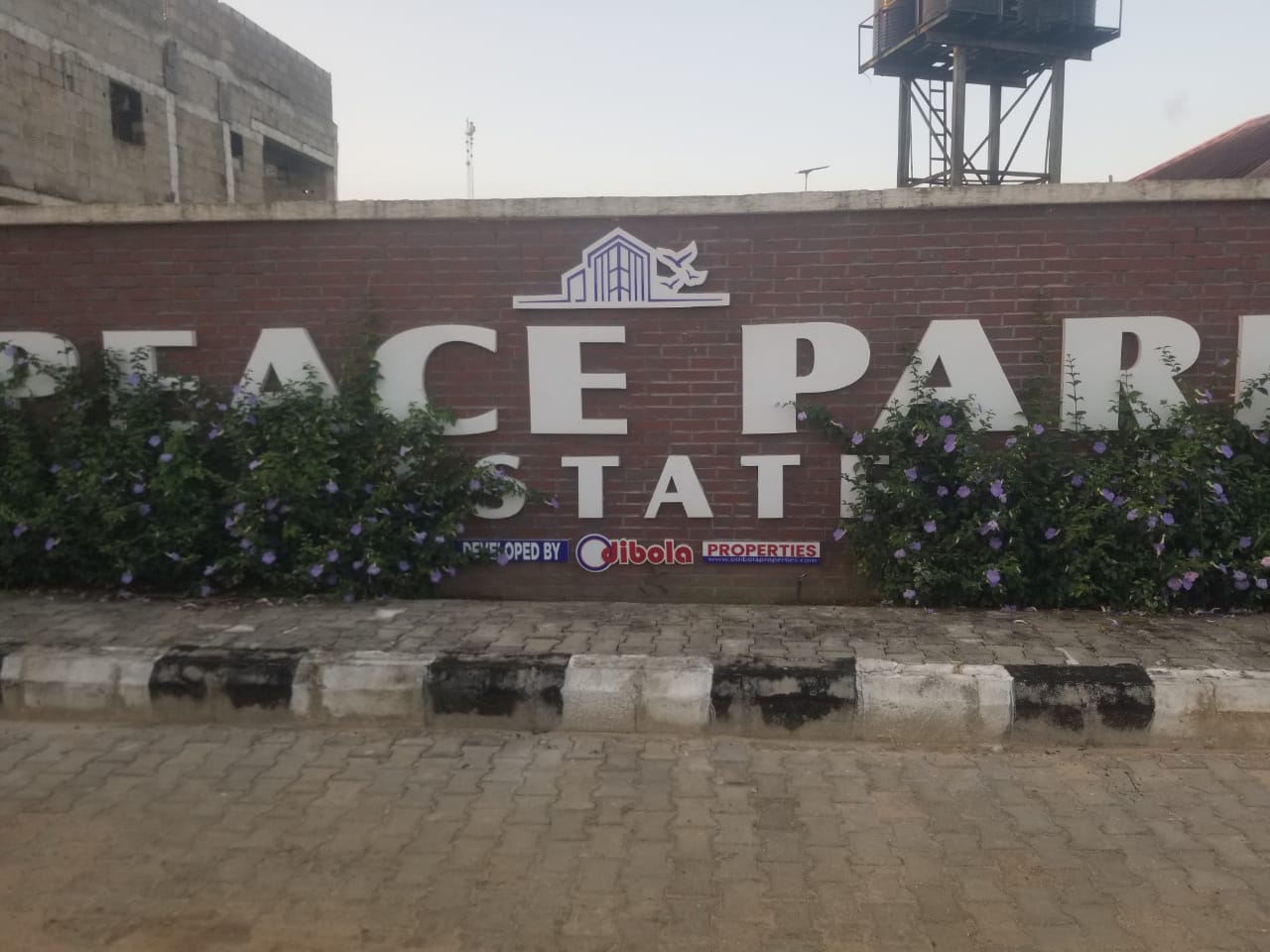
The Amaewhule family of mbodo Aluu in Ikwerre Local Government Area of Rivers State has cautioned members of the public against entering into any land transaction involving a disputed property known as “Ada Oro Fam Land,” located behind the OPM Church along Airport Road.
The family, through its legal counsel, Barrister Ndubuisi Agumagu, issued the warning amid an ongoing legal dispute over the ownership and control of the property, which is said to comprise more than 900 plots of land.
The matter is currently before the Isiokpo High Court of Rivers State in a suit numbered IHC/246/CS/2026, presided over by Justice Sobere Biambo.
The claimants in the suit include Chief Green Amaewhule and others, while Fabulous Amaewhule and Odibola Properties are listed among the respondents.
Counsel to the Amaewhule family, Barr Ndubuisi Agumagu, advised prospective land buyers and members of the public to exercise caution and refrain from purchasing any portion of the disputed property pending the determination of the case by the court.
According to the legal counsel, the property is a family estate belonging collectively to the Amaewhule family, and no individual member of the family has the authority to unilaterally dispose of portions of the land.
The counsel specifically maintained that Fabulous Amaewhule, one of the respondents in the suit, does not have the legitimate authority, according to the family’s position before the court, to sell portions of the disputed property.
The family further warned that anyone who proceeds to purchase land from the respondents while the matter remains before the court would be doing so at their own risk.
It stressed that such buyers could potentially lose their investments should the court eventually deliver judgment against the validity of the transactions.
The legal team said the warning became necessary to prevent unsuspecting members of the public from committing their resources to a property whose ownership and right of disposition are currently the subject of judicial determination.
The family also urged prospective investors, developers and land buyers to conduct proper legal inquiries and obtain independent verification of the status of the property before committing funds to any transaction relating to it.
The Amaewhule family said its position was intended to protect members of the public from possible financial losses and further legal complications while the case remains sub judice, stressing that interested parties should await the final determination of the court.
Akujobi Amadi
-

 Education1 day ago
FCE Yola Graduates 3,555 Teachers , Seeks Upgrade to University
-

 Sports1 day ago
Nigerian Trio Target Titles At PFL Africa Finals
-

 Niger Delta1 day ago
Diri Restates Stance On Lagos-Calabar Coastal Highway
-

 Niger Delta1 day ago
C’River, NUJ Pay Tribute To Late Guardian Editor
-

 News1 day ago
NDLEA Recovers Tons Of Illicit Drug Consignments In Nine States
-

 Opinion1 day ago
Checking Voter Apathy In Nigeria’s Electoral Process
-

 Politics1 day ago
2027: DICKSON’S EX-ALLY VOWS TO WORK AGAINST NDC INTEREST IN BAYELSA
-

 Politics1 day ago
2027: GROUP PLEDGES 40,000 SUPPORTERS FOR COALITION CANDIDATES IN RIVERS