
Featured
Stop Attacking Judges, CJN, NBA Tell Politicians …Say Public Sentiments Can’t Displace Law

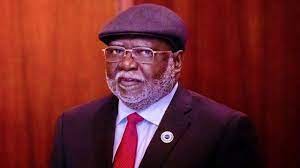
The Chief Justice of Nigeria, Olukayode Ariwoola, on Monday, said public opinions and sentiments could not displace the law of the country, urging judges to be impartial in discharging their duties.
His position was backed by the Nigerian Bar Association (NBA) as it condemned the attacks on the judiciary in recent times.
Ariwoola, who spoke at the special court session to mark a new legal year and swearing-in of new Senior Advocates of Nigeria in Abuja on Monday, also said most cases should end at the Court of Appeal.
He insisted that the appellate court was competent, and well-equipped to adjudicate effectively on most matters.
He urged Nigerians not to take every dispute to court, stressing that not all appeals should be brought to the apex court for adjudication.
He said, “Even as we celebrate the successes recorded in the past legal year in the disposal of cases, I would like to admonish all Nigerians on the imperative of being less litigious and be more disposed to alternative dispute resolutions to free the courts of this unnecessary over-stretching of both human and material resources. I have made it clear on different occasions that it is not every dispute that must find its way to the court, and it is not every matter that must come up to the Supreme Court on appeal.
“Our laws have to be amended to make most appeals to end at the Court of Appeal, which is competent, dexterous, and well-equipped with the right materials and manpower to adjudicate effectively and resourcefully. In every dispute, only one party must win; and winning could come after intense legal fireworks that are transparent and based solely on subsisting laws of the land. We cannot import foreign laws to try our cases here, as some litigants would erroneously and desperately want us to do in the quest to get victory.”
Ariwoola also urged judicial officials not to be intimidated by the actions of mobs or crowds, adding that cases should not be determined by sentiments.
He said, “The law remains the law, no matter whose interest is involved. In all we do, as interpreters of the law, we should endeavour to sever the strings of emotion from logic and assumption from fact. We should never be overwhelmed by the actions or loud voices of the mob or crowd and now begin to confuse law with sentiment or something else in deciding our cases.
“Nevertheless, unnecessary and unwarranted utterances are bound to embarrass not only others, but the judge himself; thus what should be asked, should be asked, and what should not be asked, should be avoided. I admonish our judges to, as usual, receive what is tendered in court and eschew what is against the law and facts after thorough analysis and assimilation both in and out of court, which exercise is, of course, part of judgeship.”
The CJN also called for statutory protection for judiciary independence at the federal and state levels.
He said, “We expected the independence of the judiciary to be given adequate statutory protection, not just at the federal level alone but equally at the state level so that they could be seen to be truly and genuinely independent in all ramifications. The rule of law, with all its well-understood facets, has been highly questionable since the advent of democratic governance in 1999.”
Ariwoola, however, called on the judges not to be partial while discharging their duties, describing impartiality as the hallmark of a judge.
He said, “Therefore, it is our solemn responsibility to keep the river clean at all times. Needless to say, impartiality is the hallmark of a Judge. So, I admonish all of us to always be impartial in all our judgments. I am saying all these now because I will never have this great privilege and opportunity to address the galaxies of legal luminaries, judicial icons, and distinguished personalities in the justice sector of our dear nation in another legal year of the Supreme Court as Chief Justice of Nigeria in my entire lifetime again.”
Ariwoola urged judicial officers to be honest while discharging their duties, stressing that his expectation was for “every judicial officer to work very hard and also be very honest and courteous to the litigants, witnesses, and members of the bar, and discharge all your judicial functions with all the humility at your command.”
He stated that while doing this, it was still necessary for judicial officers to have at the back of their minds that public opinions, sentiments, or emotions could never take the place of the law in deciding cases.
Ariwoola said the apex court received 1,271 motions and appeals between September 2022 and July 2023.
According to him, the apex court heard 388 political appeals, 215 criminal appeals, and 464 civil appeals.
He said, “The matters filed at the Supreme Court from September 12, 2022, to July 11, 2023, are 1,271, comprising motions and appeals. Out of these, we heard 388 political appeals, 215 criminal appeals, and 464 civil appeals. Similarly, the court considered a total number of 49 criminal motions, 153 civil motions, and two political motions.
Between September 30, 2022, and July 11, 2023, the Supreme Court delivered a total number of 251 judgments. Out of these, 125 were political appeals, 81 were civil appeals and 45 were criminal appeals. Within the period under review (precisely 10 months’ duration), a total number of 91 Rulings were delivered by the Honourable Court”.
The Attorney-General of the Federation and Minister of Justice, Lateef Fagbemi, SAN, called for a reduction to the number of appeals that get to the apex court.
He said, “We must begin to develop innovative solutions towards enhancing the working capacity of the Supreme Court, cutting down on the number of appeals that get to this Honourable Court, implementing critical judicial reforms, as well as adopting alternative dispute resolution mechanisms.”
Advising the SANs, Fagbemi warned that unlike before if the rank is withdrawn, it would not be restored.
He said, “One of the highlights of the new guidelines is that, unlike the 2018 guidelines which contain provisions for discipline of erring holders of the rank and for the restoration of the rank after three years of withdrawal upon the fulfillment of certain conditions, the 2022 Guidelines makes no provision for the restoration of the rank after withdrawal.
“In other words, once the Legal Practitioners Privileges Committee under the provisions of Paragraph 26(4) of the Guidelines withdraws the rank from any holder who may have breached the provisions in sub-paragraph (a)-(h), the withdrawal is final and the rank cannot be restored afterward. “
He also warned lawyers against analysing cases before the courts in the media.
Fagbemi said, “It is unprofessional for a legal practitioner nor a Senior Advocate of Nigeria to be seen engaging in the analysis of cases pending before the court. It is fast becoming a sad norm and regrettably so, for legal practitioners to appear on television or radio stations discussing pending matters. We have also seen lawyers after court sitting discussing what transpired in the proceedings. You must resist the urge to engage in such practice. You must also reject the temptation by media houses inviting you to analyse or discuss pending matters.”
The President of the Nigerian Bar Association, Yakubu Maikyau, SAN condemned the attacks on the judiciary in recent times.
According to him, 90 per cent of the attacks were from election-related matters.
He said, “There has never been a time in our history that the judiciary came under attack like this time, and my lords will agree with me that more than 90 per cent of these attacks stem from election-related matters, which in so many ways have affected the other matters being handled by the courts. The question is, why do we have the preponderance of these accusations arising from electoral matters? – in cases dealing with politicians and political interests.”
The NBA president noted that the allegations by politicians had impacted the public perception of the judicial system.
He said, “The accusations and name-calling have, however, in recent times acquired a dimension that calls for grave concern and action. Whether we like it or not, it is these accusations, unfounded as they may be or can be, arising from these political matters, that have largely shaped the public perception of the judiciary in Nigeria. Have we, members of the Bench and Bar, who are privileged to be the ones to guide the public in regard the matters of justice, contributed in any way to fuelling this negative public perception? “
He, however, urged judges to be above board and ensure justice was seen to be served in every matter.
He said, “It is in this wise that your lordships must not only serve justice but must ensure that justice is seen to have been served. As a matter of fact, beyond these, your lordships are under an additional duty to persuade or convince the public for whom justice is served, that indeed, justice has been served in any given situation. This duty, my lords, cannot be discharged by either the executive or the legislature. It is the exclusive preserve of the judiciary”.




Featured
JUNE 12: Democracy Remains Nigeria’s Strongest Path To Unity, Progress, Says Fubara ….Extols Abiola, Wife


Governor of Rivers State, Sir Siminalayi Fubara, has reaffirmed that democracy remains the most effective system of government for Nigeria, given the country’s rich diversity of ethnic, religious, and cultural identities.
In a goodwill message to Nigerians on the occasion of the 2026 Democracy Day celebration, Governor Fubara said June 12 represents far more than a historic date; as it embodies the enduring struggle, sacrifice, and collective aspiration of Nigerians for freedom, justice, and representative governance.
The Governor extended warm felicitations to Nigerians at home and in the Diaspora, paying tribute to the heroes and heroines of the democratic struggle, particularly Chief MKO Abiola, his wife, Kudirat Abiola, and countless others whose courage and sacrifices helped secure the democratic freedoms Nigerians enjoy today.
According to him, “June 12 is a reminder of the price paid for the democracy we enjoy today. The sacrifices made by Chief MKO Abiola, Kudirat Abiola, and many other patriots who laid the foundation for the democratic journey we continue to enjoy today. Their commitment to the principle that power must ultimately reside with the people remains a source of inspiration for every generation of Nigerians.”
Governor Fubara noted that thirty-three years after the historic June 12, 1993 election, Nigeria’s democratic experiment has continued to evolve despite challenges and setbacks.
“Our democratic journey has not been without difficulties, but the resilience of our institutions and the determination of our people have kept the nation moving forward. The ability to express differing opinions, engage in constructive debate, and peacefully choose leaders through the ballot remains one of the greatest achievements of our nation,” he said.
Governor Fubara stressed that democracy provides the best framework for managing Nigeria’s diversity and transforming it into a source of national strength.
“Nigeria’s diversity should never be seen as a weakness. Properly harnessed, it is our greatest asset. Democracy offers us the opportunity to build consensus, promote inclusion, strengthen national unity, and create the conditions for sustainable development and shared prosperity,” he said.
Governor Fubara commended President Bola Ahmed Tinubu, for his commitment to the Renewed Hope Agenda and ongoing efforts aimed at economic revitalization, strengthening security, and deepening democratic institutions across the country.
He reiterated the readiness of Rivers State to continue partnering with the Federal Government in advancing policies and programmes that improve the lives of citizens through infrastructure development, job creation, enhanced security, quality education, healthcare delivery, and good governance.
The Governor further called on Nigerians, regardless of political affiliation, ethnic background, or religious belief, to use the occasion of Democracy Day to renew their commitment to the Nigerian project and the ideals that underpin democratic governance.
“Democracy must not be viewed merely as a periodic electoral exercise. It must be reflected in our daily commitment to accountability, transparency, tolerance, justice, respect for the rule of law, and responsible leadership. As citizens and leaders, we all share a collective responsibility to strengthen our democracy and build a nation that future generations will be proud to inherit,” he said.
Governor Fubara expressed optimism about Nigeria’s future, urging citizens to remain united, hopeful, and committed to the values of peace, dialogue, and national development.
“Together, we can build a stronger, more inclusive, and more prosperous Nigeria where every citizen has the opportunity to thrive and contribute meaningfully to national progress,” he said.

Governor of Rivers State, Sir Siminalayi Fubara, has reaffirmed the unwavering commitment of his administration to peace, unity, security, and inclusive development as Rivers State marked its 59th anniversary, last Wednesday.
In a goodwill message issued on Wednesday to commemorate the anniversary, Governor Fubara stated that despite the challenges faced over the years, the people of Rivers State have continued to demonstrate resilience, strength, and an enduring spirit of unity that has sustained the state since its creation.
The Governor noted that the strong bond of brotherhood among the various ethnic nationalities of the state, including the Ijaw, Ikwerre, Ogoni, Etche, Ekpeye, Andoni, Kalabari, and others, remains one of Rivers State’s greatest strengths and a critical foundation for peace, stability, and progress.
He further observed that Rivers State has remained a major driver of Nigeria’s economy for decades, not only because of its abundant oil and gas resources, but also because of the exceptional contributions of its people across diverse sectors including academia, jurisprudence, business, entertainment, public service, and sports.
Governor Fubara assured the people that his administration will continue to prioritize policies and programmes that promote peace, protect lives and property, and expand development across all parts of the state. He emphasized that governance must be people centered and impactful, with equal attention given to every Local Government Area of the state.
The Governor also paid tribute to the elders and founding leaders of the state for preserving the spirit of unity and coexistence over the years, while urging the youths to remain hopeful, responsible, and actively committed to building a greater Rivers State through innovation, hard work, and patriotism.
He equally acknowledged the invaluable role of women in strengthening families, communities, and society, describing them as indispensable partners in the continued growth and stability of the state.
Governor Fubara called on all Rivers people to use the occasion of the anniversary as a moment of reflection and renewed commitment to peaceful coexistence, mutual respect, dialogue, and collective progress, stressing that the unity and future of Rivers State must always rise above personal interests and political differences.
Rivers State was created on May 27, 1967, by General Yakubu Gowon.
