
Nation
THE STATES

FCT
Prof. Justus Sokefun of the National Open University of Nigeria (NOUN) has called on law students at the University to study hard so as not to become “charge and bail lawyers”.
Sokefun made the appeal at the inauguration of the Moot Court/Clinical Legal Education of the University in Abuja.
Sokefun who is the Dean, School of Law and Chairman of the occasion, represented the Vice Chancellor of the University.
“The issue here is not about the university you graduate from but what you make of your effort. Be successful lawyers and go beyond “charge and bail’’.
“Make reference to text books as recommended by the course material.”
Sokefun said it was purely professional and organised by the universities to develop law students in advocacy skills and prepare them for the future.
According to him, the Moot Court builds a lawyer’s confidence wherever he finds himself.
The President of the law students Abuja Centre, Emeka Kalu, also told newsmen that only a serious lawyer would be successful in the profession due to its challenges.
He advised his colleagues to be more serious in their studies, adding “this is the only way we can show the world that we are capable”.
Kaduna
Members of the Kaduna State House of Assembly last Saturday sympathised with the victims of the bomb explosion in Kaduna during the Easter celebrations.
The lawmakers visited the victims at various hospitals and donated money to settle their medical expenses.
The Deputy Speaker of the Assembly, Dr Dogara Mato, led the delegation.
During the visit, various cash donations were given to the victims.
The places visited were Barau Dikko Specialists Hospital, 44 Nigerian Army Referral Hospital and St. Gerard Hospital, Kaduna.
At the 44 Army hospital, the Director, Brig-Gen. Napolion Amarie, expressed gratitude to the members for the donations to the victims.
At Barau Dikko Specialist Hospital, the members were conducted round by the Matron in-Charge, Mrs Hassana Garba, while at St. Gerard Hospital, the Public Relations Officer, Mr Sunday John conducted them round the institution.
Kano
The Almajiri Foundation of Nigeria has applauded the Federal Government for initiating the Almajiri Model School scheme.
The national chairman of the association, Yusuf Hassan, described the programme as “a noble idea which the foundation and all Northerners had been yearning for. ’’
According to him, the scheme was in line with the cardinal principles and objectives of the Almajiri Foundation of Nigeria, a non-governmental organisation.
Hassan, who decried the untold hardship being experienced by young Almajiri, said that they were not adequately taken care of in the society.
He said: “they roam about dangerously between fast moving vehicles in tattered clothes begging for food and money. “
He expressed optimism that the programme if sustained would completely rehabilitate the Almajiri by educating them in both religious and secular education, so that they could contribute to national development.
The chairman urged all state governments to ensure the construction of such Almajiri schools in each local government area of their respective states.
Hassan also implored the private sector and wealthy individuals to contribute their quota to the success of the scheme.
President Goodluck Jonathan had on April 10 inaugurated one of the schools at Gagi in Sokoto State.
Lagos
Residents of Akanni Crescent, Jakande Estate, Okokomaiko, Lagos, are seeking the assistance of the state government to solve the problem posed by a 20-year old swamp in the area.
The residents lamented the increasing flow of the swamp into their homes during the rainy season.
Mr Wale Odukoya, a resident of the area, said the situation was becoming worse, especially as the rainy season had set in.
Odukoya said that the swamp had existed in the area for about 20 years without efforts to checkmate its menace.
Mr Gbenga Olutobi, another resident, said that several appeals had been made to government to assist the inhabitants of the area but to no avail.
Olutobi said that “whenever it rains, the volume of the swamp increases and flows into our homes, damaging our property.”
Mrs Edith Omogiate, another resident, said the break of each rainy season raised anxieties among the people due to the problem encountered during the period.
Niger
President Goodluck Jonathan has pledged to make education accessible to all youths as part of the government’s policy on human capital development.
Jonathan made the pledge at the convocation of the Federal University of Technology Minna, last Saturday.
The President, who was represented by the Minister of Education, Prof. Ruqayyatu Rufai, said human development was part of the reasons for establishing federal universities in the federation.
He reiterated government’s commitment to provide quality education to the people.
“Let me point out that our administration is committed to improving education to ensure appropriate human capital development in Nigeria.“
Jonathan urged the universities to establish entrepreneurship training courses for their students, to equip them with the skills and make them become job creators rather than seekers after graduation.
He urged youths to maintain their resilience and determination in spite of daunting challenges.
The Vice Chancellor, Prof. Mohammed Audu, said the management had instituted a scholarship scheme for students who excelled, to sustain the record in subsequent examinations.
Ogun
Governor Ibikunle Amosun of Ogun State last Saturday installed Kehinde Olugbenle as the new monarch (Olu of Ilaro) for Ilaro in Yewa South Local Government area of the state.
Ilaro, a major town in the West Senatorial District, had been without a monarch since Feb. 20, 2008.
The administration of Amosun had upon assumption of office, initiated the process of selecting a successor to late monarch, Samuel Adekanbi.
Amsoun said that the installation was a great accomplishment for both his administration and the people of the district.
“It is my pleasure to present to Kehinde Olugbenle, the instrument of appointment and staff of office as the new Olu of Ilaro and Paramount Ruler of Yewa land.
“This installation is a testimony to the divine word of God that whatever He proposes shall surely be accomplished.
“For this reason, the government and the entire people of Ogun rejoice with the good people of Ilaro and the entire Yewa land, even as we express gratitude to God who made this event a reality.“
Osun
The Commissioner for Environment and Sanitation in Osun, Prof. Olubukola Oyawoye, has warned the residents to keep every part of the state clean to avoid flooding as the rainy season begins.
Oyawoye gave the warning in response to concerns expressed by some residents over the predictions by weather forecasters that with the onset of stormy rainy season, some parts of the state might experience flooding.
A statement issued in Osogbo on Saturday by Mr Babatunde Kolawole, the ministry’s Coordinating Director, quoted the commissioner as urging the people “to be environment friendly.’’
Oyawoye also warned the residents not to dump refuse into waterways as this could block the drains and cause flooding.
She said the 2012 weather forecast by the Nigeria Meteorological Agency revealed that the downpour would be experienced between April and November.
Plateau
Military regimes’ intolerance of freedom of speech killed the Plateau government-owned Nigeria Standard newspapers, the media outfit’s General Manager, Mr Jonathan Ishaku, has said.
“Military regimes do not tolerate freedom of speech; unfortunately, that is the fulcrum on which the media operates.
“The regimes operate by suppressing public or dissenting opinions and would insist that public-owned media houses concur.
Ishaku, a two-time editor, managing director, and now general manager of the paper, said the paper used to publish daily and printed more than 40,000 copies on a daily average.
The paper was at its peak between the 1970s and the 1980s.
“I have been around and have seen the best and worst times of the Nigeria Standard. In those days, we hardly had unsold copies and that was a great feat considering the literacy level then.
“But currently, we struggle to publish twice or thrice a week and print less than 5,000 copies; we try to make our presence felt only in Plateau and Abuja.’’
The veteran journalist said the Nigeria Standard was established in 1972 to protect the views of the minority since they did not have any voice at the time.
“The papers on the stable discharged that mandate for some time and were indeed very famous; its editorials were greatly respected and read on the 7 o’clock Network News. The paper was also read in Lagos in the morning of publication date.
“Unfortunately, autocratic regimes came and had great links with some feudal establishments that felt their interests were being threatened with the focus on the rights of the minorities.
Sokoto
The Usmanu Danfodiyo University, Sokoto, plans to establish its Faculty of Engineering in 2014, the Vice Chancellor, Prof. Riskuwa Shehu, has said.
The construction of the faculty’s infrastructure had so far gulped more than N200 million between 2007 and the present date.
“This includes funding from the Federal Government for the project as well as internally generated revenue.’’
He said that the faculty would start with programmes in three fields of civil, electrical and chemical engineering.
“The structures at the faculty have reached about 70 per cent completion. Engineering is capital intensive there is also the challenge of getting the required manpower as well as the requisite equipment,’’ Shehu said.
He said that the management of the university would soon meet with the contractor handling the project to sort out all the grey areas to ensure timely completion.
“We have to do everything humanly possible to consolidate our gains and always consider our limited resources and work within them the challenge in respect of engineering is staff recruitment as they are hard to come by. Even older universities do not have enough manpower in this regard,’’ the vice chancellor said.
He said that the institution would send requests to its catchment states to “get their best graduates in engineering.
“We will recruit them and send them for higher training at all levels, both within and outside Nigeria”, he said.



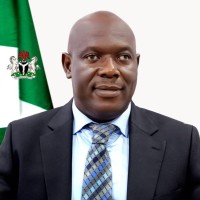
The Hydrocarbon Pollution Remediation Project (HYPREP) has commemorated the 15th anniversary of the release of the United Nations Environment Programme (UNEP) Environmental Assessment Report on Ogoniland, reaffirming its commitment to restoring the environment and improving the livelihoods of affected communities.
In a statement signed by the Project Coordinator, Prof Nenibarini Zabbey, to commemorate the anniversary, HYPREP described the anniversary as a significant milestone in Nigeria’s environmental restoration efforts, noting that the project has made remarkable progress in implementing the recommendations of the landmark UNEP report released on August 4, 2011.
The UNEP report had revealed extensive oil pollution across Ogoniland, severe environmental degradation, and serious public health risks resulting from decades of petroleum operations. It also recommended an initial $1 billion fund to commence the cleanup of the affected communities.
According to HYPREP, the Federal Government formally launched the Ogoni clean-up in 2016, while the Project Coordination Office was established in 2017 to drive the implementation of UNEP’s recommendations.
Zabbey said the current administration has continued to prioritise the project under the Renewed Hope Agenda.
Providing an update on the cleanup, the Project Coordinator disclosed that 30 of the 65 contaminated sites identified by UNEP have been fully remediated, while work is ongoing at several medium- and high-risk locations. It also stated that more than 1.5 million mangrove seedlings have been planted as part of what it described as the world’s largest restoration of oil-degraded mangroves, with over 1,000 hectares of shoreline already rehabilitated.
Zabbey further revealed that 49 Ogoni communities have been connected to potable water schemes through multiple water projects and booster stations aimed at providing safe drinking water across the region.
In the health sector, he said the 100-bed Ogoni Specialist Hospital in Kpite and the 43-bed Cottage Hospital in Buan are nearing completion, adding that several existing health facilities have been upgraded with modern medical equipment, while five ambulances have been donated to improve emergency healthcare services. The Project Coordinator also disclosed that a three-year human health biomonitoring study is being conducted in collaboration with the World Health Organization’s International Agency for Research on Cancer (IARC).
On economic empowerment, Zabbey stated that the Project has created more than 8,000 direct jobs and trained thousands of Ogoni youths and women in various vocational and technical skills, including software development, cybersecurity, aviation, commercial diving, seafaring, mechatronics, and creative arts. The project also reported awarding scholarships to more than 1,000 students, providing grants to small businesses, and supporting persons living with special needs through skills acquisition programmes.
The statement further highlighted ongoing legacy projects, including the Ogoni Power Project and the Centre of Excellence for Environmental Restoration, which it said is about 96 per cent complete. HYPREP also welcomed the recent designation of the Ogoni Wetland as a Ramsar Site of International Importance and pledged to continue promoting biodiversity conservation and sustainable management of the ecosystem.
Marking the anniversary, Zabbey said the progress achieved over the past 15 years demonstrates the collective commitment of government, development partners, stakeholders, and local communities to restoring Ogoniland. He called for renewed collaboration to sustain the cleanup effort, promote environmental sustainability, and support the long-term development of the region. 3
-

 News2 days ago
RSG Targets Nine Million Residents in Mosquito Net Distribution Campaign
-

 Oil & Energy2 days ago
Aiyedatiwa Signs New Electricity Bill
-

 Oil & Energy2 days ago
NLNG Commissions Research And Innovation Centre In RSU
-

 Maritime2 days ago
Marine Minister Commends President Tinubu On NPERA Bill Assent
-

 News2 days ago
KenPoly Holds Eight Convocations, August 29
-

 News2 days ago
RSG Begins Another Phase of Projects Commissioning Today
-

 News2 days ago
RMAFC Completes Revenue Sharing Review, Proposes New Pay
-

 Maritime2 days ago
NAGAFF Petitions IGP Over Alleged Maritime Police Harassment