
Nation
THE STATES

Adamawa
The aid group of the Jama’atu Nasril Islam (JNI) has begun a one-week disaster management training of its disaster relief officers.
The training currently ongoing in Yola, Adamawa, is being organised by the national headquarters of JNI for its officials from all the states of the federation.
Speaking in an interview with newsmen in Yola, the Secretary-General of the JNI in the state, Alhaji Gambo Jika, said the training was to equip the trainees with modern skills to handle disasters effectively.
“This workshop is purposely organised for disaster relief officers.
“The reason is to equip disaster relief supervisors and coordinating officers from all the states of the federation and some from local governments here in Adamawa.
Bauchi
Governor Isa Yuguda of Bauchi State has inaugurated a Community Radio Station in Kafin-Madaki, Ganjuwa Local Government Area of the state.
Yuguda at the ceremony pledged to complete nine other stations before the end of the year.
He said that the radio stations were established to improve the relationship between the government and the rural dwellers, adding that they would promote effective communication with the people.
The governor said community radio broadcasting was an age-long system already in practice in most parts of the world, including developing countries.
He said the stations were designed to disseminate information on weather, agriculture, politics and other socio-economic issues, particularly those in rural areas.
FCT
The Federal Ministry of Transportation has called for the full utilisation of the dredged River Niger to enhance economic activities in the country.
The Assistant Director, Press and Public Relations in the Ministry, Mr Abiodun Oladunjoye, made the call in Abuja on Thursday in an interview with newsmen.
Oladunjoye recalled that the contract for the dredging of the Lower River Niger from Baro in Niger to Warri in Delta, a distance of 572 km, was awarded in December 2008 and completed in 2011.
Oladunjoye noted that some companies, including NINON Nigeria Ltd, manufacturers of ceramic tiles, started using the channel shortly after the dredging started to transport goods from Ajaokuta to Onitsha.
Gombe
The Gombe Coordinator of Child Protection Network (CPN), Mrs Grace Samuel, has appealed to parents to ensure that their children were given good training to become responsible citizens.
She stated this in Gombe when she led the network on a visit to the State Commissioner of Information and Orientation, Rev. Habu Dawaki, to mark the International Day for Street Children.
Samuel quoted a UNICEF report in May 2005 which stated that over 7.3 million Nigerian children of school age were not in school.
“These street children are exposed to untold dangers of molestation, abuse, loneliness and lack of care.
Jigawa
The residents of Dutse, the Jigawa capital, have expressed worry over excessive heat.
A cross section of the residents who spoke to newsmen in Dutse, said that both inside and outside of their homes were no longer comfortable for them.
Malam Sanusi Adamu said that the intensive heat had made life miserable for them.
Adamu explained that in the last three weeks, he had been sleeping outside his home with his family to prevent cerebro-spinal meningitis.
Also speaking, Alhaji Ali Makama, , a resident of Fagoji in Dutse, said he had pitched his tent under the tree near his house due to the excessive heat.
“I am always under a tree especially during the day after I return from farm; I eat and do some domestic works under the tree because there is no comfort in my house.”
Kaduna
The Kaduna State House of Assembly has passed the amended the Prerogative of Mercy Bill into law to make it more inclusive and effective.
The passage followed the adoption of a report submitted by the Chairman of the House Committee on Judiciary, Mr Irmiya Kantiok, at the plenary session in Kaduna.
The committee was mandated by the House to study and review the Kaduna State Cap No: 4 of 1991, otherwise known as the Prerogative of Mercy Advisory Committee Law of 1991.
Presenting the report, Kantiok told his colleagues that the law called for a review to ensure quick dispensation of justice in the state.
He explained that the review was necessitated by an executive bill submitted to the House by Gov. Patrick Yakowa.
Lagos
The Lagos State House of Assembly (LAHA) has called for the deployment of members of the State Rapid Response Squad (RRS) to Agunfoye-Igbogbo community in Ikorodu.
The call followed a protest by residents of the community to the House during which they submitted a petition on the activities of land speculators in the area.
According to the protesters, hoodlums have taken laws into their hands and destroyed properties, valued millions of naira.
The protesters alleged that the attacks and destruction of properties were carried out by a faction of Adeyoruwa’s family, claiming ownership of the disputed land.
Nasarawa
Governor of Nasarawa StateUmar Almakura has stressed the need for people in the state and all Nigerians to be united and to live in peace with one another.
Almakura spoke on Wednesday in Agyaragu in Nasarawa State, when he paid an on the spot assessment visit to the crises areas in the state.
“We strongly need this unity if we are to continue to forge ahead as a united and indivisible entity,” he said.
According to the governor, without peace and unity, socioeconomic development will continue to elude any society.
Almakura said that there was the need for all Nigerians to continue to learn to live in peace with each other, irrespective of religious, tribal, political or ethnic differences.
Ogun
The Ogun Command of the Nigeria Security and Civil Defence Corps (NSCDC), has intercepted 40,000 litres of petrol from vandals around Arepo Village in Obafemi Owode Local Government of the state.
The command’s Public Relations Officer, Mr Kareem Olanrewaju, told newsmen in Abeokuta on Wednesday that the products concealed in 800 kegs of 50 litres were intercepted in the early hours of Wednesday.
Olanrewaju said that the perpetrators had vandalised petroleum pipes in the waterways near Beach Estate, in Arepo Village.
Plateau
To elicit support for peace efforts in the North Central, the National Emergency Management Agency (NEMA) says it will organise a special workshop for wives of serving military men serving in that zone.
“The workshop is next week and will sensitise women to the need to join the peace effort in the North Central states,” NEMA Zonal Coordinator for the zone, Alhassan Aliyu, told newsmen in Jos on Wednesday.
According to him, wives of paramilitary officers and women NGOs will also participate in the workshop scheduled for Jos.
Sokoto
Governor Aliyu Wamakko of Sokoto State has donated 60 vehicles and one thousand motor cycles to the state police command to enhance productivity among the force.
Wamakko presented the vehicles to the visiting Inspector General of Police Mohammad Abubakar at Government House in Sokoto.
He said that modern communication facilities would be attached to all the vehicles to ensure effective policing.
Wamakko said the administration would continue to support the police to enable the officers and men of the command discharge their primary assignment without hindrance.
He said that already the state government had also directed local government chairmen to work hand in hand with their respective divisional police to ensure peace in their respective areas.
Yobe
Vegetable farmers in Yobe have decried lack of preservation facilities for newly harvested tomatoes, pepper, onions and melon.
A vegetable farmer in Garin Alkali told Alhaji Usman Bukar, newsmen that vegetable farmers in Jakusko, Bade and Nguru local government areas were faced with the challenge of storage.
Usman said that the price of onions in the market was not encouraging while they were no facilities to preserve the harvest.
Zamfara
Bungudu Local Government Council of Zamfara State has directed the closure of the Gidan Daji well which claimed the lives of six persons last week.
The council’s Sole Administrator, Alhaji Sa’idu Ma’aji, said in Gidan Daji that: “it is not medically advisable to allow people to continue to draw and drink water from it,”hence the directive to seal up the well.
Ma’aji said that although the well had been the major water source for the Gidan Daji community, a hand pump provided by the state government in the nearby village of Marke, could serve them temporarily.
He said that plans were under way to sink a borehole for the Gidan Daji people, adding: “And this, I assure you, will be done very soon.”



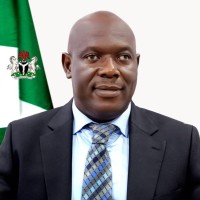
The Hydrocarbon Pollution Remediation Project (HYPREP) has commemorated the 15th anniversary of the release of the United Nations Environment Programme (UNEP) Environmental Assessment Report on Ogoniland, reaffirming its commitment to restoring the environment and improving the livelihoods of affected communities.
In a statement signed by the Project Coordinator, Prof Nenibarini Zabbey, to commemorate the anniversary, HYPREP described the anniversary as a significant milestone in Nigeria’s environmental restoration efforts, noting that the project has made remarkable progress in implementing the recommendations of the landmark UNEP report released on August 4, 2011.
The UNEP report had revealed extensive oil pollution across Ogoniland, severe environmental degradation, and serious public health risks resulting from decades of petroleum operations. It also recommended an initial $1 billion fund to commence the cleanup of the affected communities.
According to HYPREP, the Federal Government formally launched the Ogoni clean-up in 2016, while the Project Coordination Office was established in 2017 to drive the implementation of UNEP’s recommendations.
Zabbey said the current administration has continued to prioritise the project under the Renewed Hope Agenda.
Providing an update on the cleanup, the Project Coordinator disclosed that 30 of the 65 contaminated sites identified by UNEP have been fully remediated, while work is ongoing at several medium- and high-risk locations. It also stated that more than 1.5 million mangrove seedlings have been planted as part of what it described as the world’s largest restoration of oil-degraded mangroves, with over 1,000 hectares of shoreline already rehabilitated.
Zabbey further revealed that 49 Ogoni communities have been connected to potable water schemes through multiple water projects and booster stations aimed at providing safe drinking water across the region.
In the health sector, he said the 100-bed Ogoni Specialist Hospital in Kpite and the 43-bed Cottage Hospital in Buan are nearing completion, adding that several existing health facilities have been upgraded with modern medical equipment, while five ambulances have been donated to improve emergency healthcare services. The Project Coordinator also disclosed that a three-year human health biomonitoring study is being conducted in collaboration with the World Health Organization’s International Agency for Research on Cancer (IARC).
On economic empowerment, Zabbey stated that the Project has created more than 8,000 direct jobs and trained thousands of Ogoni youths and women in various vocational and technical skills, including software development, cybersecurity, aviation, commercial diving, seafaring, mechatronics, and creative arts. The project also reported awarding scholarships to more than 1,000 students, providing grants to small businesses, and supporting persons living with special needs through skills acquisition programmes.
The statement further highlighted ongoing legacy projects, including the Ogoni Power Project and the Centre of Excellence for Environmental Restoration, which it said is about 96 per cent complete. HYPREP also welcomed the recent designation of the Ogoni Wetland as a Ramsar Site of International Importance and pledged to continue promoting biodiversity conservation and sustainable management of the ecosystem.
Marking the anniversary, Zabbey said the progress achieved over the past 15 years demonstrates the collective commitment of government, development partners, stakeholders, and local communities to restoring Ogoniland. He called for renewed collaboration to sustain the cleanup effort, promote environmental sustainability, and support the long-term development of the region. 3
-

 News2 days ago
RSG Targets Nine Million Residents in Mosquito Net Distribution Campaign
-

 Oil & Energy2 days ago
Aiyedatiwa Signs New Electricity Bill
-

 Oil & Energy2 days ago
NLNG Commissions Research And Innovation Centre In RSU
-

 Maritime2 days ago
Marine Minister Commends President Tinubu On NPERA Bill Assent
-

 News2 days ago
KenPoly Holds Eight Convocations, August 29
-

 News2 days ago
RSG Begins Another Phase of Projects Commissioning Today
-

 News2 days ago
RMAFC Completes Revenue Sharing Review, Proposes New Pay
-

 Maritime2 days ago
NAGAFF Petitions IGP Over Alleged Maritime Police Harassment