
Oil & Energy
Distributed Solar ‘ll Assist 70m Nigerians Without Electricity— Mission 300

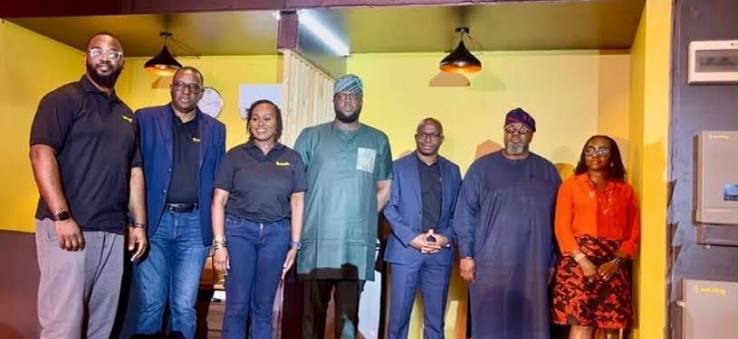
The Technical Lead for Mission 300 in Nigeria, Mr Dayo Olowoniyi said Nigeria recorded over five million new off-grid connections between 2025 and 2026.
Olowoniyi ?????????????made the remark at a Renewable Energy Product Launch, organised by Sun King, in Lagos, at the weekend.
Olowoniyi, said distributed solar is critical to reaching over 70 million Nigerians who currently have no electricity.
Olowoniyi said Nigeria recorded over five million new off-grid connections between 2025 and 2026, adding that distributed solar is one of the fastest ways to extend electricity to underserved communities.
According to him, the Federal Government’s DARES programme, implemented by the Rural Electrification Agency (REA), offers capital subsidies to renewable energy firms to reduce the cost of solar for Nigerians..
Olowoniyi said the programme, supported by the World Bank with $750 million, is helping companies deploy solar equipment in rural and low-income communities that otherwise could not afford it.
“The Federal Government cannot do it alone,” Olowoniyi said, stressing the need for more participation by state governments and the private sector to deepen solar penetration in Nigeria.
He said Mission 300, which seeks to connect more than 300 million Africans to electricity, was monitoring the pace of new connections and deployment of solar home systems and productive-use equipment in Nigeria.
Olowoniyi said sustained access to capital and stronger private-sector participation would be required to maintain the pace of electricity connections.
Also, Special Adviser to the Lagos State Governor on Climate Change and Circular Economy, Ms Titilayo Osodi, said renewable energy could improve the productivity of Micro, Small and Medium Enterprises (MSMEs) while supporting the state’s climate and sustainable-development goals.
Oshodi said reliable energy could enable businesses to operate equipment such as freezers and other appliances, while supporting activities linked to education, food preservation, water and sanitation.
She said financing options that enable households and businesses to pay for renewable energy systems in installments could improve access for people at the lower end of the socio-economic ladder.
Oshodi said more deployment of renewable-energy solutions to MSMEs could boost commercial activity and contribute to economic growth in Lagos State.
The Country Business Manager, Sun King Nigeria, Lisbon Ogunsanmi, said the company’s monthly solar-system sales had risen from about 3,000 units to around 100,000 units, reflecting growing demand for alternative energy solutions.
Ogunsanmi said the company had trained over 200 installers and operated over 136 shops, with after-sales teams across the country.
He identified affordability as a major barrier to solar adoption, saying many households and businesses could not afford to pay the full cost of a solar system upfront.
He said financing models that allowed customers to make regular payments over time could help bridge the affordability gap and enable more businesses to access reliable power.
The Vice President, Pay-As-You-Go Sales, West and Central Africa, Sun King, Omoyemi Tuga, said the company had introduced a 5 KVA Power Hub system, expandable to 30 KVA, and a 210-litre Power Freeze for households and businesses.
Tuga said the Power Freeze could operate with solar power during the day and battery power at night, while the Power Hub could support homes, businesses, schools and hospitals.
He said the company’s ‘EasyBuy’ financing model enabled customers to make an initial payment and subsequently pay weekly or monthly over one to two years, depending on the product.
Tuga said customers could access the 5 KVA Power Hub with a down payment from N340,000, while the Power Freeze would be commercially available soon.
On his part, the Vice President, Global Affairs and Marketing, Sun King, Catherine Mudachi, said the financing model was designed to enable small businesses to pay for energy equipment from their business income rather than make the full payment upfront.
Mudachi said the model allowed customers to work toward ownership of the equipment while spreading the cost over time.
She said collaboration among government, private-sector operators and financiers remained important to expanding access to reliable and affordable electricity, particularly for underserved households and businesses.


Continue Reading
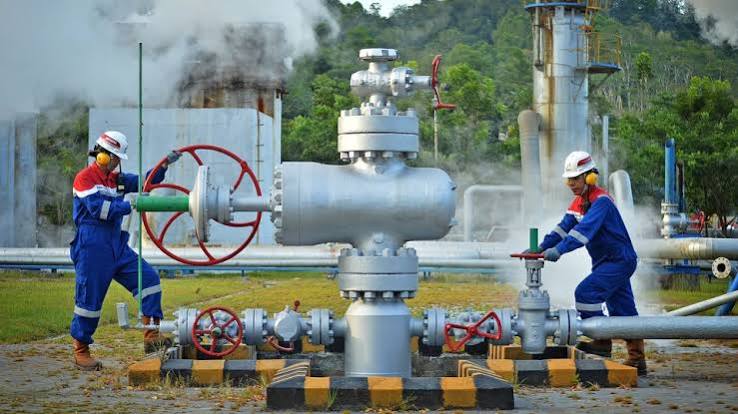
The Trump administration is no friend of wind and solar. Axed subsidies and project suspensions have been the attitude towards those alternative forms of energy. Geothermal, however, is something else. The current Department of Energy is very much for it. In fact, it is so much for it that it funded an experiment that would show whether fracking technology could be used to generate geothermal anywhere in the world.
Geothermal energy is, simply put, heat. It is heat that is generated from the decay of radioactive elements in the planet’s mantle. The amount of energy this heat translates into is quite impressive. According to the Union of Concerned Scientists, just 33,000 feet below the Earth’s surface, there is 50,000 times more energy than the energy all the oil and gas in the world can produce. This energy can be harnessed and used for heating and power generation.
However, there is a tricky aspect to it. First of all, 33,000 feet is quite deep, and getting to this depth to tap the planet’s sub-crust heat is both technologically challenging and expensive. This has made geothermal an energy source with limited practical applications in locations where the heat is closer to the surface, notably Iceland. Yet some believe fracking can help make it easier to tap that heat, and the Department of Energy’s FORGE laboratory is putting this belief to the test.
The purpose of the test is to literally create a water reservoir in a rock formation by injecting water deep into the rock, using hydraulic fracturing to open up space for the water, and then, once it heats up there, draw it out and use it for heating or power generation. The big question is whether the water heated up in the rock would stay hot enough for power generation or cool too quickly to use it for these purposes.
“There’s potential,” Annick Adjei, a senior research analyst at Wood Mackenzie, told Bloomberg. “But the risk is really in repeatability. We need a bit more in the way of milestones to see how things will go.”
According to the Department of Energy, there have been some positive results from earlier tests that encourage optimism. In its news release about the current test, the DoE said that two years ago FORGE had successfully stimulated the injection and production wells, meaning they managed to replicate a fracking process that traps water in the rock for an extended period. It then started injecting water at a rate of 10 barrels per minute. The water heated to temperatures of 370 F. That test lasted 30 days. The one currently taking place in Utah will last up to four months in order to generate more reliable data.
“The positive results achieved by the [FORGE] project over the past few years have been very beneficial to the industry…this extended circulation will provide answers to the pressing questions about thermal decline and water loss, allowing geothermal companies to continue growing and to flourish,” the head of FORGE, principal investigator Dr. Kristie McLin, said.
Promising results are one part of the flourishing equation. Costs, unfortunately, are another. For all its potential, geothermal remains a rather expensive way to generate energy when compared with gas or coal, for instance. The closed-loop system that FORGE is testing in Utah could expand the areas where we could utilize the Earth’s heat, so to speak, but the costs would need to come down first in order to make the technology truly commercial.
The possibly ironic part is that the oil and gas industry has been indispensable for the geothermal industry because it is the industry that knows how to drill deep and (relatively) cheaply. If there is one industry that can make the commercial viability case for geothermal, it would be oil and gas.
By Irina Slav for Oilprice.com
The Nigerian Electricity Regulatory Commission (NERC) has issued 194 licences, permits and certifications across Nigeria’s electricity market in 2025, representing a 15.5% increase from the 168 approvals recorded in 2024.
The increase reflects continued regulatory activity across both conventional and decentralised electricity segments, particularly in mini-grid development and electricity metering.
NERC disclosed this in its 2025 Annual Report, with the approvals covering electricity generation, distribution, trading, mini-grids and metering activities.
The regulator revealed that mini-grid permits accounted for the largest number of approvals in 2025, with NERC issuing 64 permits.
The report further shows that Meter Service Providers received 43 approvals, while Meter Asset Providers accounted for 30. Captive power projects received 31 licences.
NERC also issued seven licences for electricity distribution networks (IEDN), six off-grid generation licences, five embedded generation licences and six trading licences.
According to NERC, two on-grid generation licences were issued during the year.
The regulator’s 2025 approvals were therefore heavily concentrated in distributed generation and metering, with mini-grids, captive power and metering-related permits accounting for 168 of the 194 approvals.
In 2024, NERC issued 168 licences, permits and registrations across the sector, the report stated.
The approvals included 22 off-grid generation licences, 39 Meter Asset Provider (MAP) permits, 36 Meter Service Provider permits, 27 mini-grid permits and 24 captive power licences.
NERC also issued nine trading licences, seven mini-grid registrations, three on-grid generation licences and one System Operator licence.
The composition of approvals changed significantly in 2025, with the regulator issuing substantially more mini-grid permits while approvals for Meter Asset Providers and Meter Service Providers also remained significant.
In April, NERC issued the Mini-Grid Regulations 2026 aimed at improving electricity access across Nigeria, particularly in underserved and unserved communities.
Recall that the NERC had issued a new directive introducing stricter monitoring and transparency requirements for Nigeria’s power transmission system.
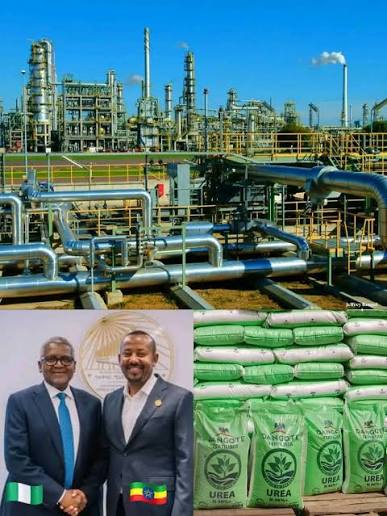
The Indorama Eleme Petrochemicals Limited (IEPL) has revealed plans to expand its petrochemical and fertiliser plants with a $3 billion investment to become Africa’s largest petrochemical and fertiliser hub.
The plan, according to the company, is to be executed within the next five years.
Managing Director of IEPL, Manish Mundra, disclosed this while delivering a keynote address at the 7th Mid/Downstream Oil and Gas Conference, in PortHarcourt.
The conference was organised by the Centre for Gas, Refining and Petrochemical Engineering (CGPRE) University of Port Harcourt, in conjunction with the Nigerian Society of Chemical Engineers.
Represented by the Head, Fertiliser Manufacture, Indorama Eleme Fertiliser and Chemicals Limited, Upendra Singh, Mundra noted that Nigeria holds Africa’s largest gas reserve and second-largest oil reserve.
Mundra said while the country’s refining capacity is expanding rapidly, yet the country still imports the bulk of its plastic, fertilisers, specialty chemicals, among others
The Indorama boss noted that repositioning the sector means converting hydrocarbon endowments into diversified high-value industrial output.
He urged the government and stakeholders in the sector to look into the issues of thin downstream base, innovation gap, and sustainability imperative to harness the huge benefits of the oil and gas sectors.
“Nigeria again has the resource, large resource base for oil and gas, which is exported as Liquefied Natural Gas or converted into polymers, fertilisers, and downstream products. The past five years have changed the arithmetic of the choice.
“For this, we need to have the policy reform, like PIA 2021 and subsidy deregulation, which are resetting the investment signals across the value chain as new downstream landscape, large-scale refining and petrochemical capacities are coming up, pushing Nigeria from import dependence toward the next export state status,” he said.
Mundra stated that increasing population growth, agriculture, construction, and packaging keep lifting African demand for polymers and fertilisers.
“We need to capitalise on the Middle East crisis and solve logistic challenges to make Africa more attractive for the West.
“We have the highest massive gas stock in Africa, more than 206 TCF, which can be converted into orifins: polyolifins, ammonia, urea, and intermediate integrated—integrated complexes. It can further be converted into resins and packaging pipes, textiles, for domestic consumption or exported to West and Central Africa,” he added.
Earlier in his welcome address, the Chairman, Governing Board, CGRPE, Anthony Ogbuigwe, said the conference was targeted at sensitising policy makers in the country on the need to add value to the oil and gas sector by utilising by-products of the sector to create more wealth for the country.
-
 News2 hours ago
Account For ?126bn ‘Missing’ Electoral Funds, SERAP Tells INEC
-

 News2 hours ago
NDLEA Seizes UK-Bound Cannabis, Drugs Hidden In Bread, Speakers
-

 News2 hours ago
NBA Tasks Law Students On Advocacy, Professional Excellence
-
 News2 hours ago
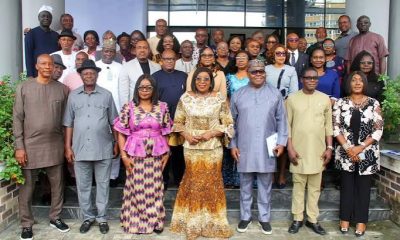
RSG Tasks Permanent Secretaries On Transformational Leadership …As Number Of PS Rises To 39 In Rivers
-
News2 hours ago
RSLGSC: Critics Of Biometric Exercise Are Haters Of Rivers -Chairman …Insists Commission Never Sacked 21,000 Workers …Discovers Seven-Year-Old On Staff Roll
-
 Maritime13 seconds ago
Workers Welfare Our Priority —MWUN PG
-

 News2 hours ago
Cultivate Culture Of Thanksgiving, Fubara Urges Rivers People
-
 News2 hours ago
Nigeria Sustains OPEC Quota Compliance As Oil Output Hits 1.68m bpd