Connect with us

Opinion

Sacrificing Humanity for Politics? 

Published

on

“Politics is temporary, but humanity is permanent. No politician is worth sacrificing genuine friendships, family bonds, or peaceful coexistence.””Politics is temporary, but humanity is permanent”.

Every election season leaves behind more than ballot papers and campaign posters. It often leaves broken friendships, divided families, fractured communities, and hearts filled with resentment. In the heat of political competition, many people forget a simple but profound truth: politics is temporary, but humanity is permanent. Across our communities, it has become increasingly common to see people sever lifelong relationships simply because they support different political parties or candidates. Individuals who once shared meals, celebrated milestones, and stood by each other during difficult times suddenly become strangers not because they committed any personal offence, but because they exercised their democratic right to think differently. This growing trend should concern every citizen. Politics is designed to provide leadership, shape public policy, and improve society.

It was never intended to become a weapon for destroying relationships or creating permanent enemies. When politics begins to erode our humanity, it ceases to serve its true purpose. A democratic society thrives on diversity of thought. Every citizen possesses the constitutional right to support any political party, candidate, or ideology without fear of intimidation or hatred. Political disagreement is not a crime; rather, it is evidence that democracy is alive and functioning. The true measure of political maturity is not our ability to silence opposing voices but our willingness to respect them. Unfortunately, many people have mistaken political loyalty for personal hostility. Instead of debating ideas, they attack personalities. Instead of discussing policies, they spread insults and misinformation. Instead of building bridges, they construct walls of bitterness.

Such behaviour weakens not only our relationships but also the democratic values we claim to defend. The reality is simple: elections are temporary. Political offices have fixed tenures. Governments change. Political alliances shift. Today’s political rivals may become tomorrow’s allies, while today’s allies may become tomorrow’s opponents. History has repeatedly demonstrated that politicians who once exchanged harsh words eventually sit together at negotiation tables in pursuit of shared interests. Yet ordinary citizens often remain trapped in unnecessary hatred long after political leaders have reconciled.This reality offers an important lesson. No politician should be worth sacrificing genuine friendships, family bonds, or peaceful coexistence. Political support should never require personal hatred. We can campaign passionately for our preferred candidates while still respecting those who choose differently.

Democracy flourishes when disagreement remains civil. One of the most dangerous habits in politics is inheriting other people’s enemies. Far too often, supporters adopt the personal conflicts of political leaders as though they were their own. People who have never met begin insulting one another on social media, damaging relationships, and sometimes engaging in violence simply because influential figures disagree.Such misplaced loyalty serves no meaningful purpose. Political leaders often possess the opportunity to reconcile, negotiate, and move forward after elections. Their supporters, however, are frequently left with damaged relationships, regret, and lasting divisions within their communities. Wisdom demands that citizens distinguish between political competition and personal relationships. Rather than inheriting hostility, we should cultivate independent judgment.

Judge individuals by their character, integrity, honesty, and personal conduct not merely by the colour of the political party they support. A person’s political affiliation does not automatically define their values, competence, or humanity. Equally important is the need to elevate the quality of our political conversations. Instead of engaging in personal attacks, we should focus on issues that genuinely affect people’s lives. Discussions should revolve around education, healthcare, infrastructure, security, economic growth, employment, agriculture, and accountable governance. These are the matters that determine the future of our nation not endless exchanges of insults. Social media has further amplified political intolerance. Behind anonymous profiles and smartphone screens, many people say things they would never express in person.

Every post, comment, and shared message has the potential either to promote understanding or to deepen division. Responsible citizenship requires restraint, accuracy, and respect, especially during politically sensitive periods. Politics should inspire service, not hostility. Leadership should unite rather than divide. Citizens should be free to disagree without becoming enemies. After all, beyond our political preferences, we remain neighbours, colleagues, business partners, classmates, worshippers, and fellow citizens who share the same hopes for peace, prosperity, justice, and national development. As another political season approaches, let us remember what truly matters. Campaigns will end. Elections will pass. Winners will celebrate, and losers will regroup. But the relationships we preserve, the respect we extend, and the humanity we uphold will remain long after the campaign slogans have faded.

The greatest victory in politics is not defeating an opponent at the polls; it is preserving our values while participating in democracy. Let us choose dialogue over division, understanding over intolerance, and respect over hatred. Above all, let us never forget this timeless principle: Politics should never be more important than humanity. And perhaps the wisest political advice anyone can embrace is this: Never inherit people’s enemies. In doing so, we preserve not only our relationships but also the very spirit of democracy itself.

By: Michael T. Abraham

Continue Reading

Opinion

FG’s Transport Support And Rivers Workers

Published

on

The Federal Government’s approval of a N70,000 monthly transport intervention for public service workers for six months, beginning in November 2026, offers hope to employees struggling with the rising cost of living. The agreement with the Nigeria Labour Congress (NLC), reached at a conciliation meeting in Abuja on October 27, is intended to cushion transport costs and ease pressure on workers’ incomes. But for public servants in Rivers State, it raises a familiar question: will the State Government key into the intervention and ensure that its workers benefit? The agreement provides for N70,000 monthly across all levels, for six months. The Federal Government also approved peculiar allowance arrears effective from May 1, 2026, to be paid in three equal instalments beginning in November.
The parties agreed to reconvene after one month to assess implementation. Ultimately, the value of these resolutions will be measured not by announcements but by whether eligible workers receive the money. Transport costs consume a substantial share of many civil servants’ earnings before they can meet household needs. Support for commuting is therefore not a luxury or political favour; it is temporary assistance to help workers remain at their jobs without sinking further into hardship. For lower-paid employees, transport costs can turn modest salaries into a daily exercise in difficult choices and sacrifice.
The agreement also urges State and Local Governments to participate and unions to press for implementation. The federal agreement does not automatically guarantee that every State and Local Government employee will receive the support. State authorities must clarify how it will apply to their workforce, make the necessary arrangements and publish a payment timetable. Rivers State must approach the arrangement with urgency and transparency. The Government should State whether it will implement the intervention and when payments will begin. Any administrative or financial question should be addressed promptly with organised labour, not allowed to become excuses for delay.
The concern is sharpened by the earlier N35,000 monthly wage award introduced by the Federal Government in 2023 after petrol subsidy removal. It was intended as temporary relief pending a new national minimum wage. While several States negotiated and paid wage awards or related sums, implementation nationwide was uneven. Reports in 2024 indicated that many States had failed to pay the federal award, while others provided different amounts. In Rivers, labour and media reports raised concerns about implementation of the N35,000 award for State workers, amid separate announcements and arrangements concerning Local Government employees.
The wage award was meant to ease the immediate effects of subsidy removal, yet workers faced uncertainty over whether the promised relief would reach them. In February 2024, the Rivers State Government announced approval of the N35,000 award for local government workers, but subsequent reports showed that implementation across worker categories remained a concern. The lesson is clear: approval and implementation are not the same. A declaration at a meeting offers little comfort to a worker whose account does not reflect the promised payment. For workers who travel to their offices daily, the implications of delayed support are significant. Transportation expenses compete with food, rent, school fees, healthcare and other essential household needs.
As fares rise, employees may be forced to reduce spending on necessities or borrow to sustain their families. A timely transport intervention would therefore provide practical relief and demonstrate that government understands the economic pressures confronting its workforce. Its temporary nature makes prompt implementation even more important. It is fair to acknowledge that this transport intervention is a new agreement and that its administrative details may require clarification. Rivers State should not be condemned in advance for a failure that has not occurred. Nevertheless, the earlier experience gives workers legitimate grounds to seek assurances before the November commencement date. The State should avoid allowing uncertainty to persist until workers begin asking why the promised assistance has not arrived.
The NLC and unions in Rivers State should engage the State Government immediately and seek a written commitment, an implementation plan and a process for reporting missed payments. If clarification from the Federal Government is needed, the State should seek it without abandoning the goal of providing relief. Labour leaders must also keep members informed about progress and insist that any agreed arrangements are applied fairly and transparently. The Rivers State Government should treat this intervention as an opportunity to rebuild confidence. Timely support would show that workers’ welfare is more than a talking point and that the State recognises the economic realities confronting its employees.
Silence, delay or selective implementation, by contrast, would revive frustration over earlier relief measures and weaken trust between government and labour. Every month lost to administrative delay leaves workers facing the same transport burden without the intended assistance. The State should consult labour, publish arrangements and pay eligible workers on time. Rivers workers should not have to wonder whether federal relief will reach them. The Federal Government has announced the support; now the State must make its position clear. We hope the N70,000 monthly transport intervention will not follow the troubling path of the earlier wage award. Rivers State should learn from that experience and ensure that this time, relief is not merely promised but delivered.


Sylvia ThankGod-Amadi

Continue Reading

Opinion

Ancestorial Worship: My Take (1)

Published

on

Everyday, Christians call on Abraham, Isaac and Jacob as they pray to God in the privacy of their homes across our multicultural, multiracial and multiethnic world. On Sundays and almost everyday of the week in the new-found full freaking fanaticism in Pentecostalism, they gather in the more than four million churches or congregations in the world to worship God, invoking the spirits of the ancestors of Jews. Meanwhile, in the scaremongering antics of institutional religion, the African has allowed himself to be hoodwinked into believing that invoking the spirit of his ancestors in prayers is idolatry and patently evil. He is mind-controlled into believing that indulgence in what the Christian clergy calls ”Satanic Act” is a sure ticket to Hell, where the individual is tormented, burnt and charred till eternity on the orders of a loving Father; what a laughable irony.
Come with me on my experience of what the Christian clergy contemptuously calls ancestorial worship. One Monday in September 1988, I drove from Port Harcourt to Owerri, accompanied by Chief AM Abasi who was the general manager of Delta Holdings Ltd, a company owned by Chief Ranami Abah, (Abadifeni III). Our mission was a meeting with Mr. Nwaorgu, the marketing manager of 33 Breweries Ltd for a dealership for Mrs. Alice Abah, whose husband, Chief Ranami Abah, had substantial equity shareholding in 33 Breweries Ltd. At the end of the meeting, we agreed to return on Wednesday with Mrs Alice to sign a contract for the dealership. When Chief Abasi and I stepped out to the parking lot, it hit me that I could not recollect how I drove from Port Harcourt through Igwuruta, Isiokpo and Elele to Owerri.
First, I waved the feeling off, ascribing it to the aerodynamic and slippery nature of the super slick German machine, a Mercedes-Benz 280 SLC convertible owned by Chief Ranami Abah. But on a second thought, I sensed a premonition; an ominous feeling. Then a sense of foreboding hit me, leaving me with the chilly feeling that something wrong was in the air. For a person who does not know fear as a result of having had out-of-body experience (OBE) in 1975 and considering the threshold of death the most beautiful experience in my life, it was a very worrisome feeling, to say the least. I quickly shook those thoughts out of my head, engaged the gear of the ever-ready German machine and zapped through Owerri traffic, attracting the same attention that trailed us all the way from Port Harcourt.
At Control Post, an inner voice instructed me not to return to Port Harcourt through the route we came. In reflexive obedience to the mysterious inaudible voice, I turned right (northwards) and stepped heavily on the gas. The straight six-cylinder engine roared in dutiful obedience; the automatic transmission immediately dropped into a lower gear, thereby giving the engine a very powerful pull that enabled the small-bodied car to dust every other vehicle on the road. Through the rear view mirror, I saw the vehicles we overtook recede speedily and virtually disappear behind us. In almost a whisper, Chief Abasi asked if I wanted to visit the 33 Brewery factory at Awo Omamma; I said ”no” without explaining the movement in the opposite direction of our journey.
Strangely, Chief Abasi did not pry further. We raced on, northwards; in thunderous silence. At Ogbaku junction, I turned left, drove westwards past Ejemekwuru and Izombe, turned left at Oguta and headed southwards on the Oguta Lake–Egbema–Omoku–Ahoada Federal Road. Carefully navigating the potholes that generously punctuated the road vis-a-vis the very low clearing of the car, I entered Egbema territory at Opuoma, drove through Mmahu, Abacheke, Okwuzi and turned eastwards to Mgbede, my home town. There, I quickly introduced Chief Abasi to my parents, left him with them and briskly walked a few metre to the grave of Osai, my grandfather. At the graveside, I solemnly told Osai that I sense something wrong in the air.
Then, in furious rage, I threatened him and my uncle, Lazarus, who lay beside him, that if they remained sleepy-eyed in that dimension and I am forced out of this world, that I will scatter their ribcage with penknife. My cousin and age mate, Luke Ofere, came out of his house and asked what was wrong and why I was in tears. With hot tears running down my cheeks, I turned around and left the graveside without a word to him; shock, surprise and confusion were boldly written on his face. On my way back to my father’s house, Nze Romanus Ogboh caught up with my brisk strides and, viciously pulling his right ear, he warned me to be careful on the road; that he dreamt that I died in a motor accident but that he administered a potion on me and I came back alive.
He was completely confused when I replied ”I know” and continued walking in tears towards my father’s house without a further word. Still in the holy rage, I called out Chief Abasi to join me in the car. Back to Port Harcourt through Omoku, Ahoada, Elele Alimini and Emohua, I told my spouse that something wrong is certainly around the corner. As we planned, Chief Abasi travelled to Calabar on Tuesday to inform Auntie Alice of the development and request her to come to Port Harcourt on Wednesday for onward journey to Owerri to effect the dealership contract. On Wednesday, I waited for them but they did not show up. I called Chief Abah and complained about the development. Thursday morning, they pulled up in front of my apartment in a blue Peugeot 504.
To be continued in our next edition.

Jason Osai
Osai lectures in Rivers State University.
Continue Reading

Opinion

Checking Voter Apathy In Nigeria’s Electoral Process 

Published

on

Quote:“Apathy may express frustration, but surrendering our votes only gives others greater power to determine our future. Nigeria needs credible elections, accountable leaders and citizens who refuse to abandon their democratic rights.”
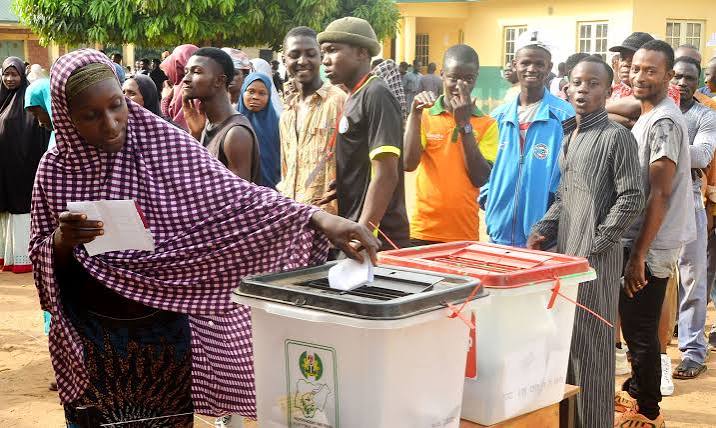
“I actually don’t know what is wrong with this country called Nigeria. Nothing will ever make me go out under the scorching sun to vote for anybody again. After all, my vote doesn’t count. “We go out and vote, but in the end, they announce whatever result they want and tell the opponents to go to court. Is this the Nigeria we all want?” These are the frustrations of many Nigerians who have lost faith in the electoral process. For them, elections have become a cycle of high expectations, alleged irregularities and disappointing outcomes. Consequently, many are becoming indifferent to how political leaders emerge and what they do after assuming office. This growing voter apathy poses a serious threat to Nigeria’s democracy and must be addressed before the 2027 general election.
Some politicians, including councillors, local government chairmen, members of the House of Representatives, senators and governors, have disappointed the people they were elected to represent. Constituents who expect their representatives to address pressing community needs often complain of neglect, poor performance and limited engagement after elections.bAs Chinua Achebe’s celebrated novel, “Things Fall Apart”, suggests, things appear to be falling apart in Nigeria’s electoral system. Yet, withdrawing from the electoral process is not the solution. Rather, it could worsen the situation by allowing a relatively small proportion of voters to determine the country’s political future. Recently, the National Orientation Agency (NOA) launched a nationwide grassroots mobilisation campaign to address voter apathy, vote buying and electoral violence ahead of the 2027 general election.
The campaign, themed “Your Vote, Your Voice, Our Future: Say No to Apathy, Vote Buying and Violence. Let’s Build a United Nigeria in 2027,” was inaugurated in Abuja. Speaking at the event, the Minister of Information and National Orientation, Mohammed Idris, commended the agency for the initiative, emphasizing that citizens must recognize the importance of their votes in determining the country’s political leadership and future. He warned that voter apathy, vote buying and electoral violence threatened democratic development, calling for stronger collaboration among government institutions, electoral authorities, security agencies, community leaders and citizens. The Director-General of the NOA, Mallam Lanre Issa-Onilu, explained that the agency would deploy its state directorates across the 36 states and the Federal Capital Territory to promote responsible electoral participation.
The campaign will use local languages, radio programmes, town hall meetings, community dialogues, drama and digital platforms to reach Nigerians in both urban and rural communities. The Chairman of the Independent National Electoral Commission (INEC), Prof. Joash Ojo Amupitan, also reaffirmed the commission’s commitment to conducting free, fair, transparent, inclusive and credible elections in 2027. He stressed the importance of early preparation, stakeholder collaboration and active citizen participation. These initiatives are commendable. However, their success will depend on sustained implementation rather than public announcements alone. Voter education must continue beyond election periods, while electoral institutions must demonstrate through their conduct that citizens’ votes deserve protection.
The government, political parties, electoral authorities and civil society organisations (CSOs) all have important roles to play. First, governments must demonstrate genuine commitment to credible elections by rejecting electoral manipulation, vote buying and the use of thugs to intimidate voters. Electoral offences must be investigated and prosecuted in accordance with the law. Security agencies must also remain professional and impartial throughout the electoral process. Beyond elections, elected officials must deliver the dividends of democracy. Reliable electricity, accessible healthcare, quality education, good roads and employment opportunities can help restore public confidence in governance. Citizens are more likely to participate when they see that democracy can improve their lives.
Political officeholders must also change their attitude towards their constituencies. Representatives should maintain regular contact with their constituents, explain their activities and demonstrate how they address local concerns. Representation should not end with election campaigns, nor should elected officials remember their constituents only when another election approaches. CSOs and political parties must intensify voter education, helping citizens understand that voting is a fundamental democratic right and an important means of holding leaders accountable. Voters should also learn to verify electoral information, report irregularities through appropriate channels and reject inducements that compromise their choices.
The electorate, too, has responsibilities. Voters must resist the temptation to sell their votes for money, food or other temporary benefits. Although economic hardship makes such inducements attractive to some, selling a vote undermines the opportunity to demand accountable leadership. Equally important is the rejection of electoral violence and misinformation. Nigerians must learn to disagree politically without becoming enemies. Citizens should verify claims before sharing them, particularly on social media, and report suspected electoral malpractice to the appropriate authorities. Participation also extends beyond voting. Citizens can attend community meetings, question elected representatives, monitor public projects and demand transparency between elections.
Nevertheless, citizens cannot be expected to sustain enthusiasm when credible complaints are ignored or electoral processes lack public confidence. INEC must therefore strengthen transparency, improve election logistics, communicate promptly and ensure that electoral complaints are handled in accordance with the law. Where disputes arise, the courts must provide lawful remedies. Nigeria’s democracy cannot thrive when eligible voters surrender their voices out of frustration. Restoring participation requires more than urging people to turn out on election day. It demands credible elections, responsible leadership, effective civic education and accountability. The 2027 general election presents an opportunity to rebuild public trust.
The NOA campaign is a welcome step, but all stakeholders must translate its message into action. Every eligible Nigerian should understand that a vote is not merely a mark on a ballot paper; it is an opportunity to influence the country’s future. Apathy may express frustration, but active and responsible participation offers a better chance of achieving change. The time to restore confidence in Nigeria’s electoral process is now. The earlier we act, the better for our democracy and future generations.
By: Calista Ezeaku
Continue Reading

Trending