
Opinion
Niger Rep: Drop ‘Use Of Force’ Option

The resolve to forcefully bring back the ousted democratically elected President of Niger, Bazoum by the Economic Community of West African States in its extra-ordinary meeting held Sunday July 30, 2023 in Abuja, is a source of concern to many. Already, Economic Community of West African States (ECOWAS) member countries last Sunday gave the junta in Niger a seven-day ultimatum to reinstate the ousted President or face military action of the regional commission. France, (the colonial master of Niger), Germany, United States and others are in support of ECOWAS commitment to force out the Government of the junta and restore the administration of Bazoum.
In fact, it is reported that a Nigeria peace delegation headed by a former Head of State of Nigeria, General Abdulsallami Abubarkar met a brick wall as the head of the junta, General Abdourahmane Tehiani refused to meet Nigeria’s emissary.General Tehiani’s action should not be taken lightly. It is a bad omen. There is more to it than what meets the eye. The head of Niger’s junta may be acting the script of an obscure or hidden alliance. Some nations may be beating the drums for the Nigerien junta. “Wisdom” the Bible says “is profitable to direct”. It is reported that Niger that got independence from France in 1960, about 63 years ago is one of the poorest countries in the world.
On one hand, considering the poor economic status and the attendant socio-political challenges of Niger Republic, one would have thought that the junta would have opted for negotiation as a panacea for this impasse. The adamance and resoluteness to hold on to power speaks volumes of the preparedness of the junta which speculatively speaking, may already have the support of some countries, to match action for action and force for force. Already, there seems to be a deepening crack on the Economic Community of West African States (ECOWAS) credibility and avowed determination to forge a united forceful front to reinstate ousted President Bazoum, as some of its member states may have considered a more humane approach to end the political upheaval.
In fact, against ECOWAS stance of directing the Chief of Defence Staff of member states “ to strategise on effective ways to implement a possible military operation to restore constitutional order; Such measures may include the use of force,” if the junta failed to release and reinstate the overthrown President, Bazoum whom France recognises as “sole President”, some countries according to media reports see ECOWAS position as “immoral and inhuman”. But earlier in a broadcast, the head of the junta of Niger, General Tehiani had warned of the dire consequences that will follow if there would be external military aggression. General Tehiani’s threats should not be dismissed with a wave of hand or the antics of a drowning man.
It is instructive to say, borrowing the words of Elechi Amadi in his fiction, “The Concubine” that, “surprise can beat the strongest”, when the preferred Madume lost to Emenike in the physical fight or contest for beautiful Ihuoma. Antecedents have also lent credibility to the fact that size and population may not give a nation advantage over their rivalry.Take Russian and Ukraine for instance. Most people who are abreast of the two countries capacities, would hardly believe that Ukraine can repel and brave the fire-power of Russia several months after mighty and giant Russia launched attack against “grasshopper” Ukraine. For many, it was like a ‘walk over’ for Russia over Ukraine considering the technological, military, population and economic prowess of Russia.
The allied forces of Moab, Ammon and Mount Seir lost to “insignificant” Judah by the God-factor. The warrior, Sennacherib who defeated the “King of Kings”, Nebuchadnezzar and the great city of Babylon in 689 B. C. lost the battle to Jehoshaphat and Judah, a tribe of Israel.It is also instructive to state that what led to the First World War was what I describe as a “trifle” considering the resultant devastation from that war. A Serbian zealot killed an Austrian duke. And that was the embryo of the World War. Nations, except only seven allied with either of the discordant countries of Serbia and Austrian and the feud which would have been nipped in the bud snowballed to a full blown war involving the world with attendant several million casualties, some of whom died from the war-related epidemic.
Serbia and Austria were not “World Powers” but they earned the support and sympathy of world powers and the world was thrown into a chaos and turpitude, the first ever flagrant man’s inhumanity to man at a global scope for four years (1914-1918). I feel a premonition of trouble that a military operation will inevitably cause a turmoil that will dent bi-lateral and multi-latera relationship of ECOWAS member states, and the cohesiveness and objectives of the regional Commission. Military operation, no doubt, will compound the plight of the civil populace who are already wallowing in an orgy of abject poverty. The poor will continue to suffer and the economy will continue to decline. Allied forces can not be sure of a landslide, casualty-free defeat over Niger. Those precious lives that would be avoidably lost on both sides can be saved.
On the other hand, I observe that what is playing out in Niger is beyond a coup d’etat perpetrated by a negligible junta or the Putschists. It is a civil disobedience that has now translated to a revolution. Karl Marx was quoted as saying, “when the people are conscious of the fact that they are oppressed, an they can rise to dislodge the instruments that make the oppression possible”. The wise saying of Marx found expression in Haiti about three years ago when through civil disobedience the unarmed and defenceless populace of Haiti overthrew the repressive military government of that country. Rather than mobilising for military operation in Niger to restore a dysfunctional constitutional Government-a government that has lost relevance, failed in its primary obligation to protect lives and properties; a government that is bereft of viable policies to salvage that country from poverty, hegemony and repression; a government that lacked the political will to midwife good governance, ECOWAS, African and world leaders should strategise on deepening democratic values in African and Third World countries.
African leaders should discontinue surreptitious activities to perpetuate themselves in power even when they have lost the confidence of the masses. I think that for 63years, the people of Niger have been pushed to the wall as evidenced in their abject poverty and “failed state” status. And having come to the wit’s end, they see this period as a veritable opportunity to fight back and quit like independent people. Nigerians should come to the negotiating table but should not be forced through military operation to do so.




Quote: “The Flamingos have conquered the world; Nigeria must now rise to its responsibility of nurturing the next generation of champions.”
Sometimes, sporting victories
More significantly, they
Umejiaku deserves special
Umejiaku received the award
Nigeria has now broken into
For too long, young girls in
But beyond the reward, this
As Nigerians celebrate this
By; Calista Ezeaku
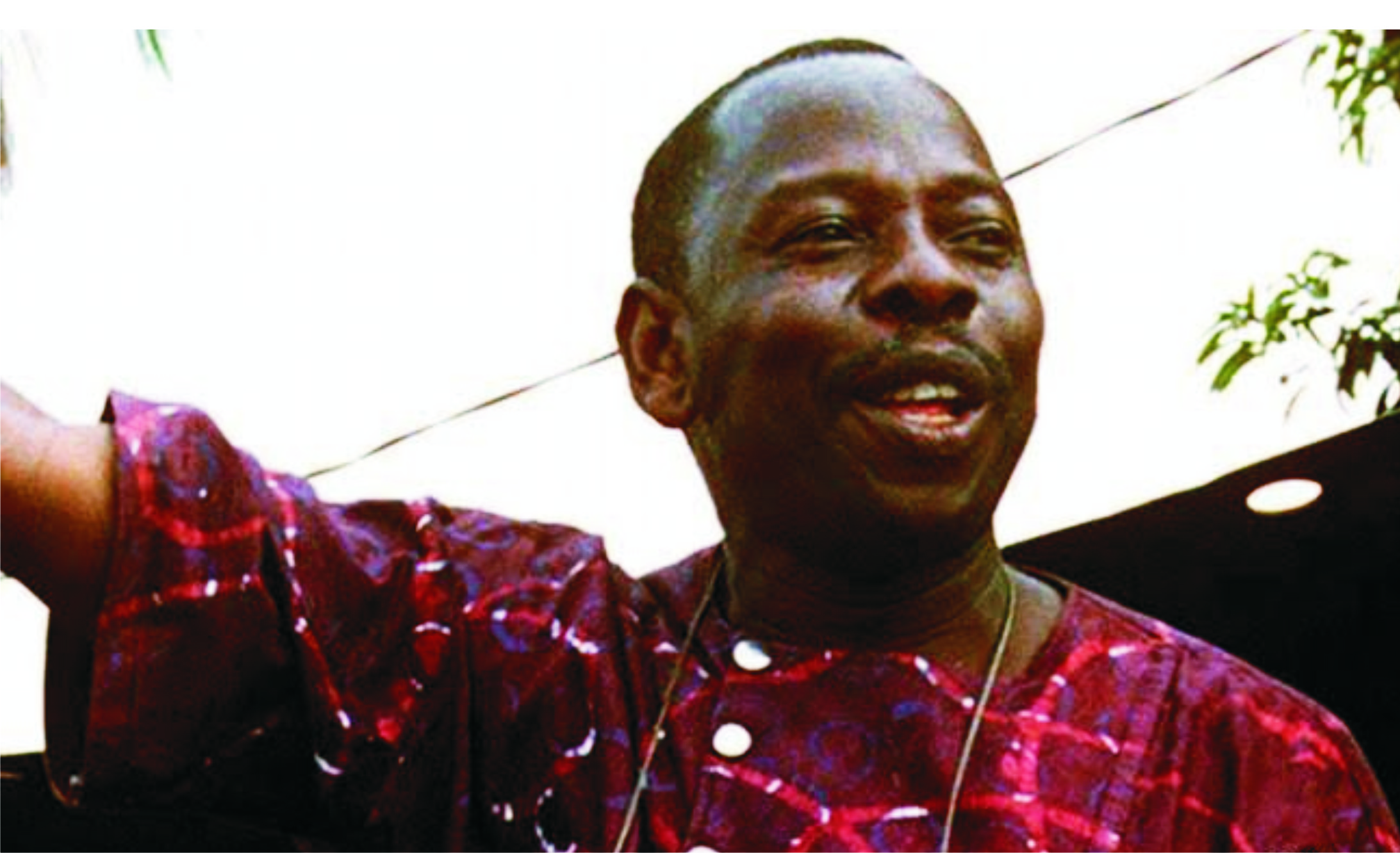
On November 10, 1995, the Nigerian military government of General Sani Abacha executed Ken Saro-Wiwa and eight other Ogoni leaders after a deeply controversial trial. Their deaths marked one of the darkest chapters in Nigeria’s history. At a time when fear silenced citizens and sycophancy flourished around military power, Saro-Wiwa chose to confront tyranny. Many Nigerians retreated into silence, while others praised the regime to secure favour. He knew the risks, yet refused to abandon a people whose land had been devastated by oil exploration and whose lives remained trapped in poverty. His courage arose from the conviction that public responsibility sometimes demands resistance to authority. Saro-Wiwa understood that speaking against a military government could lead to imprisonment or death.
Nonetheless, he believed the suffering of the Ogoni people demanded a courageous response. While oil was extracted from their land, they were left with polluted rivers, damaged farmland, declining livelihoods and an environment hostile to human survival. Fishing grounds and sources of livelihood were threatened, while the people struggled to secure basic amenities. The wealth beneath their soil brought neither adequate development nor a fair share of national resources. For him, silence in the face of injustice would have amounted to complicity. Through the Movement for the Survival of the Ogoni People (MOSOP), he organised a peaceful campaign that took the Ogoni question to the international community. MOSOP gave ordinary people an organised platform through which to express their grievances and insist on recognition.
The Ogoni Bill of Rights, presented to the Federal Government in 1990, demanded political autonomy, economic justice, environmental protection and control over the people’s resources. The campaign exposed the human and ecological costs of oil operations, particularly those associated with Shell, and challenged the apparent alliance between corporate interests and an unresponsive State. The Ogoni struggle became a defining expression of minority rights and environmental justice in Nigeria and Africa. Saro-Wiwa’s writings and mobilisation drew attention to communities treated as expendable because of their limited population and political influence. He argued that numerical strength should never determine a people’s value or rights.
A minority community does not become less deserving of justice because it cannot command electoral numbers or political power. In Nigeria, every ethnic group deserves dignity, protection and a fair opportunity to benefit from the commonwealth. Rather than respond to peaceful agitation with dialogue, the Abacha regime resorted to repression. Ogoni leaders were harassed, detained and killed; others fled into exile. The crisis intensified after four Ogoni chiefs were killed in May 1994. Saro-Wiwa and other MOSOP leaders were arrested, tried by a special tribunal and executed despite international appeals for clemency and serious concerns about the trial’s fairness. The executions drew worldwide condemnation and intensified scrutiny of Nigeria’s human-rights record and oil companies in the Niger Delta.
They demonstrated the danger of using State institutions to suppress peaceful demands. The proceedings remain a reminder of the need for judicial independence and due process. Saro-Wiwa’s courage rested on the conviction that justice must be pursued despite the cost. His method combined non-violent resistance, public education and grassroots organisation. His struggle recalled the civil-rights campaign of Martin Luther King Jr. and the power of peaceful mobilisation against injustice. Saro-Wiwa linked environmental degradation to political exclusion, economic exploitation and the denial of democratic rights. Oil-producing communities, he insisted, should not remain zones from which wealth is removed to develop other parts of the country.
Their people must benefit through roads, schools, healthcare, jobs and clean water. Resource extraction carries a duty to protect host communities. His argument extended to the structure of the Nigerian federation. He challenged a revenue-allocation system that made oil-producing communities bear the environmental and social costs of extraction without commensurate benefits. Like advocates of fiscal federalism, he believed resources should be managed and shared equitably. He envisaged a society in which no community would be disadvantaged by its size, ethnicity, political affiliation, culture or religion. His vision was a country bound together by justice and equal citizenship. Saro-Wiwa was also a gifted writer, dramatist and public intellectual.
Through books, essays, plays and television, he documented Nigerian society’s contradictions and challenged abuses of power. His popular television series, Basi and Company, demonstrated his creative range, while his leadership of the Association of Nigerian Authors encouraged writers to engage national questions. He believed literature should not be detached from society’s struggles. His pen exposed environmental injustice, political repression and the dangers of silencing courageous voices. He used storytelling, satire and drama to shape public consciousness and expose social contradictions. His literary achievements gave his activism wider reach and made the Ogoni experience part of national conversation. His commitment to the Ogoni people extended beyond the oil question.
During the Civil War, he worked to protect his vulnerable community. He urged younger generations to reject subservience and complacency and pursue change through lawful, peaceful means. Citizens, he believed, must not surrender their responsibility to challenge wrong doing. An injury to one community threatens the rights and security of all. The return to democratic government in 1999 and the establishment of the Niger Delta Development Commission, the Ministry of Niger Delta Affairs and the Hydrocarbon Pollution Remediation Project (HYPREP) are among developments that have kept the region’s demands in public view. Saro-Wiwa did not create these institutions, but his movement helped expose the urgency of intervention and sustain pressure for redress.
His death made it harder to ignore the Niger Delta’s environmental and political grievances. Yet, interventionist institutions do not prove that the original demands have been met. Their effectiveness depends on competent leadership, transparent spending, measurable outcomes and community participation. Yet, thirty-one years after his execution, the central concerns of the Ogoni struggle remain unresolved. The HYPREP-led clean-up has offered hope, but many residents await meaningful improvements. Questions persist about the programme’s pace, quality and transparency, and whether its benefits reach ordinary people. A clean-up should be judged not by ceremonies or contracts, but by restored land and waterways, safe drinking water, improved livelihoods and better public health.
It must include long-term monitoring to ensure treated sites remain safe. Residents deserve information about contamination, remediation methods and completion timelines. Reports that water projects in Gwara and Ebubu Communities, in Khana and Eleme Local Government Areas respectively, failed weeks after commissioning have raised further concerns. If confirmed, the failures would indicate weaknesses in supervision, procurement and quality control.
To be continued in our next edition.
Taneh Beemene
-
News4 days ago
RSG Reaffirms Commitment To STEM Education, Technological Advancement
-
Business4 days ago
‘NUJ, NPA’s Partnership Would Boost Port Producrivity, Economic Growth’
-
 News4 days ago
IGP Warns Police Officers Against Partisanship …Directs Regular Engagement With Journalists
-

 Oil & Energy1 day ago
FG To Double Oil, Gas Reserves, Moves To Intensified fresh Exploration
-
Business4 days ago
Fire Threat Interrupts Asaba Air Peace Flight
-
 News4 days ago
Customs To Deploy AI, Scanners Against Snuggling
-
Business4 days ago
Fish Production Deficit, A Major Investment Opportunity – Minister
-
Sports4 days ago
CAF Awards 2026 Gets A New Date