
Editorial
Subsidy Removal Without Domestic Refining?

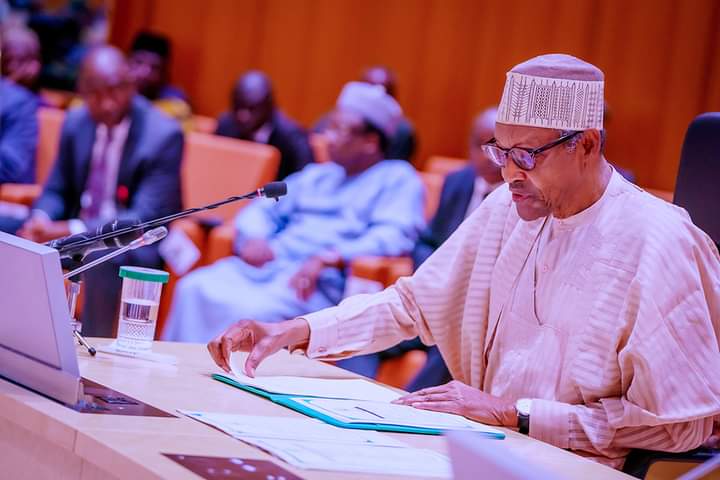
In the 2023 fiscal document presented before the joint sitting of the two chambers of Nigeria’s National Assembly, President Muhammadu Buhari proposed that the subsidy regime would end with his administration on May 29, 2023. However, not a few lawmakers vowed to extend the terminal date for the subsidy removal to the end of 2023.
The Minister of Finance, Budget and National Planning, Zainab Ahmed, disclosed that the Federal Government paid N18.397 billion in subsidies per day. The minister also stated that N6.210 trillion had been disbursed as a fuel subsidy to independent oil marketers from 2013 to 2021. This declaration has elicited reactions from some quarters who feel the subsidy figures are falsified, while others say the subsidy regime is unsustainable as it is hurting the country’s economy.
Recently, the Independent Petroleum Marketers Association of Nigeria (IPMAN) insisted it was opposed to the removal of subsidy on petrol, if the country failed to refine the product. According to the association, with the government importing premium motor spirit (petrol) consumed in the country, removing the over N3.5 trillion subsidy would expose Nigerians to arbitrary pricing.
The Tide remains steadfast in this long-canvassed position that while the subsidy in its present form is destructive and unsustainable, domestic self-sufficiency in refining is the only lasting solution to product availability, price stability and maximisation of the benefits of crude. It defies logic that Nigeria, a leading producer of crude oil, bankrupts itself by importing and subsidising refined petroleum products.
It needs not be said that if the subsidy on PMS is withdrawn, it will plunge several Nigerians into extreme poverty. Recall that Nigeria has maintained the infamous title of ‘World Poverty Capital’ according to the World Bank since 2016. The World Bank data had shown that four in every 10 Nigerians lived below the poverty line of $1.9 per day. Sadly, efforts by the present government to address the rising challenges of poverty through the National Social Investment Programme meant to improve the standard of living of the average Nigerian has yielded no positive result for a project that gulps N500 billion annually.
Next, the current inflation rate of 21.82 per cent is believed will certainly drive more Nigerians below the poverty line by the end of 2023. Globally, economies are devising measures and approaches to cushion the devastating effect of rising prices on the disposable income of their citizens. However, the present federal administration has failed to assist impoverished and vulnerable Nigerians.
Germany, Austria, Qatar, Saudi Arabia, Rwanda, Ghana, and a few other economies are giving out financial incentives to households, cost-of-living allowances, unemployment benefits, an adjustment in wages and salaries, and the roll-out of public transport measures to reduce the impact of inflation. But the Nigerian government has been insensitive to the plight of the citizens, with much attention channelled towards the just-concluded 2023 general election.
Unemployment in the country increases by geometric proportion. The Nigerian Economic Summit Group (NESG) has projected the unemployment rate in Africa’s most populous nation to rise to 37 per cent in 2023. This means that the projected unemployment rate is about four percentage points higher than the National Bureau of Statistics data of 33.3 per cent as of 2020. Additionally, many state governors cannot pay the current minimum wage of N30,000 following financial constraints.
Marketers and other groups in the downstream sector of the Nigerian petroleum industry have said that fuel prices may hit N750 per litre should the petroleum subsidy be removed. Being an OPEC member country, it is a shame for Nigeria to remain the only member that imports over 90 per cent of its refined petroleum needs. The country has no reason not to return its domestic refining. The precipitous removal of the fuel subsidy without making strategic plans or giving particular attention to domestic refining is tantamount to strangulating hand-to-mouth Nigerians.
Nigeria’s energy crisis is self-inflicted. At home, the subsidy thrives on opacity, corruption, abandonment of domestic refining, and a shutting out of the private sector in the downstream oil and gas sector. On the international front, Russia’s war on Ukraine has triggered a jump in prices. Rather than reap a windfall, however, Nigeria’s indefensible reliance on importation is damaging its brittle economy.
Before the fuel subsidy is removed, it will be appropriate for the country to go all out to resuscitate its four comatose refineries and embark on building new ones to mitigate the consequences of the withdrawal. The poser here is: Why are Nigeria’s four ailing refineries yet to be resuscitated? Over the years, previous administrations and the present one have made many attempts to restore those moribund refineries. Unfortunately, they were all in vain, since some avaricious Nigerians sabotaged that much-needed valiant effort.
Certainly, domestic refining will firm up the naira; the total removal of the petrol subsidy will precipitate an economic recession. They should only withdraw it in phases accompanied by a vigorous programme to promote private refineries with incentives, privatisation, and the creation of an investment-friendly environment. The establishment of modular refineries should be approved. These refineries have capacities ranging from 1,000 to 30,000 barrels per day.
Our leaders may just be banking on the coming on stream of Dangote’s 650,000 barrels per day refinery now undergoing finishing touches in Lagos and BUA group’s oil refineries. Dangote industry said in January that the refinery would come on stream before the end of Buhari’s administration. Perhaps this is one of the ways Nigeria would escape the worst case scenario painted by industry watchers. The truth is, there is no alternative to domestic self-sufficiency in refining; that should be the urgent national priority.




The Independent National Electoral Commission’s (INEC) disclosure of an alleged plot to target its ad hoc personnel ahead of the 2027 general elections demand urgent national attention. The reported arrest of suspects, with intelligence support from the Department of State Services (DSS), is encouraging, but must not breed complacency. Any attack on electoral workers threatens not only human lives but also Nigerians’ constitutional right to choose their leaders through credible elections. The alleged conspiracy must be thoroughly investigated, its sponsors identified and all those found culpable prosecuted.
Particularly troubling is the reported targeting of National Youth Service Corps (NYSC) members, who play a vital role in Nigeria’s electoral process. Many serve far from home and undertake sensitive assignments at polling units and other electoral locations. As civilians, they should not be exposed to intimidation, abduction or violence without adequate protection. If election workers are vulnerable, the safety of other officials, observers and voters cannot be guaranteed.
Nigeria’s electoral history offers painful lessons. Human Rights Watch reported in Nigeria’s Post-Election Violence, published in May 2011, that more than 800 people died in the violence following the 2011 general elections. NYSC members serving as electoral officials were among the victims. This tragedy underscores the deadly consequences of political tension, incitement and disputed outcomes. Nigeria must act on the latest warning before another preventable disaster occurs.
INEC deserves recognition for uncovering the alleged plot, while the DSS and other security agencies merit commendation for their reported assistance. However, arrests are only the beginning. Investigators must establish the suspects’ identities, motives, networks and intended targets, ensuring that evidence is admissible in court. The process must remain impartial and free from political interference. Credible public updates are also necessary, provided they do not compromise investigations or operational security.
The authorities must adopt a comprehensive, intelligence-led security strategy for 2027. INEC’s proposed security conference should produce practical measures developed in collaboration with the Inter-Agency Consultative Committee on Election Security (ICCES), the police, the DSS and other relevant agencies. Threat assessments should guide personnel deployment, secure transportation, emergency communications, evacuation procedures and rapid response. Protection must extend beyond polling day to the distribution of sensitive materials, collation centres and the safe return of ad hoc personnel.
Those who provide intelligence must also be protected from retaliation. Confidential reporting channels and appropriate safeguards should be established for informants and others assisting investigations. Equally, security deployments must not intimidate voters or facilitate political repression. Personnel should act professionally, impartially and proportionately, within the law. Clear mechanisms for reporting misconduct and investigating abuses are essential to maintaining public confidence.
The threat also highlights broader concerns about trust in the electoral system. The European Union Election Observation Mission’s June 2023 final report identified shortcomings in transparency and operational implementation during Nigeria’s 2023 general elections, alongside concerns about the legal framework and electoral dispute resolution. Credible elections require more than security; they depend on transparent procedures, accountable officials and consistent enforcement of electoral laws. INEC must demonstrate measurable progress in addressing previously identified weaknesses.
Voter apathy presents another challenge. INEC’s published figures indicate that approximately 25 million people voted in the 2023 presidential election, out of about 93.5 million registered voters, a turnout of roughly 26.7 per cent. Although insecurity is not the sole cause of low participation, threats against electoral personnel can heighten public anxiety and discourage voters from exercising their franchise. INEC should strengthen civic education, improve polling accessibility and communicate procedures clearly. Political parties, civil society and the media must promote peaceful participation and reject electoral intimidation.
Misinformation and manipulated digital content pose additional risks. False reports, fabricated announcements and deepfake videos can inflame tensions, impersonate officials and mislead voters. INEC should establish a well-resourced, rapid-response communication system supported by verified digital channels and timely public statements. Collaboration with credible media organisations and fact-checkers would help counter falsehoods without suppressing legitimate criticism. Clear, consistent communication is indispensable, as administrative confusion and delayed explanations often allow rumours to spread.
Electoral integrity must also begin within INEC itself. The chairman’s warning against partisanship, negligence, extortion and ethical misconduct deserves serious attention. Security measures cannot compensate for officials who abuse their positions or disregard established procedures. INEC should strengthen staff training, ensure transparent recruitment and deployment, provide secure channels for reporting misconduct and enforce disciplinary rules consistently. Allegations of bribery and political interference must be investigated regardless of rank, while ad hoc personnel should receive adequate briefing, support and prompt payment.
The legal framework also requires clarity and consistent enforcement. INEC should explain the precise provisions and applicability of Section 26 of the Electoral Act 2026, including the obligations of electoral officials and security personnel, and publish authoritative guidance on neutrality and professional conduct. Complaints by opposition parties that they have been prevented from campaigning in certain states must likewise be investigated impartially. Any established violations should attract appropriate corrective action. Electoral fairness requires not only impartial polling officials but also lawful campaigning, access to competing viewpoints and freedom from intimidation.
The alleged plot against INEC’s ad hoc personnel is a warning against complacency ahead of the 2027 general election. Governments, security agencies, INEC, political parties and civil society must work together to prevent violence, punish misconduct and protect citizens’ participation. The commission should communicate its security priorities, maintain accessible threat-reporting channels and provide periodic updates on preparedness. Nigeria’s democracy cannot be safeguarded by assurances alone; it requires demonstrable preparation, impartial law enforcement and an unwavering commitment to free, fair and credible elections.
-

 Politics3 days ago
LG CITY BOY COORDINATOR HAILS WIKE’S SUPPORT FOR ONYESOH, TINUBU
-
Politics3 days ago
DIRI INAUGURATES APC CAMPAIGN COUNCIL, SETS MILLION VOTES TARGET FOR TINUBU
-

 Politics3 days ago
NDC Candidate Urges Oborevwori To Probe Asaba Political Violence
-

 News3 days ago
Army Recovers X Account After Hack Attempt
-
 Business3 days ago
Nigeria Loses N17tr Yearly To Abandoned Projects
-
Politics3 days ago
2027: Oborevwori Tasks Media On Fair, Accurate Reporting
-
Politics3 days ago
2027: AKPABIO ENVISAGES TINUBU’S VICTORY IN SOUTH SOUTH REGION
-
Politics3 days ago
Asaba Political Violence: Police Confirm One Dead, Delta Govt Urges Probe