
Opinion
Why Youth Restiveness Thrives

The words ‘youth restiveness’ have become a cliché to Nigerians over the years. This epidemic which has undoubtedly become endemic has been given different colorations. However, I view it as the uncontrolled, violent and unpleasant ways by which youth communicate their dissatisfaction to the government or people in authority over a perceived neglect of their demands and expectations.
The origin of this menace could be traced to the oil-rich Niger Delta region of Nigeria, where the youths felt that the government of the day was not living up to their expectations and yearning, and as a result took to arms, vandalisation of oil pipelines and kidnapping of expatriates just to drive home their points. This strategy, however, took a negative turn on the economy as oil companies have relocated their headquarters to Lagos and other parts of the country while expatriates ran for their lives, thereby crippling growth and development in the region and the country at large because the Niger Delta region is the region that generates the largest revenue for the Federal Government.
Today, we have experienced the proliferation of many restive groups in the country. Apart from the Niger Delta militant groups, there exist MASSOB, OPC, OMBATSE, the defeated Boko Haram and many more groups avenging one grievance or the other. Granted, these restive groups had or are still perpetrating unwholesome acts and gaining government’s attention wrongly, one cannot pretend not to agree with the fact that life is all about cause and effect and to every inaction, there is an action; to every reaction, there is a responsive reaction.
This then brings us to the big question; ‘what could be the causes of these unwarranted restiveness or are they actually warranted? After much pondering and wondering, the following factors were deduced as the possible causes of youth restiveness.
Unemployment: This factor has become a protracted ailment in Nigeria. There are over 20 million unemployed youths ranging from graduates, skilled to unskilled teeming youths who have been denied the opportunity to make a meaning out of their lives.
Since the government always acknowledges this factor to the point that they reflect it in their manifestos, they should rise up to the occasion and do the needful to create job opportunities. Although the Federal Government is gradually stepping on the pedal, the state governments are expected to synergise.
Arming of youths by politicians: For some years, now, power tussle in Nigeria has become a do-or-die affair, a battle for only the strong hearted, politicians now distribute arms to the youths for electioneering purposes, political assassination, ballot box snatching etc and thereafter, abandon them without engaging them in meaningful enterprises or retrieving the weapons they gave to them. These weapons are later used to terrorise the populace through robbery, kidnapping, cultism etc.
When this act of restiveness has fully heated the polity to the point of explosion, even the pot-bellied politicians run abroad for safety, thereby turning the hunter to the hunted.
Corruption: The fact that Nigeria is corrupt is now stale news. Nigeria is now globally renowned for corruption to the point that a search for the word ‘corruption’ on the Internet will likely pop up the suggestion ‘corruption in Nigeria’. That Nigerians are a striking example of the paradox of poverty in the midst of plenty is now a cliché.
Although, some patriotic Nigerians may be in a haste to point out that Nigeria is not a lone ranger in this wilderness of corruption. But unlike in other countries where corruption is peculiar to the ruling class and high ranking public officials, corruption in Nigeria is a horizontal cankerworm that is clinging to the fabric of all, from the ruling class to the ordinary Nigerian. Corruption is everywhere in Nigeria, even in the air we breathe. Who will bell the cat?
However, I think there is still hope for Nigeria, especially now that the current administration has made fighting corruption its major agenda. Nevertheless, I urge the government to look into the following suggestions for possible solutions to this menace;
First is the value reorientation of the youths. The National Orientation Agency (NOA) should embark on massive sensitization and re-orientation of the youth, acquainting them with their rights and responsibilities as citizens of this great country.
Secondly, the government should continue to show serious commitment to the eradication of corruption by ensuring speedy trial and punishment of corrupt persons to serve as deterrent. Nigeria today is fighting to survive from the clutches of economic recession or retrogression as I choose to call it. This economic downturn from all indications was occasioned by the way and manner previous administrations, starting from the days of tyranny under the reckless regime of late Gen. Sani Abacha, to the immediate past administration, mismanaged the country’s fund with reckless abandon.
It is a paradox that a country so blessed by God with resources is now in a precarious situation, looking for help from within and outside to survive.
I applaud the efforts the current administration is making to bring corrupt public servants to book. However, it will be more rewarding if this fight against corruption is holistic enough and not targeted at the opposition alone. It should not be used as a tool to silence the opposition. This sanitization should cut across all and sundry who wear any label of corruption. Only then would Nigerians beat their chest and say ‘freedom at last’.
The government should also make serious efforts to create jobs to reduce the high level of youth unemployment which has been pushing the youths into crime. The youth are the most vibrant and active wing of any country’s population and as such should not be allowed to be idling. An idle mind, they say, is the devil’s workshop. When the active and adventurous mind of the youth is not meaningfully engaged, it engages itself.
Lastly, the government should promulgate laws stopping the use of thugs by politicians and rely more on the Department of State Service (DSS) and the police force for their protection.
It is not a crime for the youths to agitate for their rights, but the way and manner such agitations are communicated is of great concern, especially when it is done in a violent way. Therefore, I appeal to the youths of this great country to use constructive approach borne out of dialogue and good conscience to express and communicate their grievances to the government. It is only when this is done that we can be perceived as true leaders of tomorrow.
Mgboh writes from Port Harcourt.




Quote: “The Flamingos have conquered the world; Nigeria must now rise to its responsibility of nurturing the next generation of champions.”
Sometimes, sporting victories
More significantly, they
Umejiaku deserves special
Umejiaku received the award
Nigeria has now broken into
For too long, young girls in
But beyond the reward, this
As Nigerians celebrate this
By; Calista Ezeaku
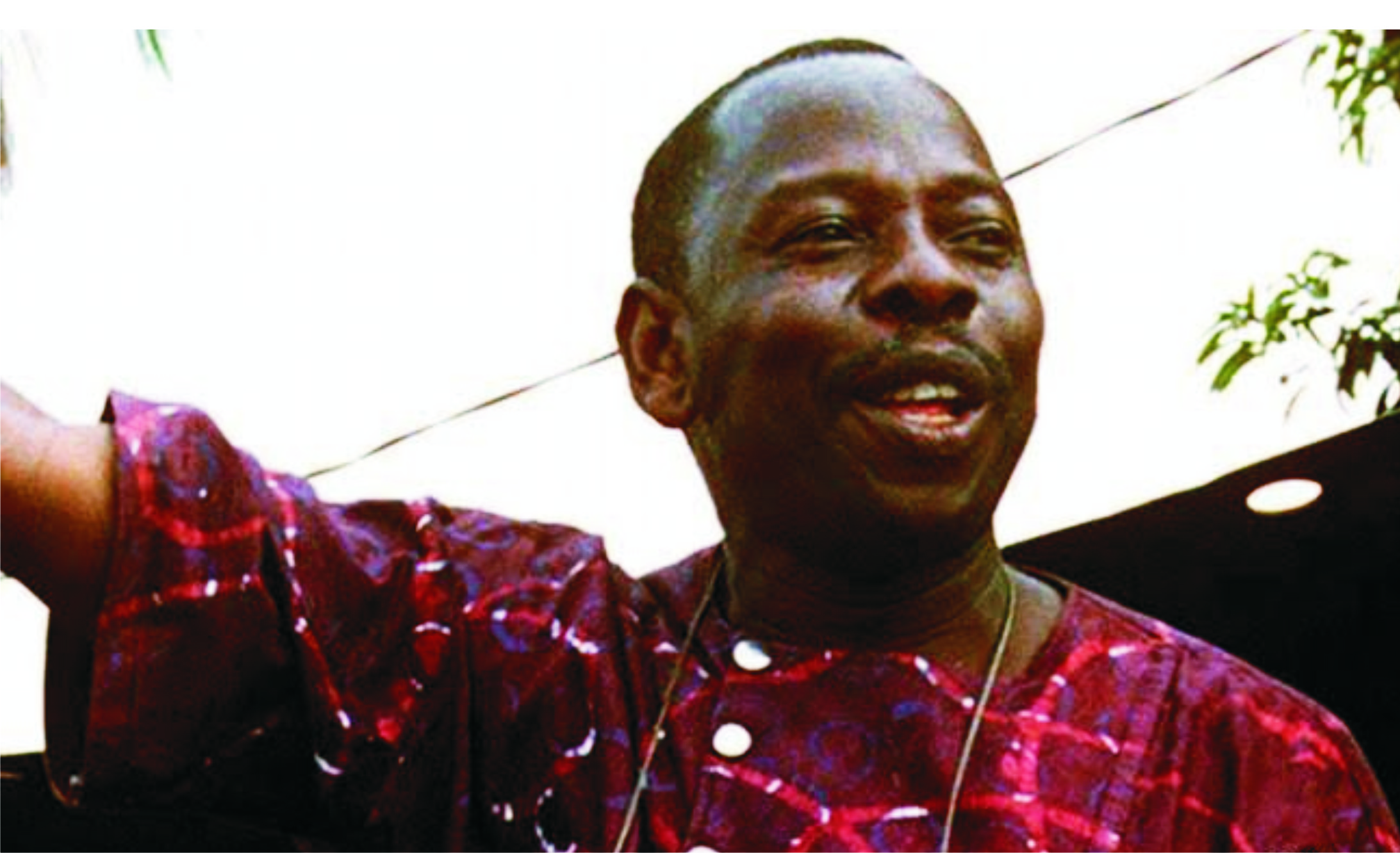
Nonetheless, he believed the suffering of the Ogoni people demanded a courageous response. While oil was extracted from their land, they were left with polluted rivers, damaged farmland, declining livelihoods and an environment hostile to human survival. Fishing grounds and sources of livelihood were threatened, while the people struggled to secure basic amenities. The wealth beneath their soil brought neither adequate development nor a fair share of national resources. For him, silence in the face of injustice would have amounted to complicity. Through the Movement for the Survival of the Ogoni People (MOSOP), he organised a peaceful campaign that took the Ogoni question to the international community. MOSOP gave ordinary people an organised platform through which to express their grievances and insist on recognition.
The Ogoni Bill of Rights, presented to the Federal Government in 1990, demanded political autonomy, economic justice, environmental protection and control over the people’s resources. The campaign exposed the human and ecological costs of oil operations, particularly those associated with Shell, and challenged the apparent alliance between corporate interests and an unresponsive State. The Ogoni struggle became a defining expression of minority rights and environmental justice in Nigeria and Africa. Saro-Wiwa’s writings and mobilisation drew attention to communities treated as expendable because of their limited population and political influence. He argued that numerical strength should never determine a people’s value or rights.
A minority community does not become less deserving of justice because it cannot command electoral numbers or political power. In Nigeria, every ethnic group deserves dignity, protection and a fair opportunity to benefit from the commonwealth. Rather than respond to peaceful agitation with dialogue, the Abacha regime resorted to repression. Ogoni leaders were harassed, detained and killed; others fled into exile. The crisis intensified after four Ogoni chiefs were killed in May 1994. Saro-Wiwa and other MOSOP leaders were arrested, tried by a special tribunal and executed despite international appeals for clemency and serious concerns about the trial’s fairness. The executions drew worldwide condemnation and intensified scrutiny of Nigeria’s human-rights record and oil companies in the Niger Delta.
They demonstrated the danger of using State institutions to suppress peaceful demands. The proceedings remain a reminder of the need for judicial independence and due process. Saro-Wiwa’s courage rested on the conviction that justice must be pursued despite the cost. His method combined non-violent resistance, public education and grassroots organisation. His struggle recalled the civil-rights campaign of Martin Luther King Jr. and the power of peaceful mobilisation against injustice. Saro-Wiwa linked environmental degradation to political exclusion, economic exploitation and the denial of democratic rights. Oil-producing communities, he insisted, should not remain zones from which wealth is removed to develop other parts of the country.
Their people must benefit through roads, schools, healthcare, jobs and clean water. Resource extraction carries a duty to protect host communities. His argument extended to the structure of the Nigerian federation. He challenged a revenue-allocation system that made oil-producing communities bear the environmental and social costs of extraction without commensurate benefits. Like advocates of fiscal federalism, he believed resources should be managed and shared equitably. He envisaged a society in which no community would be disadvantaged by its size, ethnicity, political affiliation, culture or religion. His vision was a country bound together by justice and equal citizenship. Saro-Wiwa was also a gifted writer, dramatist and public intellectual.
Through books, essays, plays and television, he documented Nigerian society’s contradictions and challenged abuses of power. His popular television series, Basi and Company, demonstrated his creative range, while his leadership of the Association of Nigerian Authors encouraged writers to engage national questions. He believed literature should not be detached from society’s struggles. His pen exposed environmental injustice, political repression and the dangers of silencing courageous voices. He used storytelling, satire and drama to shape public consciousness and expose social contradictions. His literary achievements gave his activism wider reach and made the Ogoni experience part of national conversation. His commitment to the Ogoni people extended beyond the oil question.
During the Civil War, he worked to protect his vulnerable community. He urged younger generations to reject subservience and complacency and pursue change through lawful, peaceful means. Citizens, he believed, must not surrender their responsibility to challenge wrong doing. An injury to one community threatens the rights and security of all. The return to democratic government in 1999 and the establishment of the Niger Delta Development Commission, the Ministry of Niger Delta Affairs and the Hydrocarbon Pollution Remediation Project (HYPREP) are among developments that have kept the region’s demands in public view. Saro-Wiwa did not create these institutions, but his movement helped expose the urgency of intervention and sustain pressure for redress.
His death made it harder to ignore the Niger Delta’s environmental and political grievances. Yet, interventionist institutions do not prove that the original demands have been met. Their effectiveness depends on competent leadership, transparent spending, measurable outcomes and community participation. Yet, thirty-one years after his execution, the central concerns of the Ogoni struggle remain unresolved. The HYPREP-led clean-up has offered hope, but many residents await meaningful improvements. Questions persist about the programme’s pace, quality and transparency, and whether its benefits reach ordinary people. A clean-up should be judged not by ceremonies or contracts, but by restored land and waterways, safe drinking water, improved livelihoods and better public health.
It must include long-term monitoring to ensure treated sites remain safe. Residents deserve information about contamination, remediation methods and completion timelines. Reports that water projects in Gwara and Ebubu Communities, in Khana and Eleme Local Government Areas respectively, failed weeks after commissioning have raised further concerns. If confirmed, the failures would indicate weaknesses in supervision, procurement and quality control.
To be continued in our next edition.
Taneh Beemene
-
News4 days ago
RSG Reaffirms Commitment To STEM Education, Technological Advancement
-
Business4 days ago
‘NUJ, NPA’s Partnership Would Boost Port Producrivity, Economic Growth’
-

 News4 days ago
IGP Warns Police Officers Against Partisanship …Directs Regular Engagement With Journalists
-

 Oil & Energy13 hours ago
FG To Double Oil, Gas Reserves, Moves To Intensified fresh Exploration
-
Business4 days ago
Fire Threat Interrupts Asaba Air Peace Flight
-
 News4 days ago
Customs To Deploy AI, Scanners Against Snuggling
-
Business4 days ago
Fish Production Deficit, A Major Investment Opportunity – Minister
-
Sports4 days ago
CAF Awards 2026 Gets A New Date