
Opinion
All Critics Are Not Politicians

I have to charge all of you to defend the government vigorously and not allow any irresponsible and politically motivated statements to keep spreading falsehoods about this government. Information to the public should be better packaged, go on the offensive, we are proud of our achievements and we should blow our own trumpets.”
The above quote was from President Muhammadu Buhari’s closing remarks at the first year ministerial performance review retreat which was held at the State House in Abuja on Tuesday, September 8, 2020. He went further to score his administration high on all fronts including security, poverty alleviation, job creation, railway projects and others.
Surely, Buhari was right in demanding that the ministers should roll up their sleeves and fight for the government they serve as they were selected to help carry out his agenda. They are expected to be personally loyal to the president as well as his ideology and policy agenda. In my recent article titled, “As The Ministers Celebrate One Year In Office …”, suggestions were made on how the various ministries, agencies and parastatals can collaborate to help in realising the Next Level agenda of the president particularly his plan for his remaining three years in office which is to “Build a thriving and sustainable economy; enhance social inclusion and reduce poverty; enlarge agricultural output for food security and export; attain energy sufficiency in power and petroleum products and expand transport and other infrastructural development.
“Expand business growth, entrepreneurship and industrialisation; expand access to quality education, affordable healthcare and productivity of Nigerians; build a system to fight corruption, improve governance and create social cohesion; and improve security for all.”
However, the vigorous defense of the government shouldn’t be the duty of the ministers and those in authority alone. Many citizens will be ready and willing to do so if the government is transparent, honest and sincere in all its dealings and when they see the leaders walk their talk. A situation where those at the helm of affairs at different levels of government say one thing and do a different thing, will not encourage citizens to be the mouthpiece of the government at their various corners as they would have loved to.
Almost every election year, candidates of various political parties promise the citizens heaven on earth. They promise to ban all government officials from seeking medical care abroad; revive our minimally performing refineries to optimal capacity; end gas faring and ensuring sales of at least half of the gas produced within Nigeria; create at least an additional two million new middle-income home owners in our first year in government and one million annually thereafter; improve power generation and distribution; equalise naira and dollar; ensure free education; improve security and so on, only for them to renege on the promises or start giving all manner of excuses when elected into power. Tell me, how can the citizens proudly defend such a government?
Most patriotic Nigerians will be glad to guard the government if they are adequately carried along by their leaders and provided with the right information. A situation where the people are left in the dark or are belatedly informed about government’s policies and programmes, will cast doubts in their minds about the good intentions of government, thereby making their defense job a herculean task.
Last week, someone close to me almost had a heart attack, no thanks to the latest electricity tariff hike. She works with a non-governmental organization (which recently slashed the staff salary due to the economic effects of Covid-19 pandemic). Her husband is a staff member of a federal government agency. The family that lives in a three bedroom rented apartment in Life Camp axis of Abuja, has the habit of settling their utility bills at the beginning of the month. According to her, N20, 000.00 used to fetch them 761.8 units of electricity, which they struggle to manage for one month.
So as usual, she purchased N20, 000.00 worth of electricity via an online portal, buypower.ng. She was shocked to receive an SMS on her phone showing the unit purchased as 387.9. She went through the transaction record to see if she had done something wrong but all steps were rightly taken. She dialed the buypower.ng phone severally to get an explanation from them but it was engaged. She became alarmed. “With the meager 387.9 units, it means my home will be in darkness for half of the month? Does it mean we will be spending about N40, 000.00 on electricity every month? Where do we get such money from?” She cried. She made up her mind to go to Abuja Electricity Distribution Company (AEDC)’s office to get to the root of the matter but the journey was cut short when she gathered through some phone calls that electricity tariff had been adjusted.
Apparently, she never saw it coming. She was probably one of those who believed the story that going by promises made by the federal government to the International Monetary Fund while seeking the $3.4 billion emergency financial assistance recently approved for the country, Nigerians will inevitably pay a much higher tariff for power but that it will start from 2021. Besides, the leadership of the National Assembly had announced some months ago that after a meeting with the regulators, NERC, and DISCOs representatives over the burning issue, the electricity tariff hike earlier scheduled for July 1, had been postponed until the first quarter of 2021 to enable Nigerians recover from the negative effects of the COVID-19 Pandemic.
Days later, my friend got an SMS from AEDC informing her that from Tuesday, September 1, 2020, a new tariff called the Service Reflective Tariff, which comes with an adjustment in tariff based on hours of supply, would be implemented.
There are millions of people like this woman, who feel that some government policies are anti-people and that even though the government may have good intentions as often claimed, the way and manner these policies, projects and programmes are implemented make people doubt those intentions. So when people like this criticize the government, it is because they feel the pinch and want things done better in the interest of the generality of the people and the nation and not for political reasons as the president said.
By: Calista Ezeaku




Quote: “The Flamingos have conquered the world; Nigeria must now rise to its responsibility of nurturing the next generation of champions.”
Sometimes, sporting victories
More significantly, they
Umejiaku deserves special
Umejiaku received the award
Nigeria has now broken into
For too long, young girls in
But beyond the reward, this
As Nigerians celebrate this
By; Calista Ezeaku
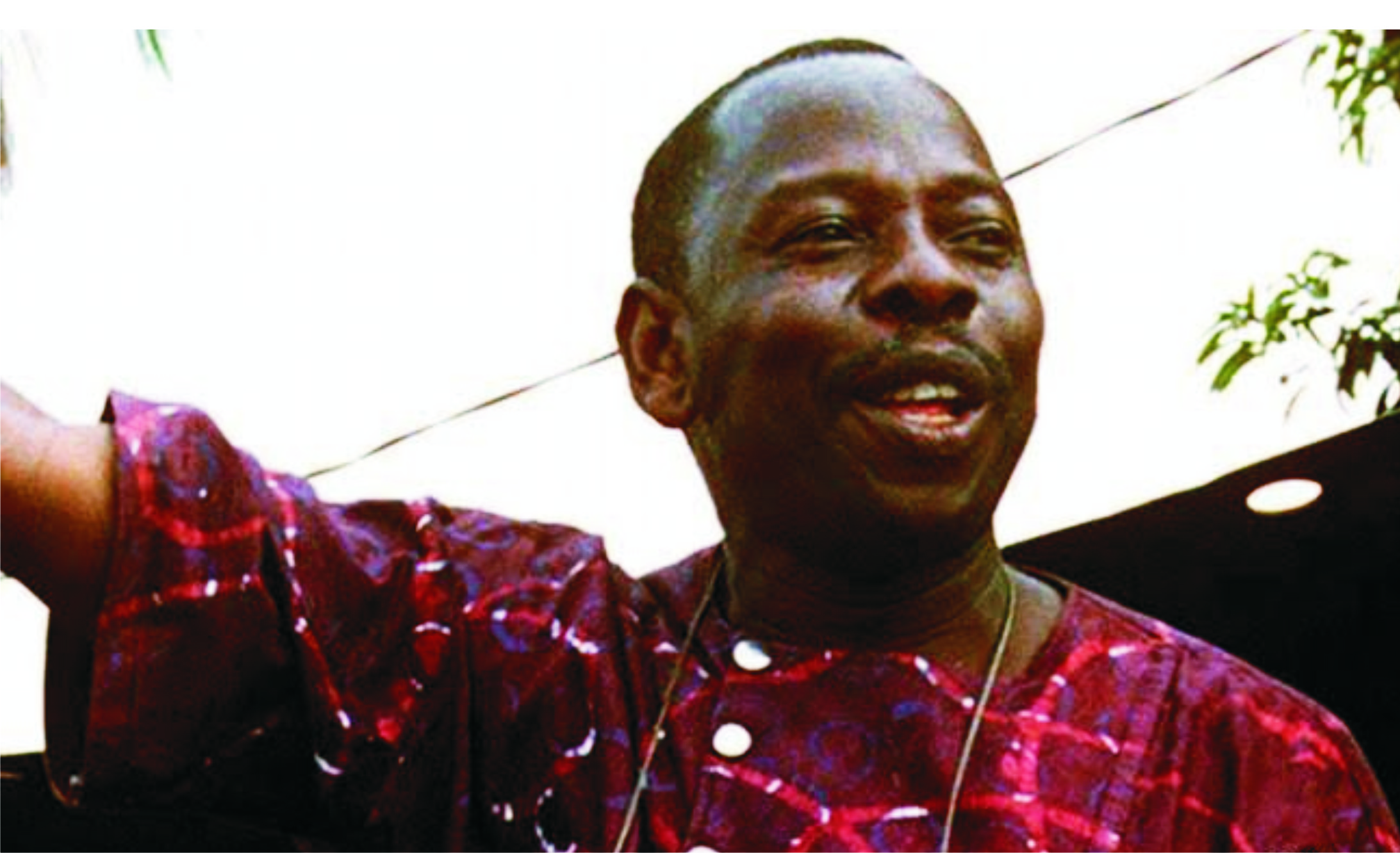
Nonetheless, he believed the suffering of the Ogoni people demanded a courageous response. While oil was extracted from their land, they were left with polluted rivers, damaged farmland, declining livelihoods and an environment hostile to human survival. Fishing grounds and sources of livelihood were threatened, while the people struggled to secure basic amenities. The wealth beneath their soil brought neither adequate development nor a fair share of national resources. For him, silence in the face of injustice would have amounted to complicity. Through the Movement for the Survival of the Ogoni People (MOSOP), he organised a peaceful campaign that took the Ogoni question to the international community. MOSOP gave ordinary people an organised platform through which to express their grievances and insist on recognition.
The Ogoni Bill of Rights, presented to the Federal Government in 1990, demanded political autonomy, economic justice, environmental protection and control over the people’s resources. The campaign exposed the human and ecological costs of oil operations, particularly those associated with Shell, and challenged the apparent alliance between corporate interests and an unresponsive State. The Ogoni struggle became a defining expression of minority rights and environmental justice in Nigeria and Africa. Saro-Wiwa’s writings and mobilisation drew attention to communities treated as expendable because of their limited population and political influence. He argued that numerical strength should never determine a people’s value or rights.
A minority community does not become less deserving of justice because it cannot command electoral numbers or political power. In Nigeria, every ethnic group deserves dignity, protection and a fair opportunity to benefit from the commonwealth. Rather than respond to peaceful agitation with dialogue, the Abacha regime resorted to repression. Ogoni leaders were harassed, detained and killed; others fled into exile. The crisis intensified after four Ogoni chiefs were killed in May 1994. Saro-Wiwa and other MOSOP leaders were arrested, tried by a special tribunal and executed despite international appeals for clemency and serious concerns about the trial’s fairness. The executions drew worldwide condemnation and intensified scrutiny of Nigeria’s human-rights record and oil companies in the Niger Delta.
They demonstrated the danger of using State institutions to suppress peaceful demands. The proceedings remain a reminder of the need for judicial independence and due process. Saro-Wiwa’s courage rested on the conviction that justice must be pursued despite the cost. His method combined non-violent resistance, public education and grassroots organisation. His struggle recalled the civil-rights campaign of Martin Luther King Jr. and the power of peaceful mobilisation against injustice. Saro-Wiwa linked environmental degradation to political exclusion, economic exploitation and the denial of democratic rights. Oil-producing communities, he insisted, should not remain zones from which wealth is removed to develop other parts of the country.
Their people must benefit through roads, schools, healthcare, jobs and clean water. Resource extraction carries a duty to protect host communities. His argument extended to the structure of the Nigerian federation. He challenged a revenue-allocation system that made oil-producing communities bear the environmental and social costs of extraction without commensurate benefits. Like advocates of fiscal federalism, he believed resources should be managed and shared equitably. He envisaged a society in which no community would be disadvantaged by its size, ethnicity, political affiliation, culture or religion. His vision was a country bound together by justice and equal citizenship. Saro-Wiwa was also a gifted writer, dramatist and public intellectual.
Through books, essays, plays and television, he documented Nigerian society’s contradictions and challenged abuses of power. His popular television series, Basi and Company, demonstrated his creative range, while his leadership of the Association of Nigerian Authors encouraged writers to engage national questions. He believed literature should not be detached from society’s struggles. His pen exposed environmental injustice, political repression and the dangers of silencing courageous voices. He used storytelling, satire and drama to shape public consciousness and expose social contradictions. His literary achievements gave his activism wider reach and made the Ogoni experience part of national conversation. His commitment to the Ogoni people extended beyond the oil question.
During the Civil War, he worked to protect his vulnerable community. He urged younger generations to reject subservience and complacency and pursue change through lawful, peaceful means. Citizens, he believed, must not surrender their responsibility to challenge wrong doing. An injury to one community threatens the rights and security of all. The return to democratic government in 1999 and the establishment of the Niger Delta Development Commission, the Ministry of Niger Delta Affairs and the Hydrocarbon Pollution Remediation Project (HYPREP) are among developments that have kept the region’s demands in public view. Saro-Wiwa did not create these institutions, but his movement helped expose the urgency of intervention and sustain pressure for redress.
His death made it harder to ignore the Niger Delta’s environmental and political grievances. Yet, interventionist institutions do not prove that the original demands have been met. Their effectiveness depends on competent leadership, transparent spending, measurable outcomes and community participation. Yet, thirty-one years after his execution, the central concerns of the Ogoni struggle remain unresolved. The HYPREP-led clean-up has offered hope, but many residents await meaningful improvements. Questions persist about the programme’s pace, quality and transparency, and whether its benefits reach ordinary people. A clean-up should be judged not by ceremonies or contracts, but by restored land and waterways, safe drinking water, improved livelihoods and better public health.
It must include long-term monitoring to ensure treated sites remain safe. Residents deserve information about contamination, remediation methods and completion timelines. Reports that water projects in Gwara and Ebubu Communities, in Khana and Eleme Local Government Areas respectively, failed weeks after commissioning have raised further concerns. If confirmed, the failures would indicate weaknesses in supervision, procurement and quality control.
To be continued in our next edition.
Taneh Beemene
-
News5 days ago
RSG Reaffirms Commitment To STEM Education, Technological Advancement
-
Business5 days ago
‘NUJ, NPA’s Partnership Would Boost Port Producrivity, Economic Growth’
-

 News5 days ago
IGP Warns Police Officers Against Partisanship …Directs Regular Engagement With Journalists
-
Business2 days ago
BSG Partiner American Coy To Invest $100m In Gas Processing
-

 Oil & Energy2 days ago
FG To Double Oil, Gas Reserves, Moves To Intensified fresh Exploration
-
Business2 days ago
Seme Customs Intercepts Live Pacific Ridley Sea Turtle
-
Business5 days ago
Fire Threat Interrupts Asaba Air Peace Flight
-
 News5 days ago
Customs To Deploy AI, Scanners Against Snuggling