
Featured
Boko Haram Attacks Military Camp, Kills Nine Soldiers, 27 Missing …22,000 Nigerians Missing In Insurgency, ICRC Confirms

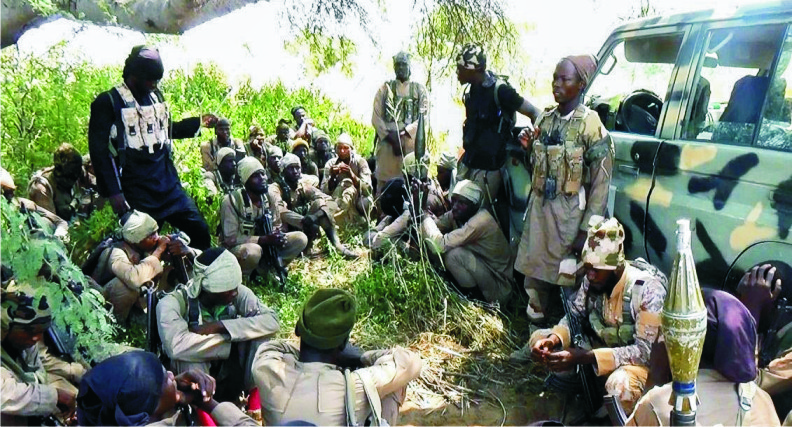
No fewer than nine soldiers have been killed and over a dozen injured in an attack on a new military camp in Borno State.
About 27 soldiers were also reported missing after the attack.
The insurgents attacked the new military base at Granda near Gudumbali in Guzamala Local Government Area in Borno State at about 9.30pm, last Tuesday, security sources said.
The troops were deployed from Damboa to Gudumbali, last week, and they had barely settled down when the insurgents struck, the sources said, yesterday, pleading anonymity.
Though troops battled the insurgents for over an hour but lost nine soldiers in the cross-fire.
Air support from the air force for the fighting soldiers could not, however, yield much impact as troops were reportedly close in battle with Boko Haram terrorists, making it difficult for the military fighter jet to shell the insurgents, a source familiar with the operation told Daily Sun.
“Nine soldiers died, some were slaughtered,” a military source said but did not give further details.
It was gathered that corpses of the slain soldiers have already been evacuated and brought to the Army mortuary at the Maimalari Cantonment in Maiduguri.
Among the items allegedly carried away by the insurgents include a military petroleum tanker, an armoured vehicle, and eight other operational vehicles.
Islamic State West Africa Province (ISWAP), which is affiliated with the Islamic State group, has claimed responsibility for the attack, saying its fighters killed or wounded dozens of troops.
Late Wednesday, a military officer who requested anonymity said: “So far, nine bodies of soldiers were recovered. Twenty-seven soldiers are still missing and their fate remains unknown.”
Another military source confirmed the provisional death toll, adding that “search and rescue is ongoing.”
According to SITE Intelligence, which monitors jihadist activities worldwide, ISWAP also claimed to have destroyed several trucks and captured numerous other vehicles in the attack.
The Nigerian air force claimed in a statement Wednesday that it had destroyed two ISWAP gun trucks in nearby Garunda the previous day.
“The attack aircraft tracked the two gun trucks as they attempted to evade detection by driving into foliage,” it said.
The last Tuesday’s incident was one in a series of attacks on military base at Gudumbali by Boko Haram in a decade of insurgency in the northeast.
Roughly 145 soldiers were killed in an attack on the military location in the town on November 18, 2015.
The incident was regarded as one of the deadliest Boko Haram attacks in the state since 2011 when insurgency heightened.
The military recently withdrew troops from many of its smaller locations in Borno State to bigger base called Super Camps following the introduction of a new operational concept.
The new concept was randomly condemned by scores of Borno people, expressing fears the new approach could make many communities vulnerable to Boko Haram attacks.
The Minister of Defence, Maj-Gen Bashir Magashi (rtd) and the Chief of Army Staff, Lt Gen Tukur Buratai held talks with Borno elders few days after similar meeting was organised by the Theatre Commander, Operation Lafiya Dole, Maj-Gen Olusegun Adeniyi at Maimalari Cantonment, 7 Division Maiduguri, Nigerian Army.
However, a least, 22,000 people are missing as a result of the Boko Haram insurgency in the North-East of Nigeria, the International Committee of the Red Cross (ICRC) confirmed in a statement, yesterday.
It said that nearly 22,000 Nigerians constituted the highest number of missing persons registered with the organisation in any country.
“Every parent’s worst nightmare is not knowing where their child is. This is the tragic reality for thousands of Nigerian parents, leaving them with the anguish of a constant search,” ICRC President Peter Maurer said at the end of a five-day visit to Nigeria.
“People have the right to know the fate of their loved ones, and more needs to be done to prevent families from being separated in the first place,” he said.
During the visit, Maurer met with Nigerian President Muhammadu Buhari, senior government officials, civil society and business leaders.
The Red Cross said that some families were often separated while fleeing attacks, while others have had loved ones abducted or detained and do not know their whereabouts.
“The ICRC works with the Nigeria Red Cross and other Red Cross and Red Crescent societies in the region to trace missing people by showing photographs, calling out names and going door-to-door in camps and communities,” the statement said.
“So far, 367 cases have been solved since ICRC received its first cases in 2013, underscoring the immense challenges that come with finding missing people and reconnecting them with their families in Nigeria,” it said.
The Chief of Army Staff, Lt-Gen Tukur Buratai, last Tuesday, had said that the military had done a lot in the war against the insurgents, but admitted that humanitarian efforts were being hampered.
“Large swathes of the northeast of the country remain completely inaccessible to humanitarian organisations. People have also been displaced by fighting many times, making them harder to find,” he added.
Similarly, barely a week after the peace meeting in Abuja between the Jukun and the Tiv at the instance of the President Muhammadu Buhari, gunmen suspected to be Jukun militia yesterday attacked and killed two people in Yongogba village in Takum Local Government Area of Taraba State.
This is barely 24 hours after armed bandits invaded Kukoki community in Shiroro Local Government Area of Niger State and kidnapped six people, three communities in Rafi Local Government Area of the state have come under attack.
A resident of Yongogba village, Mr. Kester Iorhemba, told our correspondent on the phone that the attackers who invaded the village from Takum burnt the entire village and looted valuable property.
According to Iorhemba, the attackers, riding on motorcycles and two Toyota Hilux vans, invaded the village at about 8.45am killing two people, with scores still missing.
He explained that the attackers, who came through a farm, killed two people who were already on their farms before proceeding to burn the entire village.
The witness, who said the casualty figure may be higher as many people were already on the farm along the route the attackers came, called on Governor Darius Ishaku, who had said he has the capacity to end the killings in Taraba State, to do so immediately.
“I was on my way to the farm when I sighted two Toyota Hilux vans and motorcycles advancing towards our village. I couldn’t call the people back home because of poor network.
“Many people are still missing and I am sure many of those missing might have been killed by the attackers who came in their numbers.
“Our governor, who recently kicked against a commission of inquiry into the crisis, said he has the ability to solve the problem. So I want to plead with him to end these killings.”
The Police Public Relations Officer in the state, David Misal, could not return his calls or reply to text messages sent to his phone for confirmation.
Ishaku had told our correspondent that he was capable of ending the hostilities without interference from the federal or Benue State governments.
In Niger, the heavily armed bandits arrived the communities in 24 motorcycles with three of them on each of the motorcycles.
The communities are Rafin-wayam, Rafin-kwakwa and Gidan Dogo-Gurgu.
The entire communities were thrown into confusion as people, including women and children, ran in different directions for safety.
About 800 people from the three communities have been forced to relocate, with majority of them staying in a temporary camp in some structures including schools in Kagara, the headquarters of the local government.
A resident of one of the communities, Malam Dahiru Mohammed, said the bandits surrounded his community, Rafin Wayam, to prevent anybody from escaping as they ransacked houses looking for what to carry.
“They took everything from us, including bread and beverages. They didn’t kill anybody but they collected all our valuables,” he narrated
After about two hour of operation, which began at about 6.45pm, the bandits left the communities in a convoy and headed to Pangu-Gari, another community in the area.
Youths from Kagara trooped to the streets to protest what they called “incessant” armed bandits’ attacks in the area in the last one month.
The placard carrying youths chanted anti-government slogans and blocked the major highway leading to Brinin Gwari in Kaduna State.















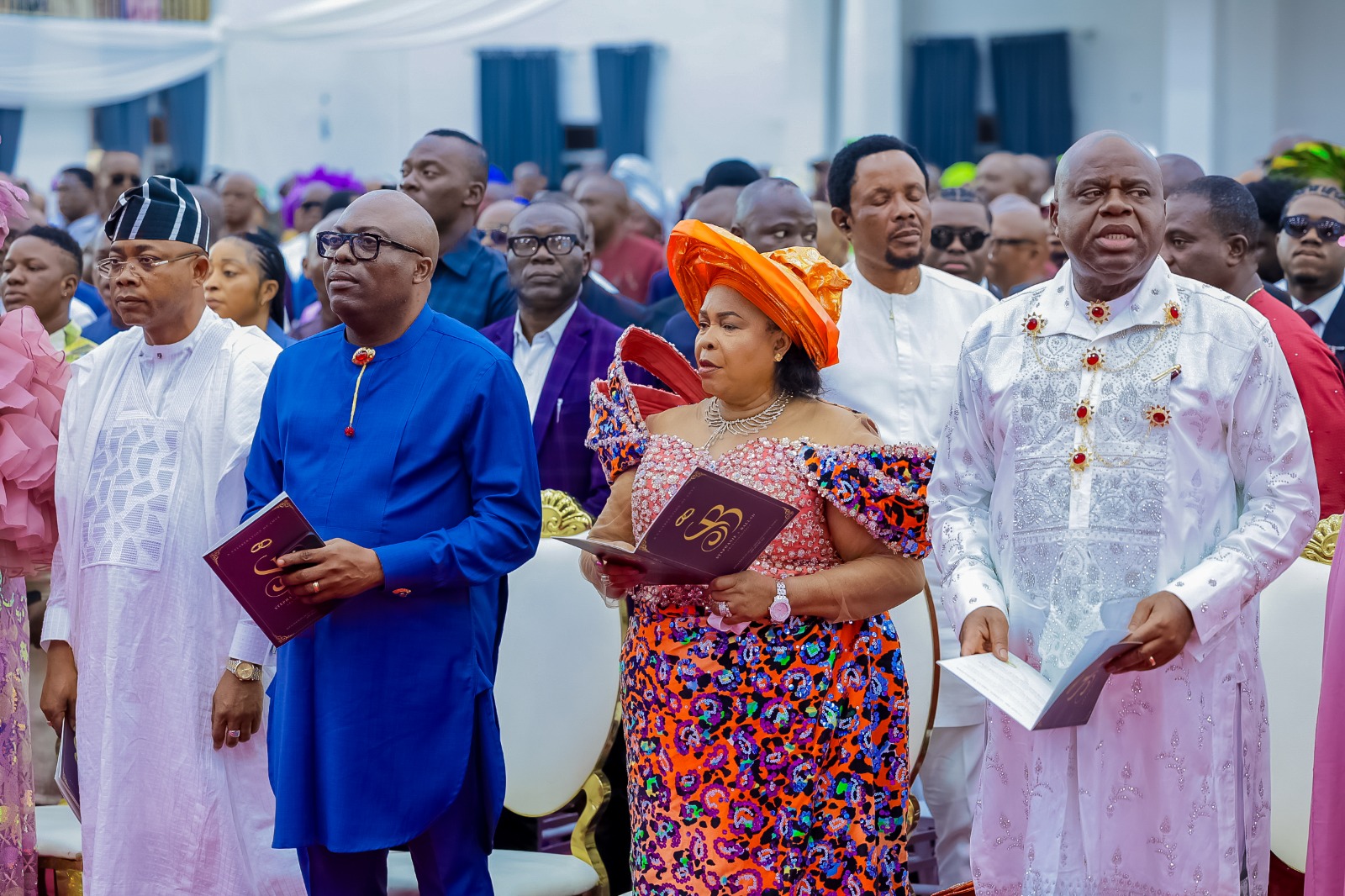
Rivers State, Sir Siminalayi Fubara, has assured members of the National Youth Service Corps (NYSC) of his administration’s commitment to supporting and strengthening the scheme in the State.
Fubara gave the assurance last Friday at the NYSC permanent orientation camp, Nonwa-Gbam, Tai Local Government Area in the State, during the swearing-in ceremony of 2026 Batch B Stream II orientation course.
Represented by the Permanent Secretary, Cabinet Bureau, Office of the Secretary to the State Government, Dr. Promise Oguzie, the governor said the State Government would remain intentional in providing the necessary support to improve the NYSC scheme and enhance the experiences of corps members deployed to the state.
He charged the corps members to be role models and quality nation-builders in their service to the good people of Rivers State in particular, and Nigeria at large.
“I charge you to be exemplary, dedicated and committed in all you do. Take full advantage of all the camp programmes and activities to enrich yourselves”, he said.
In his welcome address, the State Coordinator of NYSC in Rivers State, Mr. Moses Oleghe, urged corps members to see their deployment to Rivers State as a “veritable opportunity to make meaningful contribution to the growth of the State in particular and Nigeria at large.”
He further charged them to serve with all sense of “integrity, discipline, and the fear of God, especially when they will be engaged as INEC ad-hoc staff that will conduct the 2027 general elections.”
A total of 3,584 corps members composed of 1,421 males and 2,163 females were sworn in by the Chief Judge of Rivers State, who was represented by Justice Godspower Aguma.

Governor of Rivers State, Sir Siminalayi Fubara, says Nigeria needs God-fearing leaders for the nation to move in the right direction and make meaningful progress.
The Governor stated this yesterday when he received in audience, the World President of the Seventh Day Adventist Church, Pastor Erton Kohler; his wife, Andriene Marques Kohler; daughter Mariana Marques Kohler and a retinue of ministers of the church at Government House, Port Harcourt.
Fubara who hailed the Seventh Day Adventist Church for its contributions to education and the grooming of future leaders in Nigeria, expressed delight that the Church had over the years, been investing in education at various levels and currently runs two universities in the country.
He commended the church for not only using its institutions to spread the gospel of Christianity but to groom future leaders for the country.
According to him, religion should not be just about defending one’s faith, but also making meaningful impact on the lives of the people.
He said that by floating these educational institutions, the church has demonstrated capacity to support Nigeria in the task of producing not only educated people but a breed of God-fearing leaders.
“Our country is where it is today because we lack the fear of God. If you have the fear of God, there should be a limit to what you can do because you understand the supremacy of God. But when God is not in your equation, you’ll go beyond the line and that is what has brought us to where we are today.
“So, I feel very happy that you are contributing to the development of our future leaders in this country. We need the right people being in the right place; prepared properly with good minds; that is what we need, not just in Nigeria but round the whole world.,” he said.
Governor Fubara further observed that the absence of God-fearing people in high places to take the right decisions that could impact positively on the society, has also given rise to other problems such as social inequality, poverty, corruption and criminality. According to him, Nigeria needs a system where the average parent could afford quality education for their children and a guarantee that upon graduation, the average child will have the capacity to compete favourably with anybody, anywhere in the world.
“If we have a situation where the little money that you’re being paid as wage can also afford you quality healthcare and after working at least for 15-20 years, you have a roof over your head, tell me why you should be involved in any kind of crime? At that point, you’ll feel secured and this attitude of insecurity about the future that leads to all the social vices we have today won’t be there,” he said.
Governor Fubara expressed appreciation to the delegation for the visit and for their prayers for Rivers State, assuring them of his continued support for their programmes in the state.
Leader of the delegation and World President of the Seventh Day Adventist Church, Pastor Erton Kohler said he was in Nigeria for a special conference of the church during which thousands of the church’s ministers will be undergoing an empowerment programme to further equip them for the task of herding their flocks and serving the society.
He expressed gratitude to the Governor for the warm reception accorded his entourage, saying the memory of the visit will linger in his mind for a lifetime.
Kohler disclosed that the Church has over twenty -four million (24,000,000) members and more than 182,000 places of worship, spread across 212 countries of the world.

The Rivers State House of Assembly has approved the 2026–2028 Medium Term Expenditure Framework (MTEF) submitted by Governor Siminalayi Fubara.
This reaffirms the lawmakers’ commitment to enacting laws and taking legislative actions geared towards the overall development of the State.
The Assembly gave the approval during its Second Legislative Sitting of the Fourth Session held last Friday.
Speaking on the MTEF document during plenary, the House Speaker, Rt. Hon. Martin Amaewhule, noted that by the provision of Section 10(1)(b) of the Rivers State Fiscal Responsibility Law No. 8 of 2010, the MTEF ought to have been laid before the House in September 2025.
Amaewhule explained that traditionally, the document is expected to be presented four months before the commencement of the next financial year and immediately after the expiration of every three-year fiscal cycle.
He, however, stated that in the interest of the State and its people, the House considered it necessary to deliberate on the document, describing it as a precursor to the 2026 Budget Estimates.
The Speaker expressed concern that the year had already progressed significantly before the presentation of the framework.
During deliberations on the document, members examined the assumptions and projections contained in the MTEF and observed that strict adherence to the outlined fiscal parameters would ultimately serve the interest of Rivers people.
The lawmakers maintained that effective implementation of the framework would promote prudent financial management and enhance developmental planning across the State.
Following the debate and positive consideration by members, the Speaker put the question to the House and members voted overwhelmingly in support of the approval of the MTEF.
Meanwhile, during the same sitting last Friday, the House also received a petition from the Chairman of Obio/Akpor Local Government Council, Dr. Gift Worlu.
The petition was presented by the member representing Obio/Akpor Constituency II, Hon. Emilia Amadi.
According to the petition, concerns were raised over an imminent security breach, threats to lives, destruction of property and alleged forceful takeover of property by some lawless persons within parts of the Local Government Area.
Presenting the petition before the House, Hon. Amadi appealed to the lawmakers to revisit the matter and take necessary steps aimed at safeguarding lives and property in the affected communities.
The House is expected to further deliberate on the petition and consider measures to address the concerns raised in order to sustain peace and security in the area.
King Onunwor
-

 News2 days ago
RSG Targets Nine Million Residents in Mosquito Net Distribution Campaign
-

 Oil & Energy2 days ago
Aiyedatiwa Signs New Electricity Bill
-

 Oil & Energy2 days ago
NLNG Commissions Research And Innovation Centre In RSU
-

 Maritime2 days ago
Marine Minister Commends President Tinubu On NPERA Bill Assent
-

 News2 days ago
KenPoly Holds Eight Convocations, August 29
-

 News2 days ago
RSG Begins Another Phase of Projects Commissioning Today
-

 News2 days ago
RMAFC Completes Revenue Sharing Review, Proposes New Pay
-

 Maritime2 days ago
NAGAFF Petitions IGP Over Alleged Maritime Police Harassment