
News
NNPC’s Supply Monopoly, Cause Of Sacrcity – Oil Magnate

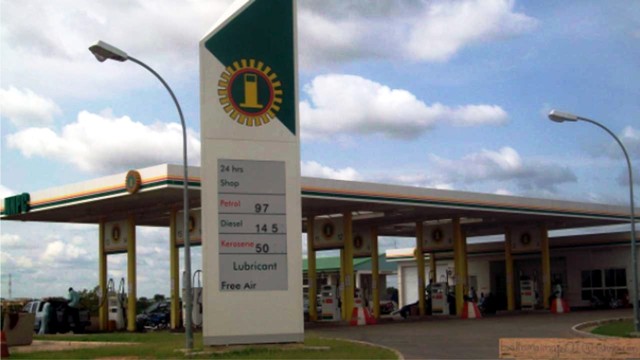
An oil and gas merchant, Capt. Emmanuel Iheanacho, has attributed the persistent scarcity of petrol to monopoly of the product by the Nigerian National Petroleum Corporation (NNPC).
Iheanacho who is also the Chairman, Integrated Oil and Gas Ltd.,said in Lagos yesterday that inability of NNPC to create a window for private importers to import petrol also contributed to the scarcity.
According to him, the current shortage in fuel importation gap was caused by the landing cost margin of N171 per litre and the selling cost pegged at N 145 per litre.
He said that this was not realistic for marketers to import and sell at that rate. “The selling of the product at N145 per litre is no longer feasible with the current exchange rate. Shortage of foreign exchange and increase in crude prices have made it unprofitable to import petrol and sell same at N145 per litre.
“The problem is that importation of petrol is being handled, almost 100 per cent, by NNPC, while private importers backed out because the increase in crude price has made the landing cost high,’’ he said.
Iheanacho said that the marketers’ huge debts of over N800 billion had also contributed to the inability of marketers to import petrol.
He said that most independent marketers had closed their companies due to inability to pay their workers.
Iheanacho urged the Federal Government to settle all the outstanding debts owed marketers since 2015.
According to him, commercial banks have taken over the property and tank farms of some companies that could not pay back their loans. Loading of petrol had commenced in Apapa. A visit to Apapa yesterday showed that hundreds of trucks were on queue waiting to load the product at Total, Forte Oil, Oando Plc, MRS, NIPCO and other private depots.
Long queues of motorists still persist in many filling stations in the metropolis. In areas like Ikorodu, Epe, Ibeju-Lekki, Oshodi, Ajegunle, Ikotun, Bariga and Sango-Ota, some stations were still selling petrol for between N180 and N200 per litre. In Ikorodu area, many filling stations were selling at N200 per litre, while only few were selling at the official price. Commercial bus operators increased their fares by more than 100 per cent, claiming that they bought petrol above the official price of N145 per litre.




The Inspector-General of Police, Olatunji Disu, has directed Commissioners of Police in the 36 states and the Federal Capital Territory (FCT) to arrest and prosecute persons involved in the destruction, defacement and unlawful removal of political campaign posters, banners and billboards ahead of the 2027 general elections.
The Force Public Relations Officer, CSP Aniete Iniede, disclosed this in a statement issued in Abuja, on Wednesday.
The statement noted that the Nigeria Police Force had observed with serious concern the increasing incidents of deliberate destruction of campaign materials belonging to political parties and candidates across the country.
The Police in the statement condemned acts of political intolerance and warned political thugs, hoodlums and other mischief-makers involved in the destruction of campaign materials to desist from such activities or face the consequences.
It further explained that the destruction, defacement or unlawful removal of another candidate’s campaign materials could constitute malicious damage, which is a criminal offence under applicable laws, including Section 451 of the Criminal Code Act and Section 326 of the Penal Code Law.
The Police in the same vein, stressed that political differences or loyalty to a particular party did not confer on anyone the right to destroy another candidate’s property or prevent others from exercising their constitutionally guaranteed right to campaign freely.
According to the statement, all political parties and candidates, irrespective of their affiliations or status, were entitled to equal protection under the law, adding that no individual or group had the authority to determine whose campaign materials should be displayed or destroyed.
“The IGP had directed Commissioners of Police in the states and the FCT to take proactive measures to prevent such incidents, investigate reported cases and ensure the arrest and prosecution of persons found culpable”, it said.
It also warned that political sponsors and individuals who recruit, encourage or facilitate the criminal acts would be held accountable whenever evidence established their involvement.
The police urged political parties, candidates and their supporters to conduct their campaigns peacefully and respect the rights of others, warning that political intolerance, intimidation and criminal conduct must not be allowed to undermine the nation’s democratic process.
The statement noted that the Force would not allow political thugs and troublemakers to turn the nation’s political environment into a theatre of lawlessness, insisting that anyone found violating the law would face its full consequences.
However, the Police Force called on Nigerians to respect the law and uphold the principles of peaceful political participation, particularly as political activities gather momentum ahead of the 2027 general elections.
The police reiterated that the right to campaign and promote political interests must be exercised within the confines of the law, while urging political stakeholders to discourage violence and other acts capable of threatening public peace.
The Force assured Nigerians of its commitment to maintaining law and order throughout the political season, stressing that the protection of all candidates and political parties remained a priority as the country prepares for the 2027 general elections.
King Onunwor
Electricity generation on Nigeria’s national grid dropped to 3,659 megawatts (MW) as of 3pm yesterday from a peak of 3,996MW recorded on Wednesday, amid worsening power supply across parts of the country.
The Federal Government, however, attributed the decline to gas supply constraints to thermal power plants, reduced water inflows into hydroelectric reservoirs and operational challenges within the power sector.
Data obtained from the Nigerian Independent System Operator (NISO) showed that the decline had affected electricity allocation to Distribution Companies (DisCos), resulting in shorter hours of supply and increased load shedding across distribution networks.
Data on the distribution load allocation dashboard as of 5:39pm yesterday showed that the 11 electricity distribution companies received a combined allocation of 3,031MW.
Abuja Disco received the highest allocation of 669MW, followed by Ibadan Disco with 413MW and Port Harcourt Disco with 338MW. Benin Disco received 279MW, Enugu 267MW, Eko 256MW, Ikeja 249MW, Kano 173MW, Kaduna 167MW, Jos 146MW, while Yola Disco received the lowest allocation of 74MW.
The Federal Ministry of Power, in a statement, yesterday, by the Special Adviser (Media and Publicity) to the Minister of Power, Adeola Adelabu, acknowledged complaints by electricity consumers in Lagos, Abuja, Ogun, Kwara and Oyo states over worsening supply in recent days.
The Ministry noted that the affected areas had recently experienced noticeable improvements in electricity supply before the latest disruptions.
It, however, ruled out a major or systemic failure of the national grid, explaining that preliminary assessments linked the disruptions to maintenance and operational challenges in parts of the power value chain, alongside declining generation.
Acknowledging the impact of the disruptions on consumers, the Ministry said: “We recognise what every hour without power means for individuals, families and businesses, and we do not take it lightly.”
It added that the Minister of Power, Joseph Tegbe, was working with the Transmission Company of Nigeria (TCN), NISO and electricity distribution companies to address the challenges and restore normal supply.
According to the Ministry, the Minister had engaged relevant operators to resolve the operational constraints, accelerate ongoing maintenance and keep the public informed about restoration efforts.
In a separate statement, NISO confirmed that limited gas availability had constrained the ability of affected thermal generating stations to operate at their available capacities, while reduced water inflows had affected hydroelectric generation.
The system operator stated: “The limited availability of gas has constrained the capacity of affected thermal generating stations to operate at their available levels, while reduced water inflows into reservoirs have impacted the generation capacity of hydroelectric power stations.”
NISO explained that the reduction in available generation had affected the volume of electricity allocated to DisCos for distribution to consumers, resulting in increased load shedding.
It added that the extent of the impact varied across distribution networks, depending on available generation and the corresponding allocations to individual DisCos.
Acknowledging the impact of the generation shortfall on consumers nationwide, NISO said it remained committed to maintaining grid stability and optimising the dispatch of available generation.
It stated: “NISO remains committed to maintaining grid stability, optimizing the dispatch of available generation, and ensuring the secure, reliable and efficient operation of the national grid within prevailing operational constraints.”
The system operator also disclosed that it was working towards diversifying the country’s energy mix to strengthen security of electricity supply.
The Trade Union Congress of Nigeria (TUC) has rejected another wage award, demanding a sustainable salary increase to improve workers’ welfare and purchasing power.
This was contained in a communiqué signed by Mr Nuhu Toro, TUC Secretary-General at the end of its emergency National Administrative Council (NAC) and issued in Abuja, yesterday.
Toro said the Congress remained committed to protecting workers’ interests, collective bargaining and purposeful leadership.
He said the demand for a salary increase followed the Federal Government’s failure to fully implement the 2023 wage award agreement reached with organised labour.
According to him, the agreement reached on Oct. 2, 2023, provided for a wage award palliative to run until the new minimum wage became law on July 29, 2024.
“Under the agreement, workers received an average of only three months out of the 10 months agreed upon,” he said.
He maintained that another wage award would not provide the sustainable intervention required to improve workers’ purchasing power and living standards.
“The Congress is demanding a salary increase and not another wage award,” he said, reaffirming the position earlier communicated in its Oct. 21 press release.
Toro emphasised that the national minimum wage was a statutory floor and should not be regarded as a ceiling on workers’ earnings.
He also acknowledged the positions of the Congress’s public-sector affiliates, including SSAUTHRAI, NUAHP and SSASCGOC, describing them as consistent with TUC’s earlier position.
He said workers’ welfare could not be advanced by disregarding collective bargaining rights or undermining unions’ legitimate representation on conditions of service.
“The rights of affected unions to collective bargaining and legitimate representation in matters concerning their conditions of service must be respected,” he said.
Toro reaffirmed TUC’s status as a recognised trade union centre with the mandate to represent, defend and negotiate for its members, citing ILO Conventions 87 and 98.
He said the Congress would continue constructive and result-oriented engagement with government to implement resolutions reached at its Oct. 8, 2026 meeting in Abuja.
He called for the removal of barriers confronting federal and state government employees, stressing the need for practical solutions to their challenges.
On accountability, Toro reaffirmed the NAC’s commitment to the National Executive Council (NEC), the highest decision-making organ between delegates’ conferences.
He urged TUC leaders to focus on securing improved salaries through stakeholder engagement rather than public exchanges, adding that workers’ welfare remained non-negotiable.
“The Congress believes in purposeful, result-oriented leadership that delivers tangible benefits to workers rather than distractions, endless discussions or unsustainable interventions,” he said.
-
Rivers4 days ago
Don Seeks Repositioning Of Tech Education For Dev
-
 Education4 days ago
PAMO MEDICAL UNIVERSITY -Nullifies Arrest warrant on VC
-
Niger Delta4 days ago
PANDEF Seeks 50% Oil Derivation Allocation Increase
-

 Education4 days ago
IAUE MOVES TO END GHOST WORKERS SYNDROME AS 400 NEW NON-TEACHING STAFF UNDERGO MANDATORY ETHICS TRAINING
-

 News4 days ago
Fresh Ebola Scare As NCDC Records Two Cases
-
News4 days ago
Customs Partners EFCC, NDLEA, Others To Tackle Money Laundering, Terrorism Financing
-

 Politics4 days ago
2027: RIVERS GUBER CANDIDATES SIGN CHARTER TO PRIORITIZE CITIZENS’ DEMANDS
-
 Politics4 days ago
2027: South-East Govs Insist On Tinubu’s Re-election