Connect with us

Oil & Energy

Global Energy Advisory

Published

on

Saudi Arabia was in the spotlight this week, after a string of arrests on corruption allegations and muscle flexing in the direction of Iran. The so-called anti-corruption sweep toppled former and current ministers and several members of the Saudi royal family, sparking worry about a possible destabilisation in OPEC’s largest oil producer.
It has emerged in the meantime, however, that the operation might be primarily focused on money-gathering: to date, some $800 billion in assets of the people arrested have been frozen by the government and some observers have suggested the money will become state property, to go into propping up the government coffers.
At the same time, Saudi Arabia is baring its teeth at Iran, accusing it of a direct military attack after earlier this week the Iran-backed Houthi rebels in Yemen fired a missile at Riyadh, which the Saudi anti-missile system intercepted. The White House is backing the Saudis in their claims against Iran. Tehran has said the missile attack came in response to Saudi intervention in Yemen. This intervention, initiated two years ago, is a heavy load on Crown Prince Mohammed.
All these events have been bullish for oil prices but the latest from Saudi Arabia may have an opposite effect. Satellite imaging services provider Orbital Insights has released data suggesting Saudi Arabia has been lying about the state of its crude oil inventories. While Riyadh has been reporting a decline in these since early 2016, Orbital Insight data suggested a slight increase.
That data only comes from storage tanks on the ground, while Saudi Arabia also stores crude abroad, at foreign ports, and underground tanks. If stockpiles declined there then the Orbital data is irrelevant. If the Orbital data does indeed show cheating on the numbers, the OPEC production cut deal could well be dead in the water.
Deals, Mergers And Acquisitions
• French Total has bought the LNG exploration and production assets of Engie for $1.45 billion. The assets include a liquefaction plant in Louisiana, a number of long-term sales and purchase agreements, a fleet of LNG carriers, and access to re-gasification terminals in Europe. The deal also involves an additional consideration of $500 million if oil prices improve in the next few years.
• Australian Elk Petroleum has finalised the acquisition of the Greater Aneth oil filed in Utah, for a total $160 million. The seller is Resolute Energy Corp, which had a 63 per cent stake in the field, which is among the biggest CO2 enhanced oil recovery projects in the country. Its remaining recoverable reserves after a 30-year productive life are about 300 million barrels.
• China Energy Investment Corp. has signed preliminary agreements to invest $83.7 billion in U.S. LNG storage, power generation, and chemical production projects. The investment will be focused on West Virginian and was agreed during President Trump’s visit to China as part of his Asian tour.
• Noble Energy has agreed to sell 30,200 acres in the Denver-Julesburg Basin to SRC Energy for $608 million. The assets produce an average 4,100 bpd of oil equivalent from 600 drilling locations.
• Anadarko is selling its Moxa gas field in Wyoming for $350 million. The field’s output has been in decline since last year, with peak production at 96 million cubic feet daily. This has now, a year later, fallen to 72 million cubic feet daily. The company did not mention the name of the buyer.
Tenders, Auctions And Contracts
• Mexico’s tender for an oil and gas marketing firm was declared void this week, as it failed to attract any bids. The government organised the tender to pick a marketer that will sell the oil and gas produced under new contracts. Until 2013, when Pemex had a monopoly of the Mexican oil and gas market, the marketing of Mexican oil and gas was the charge of a Pemex unit, P.M.I. Comercio Internacional.
• The state oil companies of Iraq and Iran are discussing joint oil field development in Iraq, local media reported-two days after news of another ongoing negotiation concerning the possibility of shipping crude oil from Kirkuk fields to an Iranian refinery.
Discovery And Development
• China is preparing to launch the world’s largest offshore drilling rig in the South China Sea, to explore for gas hydrates, a potentially promising source of energy of which there may be vast reserves, according to scientific investigations. The Blue Whale 2 is a floating platform and can operate in 11,000 feet of water. What’s more, it can drill at depths of 50,000 feet, which is unprecedented.
Source: Oilprice Report for 10/11/17.

• Nigerian Oranto Petroleum has started exploration activities in South Sudan in partnership with geophysical survey services provider BGP. The Nigerian company has pledged $500 million for the exploration project, which contains an oil and gas block with reserves estimated at over 3 billion barrels of crude oil.
• Shell has started the construction of a $6-billion petrochemical complex in Pennsylvania, whose main feedstock will be natural gas form shale plays in the area. The complex will include three polyethylene plants with a combined annual capacity of 1.6 million tons, plus a steam cracker with a capacity equal to that of the polyethylene plants.
• UK-based Tower Resources plans to resume its exploration activities in Cameroon after a $2.76-million capital injection. The company is exploring for oil in the Thali license area, which has estimated oil-in-place resources of 39 million barrels. Drilling could begin as soon as next year, so the company can take advantage of the low prices for oilfield services while they last.
Regulatory Updates
• The chairwoman of the Senate’s Energy and Natural Resources Committee, Lisa Murkowski, has released a bill that would open the Alaska Arctic National Wildlife Refuge to oil and gas drilling if passed. The bill envisages at least two large-scale lease sales over the next ten years, spanning a minimum of 400,000 acres each. Surface development, however, should not exceed 2,000 acres, according to the bill. Environmentalists are unhappy about the legislation, arguing that recent leases sales in the North Slope have failed to yield any significant finds.
Politics, Geopolitics & Conflict
• The Niger Delta Avengers have announced an end to the ceasefire they had agreed with the Nigerian government and now once again oil infrastructure is fair game for the militant group despite calls from local community chiefs for its members to lay down their arms.
• Protests from local communities continue in Peru and are likely to continue to affect all natural resources industries present in the Andean country. Late last month, indigenous villagers ended a 43-day protest that had halted production in Peru’s largest oil block after signing a deal with the government. Protesters demander cleaning up oil pollution and from government to commit to including tribes in talks on long-term oil drilling plans, and the government accepted the terms. It is not announced why the protests were renewed. Oilfield in question, Block 192 is operated by Canadian Frontera Energy Corp but has not produced any oil from it since three indigenous tribes seized oil wells in mid September.
• The latest offshore tax haven leak, the Paradise Papers, could cause a headache for Glencore as they reveal the company hid its ownership stake in SwissMarine Corporation when it was negotiating its takeover of XStrata. Also, according to leaked documents, Aberdeen, Scotland-based Ithaca Energy is said to have set up a shell company in Bermuda in 2012 to purchase its share in a $50-million North Sea oil production platform.


Continue Reading

Oil & Energy

Aiyedatiwa Signs New Electricity Bill

Published

on

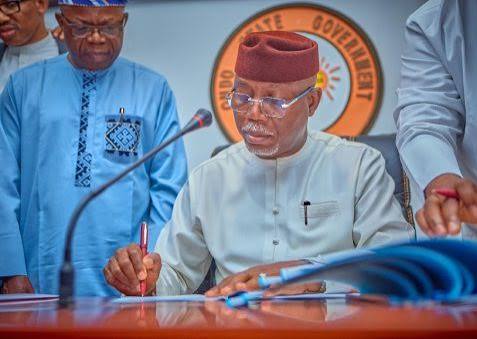
Ondo State Governor, Lucky Aiyedatiwa has signed the State Electric Power Sector (Amendment) Law, 2026, aimed at strengthening regulation and attracting investment into electricity generation, transmission and distribution across the state.
The new legislation, passed by the State House of Assembly, amends Ondo State Electric Power Sector Law, 2020, and aligns the state’s electricity framework with recent constitutional and statutory developments, particularly the Electricity Act, 2023.
A statement issued by the Chief Press Secretary to the Governor, Prince Ebenezer Adeniyan, said a major provision of the law was the establishment of State Electricity Regulatory Commission (SERC), an independent body responsible for regulating electricity activities and standards in Ondo State.
It added that the commission would oversee tariffs, open access, franchises, third-party investments, mini-grids and renewable energy development, while also issuing licences and permits for electricity generation, transmission and distribution facilities.
“The law also provides for the establishment of the State Independent System Operator (SISO) and State Market Operator (SMO) to facilitate the effective operation and development of the state’s electricity market.
“Under the amended law, compulsory metering is required for both grid-connected and off-grid electricity consumers. Electricity sellers are mandated to provide appropriate meters, while consumers will maintain direct service and payment relationships with their respective electricity providers.
“The legislation also provides legal protection for electricity infrastructure financed by communities, associations and private individuals. Transformers, distribution lines and other facilities connected to the public distribution network are protected against arbitrary interference,” the statement said.
It stated further that the law creates the offence of “Electricity Infrastructure Expansion Sabotage” for anyone who deliberately prevents certified electricity infrastructure from being connected to the grid.
According to the statement, first conviction attracts a N2 million fine, as well as an additional N25,000 for every day the refusal continues after written notice from the regulatory authority.
Continue Reading

Oil & Energy

NLNG Commissions Research And Innovation Centre In RSU

Published

on

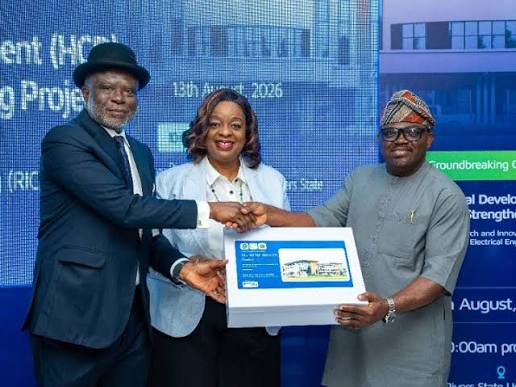
The Nigeria Liquified Natural Gas (NLNG) has launched the Research and Innovation Centre for Computer and Electrical Engineering (RICCEE), in the Rivers State University, a major research and development initiative jointly promoted by Nigeria LNG Limited (NLNG) and the Nigerian Content Development and Monitoring Board (NCDMB).
The project, valued at US$6.2 million, is being implemented under NLNG’s Human Capacity Development (HCD) Plan and forms part of the NCDMB Human Capital Development Institutional Strengthening Programme.
The centre is designed to strengthen the university’s capacity for advanced, industry-relevant research, specialised training, technology development and practical problem-solving in computer, electrical and electronics engineering.
The initiative is expected to promote industry-focused research and develop innovative solutions to operational challenges confronting Nigeria’s energy and industrial sectors.
The facility would be developed on approximately 9,336 square metres of land within Rivers State University and will comprise a three-storey building of more than 9,000 square metres, containing 18 specialised laboratories.
The laboratories would include facilities for Electronics and Signal Processing, Robotics and Embedded Systems, Software Engineering and Digital Forensics and Cybersecurity as well as  provide offices, storage areas and technical administration spaces to support research, teaching and equipment management.
The building would incorporate sustainability features, including solar energy provisions, energy-efficient lighting and environmentally responsible systems designed to reduce operating costs and support reliable research activities.
A US$1.2 million Professorial Chair would also be established as part of the initiative to support advanced research, academic leadership, and industry collaboration.
Speaking at the groundbreaking ceremony, last Thursday, the Managing Director and Chief Executive Officer of NLNG, Adeleye Falade, who was represented by Dr Sophia Horsfall, General Manager, External Relations and Sustainable Development of NLNG, described the new engineering facility as more than infrastructure, noting that it would serve as a hub for equipping students, lecturers and researchers with the tools required for practical learning, applied research and innovation in computer, electrical and electronics engineering.
Represented by the General Manager, External Relations and Sustainable Development, NLNG, Sophia Horsfall, Falade stated that the centre would strengthen collaboration between academia and industry and ensure that research outcomes from Rivers State University directly address operational and societal challenges facing Nigeria.
He explained that the project is aimed at improving the capacity of institutions of learning through upgraded infrastructure, modern research facilities, technical equipment and industry-aligned training programmes that extend human capital development beyond the classroom.
According to him, the centre would help bridge the gap between academic knowledge and practical industry requirements by enabling researchers and professionals to collaborate on innovations with commercial and developmental relevance.
Falade emphasised that while infrastructure is important, people remain the greatest investment, noting that education delivers the highest return by building confidence, competence and capacity for national development.
He further announced that NLNG’s Research and Development Implementation Consultancy would be based at the centre upon completion adding that the consultancy would support the development of a robust research and development framework in line with the Nigerian Oil and Gas Industry Content Development Act, 2010 and facilitate commercially viable, industry-relevant research in partnership with selected tertiary institutions.
Falade commended the Nigerian Content Development and Monitoring Board (NCDMB) for its leadership in bringing industry and academia together and reaffirmed NLNG’s commitment to sustainable human capital development and indigenous technological advancement.
On his part, the Executive Secretary of NCDMB, Engr. Felix Omatsola Ogbe, who was represented by the Director, Capacity Building Directorate, Engr. Abayomi Bamidele, described the groundbreaking ceremony as a significant milestone in the implementation of the Board’s Human Capital Development objectives.
Ogbe confirmed that NCDMB is fully aligned with NLNG in the implementation of the RICCEE project and would work closely with all stakeholders to ensure its successful execution and completion, commending the NLNG for its commitment to the project.
He explained that the project forms part of NCDMB’s Institutional Strengthening Programme, which seeks to establish enduring partnerships with institutions of higher learning by providing infrastructure that enhances teaching, research, innovation and practical skills development.
He challenged the centre to become a vibrant hub of discovery, creativity, enterprise and technological advancement, where students would be inspired to innovate, researchers would develop solutions to real-world challenges and industry would find reliable partners for research and development.
He also commended NLNG for its commitment to the project and praised the Governing Council, Vice-Chancellor and management of Rivers State University for their dedication to academic ex.
In his address, the Vice-Chancellor of Rivers State University, Prof. Isaac Zeb-Obipi, described the occasion as a historic milestone for the institution and reaffirmed the university’s vision of becoming a leading institution focused on solving practical societal problems through research, innovation and human capacity development.
Prof. Zeb-Obipi stated that the RICCEE project aligns with the university’s 2026–2030 Strategic Development Plan, which prioritises the improvement of academic programmes and the strengthening of research collaboration, innovation and entrepreneurship.
Continue Reading

Oil & Energy

Reps Demand Urgent Action On Bille Gas Seepage, Odidi Oil Spill

Published

on

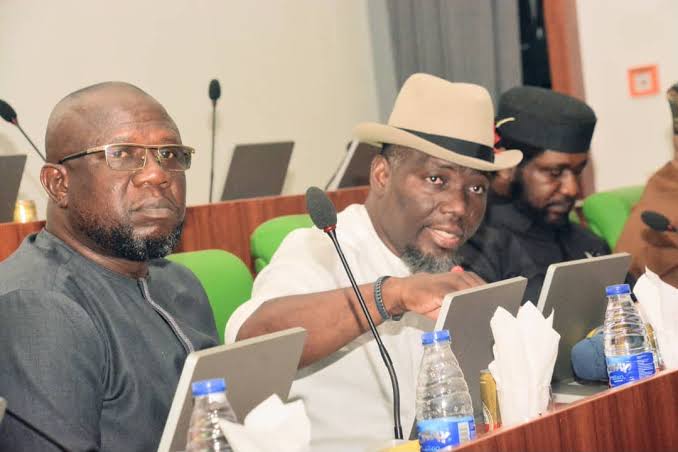
The House of Representatives Committee on South-South Development Commission has demanded urgent and concrete measures to resolve the prolonged gas seepage in Bille Community, Rivers State, and the oil spill affecting Odidi Federated Community in Delta State.
Chairman of the Committee, Hon. Julius Gbabojor Pondi, made the demand during an urgent Stakeholders’ Engagement on the Bille gas seepage and a Legislative Hearing on the Odidi oil spill, in Abuja, last week.
Pondi said the two incidents had exposed host communities in the oil-producing region to prolonged environmental hazards while responses from relevant authorities had yet to produce satisfactory and timely resolutions.
The Committee’s intervention comes amid growing concerns over environmental degradation in the Niger Delta, where communities dependent largely on fishing, farming and other natural-resource-based livelihoods continue to contend with the consequences of oil and gas activities.
Pondi said the Committee’s concern over the Bille incident was heightened following its engagement with the Nigerian Upstream Petroleum Regulatory Commission (NUPRC) and the National Oil Spill Detection and Response Agency (NOSDRA) on July 30, 2026.
He said the Committee was deeply concerned that the gas seepage had persisted for approximately nine months without a clear end in sight.
“The implications are serious. Beyond the potential risks to health, safety and the environment, the incident has imposed severe economic hardship on the people of Bille,” Pondi said.
He noted that Bille, a predominantly fishing community, had suffered consequences affecting livelihoods, food security, household income, education and the general well-being of families.
“It is unacceptable for an incident of this magnitude to persist for so long without a clear, time-bound and effective resolution strategy,” he stated.
According to Pondi, the engagement was intended to establish the facts surrounding the incident, assess the response so far, identify obstacles and agree on practical, measurable and time-bound actions.
He said the Committee expected comprehensive briefings from the operating company, NUPRC, NOSDRA and other relevant agencies on the cause, extent and current status of the seepage, while representatives of Bille Community would be given an opportunity to present their concerns and the relief and interventions required.
“Most importantly, we want to move from prolonged discussion to concrete action and lasting resolution,” he said.
Giving an account of the agency’s technical findings, a Director of NOSDRA, Dr Yusuf Rigasa, said investigations had established what he described as “multi-point subsurface gas bubbling” at several locations in Bille.
He stated that gas bubbling had been detected around the premises of the Government Primary and Secondary School, as well as in waterways and certain mangrove areas.
According to him, NOSDRA conducted an air-quality assessment on December 6, 2025, across 19 stations and recorded elevated levels of hydrogen sulphide, methane, volatile organic compounds and carbon dioxide.
Rigasa explained that hydrogen sulphide has a characteristic rotten-egg smell, while methane is highly flammable and potentially explosive.
The concentrations recorded, he said, exceeded applicable regulatory thresholds.
Rigasa stated that the agency’s reference laboratory also analysed samples collected on December 16, 2025, and found elevated levels of total petroleum hydrocarbons in groundwater, surface water and sediment samples adding that
findings indicated that soil, surface water and groundwater in parts of Bille had been affected by pollution.
What we can confirm for the House is that the air, the groundwater, the surface water and the sediment in the swampy areas in that village, they are all polluted,” he said.
 The NOSDRA official, however, said the agency had not established that the gas was from a hydrocarbon source.
Continue Reading

Trending