Connect with us

Business

FRSC Updates Officers On Speed Limiting Device Enforcement

Published

on

In a move to reduce road
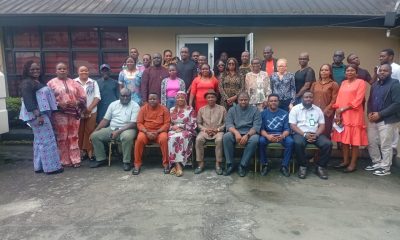
crashes in the country, the Federal Road Safety Commission (FRSC) has updated its Zonal Commanding Officers on how to successfully enforce the use of Speed Limiting Devices (SLD).
Speaking at a Strategic Session with the officers in Abuja, FRSC Corps Marshal, Boboye Oyeyemi, said it was important to key all the commanding officers of the commission into the SLD policy to ensure that they were properly informed on the best practice and challenges.
Oyeyemi said that the session with the officers became necessary considering that speed accounted for 50.8 per cent of road crashes in the country in 2014.
He said that in view of the large road network, a huge land mass, and a vehicular density of 8.5 million in the country, it required proper planning for road traffic accidents to reduce.
“Implementation of SLD policy requires proper planning and FRSC is very mindful of that.
“Speed accounted for 50.8 per cent of road crashes in 2014; that informed the adoption of the policy by all critical stakeholders in order to stem the crash.
“Nigeria has 204,000km road network, 924,000 sq km land mass and vehicular density of 8.5million, which requires proper planning.
“The policy has got the support of the current administration and the deadline of April 2016 is final.
“Enforcement of SLD policy will be in phases, starting with commercial vehicles in April, while other vehicles will follow suit later.
“We are nurturing the commission to a greater height by building the capacity of its personnel from time to time.’’
The Tide source reports that the enforcement of the use of the device is scheduled to begin on April 1, 2016 following Federal Government’s approval of the policy in November.
According to the FRSC chief, the Standard Organisation of Nigeria (SON) has certified 16 operators that will handle the installation of the speed limiting devices in vehicles nationwide.
The corps marshal expressed appreciation to the stakeholders in the road sector for their support and understanding, saying the agency would continue to carry them along in its activities.
Some of them, who spoke with newsmen after the session, said that they would communicate the decisions taken at the event to the sector commanders.
According to him, the same information will be passed down to all other officers of the commission.


Continue Reading

Business

FEC Approves New National Immigrants Policy 

Published

on

The Federal Executive Council (FEC) has approved the Revised 2025 National Migration Policy (NMP), marking a major step by the President Bola Ahmed Tinubu’s administration to strengthen Nigeria’s migration governance and maximise the economic and social benefits of migration.
The policy, adopted at the FEC meeting on Wednesday, August 19, 2026, replaces the National Migration Policy introduced in 2015 and provides an updated framework for addressing emerging migration trends, protecting migrants and promoting safe, orderly and regular migration.
Minister of Humanitarian Affairs and Poverty Reduction, Dr Bernard Doro, described the approval as a significant milestone in Nigeria’s efforts to translate its international migration commitments into coordinated action at home.
In a statement issued Friday by his Senior Technical Adviser on Information Systems and Data Analysis, Dr Abimbola Fasanu, Doro said the revised policy would strengthen migrant protection, support return and reintegration, improve migration data and create opportunities to harness migration and diaspora resources for national development.
The minister linked the development to Nigeria’s participation in the 2026 International Migration Review Forum (IMRF), held at the United Nations Headquarters in New York in May.
Doro led Nigeria’s delegation to the forum and served as Co-Chair of Roundtable 3, where the country showcased progress in implementing the Global Compact for Safe, Orderly and Regular Migration (GCM).
“Our participation at the International Migration Review Forum demonstrated Nigeria’s commitments to the world. The adoption of the Revised National Migration Policy brings those commitments home and provides the national framework for translating them into coordinated and measurable action.
“Migration should not become a journey into vulnerability. Our responsibility is to build systems that enable Nigerians to migrate safely and regularly, protect those who move, support those who return, and harness migration as a force for national development,” Doro said.
He stressed that the ultimate measure of the policy would be its impact on Nigerians at home and abroad.
The revised policy emerged from a broad consultation involving Ministries, Departments and Agencies (MDAs), state governments, civil society organisations, academia, international development partners and other stakeholders in Nigeria’s migration ecosystem.
The review was coordinated by the National Commission for Refugees, Migrants and Internally Displaced Persons (NCFRMI), with technical support from the International Organisation for Migration (IOM).
The revised policy and its Integrated Implementation Plan were validated by stakeholders at the Technical Working Group on Migration and Development meeting in Abuja on April 29, 2025.
The framework is expected to improve institutional coordination, strengthen Nigeria’s response to changing migration patterns and align national migration priorities with regional and international frameworks, particularly the Global Compact.
Doro commended the NCFRMI, government agencies, IOM, development partners, civil society organisations and other stakeholders for their contributions to the policy review.
He said the new framework would improve assistance for Nigerians returning from abroad, strengthen migration and diaspora data, promote safer migration pathways and improve coordination among federal, state and local governments.
Federal Commissioner of NCFRMI, Dr Tijani Aliyu Ahmed, also welcomed the FEC approval, describing it as the culmination of years of technical work, consultation and collaboration among stakeholders.
According to him, the decision provides fresh impetus for coordinated implementation at federal, state and local levels while strengthening Nigeria’s ability to protect migrants and vulnerable populations and maximise the developmental gains of migration.
“With the policy now approved, attention shifts to implementation, monitoring and localisation.
The approval demonstrated the Tinubu administration’s commitment to strengthening institutions and converting Nigeria’s international obligations into practical national policies.
“This approval is not the end of the process. It is the beginning of the most important phase: implementation,” he said.
“Our responsibility now is to ensure that the policy moves beyond paper and becomes a living framework that protects Nigerians, strengthens coordination, creates safer migration pathways and enables our country to harness migration as an instrument of development.”
Nkpemenyie Mcdominic, Lagos
Continue Reading

Business

Ogoni Oil Resumption: Group Demands Transparency, Full Jobs Disclosure, Contracts

Published

on

A group under the aegis of the Greater Ogonis in Diaspora Organizations (GODO) has called for full transparency and accountability in the ongoing dialogue over the proposed resumption of oil production in Ogoniland, demanding disclosure of employment opportunities, contracts, confidence-building projects and other oil-related activities.
The group made the demand in a statement signed by its President, Chief Ambrose Kii and made available to the  public in Port Harcourt , at the weekend.
GODO said the concerns raised by the President of KAGOTE, Chief Lesi Maol, a member of the Ogoni Dialogue Committee, Rev. Msgr. Pius Kii, and KAGOTE Second Vice President and ODC member, Rear Admiral John Nicholas Bakpo (rtd.), had reinforced the need to protect the collective interests of the Ogoni people.
The group stressed that its position should not be interpreted as opposition to the Federal Government or the proposed return of oil production to Ogoniland, but as a demand for a process that is transparent, equitable,
 environmentally responsible and capable of delivering lasting benefits to the people.
It expressed particular concern over reports concerning 40 employment opportunities reportedly allocated to Ogoni youths by the Nigerian National Petroleum Company Limited (NNPCL) as part of confidence-building measures.
GODO demanded the public disclosure of the identities of the beneficiaries, their communities and local government areas, as well as the criteria used in selecting them and the process through which the list was approved.
It also called for an investigation into allegations that 18 of the 40 employment slots were allegedly allocated to persons who are not Ogonis, stressing that such a serious allegation should not be ignored if confidence in the dialogue process is to be sustained.
The organisation said any diversion of opportunities specifically meant for Ogoni youths would constitute a breach of trust, insisting that all beneficiaries and the basis of their selection should be subjected to appropriate scrutiny.
It further raised concerns over reports that oil-related activities may have commenced in some parts of Ogoniland while negotiations between the Federal Government and representatives of the Ogoni people are still ongoing.
The group maintained that critical issues relating to participation, equity, community benefits, environmental safeguards and other conditions for the resumption of oil production must be resolved before irreversible decisions are taken.
According to GODO, allowing oil activities to proceed while fundamental negotiations remain inconclusive could create a situation where Ogoni stakeholders are eventually confronted with decisions that have already been taken without their full participation.
The organisation also demanded comprehensive details of the confidence-building projects reportedly being executed across Ogoniland, including their locations, contractors, scope, funding arrangements and implementation status.
It said concerns raised by Rear Admiral Bakpo, who reportedly complained that despite being a member of the ODC and a monitoring team for confidence-building projects in Khana, he was allegedly unaware of the contractors and scope of projects he was expected to monitor, required urgent attention.
GODO also called for clarification of the reported harmonisation arrangement involving individuals allegedly outside the ODC, urging the Office of the National Security Adviser to clarify whether it authorised the composition of the controversial list and, if not, establish how the names became associated with the office.
The group urged President Bola Ahmed Tinubu and the National Security Adviser, Mallam Nuhu Ribadu, to review the emerging concerns, saying the Ogoni people have waited for decades for a credible resolution and should not be pressured into accepting an arrangement that fails to guarantee justice, transparency, meaningful participation, environmental protection and equitable benefits.
King Onunwor
Continue Reading

Business

Foundation Unveils New Digital Medical Facilities

Published

on

The management of Save a Life  Hospital has unveiled a fully digitalised medical facilities  to enhance effective medical services and treatments for its patients across the globe.
The Founder and Director of the foundation, Dr Richard Okoye who  conducted journalists round the facilities at the hospital in Port Harcourt, Friday, said the unveiling of the digital facilities was a dream come through and a commitment to international best practices.
He said the breakthrough makes save a Life hospital th.e first fully digitalised hospital in Africa, adding that the hospital will remain committed to research, innovation and excellence service delivery.
Briefing newsmen at the hospital,  Dr  Okoye disclosed that Nigeria was rated globally to have the lowest life expectancy after Afghanistan, adding that the situation was worsened by the mass flight of doctors from Nigeria to seek greener pastures out the country, known as jakpa syndrome.
According to Dr Okoye, part of the innovations recorded by safe a Life Foundation is the introduction of a medical application known as ‘my home clinic’ which avails patients the opportunity to engage medical facilities and enjoy medical services from their homes.
The renown medical practitioner pointed out that proper information management is applied to check misdiagnosis, minimize hytrogenic deaths and other tactical errors of medical enquiry; and practice.
He emphasised that the home delivery of medical services has also enhanced zero maternal mortality, as proper digital records of pregnant women are carried out with precision and followed up with proper medical services.
Dr Okoye called on governments and other stakeholders to key into the innovation to get it properly domesticated in tertiary, secondary and primary health care practices, adding that the target is to bridge the gap in jakpa syndrome and shore up Nigeria’s life expectancy ratio by reducing preventable deaths.
Continue Reading

Trending