
Oil & Energy
NNPC, Ogun Move to Revive $10bn OgunLNG Project


The Nigerian National Petroleum Company Limited (NNPC Ltd) is set to invest an initial $10 billion in the development of the OgunLNG project in Ogun Waterside, Ogun State, as the lon QQg-delayed gas project enters a fresh phase of revival.
Speaking to journalists after a meeting with officials of the company led by its Chief Financial Officer, Adedapo Segun, in Iperu, Ikenne Local Government Area of the state, Governor Dapo Abiodun disclosed that NNPC had commenced discussions with the state government on the revival of the project, which has remained on the drawing board for more than three decades.
The development comes barely a week after the Ogun State Government signed agreements with global ports and logistics giant, DP World, for the development of the Gateway Deep Sea Port and the 10,000-hectare Ogun State Blue Marine Special Economic Zone, in a deal expected to attract more than $7 billion in initial investment.
Abiodun described the renewed interest in OgunLNG as a significant development for Ogun State and Nigeria, noting that the project has the potential to strengthen the country’s energy supply while providing gas for industries and supporting large-scale industrialisation. Africans& Diaspora
“Today, we just received members of the Nigerian National Petroleum Company who have come to meet with us on behalf of the Group Chief Executive Officer. They have come to discuss with us the LNG plant that was originally designed and called OKLNG, which was meant to be situated on our coastline. Now they have brought the project back to life,” the governor said.
According to him, the discussions focused on land requirements, incentives and other arrangements necessary to facilitate the smooth take-off of the project, with the state government assuring NNPC of its full cooperation.
He said the project would have significant multiplier effects, particularly in employment generation and the provision of gas to industries within the economic zone, Ogun State and the wider South-west region.
The governor cited the NNPC’s facility in Bonny, Rivers State, where he said about 14,000 people are employed, as an indication of the potential employment impact of the OgunLNG project.
Abiodun said the revival of OgunLNG immediately after the signing of the DP World agreements was particularly significant, as the LNG project, deep seaport and Blue Marine Special Economic Zone could collectively create an integrated ecosystem linking energy, manufacturing, maritime trade, logistics and exports.
“Last Wednesday, we signed an MoU on the Deep Sea Port and today we have the NNPC team here discussing the activation of the LNG plant,” he said.
The governor said the development would further reinforce Ogun’s position as an industrial centre while positioning Ogun Waterside as an emerging energy and maritime hub.
He also commended President Bola Ahmed Tinubu for his support for the revival of strategic economic projects, saying OgunLNG would contribute to the federal government’s efforts to deepen gas utilisation, expand energy supply and support economic growth.
Speaking on the NNPC engagement, Segun said the company was undertaking a comprehensive assessment of the factors that stalled the project in the past, with a view to finding lasting solutions and resuscitating it.
“We are here to engage with the government of Ogun State on the project we are looking to site along the coastline of the state,” Segun said.
NNPC’s Executive Vice President, Gas, Power and New Energy, Lekan Ogunleye, disclosed that the company would require approximately 1,728 hectares for the LNG plants, utilities, storage facilities and associated infrastructure.
He added that approximately 2.5 kilometres of dedicated Atlantic frontage would be required to support marine traffic and safety requirements for up to three LNG jetties.
Ogunleye congratulated the people of Ogun State on the proposed development, saying the project could significantly change the economic fortunes of the area.


Continue Reading
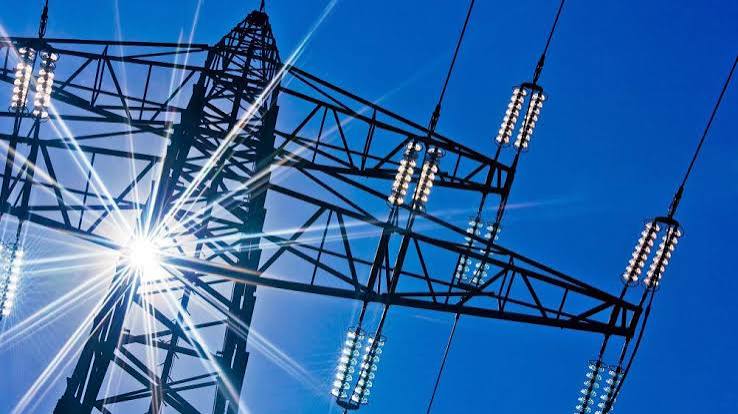
After years of stagnation in key developed markets, power demand is rising again at a pace not seen in decades as data centers, electrification, and industrialization drive a surge in electricity consumption.
The Age of Electricity, as the International Energy Agency (IEA) put it in its 2026 Electricity report, is gathering pace, changing long-term assumptions and forecasts about power markets in all regions, and posing new challenges for policymakers, power generators, and grid operators.
One common feature in the Age of Electricity is that power demand is rising everywhere in the world, driven by higher electrification rates and the AI and data center boom. But different countries and regions have taken different pathways to meet higher electricity demand, reshaping their regional power markets in different ways, analysts at Wood Mackenzie say.
In the United States, electricity consumption set a new record high last year and is on track for new all-time highs this year and next, as the AI boom has ended America’s decade of stagnant power use.
This growth was mostly due to the data centers, as “data center load is emerging as the dominant driver of long-term U.S. electricity growth,” as the U.S. Energy Information Administration (EIA) said in its annual outlook earlier this year.
Related: U.S. Threatens Diesel Export Ban Unless Europe Releases Stockpiles
Despite a pause in connecting new data center projects in Texas to the grid, the West South Central region will still account for the largest regional share of growth in total electricity sales, totaling nearly 20% of nationwide growth in 2026 and almost 40% in 2027, according to the EIA’s forecast in the Short-Term Energy Outlook (STEO) for September.
WoodMac’s analysts forecast 3.2% annual electricity sales growth in the U.S. through 2035, two-thirds of which will come from data centers. With the backing of the Trump Administration, gas remains a popular choice and will meet 52% of the increased power generation through 2035.
However, gas investment costs have hit a record high, and bottlenecks in gas turbine deliveries are complicating decisions to rely too much on gas-powered generation.
“The need for electrons must be balanced against the risk of stranded assets,” Wood Mackenzie’s power and renewables market analysts say.
“The tension between speed to power and affordability are spurring reforms across regional US power markets,” they added, but noted that state policy responses remain fragmented and there is no silver bullet to solving the challenge.
Power demand in Europe is also rising, due to the same global factors plus another major driver—the European Union’s decarbonization policies and drive to boost the share of renewables as a way to protect against geopolitical challenges to energy security, such as the lack of LNG supply from Qatar because of the Iran war and the disrupted traffic through the Strait of Hormuz.
The Asia-Pacific region is set to see the biggest power demand growth of any region, driven by industrialization, economic expansion, and urbanization in China, India, and Southeast Asia, according to Wood Mackenzie.
The APAC region will account for nearly three-quarters of overall global demand growth to 2035, WoodMac says.
Despite the fact that the pathways to meeting rising power demand diverge among regions, another common thread has emerged in recent years. It’s that the grids are not ready to handle the surge in electricity loads.
Global power demand is expected to grow by more than 3.5% per year on average through the end of the decade, the International Energy Agency (IEA) said in its Electricity 2026 report.
Global electricity demand is rising at the fastest pace in 15 years and will continue to do so at least until the end of the decade as AI infrastructure, advanced manufacturing, and electrification have ushered in The Age of Electricity, the IEA says.
As demand grows, developers of new capacity, especially renewables and natural gas, face constraints in connecting to the grids. Regional and country-specific trends are not the same, but the need for rapid and efficient expansion of grids is a pressing global issue. Without increased system flexibility and rapid grid expansion, the Age of Electricity could roll out at a slower pace than expected.
Today, global investments in grids are about $400 billion per year. If the world is to meet the expected growth in power demand through 2030, it would need to boost annual grid investment by about 50% from $400 billion, according to the IEA.
“A lack of grid capacity is emerging as a critical bottleneck in many regions, driving higher levels of congestion and slowing the deployment of new electricity generation, storage and demand,” the agency said in the report.
“Grid connection queues have reached record levels worldwide.”
In other words, today’s grids are not ready to handle tomorrow’s electricity needs.
“Meeting this demand will require annual investment in grids to rise by 50% by 2030,” Keisuke Sadamori, IEA Director of Energy Markets and Security, said earlier this year.
“Expanding flexibility will also be crucial as power networks continue to evolve – so will a strong focus on security and resilience.”
By: Tsvetana Paraskova
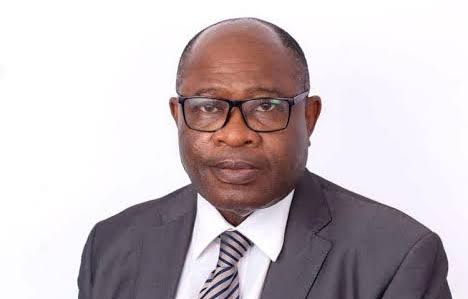
The Anambra State Government has revealed plans to establish a modular refinery as part of projected development strategy to develop the state’s gas processing and petroleum sector.
The Commissioner for Petroleum and Mineral Resources, Prof. Charles Ofoegbu, disclosed this when he received members of the National Association of Liquified Petroleum Gas (LPG) Marketers (NALPGAM), Anambra Chapter, on a visit, in Awka, weekend.
Ofoegbu said “The proposed modular refinery will eventually lead to the establishment of a Liquefied Petroleum Gas processing plant.
“Gov. Chukwuma Soludo’s administration is committed to sanitising the petroleum sector and creating an enabling environment for investors.
“So, we are calling on Anambra residents and other interested investors to take advantage of the opportunity to establish gas processing plants in the state.
“Be rest assured that the state government is ready to support prospective investors with gas supply to their plants.”
The commissioner who described the association’s proposed workshop as timely, emphasising its need parrticularly in addressing challenges facing LPG marketers.
Earlier, the State Chairman of NALPGAM, Dr. Daniel Madueke, said the visit was to seek the commissioner’s approval to organise a workshop on LPG safety and operations.
Madueke said the workshop would educate the public on the nature and composition of LPG, different pressure levels at which it operates and measures to prevent domestic gas accidents.
He also congratulated Ofoegbu on his appointment as commissioner.
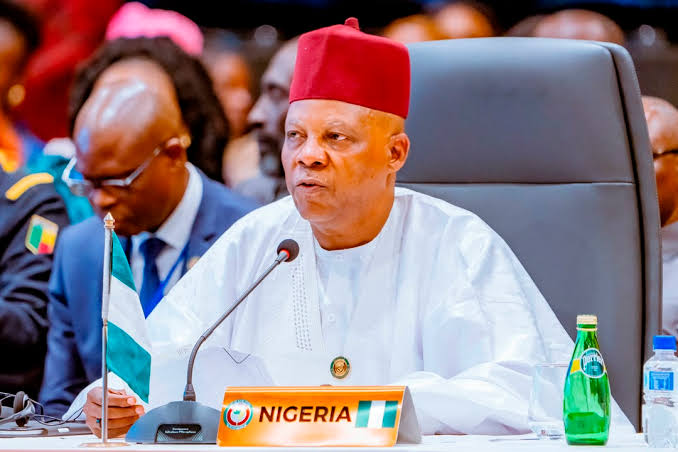
Vice President Kashim Shettima has called for urgent policy reforms, stronger public-private partnerships, and innovative risk-sharing mechanisms domestic and foreign investment into Nigeria’s green infrastructure.
Shettima said the country required about $410 billion in additional investment by 2060 to achieve its net-zero pathway.
He made the call at the second edition of the Decarbonising Infrastructure in Nigeria (DIN) Summit.
Represented by his Deputy Chief of Staff, Senator Ibrahim Hadejia, the vice president said the scale of funding required presented not only a challenge but also a significant investment opportunity for domestic and international investors.
He said “Our Energy Transition Plan estimates that Nigeria will require about $410 billion in additional investment above business-as-usual through 2060 to achieve its net-zero pathway. GoGreen
“That is a significant financing requirement. But it also tells us something else: there is a very large investment opportunity ahead of us.”
Shettima stressed that while government would remain an important player in financing the transition, it could not provide all the capital required to achieve Nigeria’s long-term energy and infrastructure objectives.
“We need the private sector. We need development finance institutions. We need domestic financial institutions and institutional investors. And, perhaps most importantly, we need projects that are properly prepared and capable of attracting that capital”, he stated.
Shettima pointed out that the central issue was no longer simply the availability of ideas, policies, or climate ambitions, but the ability to convert them into projects that investors could assess, finance and implement.
He identified the questions investors would ordinarily ask before committing capital, including whether the policy environment was clear, whether the revenue model was credible, whether technical issues had been adequately addressed, and how risks would be allocated among the parties involved.
“These are practical questions. And I believe that is where DIN Summit 2.0 can make a useful contribution,” he said.
The vice president acknowledged that investment in green infrastructure in Nigeria faced policy, financial, technical and institutional challenges, but said however, that the obstacles could be addressed through collaboration among stakeholders.
The summit, held at the United Nations House in Abuja, was organised by the Office of the Vice President with support from the National Council on Climate Change and United Nations Industrial Development Organisation (UNIDO).
Themed, ‘De-risking Green Infrastructure Investment in Nigeria: Enabling Policy, Project Readiness and Risk-Sharing Solutions’, the forum brought together policymakers, development finance institutions, private investors, members of the diplomatic corps, and climate experts to examine ways of closing the huge financing gap confronting Nigeria’s green transition.
-
Business4 days ago
Maduba Urges Lawyers To Embrace AI, Build Lasting Legacy
-
 Featured4 days ago
UNICEF Strengthens Public Health Emergency Preparedness Across 10 States
-
Business4 days ago
Skills Acquisition: FG To Lift 5m Nigerians Out Of Poverty
-
Politics4 days ago
2027: GROUP PLANS DOOR-TO-DOOR CAMPAIGN FOR RIVERS ADC CANDIDATES
-
 News4 days ago
RSG Relocates Community Secondary School Over Flooding
-
Business4 days ago
Nigeria At 66: From Reform To The Real Test Of Development
-

 News2 hours ago
Insecurity: NSCDC Warns Against Misinformation, Fake Videos
-
News4 days ago
NIPSS Reschedules Economic Summit To Dec