
News
2026 Budget: FG Allocates N12.78bn For Census, NPC Vehicles


The Federal Government has allocated N12.78bn to the National Population Commission (NPC) in its proposed 2026 budget for census activities, construction of permanent office buildings, and vehicle procurement.
This is contained in the 2026 Appropriation Bill released by the Budget Office of the Federation.
President Bola Tinubu had on December 19, 2025, presented the budget estimate totalling N58.18tn to a joint session of the National Assembly.
According to the budget estimates, N770m is allocated for the ongoing National Population and Housing Census project, while N8.4bn is earmarked for the construction of permanent office buildings for the commission.
The purchase of official vehicles for federal commissioners is allocated N2.8bn.
The development of the National Population Data Bank, the Nigerian Population Database Management System, and the hosting of the population geo-portal and web portal are to receive N54.6m.
Preparation of the Enumeration Area Demarcation concept manual will cost N1.89m, while N17.5m is planned for the conduct of a second pretest.
Stakeholder conferences to present the 2018 census instruments are budgeted at N7m, while upskilling staff in data collection and interviewing techniques will cost N14m.
Census in schools is allocated N7m, while the development of a small-area lor enumeration-area-level database for spatial analysis and dissemination is set to receive N1.82m.
Field demarcation in 774 local government areas is budgeted at N1.4m.
Inter-censal population activities—including population projections, sentinel surveys, and the Nigerian Demographic and Health Survey—as well as the development of small-area-level databases for analysis, have been allocated N12.39m.
Census publicity and advocacy, including information campaigns through print and electronic media, are budgeted at N173.11m.
Monitoring and evaluation of commission projects will cost N28m, while research, documentation, and archiving—including studies on special populations such as herdsmen, fishermen, homeless persons, and migrant farmers—are also budgeted at N28m.
Cartographic consumables for the enumeration area demarcation exercise are allocated N1.61m.
Amendment of the NPC Act and prosecution of objections to the 2006 census results will cost N49m.
Expansion of registration centres and the registration of births and deaths are allocated N245m, while the generation of statistics on internal and international migration is budgeted at N24.5m. Population activity coordination in line with presidential directives will also cost N24.5m.
Additionally, specialised studies in demography, establishment of an e-library, and an annual population lecture series are budgeted at N35m, while the commemoration of World Population Day and the Annual Population Census Day is allocated N63m.
Budget preparation, verification of fixed assets, and the updating of financial documentation in line with IPSAS accrual accounting standards will cost N35m.
Nigeria last conducted a national census in November 2006, recording a population of 140,431,790.
Nearly 20 years later, the country is still struggling to complete preparations for a new count.
The planned census faced several setbacks under former President Muhammadu Buhari, including funding shortages, insecurity, and disruptions caused by the COVID-19 pandemic.
Despite moves by the NPC to deploy digital mapping and biometric systems to improve accuracy, the exercise was repeatedly postponed.
The 2023 census was eventually shelved due to financial constraints and the transition to a new administration, leaving much of the groundwork incomplete as Buhari exited office.
Under President Bola Tinubu, renewed attempts to revive the project have faced further challenges.
There is still no clear roadmap on the timing, methodology, or how to enumerate Nigeria’s large mobile populations, including internally displaced persons.
During a meeting with NPC officials on February 24, 2025, Tinubu expressed displeasure over the prolonged delays.
“This stop-and-go activity on the census cannot work with me. So we’d better have a definite path,” he said.


The programme, which targets vulnerable residents in rural communities, is designed to stimulate local economies, reduce poverty, promote environmental sustainability and discourage youth restiveness through community-based public works.
The Technical Head of Climate-Smart Labour-Intensive Public Works (LIPW) under RIVCARES, Engr Prince Enyindah, disclosed this during the training and orientation programme organised for beneficiaries across the three senatorial districts in Saakpenwa, Ahoada and Port Harcourt.
Enyindah explained that the 5,500 beneficiaries were selected from the Rivers State Social Register, stressing that they would be engaged in environmental sanitation and other climate-friendly activities within their respective communities.
He noted that the programme was upgraded from the former Rivers COVID-19 Action Recovery and Economic Stimulus Scheme to the Rivers State Community Action for Resilience and Economic Stimulus programme, with climate-smart interventions incorporated into its operations.
According to him, the monthly stipend for beneficiaries has been increased from N15,000 to ¦ 20,000, payable for 12 months, with the possibility of a review after the initial one-year period.
He urged the beneficiaries to appreciate the state government under Governor Siminalayi Fubara for the initiative and encouraged them to invest their monthly stipends in productive economic activities that could improve their financial conditions.
Speaking in Saakpenwa, headquarters of Tai Local Government Area, Enyindah explained that beneficiaries would be responsible for activities aimed at improving sanitation, hygiene and environmental conditions in their communities.
He listed the areas of intervention to include clearing community footpaths, cleaning drainages and gutters, maintaining market places, town halls, community playgrounds and traditional rulers’ palaces.
He also urged the beneficiaries to discourage indiscriminate tree felling as part of efforts to promote environmental protection and climate resilience.
At Ahoada, headquarters of Ahoada East Local Government Area, where beneficiaries from Ogba/Egbema/Ndoni, Ahoada East, Ahoada West and Abua/Odual Local Government Areas received their training, the RIVCARES technical head emphasised that the programme was not politically motivated.
He maintained that the beneficiaries were selected through the state Social Register and cautioned against individuals or political actors claiming personal credit for their recruitment.
Enyindah further disclosed that plans were underway to provide beneficiaries with additional vocational and entrepreneurial skills to enhance their capacity to generate income beyond the monthly stipends.
Speaking with journalists, he explained that the programme was specifically designed to stimulate economic activities in rural communities, alleviate poverty and address factors contributing to youth restiveness.
He observed that prolonged unemployment and lack of income among rural residents could expose some individuals to social crises, adding that the monthly financial support would provide beneficiaries with some economic relief.
“If you look at the programme, it is an economic stimulus programme. You discover that there are people who stay in our rural communities from day one to the end of the month without getting a dime, and that can make them put their hands into crisis.
“But when somebody who is not getting anything is given ¦ 20,000 at the end of the month, it will make a little meaning to the person,” he said.
He explained that the programme currently covers all 23 local government areas of Rivers State, with approximately 234 beneficiaries allocated to each council area.
Enyindah described the ongoing exercise as the first phase of the intervention, noting that subsequent phases would be expanded as additional resources became available.
He therefore appealed to the state government to provide more counterpart funding to enable the programme to accommodate additional beneficiaries across the local government areas.
According to him, the previous phase of the intervention recorded significant achievements, particularly in addressing youth restiveness and providing economic opportunities for vulnerable residents.
Also speaking at Ahoada, the Head of Operations, Labour-Intensive Public Works, Mr Wilson Ihunwo, encouraged the beneficiaries to prepare for the responsibilities associated with the programme and make meaningful contributions to the maintenance of public facilities in their communities.
He explained that the beneficiaries would be encouraged to take ownership of public utilities and ensure their proper maintenance for the benefit of residents.
Similarly, the Head of Gender-Based Violence under RIVCARES, Jennifer Bishop, cautioned against gender discrimination, harassment and other forms of workplace misconduct.
She urged male beneficiaries to invest their stipends responsibly, while advising female beneficiaries to maintain appropriate professional boundaries and avoid inappropriate advances towards their supervisors.
Some beneficiaries, including Chiwendu Dukuma from ONELGA, Oby Joseph from Abua/Odual and Odema Kingsley from Omalem Community in Abua, expressed appreciation to the Rivers State Government for including them in the programme.
They pledged to utilise the financial support responsibly and invest their earnings in productive ventures, while appealing to the government to sustain and expand the initiative to accommodate more vulnerable residents.
The RIVCARES Community Workforce Programme is expected to combine temporary employment opportunities with environmental improvement, community development and economic empowerment across the 23 local government areas of Rivers State.
The Rotary Club of Port Harcourt Passport, District 9141, has unveiled a N28 million intervention plan targeting healthcare delivery, peacebuilding, education, water and sanitation, maternal and child health, and environmental protection during the new Rotary year.
The new President of the club, Rotarian Noble Uranta, disclosed this shortly after his induction as the 7th President, explaining that his administration would align its programmes with Rotary International’s global mission and seven areas of focus.
Uranta said each area would receive dedicated attention and resources to ensure that the club’s interventions deliver meaningful and sustainable benefits to its host communities.
He identified the areas of focus as peacebuilding and conflict prevention, disease prevention and treatment, water, sanitation and hygiene, maternal and child health, basic education and literacy, and environmental protection, among others.
Giving a breakdown of the proposed interventions, the Rotary President said the club had earmarked ¦ 2 million for peacebuilding and conflict prevention through community dialogue forums and mediation training aimed at promoting peaceful coexistence and resolving disputes.
He disclosed that ¦ 3.5 million would be committed to disease prevention and treatment through medical outreaches, vaccination drives and health awareness campaigns.
On water, sanitation and hygiene, Uranta said N3million had been allocated to borehole projects and hygiene education in schools to improve access to clean water and promote healthier communities.
He further announced that N2.5 million would be devoted to maternal and child health initiatives, including the provision of safe delivery kits and nutrition programmes to improve the wellbeing of mothers and children.
For basic education and literacy, the club plans to invest N13 million in scholarships, literacy campaigns and the provision of computers to schools to improve learning opportunities and bridge the digital divide.
Similarly, N2.5 million has been earmarked for environmental protection initiatives, including tree-planting campaigns and waste recycling programmes to promote environmental sustainability.
The proposed interventions, according to Uranta, represent the club’s commitment to extending its humanitarian services and creating measurable improvements in the lives of people within its areas of operation.
He assured members that his administration would prioritise impactful projects that address community needs and contribute to sustainable development.
The new President also solicited the cooperation and support of club members, stressing that their collective commitment would be essential to achieving the objectives of his administration during the Rotary year.Rotary Club Unveils ¦ 28m Budget for Healthcare, Education, Peacebuilding, Others
The Rotary Club of Port Harcourt Passport, District 9141, has unveiled a ¦ 28 million intervention plan targeting healthcare delivery, peacebuilding, education, water and sanitation, maternal and child health, and environmental protection during the new Rotary year.
The new President of the club, Rotarian Noble Uranta, disclosed this shortly after his induction as the 7th President, explaining that his administration would align its programmes with Rotary International’s global mission and seven areas of focus.
Uranta said each area would receive dedicated attention and resources to ensure that the club’s interventions deliver meaningful and sustainable benefits to its host communities.
He identified the areas of focus as peacebuilding and conflict prevention, disease prevention and treatment, water, sanitation and hygiene, maternal and child health, basic education and literacy, and environmental protection, among others.
Giving a breakdown of the proposed interventions, the Rotary President said the club had earmarked ¦ 2 million for peacebuilding and conflict prevention through community dialogue forums and mediation training aimed at promoting peaceful coexistence and resolving disputes.
He disclosed that ¦ 3.5 million would be committed to disease prevention and treatment through medical outreaches, vaccination drives and health awareness campaigns.
On water, sanitation and hygiene, Uranta said ¦ 3 million had been allocated to borehole projects and hygiene education in schools to improve access to clean water and promote healthier communities.
He further announced that ¦ 2.5 million would be devoted to maternal and child health initiatives, including the provision of safe delivery kits and nutrition programmes to improve the wellbeing of mothers and children.
For basic education and literacy, the club plans to invest ¦ 13 million in scholarships, literacy campaigns and the provision of computers to schools to improve learning opportunities and bridge the digital divide.
Similarly, ¦ 2.5 million has been earmarked for environmental protection initiatives, including tree-planting campaigns and waste recycling programmes to promote environmental sustainability.
The proposed interventions, according to Uranta, represent the club’s commitment to extending its humanitarian services and creating measurable improvements in the lives of people within its areas of operation.
He assured members that his administration would prioritise impactful projects that address community needs and contribute to sustainable development.
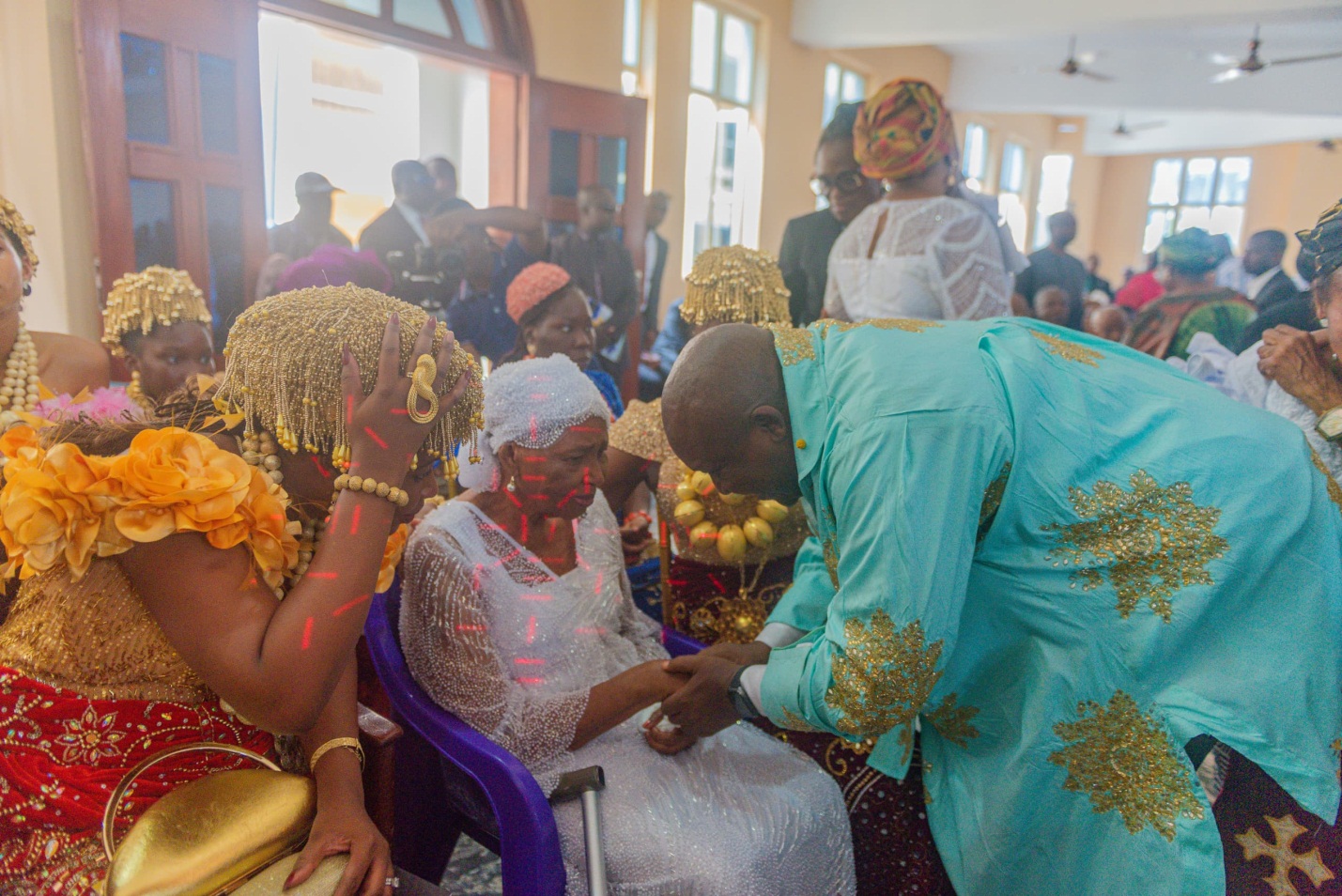
Rivers State Governor, Sir Siminalayi Fubara, has described the late Chief Albert Korubo Horsfall as a distinguished statesman whose contributions to national development brought honour and distinction to the Kalabari Kingdom and Rivers State.
Fubara said Horsfall’s life of service, patriotism, integrity and commitment to humanity had left an enduring legacy that would continue to inspire generations.
The governor spoke through the Secretary to the Rivers State Government, Dr Dagogo Wokoma, at the funeral service of the late elder statesman last Saturday in Buguma, Asari-Toru Local Government Area of the State.
He described Horsfall as a patriotic Nigerian whose leadership and dedication to the country’s development earned him a place in the nation’s history.
“Chief Horsfall was a distinguished statesman whose life was defined by service, patriotism, integrity and commitment to humanity.
“His contributions to our nation, particularly through his service as Director-General of the State Security Service, pioneer Director-General of the National Intelligence Agency and Chairman of OMPADEC, remain significant milestones in our national history,” Fubara said.
The governor noted that the late Horsfall’s contributions to national security, intelligence administration and the development of the Niger Delta would remain part of his enduring legacy.
“His legacy of leadership, national service and dedication to development will remain an enduring source of inspiration to generations yet unborn,” he added.
Fubara urged the bereaved family, the Kalabari people and other Nigerians to uphold the values of peace, unity and selfless service exemplified by the late elder statesman.
The funeral service attracted several dignitaries, including the Director-General of the Department of State Services (DSS), the Director-General of the National Intelligence Agency (NIA), a representative of the Bayelsa State Governor, the Managing Director of NDDC, Chairman of PENDEF and the Regent of the Kalabari Kingdom.
Also in attendance were the Rivers State Commissioner for Education, the Commissioner for Special Projects and other government officials, traditional rulers and stakeholders.
-
Rivers4 days ago
Don Seeks Repositioning Of Tech Education For Dev
-

 Education4 days ago
PAMO MEDICAL UNIVERSITY -Nullifies Arrest warrant on VC
-
Niger Delta4 days ago
PANDEF Seeks 50% Oil Derivation Allocation Increase
-

 Education4 days ago
IAUE MOVES TO END GHOST WORKERS SYNDROME AS 400 NEW NON-TEACHING STAFF UNDERGO MANDATORY ETHICS TRAINING
-

 News4 days ago
Fresh Ebola Scare As NCDC Records Two Cases
-
News4 days ago
Customs Partners EFCC, NDLEA, Others To Tackle Money Laundering, Terrorism Financing
-

 Politics4 days ago
2027: RIVERS GUBER CANDIDATES SIGN CHARTER TO PRIORITIZE CITIZENS’ DEMANDS
-
 Politics4 days ago
2027: South-East Govs Insist On Tinubu’s Re-election