
Oil & Energy
More Than 100, 000 Vehicles In Nigeria Now Use CNG – PiCNG ……Targets 1m CNG Vehicles In 2027


The Presidential Initiative on Compressed Natural Gas (PiCNG) and Electric Vehicles (EVs) says more than 100,000 vehicles in Nigeria now use Compressed Natural Gas (CNG).
The Executive Chairman/CEO, PiCNG, Ismaeel Ahmed, said this at the Alfa Designs Nigeria Limited CNG products Unveiling and Stakeholders’ Engagement, in collaboration with the News Agency of Nigeria (NAN), in Abuja, at the weekend.
Represented by the Chief Compliance Officer, PiCNG, Zayyanu Tambari, Ahmed said that as at 2023, there were only about 11,000 CNG converted vehicles in the country.
He said “Ultimately, everything we are doing on the CNG programme is about the number of vehicles on the road that are using CNG as an alternative fuel or as a complement fuel.
“This is a legacy programme of the CNG that has been around for about a decade because the first CNG facilities were commissioned in Nigeria in 2012 by NIPCO in Benin City.
“Today, as we speak, there are over 100,000 cars that are using CNG on the Nigerian roads. Companies in the private sector and operators are refitting their fleet, especially the long haulage to move on CNG.
According to him, this is a direct presidential mandate to convert one million vehicles or to have at least one million vehicles either converted, factory fitted, manufactured in Nigeria or imported saying “Our target is one million vehicles at least using CNG by 2027 ending”.
Ahmed said that the presidential CNG initiative was working with stakeholders and partners to meet the target of Mr President to ensure that CNG becomes a preferred alternative, cheaper, safer and cleaner alternative.
He recalled that in October 2023 when the president inaugurated the programme, there were only 11 states with one form of CNG infrastructure or another.
“Basically, it is only around the pipeline system that we have either a conversion center or a retail outlet. And there are only about 11 states.
“Today, there are over 25 states with a CNG footprint in one form or another. And about six or eight states will join in the next few months.
“We hope and we are confident that by end of next year, we will be able to cover the entire country. The target is to do 36 states plus Abuja by 2027.
“I believe that at the rate we are going, by the end of 2026, we will have taken the CNG footprint in every state, if not every senatorial district in Nigeria,” he said.
He described the unveiling as a milestone in Nigeria’s transition toward cleaner, affordable, and more sustainable transportation and industrial energy solutions.
Ahmed commended the Alfa Designs Nigeria Limited’s partnership with NAN in convening the engagement and unveiling new CNG products developed with leading global Original Equipment Manufacturers (OEMs).
“This initiative shows the growing momentum across the country as innovators, local manufacturers and development partners actively contribute to Nigeria’s Gas Expansion Programme,” he said.
The products, unveiled by the PiCNG CEO, alongside other dignitaries, included CNG conversion kits by Mijo AutoGas, CNG cylinder by EKC International, CNG Mother Station by CIMC ENRIC and Optical Gas Imaging Camera by Opgal Optronics.


Continue Reading
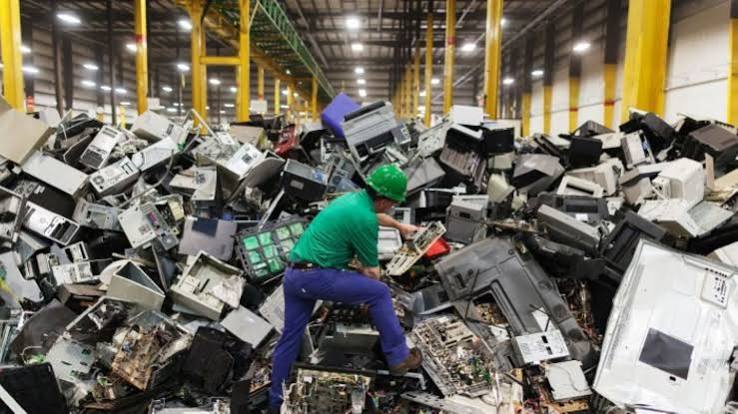
The United Nations Industrial Development Organisation (UNIDO), E-waste Producers Responsibility Organisation Nigeria (EPRON), and E-Terra Technologies Limited have begun discussions on a possible collaboration to address the growing e-waste challenge associated with Nigeria’s expanding renewable-energy sector. NigeriaTravel Guides
The engagement followed a facility tour of E-Terra’s Materials Recovery and Recycling Facility (MRRF), Abule-Ado, Lagos, by UNIDO and EPRON representatives, followed by a cross-sector meeting on the responsible management of solar panels, inverters, batteries and other renewable-energy equipment at end-of-life.
Speaking, the Technical Advisor, Division of Circular Economy and Green Industry, UNIDO, Satoko Takenoshita, stressed the need for responsible resource management alongside the transition to renewable energy.
“Developing appropriate systems for recovering and recycling end-of-life solar equipment, batteries and related technologies will be critical to ensuring a truly sustainable energy future.”
Executive Director of EPRON, Mrs Ibukun Faluyi, said stakeholders must prepare for the waste streams that would arise from increasing renewable-energy adoption. CompareSmart Gadgets
“Collaboration is essential to building an effective Extended Producer Responsibility and circular-economy framework around these materials.”
Technical Director, E-Terra, Patrick Inoh, who conducted the facility tour on behalf of CEO, Dr. Ifeanyi Chukwutem Ochonogor, welcomed the initiative, noting that strategic partnerships are vital to tackling Africa’s e-waste challenge.
The stakeholders emphasised the need for effective collection, take-back, material recovery, recycling and environmentally sound treatment to prevent improper disposal, burning and informal dismantling.
The engagement, they noted, marks an important step towards ensuring that Africa’s clean-energy transition is matched by responsible and sustainable e-waste management.
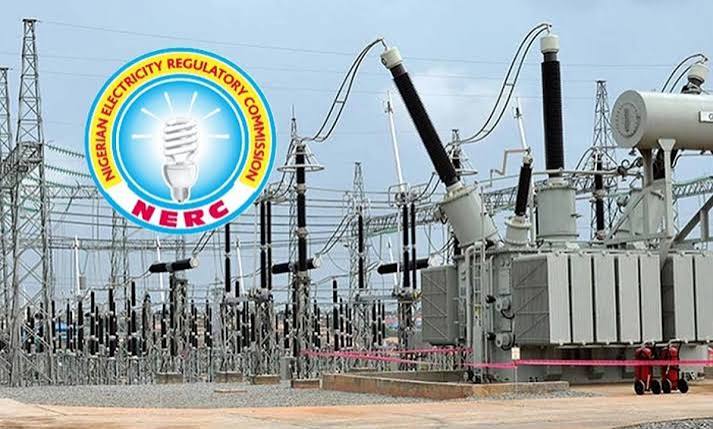
The Nigerian Electricity Regulatory Commission (NERC) has directed electricity Distribution Companies (DisCos) to allocate up to 60% of their earned Non-Administrative Operating Expenditure (Non-Admin OpEx) to capital expenditure (CapEx) from February 2027.
The directive was contained in a new Order issued by the Commission and signed by NERC Chairman, Musiliu Oseni and Vice Chairman Yusuf Ali.
Under the framework, DisCos without outstanding debts would be required to remit 60% of their earned Non-Admin OpEx to dedicated CapEx provision accounts from the February 2027 market cycle, while 40% would go to their operation accounts.
For DisCos, with outstanding debts, 30% would be remitted to the CapEx account and 20% to their operational accounts, while the remaining 50% would be applied toward outstanding obligations to the Nigerian Bulk Electricity Trading Plc (NBET) and the Market Operator (MO), where applicable.
NERC said the directive follows an April 2026 review of DisCos’ utilisation of earned Non-Admin OpEx during the 2025 market cycle.
The review found that while many DisCos did not generate enough revenue to meet their upstream market obligations, some recovered revenues above those obligations, enabling them to earn significant portions of other components of their approved revenue requirements.
The Commission said improvements in Aggregate Technical, Commercial and Collection (ATC&C) losses had helped some DisCos generate enough revenue to fully cover their Administrative Operating Expenditure (Admin OpEx), with additional funds available from other revenue requirement components.
NERC said the new framework is necessary because DisCos face difficulties accessing external financing, making it important to deploy internally generated resources toward network investment.
“Non-Admin OpEx is deployed for network improvement and expansion to ensure improved reliability of supply,” the Commission said.
The directive would take effect from the August 2026 market cycle, with a transitional allocation framework running until January 2027 before the higher CapEx allocation takes effect from February.
“From August 2026 to January 2027, DisCos without outstanding debts are required to allocate 50% of earned Non-Admin OpEx to the CapEx Provision Account and retain 50% in their DisCos Operation Account.
“For DisCos with outstanding debts, 25% will be allocated to the CapEx account, while 25% will be retained for operations. Where a DisCo owes either NBET or the MO, but not both, the applicable share for the outstanding obligation will instead be remitted to the dedicated CapEx account”, it stated.
Recall that in July, NERC directed DisCos to dedicate a significant portion of their surplus operating revenues to capital expenditure and market debt repayment while obtaining NERC’s approval before the funds can be spent.
By: Lady Godknows Ogbulu
Oil & Energy
NCDMB, SNEPCO Graduate Seven Young Nigerians On DD/MWD, EWL …….. Issues 18 Int’l Certifications
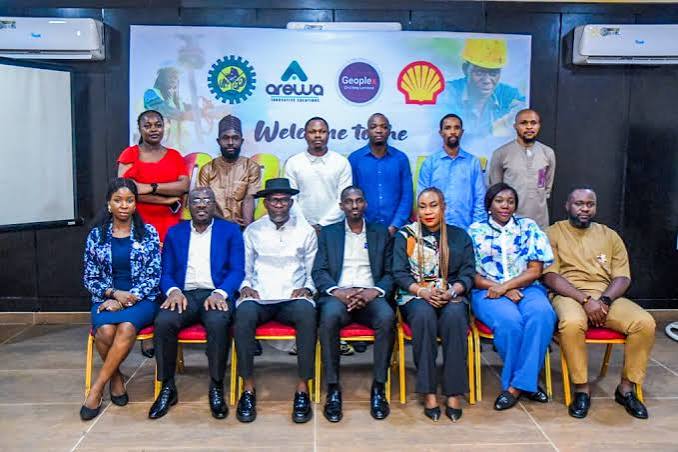
Seven young Nigerian engineers and geologists have graduated in Directional Drilling and Evaluation Services (DD/MWD) and Electric Wireline Evaluation Services (EWL) for which the trainees collectively received 18 international certifications from reputable European organisations.
The exercise was conducted by Nigerian Content Development and Monitoring Board (NCDMB), in partnership with Shell Nigeria Exploration and Production Company (SNEPCO) Limited and Geoplex Drillteq Limited.
Under the contractual framework provided by SNEPCO, Directional Drilling and Evaluation exposed the trainees to jar maintenance, bottom-hole assembly components, measurement-while-drilling principles, formation integrity and leak-off test procedures.
For Electric Wireline Services, they had hands-on training on wireline logging, cement evaluation, perforation operations, pressure-control equipment, and rig-up and rig-down activities.
The Director, Capacity Building Directorate (CBD), NCDMB, Engr. Abayomi Bamidele, represented by the Deputy Manager in the unit, Mr. Tareowei Bufazi, noted with satisfaction that the trainees had a detailed curriculum for the two programmes implemented concurrently under the SNEPCO contracts.
Represented by the Deputy Manager in the unit, Tareowei Bufazi, Bamidele described the classroom sessions of the programmes and the on-the-job training in live projects as rigorous, pointing out that trainees have been adequately prepared for major opportunities globally and Final Investment Decisions (FIDs) that are coming on stream.
Charging the graduands, he said the knowledge, skills and certifications they have acquired should serve as “a foundation for continuous learning and professional growth,” adding that they would be remembered for problems they are able to solve, standards they are able to uphold, and value they create.
“The world you are entering is competitive, demanding, and constantly evolving,” he explained, adding, “you have already proven that you can rise above challenges….Be courageous enough to seize opportunities and resilient enough to overcome setbacks.”
The CBD boss commended SNEPCO for their commitment to the successful implementation of the programme and for investing in the development of Nigerian talent. He also thanked Geoplex and Arewa Innovative Solutions for their respective roles.
Earlier in his opening remarks, Kingsley Erhunmwunsee, of SNEPCO Limited, stated that the company treats local content as an investment in Nigeria’s future, and not just as a regulatory obligation.
He emphasised that Nigeria’s oil and gas industry needs highly skilled people who can operate safely, solve complex problems, embrace new technologies and deliver world-class performance.
In his words, “Developing that capability within Nigeria strengthens not only individual careers, but also our companies and the Nigerian economy.” He expressed appreciation to the NCDMB for its sustained efforts in local content development and for the support it provided toward the successful implementation of the training programme.
In another address, the Vice President-Business Development, Geoplex Drillteq Limited, Akeem Raji, described the close-out ceremony as “a celebration of learning, professional development, collaboration and a shared commitment to building sustainable Nigerian capacity within the oil and gas industry.”
According to him, at Geoplex, the Management believes that “sustainable Nigerian Content Development must translate into measurable technical capability, recognised qualifications and improved employability; and the real value of training becomes evident when the knowledge and experience acquired are applied safely, competently and productively within the industry.
Raji expressed commended NCDMB for its leadership, oversight and continued commitment to developing Nigerian capacity in the oil and gas sector.
International certifications received by the seven graduands were from the United Kingdom-based National Examination Board in Occupational Safety and Health (NEBOSH), International Association of Drilling Contractors (IADC), and Offshore Petroleum Industry Training Organization (OPITO).
-

 News2 days ago
Rivers NLC Blames Delay In Pension Payment On Political Crisis …Urges Retirees To Be Patient
-
Business2 days ago
NPCC Demands Faster Trade Processes
-
Business2 days ago
Navy Uncovers Stolen Crude Oil In Rivers
-
Rivers2 days ago
FG Halts Push For Oil Prospecting In Ogoni …To Review MOUs In Oil Mining Resumption
-
Politics2 days ago
Delta APC, NDC Clash: Group Demands Perpetrators’ Arrest, Prosecution
-
Sports2 days ago
Veteran Sportsman Calls For Civic Center Reconstruction
-
 Politics2 days ago
Gombe, Kano, Bauchi, Delta Bye-Elections Provide Lessons For 2027 – Amupitan
-

 News2 days ago
Tinubu Hails By-election Winners In Four States