Connect with us

Environment

Conference Calls For Water Supply Master Plans For States In Nigeria

Published

on

Water Engineers in Nigeria have called for a water resource/water supply master plan for each of the 36 states of the country with a well defined action plan for implementation.
This was contained in a communique at the end of the 6th International Water Conference at Abeokuta, the Ogun State capital.
The conference was organised by the Nigerian Institution of Water Engineers (NIWE), a branch of the Nigerian Society of Engineers.
The communique also said there is an urgent need to enhance political will for adequate Water, Sanitation and Hygiene (WASH) services in the country.
According to the communique, “the Federal Ministry of Water Resources and Sanitation should organised a national forum chaired by the president or vice president to discuss WASH.and modalities for meeting the SDG 6″
It called for full autonomy to be granted to water supply agencies across the country by state governments in order to attract investors into the sector
“This will require adequate legislation that will remove unnecessary interference in its operation and management.
“There is need to develop a water resource/ water supply master plan for each of the 36 States of the federation with a well defined action plan for implementation. This will be the responsibility of the sub nationals and may be supported by the Federal Ministry of Water Resources and Sanitation ”.
The communique signed by Dr Adeyinka Sobowale and Engr. Temitope Esther Aboyeji, a copy emailed to The Tide Environment Desk in Port Harcourt further stressed the need for states in the country to establish water regulatory agencies to adequately regulate the activities of water providers in their respective states.
“Furthermore, ground water regulatory frameworks for the entire country should be developed, ”it said.
The conference also urged the government to mandate and finance research centres , Universities, and Polytechnics and the private sector to begin development and manufacture of equipment and machines for the water sector locally to reduce the heavy dependence on importation
“There is  a need to adopt new and efficient technology control systems and innovations for revamping safely managed water supply systems.
“Professional Engineers are specially trained to design, construct, and manage all water infrastructures and systems, they should be given the pride of place to provide leadership in all water utilities across the country to promote effective service delivery,”it said.
The communique said the conference deliberated on various issues among which are: Water Sanitation and Hygiene( WASH) governance comprising the range of political, social, economic and administrative systems which includes policy, law and institutions that are in place to develop and manage water resources and the delivery of water services to different segments of the society.
Also deliberated upon are: challenges facing WASH in Nigeria including lack of or inadequate political will,weak policy and legal instruments, inappropriate institutional arrangements, lack of autonomy for water agencies, weak financial frame-work , inadequate and ageing infrastructures and lack of adequate manpower as well as fragmentation of approach to addressing water resources management in Nigeria.
Also considered are: lack of access to funding,. autonomy and accountability as key factors that must be ensured in the instruments guiding the sector, while  suggesting that unbundling water supply functions into different agencies should be pursued to promote efficiency and accountability.
According to the conference, “sustainable WASH services in terms of financial viability, reliable service and acceptable standards cannot be achieved without good and appropriate governance”
Speaking with The Tide in in Port Harcourt, General Manager of the Rivers State Water Supply and Sanitation Agency (RUWASSA), Mr Napoleon Adah, said the outcome of the conference will repositioned the water sector for greater productivity if implemented.
He said the conference has carefully examined all problems militating against adequate water supply in the country and as well proffer solutions to them.


Continue Reading

Environment

LWC, Julius Berger seek stronger coordination on Lagos infrastructure

Published

on

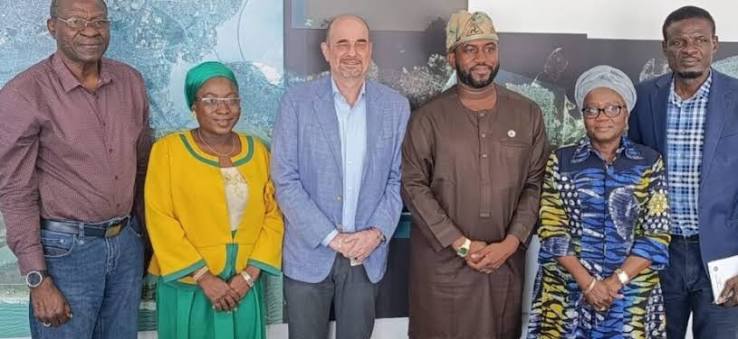
The Lagos Water Corporation (LWC) has commenced discussions with Julius Berger Nigeria Plc to strengthen coordination between water and road infrastructure projects.
This is contained in a statement issued by the corporation.
The corporation said the engagement followed a courtesy and familiarisation visit led by its Managing Director, Mr Mukhtaar Tijani, to Julius Berger’s Ijora office.
It said the visit was aimed at strengthening institutional relations and creating opportunities for deeper collaboration between both organisations.
The corporation stressed the importance of cordial relationships with neighbouring organisations and strategic stakeholders to promote future collaboration.
The meeting focused on road construction, water pipeline protection, water infrastructure development and sustainable water supply across Lagos Island and its environs.
Both organisations highlighted the need for early communication and technical coordination to prevent conflicts between road projects and existing water infrastructure.
Julius Berger Regional Commercial Manager, Region West, Mr Alexander Bauer, reaffirmed the company’s commitment to sustainable engineering solutions rather than short-term fixes.
Bauer stressed the importance of early stakeholder engagement and proper coordination before construction activities begin.
The meeting also examined access to project drawings and technical information required to improve coordination between water and road infrastructure projects.
Julius Berger explained that releasing detailed project drawings remained subject to approval from the appropriate client.
Both organisations therefore agreed on the need to engage the Lagos State Government to secure necessary approvals and strengthen technical collaboration.
The discussions also focused on accurate pipeline information and its importance in planning future water infrastructure and urban development projects.
The LWC delegation raised concerns about uncoordinated borehole drilling and its potential effects on groundwater resources and the ecosystem.
Participants noted that stronger public water supply systems could reduce dependence on individual boreholes and help protect underground water resources.
Construction & Maintenance
They also agreed on the importance of sharing information on construction activities, road conditions, project schedules and potential disruptions.
Security and community considerations were also discussed, with Julius Berger highlighting its engagement with relevant authorities on security infrastructure within the area.
The meeting ended with a shared commitment to open communication, stronger technical coordination and exploring further opportunities for collaboration.
The engagement is expected to strengthen synergies between water and road infrastructure planning and support resilient and sustainable infrastructure development across Lagos.
Continue Reading

Environment

IYD: Climate experts advocate investment in African youth

Published

on

Some Climate Experts across Africa have called for investment in African youth to enhance future security.
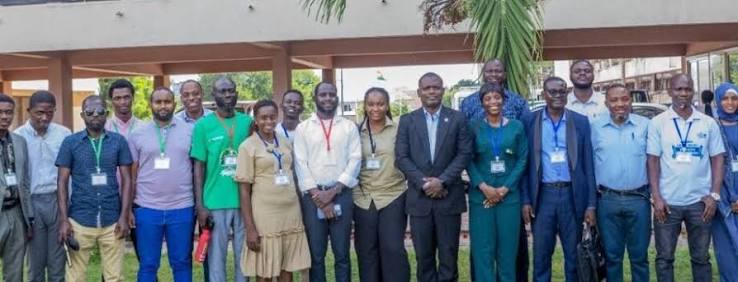
They made the call on Wednesday during a webinar organised by Planet, People and Peace Foundation (PPPF), a non-governmental organisation, to observe 2026 International Youth Day (IYD).
According to them, there is a need to invest, listen and create opportunities for young African people.
The Tide source reports that the 2026 theme of the IYD is “Different Contexts, Common Aspirations’’.
Miss Bisi Kumuyi, the Secretary, Climate Beyond Border Caravan (CBBC), Nigeria, who canvassed for investment in youth, said the future of Africa would be determined by the opportunities the continent created for its young people today.
The CBBC, an initiative of PPPF, is a pan-African, youth-led campaign promoting climate action, cross-border cooperation and green economic transformation across the continent.
‘‘As Africa joins the rest of the world to commemorate International Youth Day on Aug. 12, 2026, we celebrate the energy, creativity, resilience and determination of young Africans who continue to shape the continent’s present and future.
‘‘This year’s theme reminds us that young people across Africa live in different social, economic and cultural circumstances.
‘‘They share common aspirations: access to quality education, decent employment, innovation, peace, inclusion, environmental sustainability and opportunities to fulfil their potential,’’ she said.
Also speaking, Mrs Nouran Farouk, an Egyptian Climate Activist, called for urgent investment in Africa’s youth.
According to her, Africa is the world’s youngest continent, and its youthful population represented one of its greatest assets.
Continue Reading

Environment

PWDs: CCD Unveils Report On Climate Change Impacts, Urges Implementation

Published

on

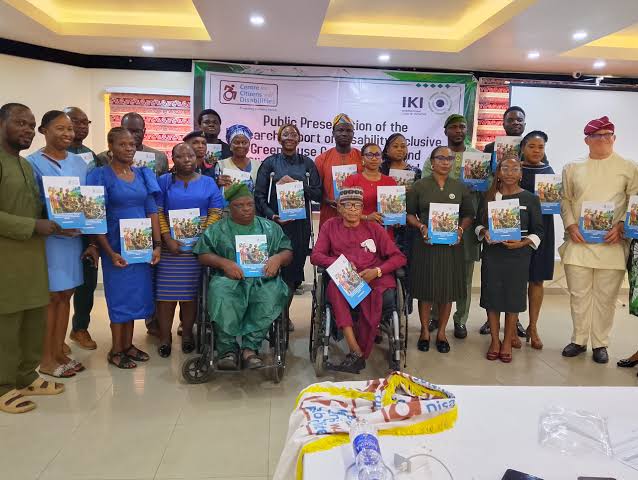
The Centre for Citizens with Disabilities (CCD) has unveiled a research report on impacts of climate change on Persons With Disabilities (PWDs), calling for its implementation in the country.
The Acting Director CCD, Mr Godwin Unumeri, made the call  at the public presentation of the report titled: “Disability-Inclusive Greenhouse Gas Emission and Climate Change Adaptation and Mitigation in Nigeria” on Wednesday in Lagos.
The event brought together government institutions, development partners, civil society organisations, persons with disabilities and other key stakeholder to foster dialogue, collaboration and stronger commitment to disability-inclusive climate change adaptation and mitigation in Nigeria.
Unumeri urged stakeholders to strengthen collaboration and policy commitment toward building climate resilience and ensuring the inclusion of persons with disabilities in Nigeria’s climate response.
He noted that valuable insights and recommendations from stakeholders at a validation workshop in February had been incorporated into the report.
According to him, effective implementation of the recommendations requires sustained collaboration, strong policy commitment, adequate resource mobilisation and coordinated action across sectors.
“By working together, we can translate these findings into practical interventions that strengthen climate resilience and ensure the full inclusion of persons with disabilities in Nigeria’s climate response,” he said.
In her remarks, the General Manager, Lagos State Office for Disability Affairs (LASODA), Adenike Oyetunde-Lawal, urged the stakeholders to ensure that the report would be translated into practical interventions to enhance full inclusion of PWDs particularly in climate change policies.
Continue Reading

Trending