
Nation
Agriculture To The Rescue

Who says something good will not come out of the current economic crisis in the country? If not for anything, the dwindling oil revenue has forced many people and indeed the nation in general to consider going back to agriculture. Before the discovery of oil in 1958, agriculture was the country’s economic mainstay with different regions boasting of different cash crops like groundnut, cocoa, rubber palm oil produce and many more, thus making agriculture a main source of employment, income and foreign exchange earnings for the nation.Today, with its abundant arable land and over 160 million people, Nigeria cannot feed its citizens not to talk of exporting to other lands. Successive administrations at both federal and state levels have claimed to be investing in agriculture with little or noting to show for it. Rather, the country has become one of the largest importers of food in the world. All kinds of good items from all over the world find their way into the Nigeria. We import wheat, sugar, fish, milk, vegetables, fruits, rice and other food items which could be abundantly produced locally.
Incidentally, the constant plummeting of the naira has sky-rocketed the prices of virtually every item in the market. The result is that many Nigerians today go hungry. The recent stories of how people steal cooked food, abandon their children at shops in exchange for food items are indications of how bad the situation has become. And the only remedy is agriculture. Some stakeholders in the agriculture sector have posited that with over 79 million hectares of arable land, diversified ecological conditions, abundant water resources and adequate rainfall and sincere commitment by government, poverty, joblessness, and hunger will be completely eliminated in the country.That is why the effort of some state governments towards improving agriculture must be commended. Sometime in 2016, Benue state government approved the declaration of every Friday as a work-free day to enable workers in the state work in their farms.
The objective was to enable as many workers as possible to produce food to feed their families, given the economic downturn in the country which has made regular payment of salaries in some of the states of the federation a major challenge. This is indeed a good initiative which should be emulated by other governors. They have a lot to do to steer their states away from the monthly handouts from Abuja. Virtually every state in the country is blessed with one natural endowment or the other, which if properly harnessed and utilised will impact positively on the people. Why then do our governors wait on Abuja for handout?
The point is, now that there is no money in the country even to pay salaries, our leaders should think of ways of harnessing our natural resources to make life better for the country. It is high time we began to think of life without crude oil. We succeeded without oil before, we can do it again. Let every state governor encourage their people to go back to agriculture. Reports have it that many civil servants in Ekiti State have toed the Benue line by returning to their villages to farm. Anambra and Akwa Ibom states are also said to be presently producing tomatoes in very large qualities. That is the way to go.
Many countries had used a similar situation we are in now to turn their fortunes around and we can do it if only we are able to reduce our dependence on crude oil and focus on other lucrative sectors like agriculture.
Government should therefore, encourage farming by providing modern farming implements to farmers to boost their production. A situation where most farmers still rely on crude farming implements like hoes and cutlasses is most discouraging.
Farmers who are willing to expand their farms often complain of lack of support from banks. Unless this problem is solved and provision of soft loans to farmers is made possible, our dream of having a thriving agriculture sector may not be realised.
Recall that some Benue State civil servants at a point formed cooperatives, and loans were given to only groups that had verifiable farms. Such measures should be adopted by other states to ensure that only real farmers and those truly interested in farming received support.
Provision of power, accessible roads and good transport system is also paramount. Many farm products perish in villages due to non-availability of access roads and transport system to bring them to the cities’ consumers. And yet, there is no storage facilities.
There is indeed need for federal, states as well as individuals to show more commitment to agriculture if the on-going hunger in the land will be quelled. The time of paying lip service to agriculture ought to be over. Individual cooperative societies, clubs and other stake holders should invest in agriculture. This will not only assure on adequate food supply in the country, but will also create jobs for our teeming unemployed youths, reduce rates of social vices and crimes associated with unemployment.
However, one thing is certain, without peace and security in our rural communities there can be no development.
Farming and other agricultural activities which largely take place in the villages cannot thrive if the constant killings, kidnapping, cult war, Boko Haram activities, cattle rearers’ disturbances and other crimes perpetuated in our communities are not curtailed.
Nigeria can regain her pride as the food basket of Africa if the right measures are taken to revive the agriculture sector. President Buhari promised during his electioneering campaign that he would pay adequate attention to agriculture. The time to do that is now, so that Nigerians can have food to eat.
by: Calista Ezeaku



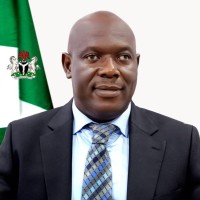
The Hydrocarbon Pollution Remediation Project (HYPREP) has commemorated the 15th anniversary of the release of the United Nations Environment Programme (UNEP) Environmental Assessment Report on Ogoniland, reaffirming its commitment to restoring the environment and improving the livelihoods of affected communities.
In a statement signed by the Project Coordinator, Prof Nenibarini Zabbey, to commemorate the anniversary, HYPREP described the anniversary as a significant milestone in Nigeria’s environmental restoration efforts, noting that the project has made remarkable progress in implementing the recommendations of the landmark UNEP report released on August 4, 2011.
The UNEP report had revealed extensive oil pollution across Ogoniland, severe environmental degradation, and serious public health risks resulting from decades of petroleum operations. It also recommended an initial $1 billion fund to commence the cleanup of the affected communities.
According to HYPREP, the Federal Government formally launched the Ogoni clean-up in 2016, while the Project Coordination Office was established in 2017 to drive the implementation of UNEP’s recommendations.
Zabbey said the current administration has continued to prioritise the project under the Renewed Hope Agenda.
Providing an update on the cleanup, the Project Coordinator disclosed that 30 of the 65 contaminated sites identified by UNEP have been fully remediated, while work is ongoing at several medium- and high-risk locations. It also stated that more than 1.5 million mangrove seedlings have been planted as part of what it described as the world’s largest restoration of oil-degraded mangroves, with over 1,000 hectares of shoreline already rehabilitated.
Zabbey further revealed that 49 Ogoni communities have been connected to potable water schemes through multiple water projects and booster stations aimed at providing safe drinking water across the region.
In the health sector, he said the 100-bed Ogoni Specialist Hospital in Kpite and the 43-bed Cottage Hospital in Buan are nearing completion, adding that several existing health facilities have been upgraded with modern medical equipment, while five ambulances have been donated to improve emergency healthcare services. The Project Coordinator also disclosed that a three-year human health biomonitoring study is being conducted in collaboration with the World Health Organization’s International Agency for Research on Cancer (IARC).
On economic empowerment, Zabbey stated that the Project has created more than 8,000 direct jobs and trained thousands of Ogoni youths and women in various vocational and technical skills, including software development, cybersecurity, aviation, commercial diving, seafaring, mechatronics, and creative arts. The project also reported awarding scholarships to more than 1,000 students, providing grants to small businesses, and supporting persons living with special needs through skills acquisition programmes.
The statement further highlighted ongoing legacy projects, including the Ogoni Power Project and the Centre of Excellence for Environmental Restoration, which it said is about 96 per cent complete. HYPREP also welcomed the recent designation of the Ogoni Wetland as a Ramsar Site of International Importance and pledged to continue promoting biodiversity conservation and sustainable management of the ecosystem.
Marking the anniversary, Zabbey said the progress achieved over the past 15 years demonstrates the collective commitment of government, development partners, stakeholders, and local communities to restoring Ogoniland. He called for renewed collaboration to sustain the cleanup effort, promote environmental sustainability, and support the long-term development of the region. 3
-

 News2 days ago
RSG Targets Nine Million Residents in Mosquito Net Distribution Campaign
-

 Oil & Energy2 days ago
Aiyedatiwa Signs New Electricity Bill
-

 Maritime2 days ago
Marine Minister Commends President Tinubu On NPERA Bill Assent
-

 Oil & Energy2 days ago
NLNG Commissions Research And Innovation Centre In RSU
-

 News2 days ago
KenPoly Holds Eight Convocations, August 29
-

 News2 days ago
RMAFC Completes Revenue Sharing Review, Proposes New Pay
-

 News2 days ago
RSG Begins Another Phase of Projects Commissioning Today
-

 Maritime2 days ago
NAGAFF Petitions IGP Over Alleged Maritime Police Harassment