
Opinion
Nigeria’s Failures, Spare The Divine

During a workshop recently, there were the usual heaps of complaints about the ineptitude of those in authority and government’s insensitivity to the wellbeing of Nigerian citizens; how the government is making life hellish for the people and all that. The topic of discussion had to do with patriotism. Many of the participants vehemently disagreed that they should be patriotic claiming that the country has failed them. Just then, a question came from one female participant. She asked, “are we justified in this country to complain about the government?” the answer she got was negative. You know why? She said there is a very high level of corruption among the led as much as it is among the leaders of the country. Many Nigerians cheat the government. They do not pay tax. A lot of business men, traders, and private organisations hardly pay tax and a whole lot of those that try to fulfill this civic responsibility cut corners, thereby paying far less than the amount they ought to pay. She queried how the government would get enough money to provide the badly needed infrastructure and cater for other developmental needs of the country if a large percentage of the citizens evade taxes, contractors inflate contracts sums, and many other Nigerians both the high and the low in negative acts that are detrimental to the development of a country.
“The bulk of the problem in Nigeria is caused by the citizens. We don’t play our roles both in electing our leaders and in carrying out our civic duties. Everything in the country is free. We don’t pay tax. We as citizens lack discipline. We cannot expect our leaders to do wonders when we as the followers are not ready to do our own little bits,” she summed up. I couldn’t agree less with her that a lot is expected of us as citizens. A good number of times we complain about the rot in our society and most often heap the blame on the doorstep of the leaders without pausing for a second to ask ourselves if advertently or inadvertently we contribute to the poor situation in the country and the pain of our fellow Nigerians. You can imagine some Nigerians making a fortune out of the relief materials donated by the government, individuals and organisations to the flood victims. Some of these victims have lost their homes, property and have gone for days without food but those in charge of the relief materials capitalize on their misfortune to enrich themselves. A few days ago, the Presidency, while condoling with victims of the flooding, blamed persons who failed to comply with town planning regulations by building on drainage channels; citizens’ disregard of early warnings by the National Emergency Management Agency (NEMA), and the global effects of climate change. Indeed, many Nigerians care less about environmental rules as regards to! waste disposal and building regulations. Even when it is obvious and there are warnings that a particular place is a water channel, they must know somebody that knows somebody in government and before you know it, a magnificent structure will be erected on there, leading to environmental havoc both in the vicinity and beyond. But do these exonerate the government from the current bad state of the country? Of course, no. The essence of electing or appointing people into positions of authority is to ensure proper direction of an organization or country as the case may be and proper utilization of the country’s resources to create an ideal future for the country. Leadership comes with a lot of responsibilities which you as a leader must live up to.
Leaders must be ready to come up with policies that will benefit the citizens and help in checking the ills in the society. If some citizens evade taxes, involve in corruption and other criminal activities and civil disobedience, whose duty is it to make sure that they are called to order and that defaulters face the consequences of their action? There is crime everywhere. In other countries there are people who wouldn’t want to pay their taxes even when they see that the money is properly used in provision and maintenance of amenities in their society unlike in Nigeria where there is still question on what the taxes are used for. But they have ways of preventing crime and when it happens, they will get the culprit and bring him to justice. These sane climes have been able to do away with religion, ethnicity, race and partisanship in electing and appointing people into leadership positions. Their prime consideration is who has the capacity to deliver? Where is the round shape that will perfectly fit into a round hole and if the person fails to live up to their expectation, he is shown the way out. We saw what happened in the United Kingdom last week. For just one policy mistake, the former British Prime Minister, Liz Truss lost an exalted position. She publicly declared that, “I cannot deliver the mandate on which I was elected” and resigned after barely six weeks in power. That is the kind of attitude expected from a leader not the blame game we usually see in Nigeria. A government in power blames the preceding administration for all the problems in the country and never takes responsibility for its ineptitudes; a minister for water resources blames the ravaging flood that has claimed many lives, submerged many communities and caused unparallel devastation across the country on “act of God’’, disputing the reports that the flood is largely as a result of the release of water from the Lagdo dam in Cameroon. According to the report, successive Nigerian governments over the years have failed to fulfil this country’s part in an agreement with Cameroon to build a counterpart dam that would take in water from Lagdo whenever Cameroonian authorities open that dam. The Dasin Hausa dam in Adamawa State which is two times the size of Lagdo dam is meant to serve as a form of shock absorber to flood in Nigeria is yet to be completed since 1982.
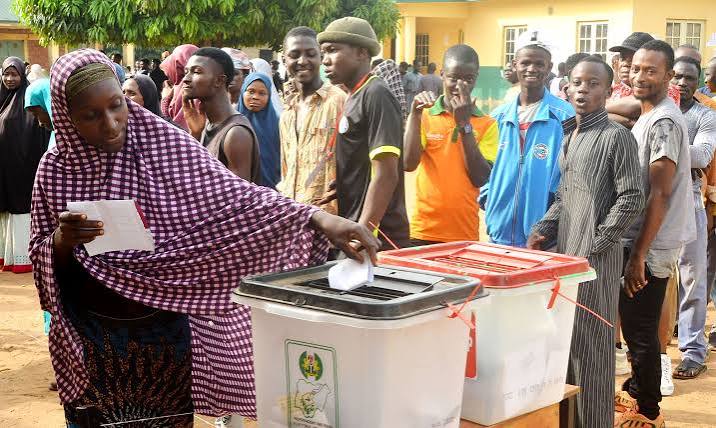
The same minister, Suleiman Hussein Adamu, went further to publicly declare that Nigeria and Cameroon signed an MoU concerning the release of water from the dam “but since then, every year, once the flood season comes, it is the Nigerian Hydrological Service Agency that calls them ‘what is your level of water?’ Even this one they said they will inform and didn’t. They are the ones that should be keeping us informed on the basis of MoU but they didn’t.” What an excuse! And what has the Nigerian government done since Cameroonian authorities did not keep to their own side of the agreement which has resulted in the great calamity in Nigeria? Meanwhile, the Minister of Humanitarian Affairs and Disaster Management, Sadiya Farouq, told newsmen in Abuja a few days ago that the excess water released by Cameroonian authorities from the country’s Lagdo dam compounded the flooding in Nigeria and that her ministry would initiate bilateral talks with the Cameroonians in November on the periodic opening of Lagdo dam. President Mohammadu Buhari on the other hand, just three days ago ordered the Minister of Water Resources to give him a prevention plan on flood in 90 days, less than six months in office. If we want this country to move forward, both the leaders and the led must sit up and take their various duties and responsibilities seriously. The elections are here again, we must put religious, tribal and political sentiments behind and vote for people that are capable and have all it takes to make the right policies and implement them. We, the citizens must learn from the UK and begin to hold our leaders at various levels of government accountable. It is so scary what this country will be like in the coming years if we make the mistake of electing the wrong people in the next general election. The ball is in our court.
By: Calista Ezeaku



Quote: “No oil vessel, commercial contract or operational deadline is worth the loss of innocent lives; where environmental grievances are ignored and dialogue gives way to confrontation, the entire society pays a price that no compensation can adequately erase.”

Quote:”The value of wealth is
Will and gifts are subjects
A Will is an important legal
Where documentation is
This does not mean every
Properly completed lifetime
Property owners must also
My appeal is simple: let us
-

 Education2 days ago
FCE Yola Graduates 3,555 Teachers , Seeks Upgrade to University
-

 Sports2 days ago
Nigerian Trio Target Titles At PFL Africa Finals
-

 Niger Delta2 days ago
Diri Restates Stance On Lagos-Calabar Coastal Highway
-

 Niger Delta2 days ago
C’River, NUJ Pay Tribute To Late Guardian Editor
-

 News2 days ago
NDLEA Recovers Tons Of Illicit Drug Consignments In Nine States
-

 Opinion2 days ago
Checking Voter Apathy In Nigeria’s Electoral Process
-

 Politics2 days ago
2027: DICKSON’S EX-ALLY VOWS TO WORK AGAINST NDC INTEREST IN BAYELSA
-

 Politics2 days ago
2027: GROUP PLEDGES 40,000 SUPPORTERS FOR COALITION CANDIDATES IN RIVERS