
Editorial
Towards Violence-Free Poll In Rivers

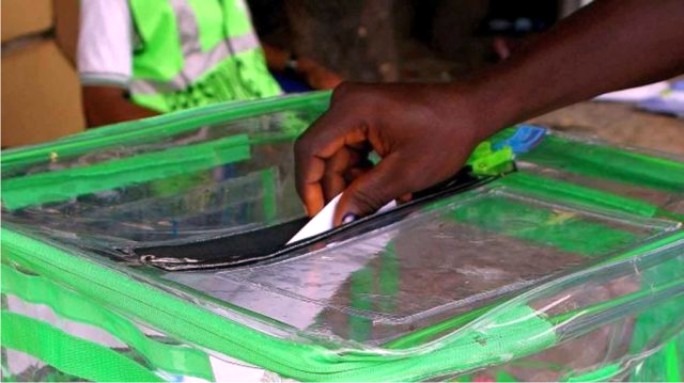
Acting on credible intelligence, the Rivers State Governor, Chief Nyesom Wike, recently accused
some imprudent politicians in the state of enlisting political thugs, cultists and ex-convicts to cause pandemonium in furtherance of their political yearnings for 2023, as the general election draws nearer. This call is timely because it had paused our progress in the past.
Speaking during a statewide broadcast, the governor asserted that the state had also gleaned intelligence reports to the effect that some hoteliers and proprietors of entertainment spots had also been contacted to permit the use of their premises as bases for the convergence of the political thugs in the State. This is a scary revelation, requiring urgent measures to contain it.
In the broadcast statement published by his media aide, Kelvin Ebiri, Wike assured that he would not take the intelligence report lightly, and cautioned that his administration would never authorise any politician, regardless of status, to fiddle with the prevailing tranquillity and security being savoured by the people and residents of the state.
Hear him: “Similarly, we will not allow any political party, be it All Progressives Congress (APC), the Peoples Democratic Party (PDP) or the Social Democratic Party (SDP) to threaten the safety and security of lives and property during the campaigns with mayhem, thuggery, or violence. Accordingly, we have already alerted and set the security agencies on the trail of these misguided politicians and leaders of political parties and stop them on their tracks with the full weight of the law.
“We also wish to warn owners of hotels and proprietors of relaxation centres to take notice and desist from releasing their facilities for politicians and party leaders to use to meet and plot against the peace, safety, and security of our state.” He further stated that any hotel or entertainment outfit found to be linked with any such criminal activities in the state would be pulled down.
As a government that should safeguard the sanctity of lives and property of the Rivers people, the governor could not have responded to the threat in a small measure. Moreover, as the Chief Executive of the state, he must have got his facts right. The unbridled lust for power by these politicians has reached a crescendo, causing serious concerns. Their latest move must be crushed to prevent frightening consequences for the state.
Nobody can equitably blame Governor Wike for being partisan in this matter. That is because when he made reference to the guilty parties, he did not exonerate his political party, the Peoples Democratic Party (PDP). Although we believe that the governor can manage the threat effectively given his thoroughbred political will, Rivers people must be vigilant and aware of safety.
While everyone is advised to be circumspect, questionable tendencies and gatherings should be communicated to law enforcement agents for quick action. These are very tumultuous times for our country, as the level of insecurity everywhere has never been worse. The state government and security agencies have been labouring inexhaustibly hard to guarantee the peace we currently relish for the wellbeing of our state. We must not truncate it.
Rivers’ politicians should abide by the rules and guiding principles of politicking and elections set by the Independent National Electoral Commission (INEC) and the Electoral Act. They must refrain from violence, especially the type that was witnessed in previous elections. Unfortunately, it is in plain sight that some exceedingly perilous politicians have vouched to constitute themselves into a cog in the wheel of democratic advancement in the state. Such persons must not be spared the repercussions of their actions.
As the chief security officer of the state, the governor has acted rightly by letting out the vicious plot of politicians with something frantic in their gaiety. It is, therefore, the task of the police to investigate the allegations and possibly bring the culprits to justice. Offences, such as the one plotted by the political actors seeking to cause trouble in the state, should be positioned on a similar pedestal as electoral infractions.
With the political ambitions of some politicians in convulsion, we implore them to let peace reign in Rivers State. They should play the game of politics with faith, love for one another and ensure that none of their supporters is involved in breaching the peace and unity. There is a need to promote harmony and mutual understanding among themselves, both at state and local government levels. Let us accentuate the things that bind us.
It is pertinent for families to educate their youths on the necessity to shun overtures to be used for violence by disreputable politicians, who might have securely kept their children and wards in foreign countries to get quality education. The government, religious organisations and stakeholders have a huge responsibility to disseminate the culture of political tolerance. Peace-building process should be led and driven by youths at the grassroots level.
Young people in Rivers State are expected to vote for candidates with integrity, credibility and good character in the 2023 general election. Nigeria is currently facing a challenging situation with poor leadership choices. Citizens should always vote for politicians who have good personalities. Now is the time for the young to build the future they want. This is about ensuring that every vote counts, recognising the problems that affect our state and our country.
Hotel and entertainment hangout owners in the state should not contemplate that the Rivers State Government’s stance on the security threat unfairly targets them. Instead, they need to work together and assist the government as a proactive means of checking the breakdown of law and order. They should not authorise their establishments to become locations for sullen politicians to conscript thugs and cultists to engender anarchy.
While political actors have every right to articulate their discontentment through legitimate and valid channels, the state government should not countenance destructive protestations, and the use of cultists or thugs to impede the rule of law. The authorities should put an end to planned activities to inflict a breach of the peace, a violation of the rights of citizens and a threat to the security of people and property. That is the reason we have a government.



There are moments in the life of a legislature when plain speaking becomes a public service. Senator Adams Oshiomhole provided such a moment on the floor of the Senate when he accused the Minister of Works, Senator David Umahi, of manifestly neglecting critical federal arteries in Edo and Delta States, and implored his colleagues to prevail on the Minister to adopt a more equitable and genuinely national approach to road infrastructure delivery. It was blunt, it was uncomfortable, and it was necessary.
The specifics of his complaint deserve restating. Drawing attention to the recent approval of some 20 new road projects despite the parlous state of existing ones, the former Edo State governor lamented that Nigerians cannot travel from Benin to Warri, Benin to Asaba, Benin to Auchi, or Auchi to Okene without encountering severe distress. He alleged a deliberate omission of these corridors from the national budget in the last three years, save for palliative interventions directed by President Bola Tinubu through tax credit arrangements. His question — “What have we done wrong?” — resonates far beyond the chambers of the National Assembly.
We lend our full and unequivocal support to that call. The Auchi-Benin Road, for instance, has been in a deplorable and near-impassable condition for several years, turning what should be a two-hour journey into an all-day ordeal of broken axles, extortionate fares, and despondent commuters. The media have, on multiple occasions, chronicled the suffering of motorists, traders, and students who ply that route. To describe it as a federal road today is to stretch the meaning of the term beyond recognition.
This pattern of sidelining is not confined to Edo or Delta. Even here in Rivers State, the disposition of the Federal Ministry of Works has left much to be desired, particularly along the Eleme axis of the East-West Road. That road, which ought to be a flagship of federal presence in the Niger Delta, has remained in a wretched state for long. Those who use it daily — workers at the Eleme Petrochemical Complex, the two refineries, Onne Port, and the countless ancillary industries — can attest to its deterioration. Work has proceeded in fits and starts without the sustained urgency such a strategic road demands.
The Eleme stretch is not a mere intra-state byway. It is the gateway to the nation’s economic jugular. According to the Federal Ministry of Works and Housing’s 2023 Highway Condition Survey, only about 35 per cent of the country’s 36,000 kilometres of federal roads are rated as being in good or fair condition, with the remainder classified as poor or very poor. The East-West Road, conceived in the 1970s to bind the entire Niger Delta, remains unfinished in critical sections more than four decades after. If it had been treated as a priority, the perennial gridlock, carnage, and economic loss on the Eleme-Refinery junction would have long been consigned to history.
The irony is as painful as it is glaring. The Niger Delta remains the goose that lays the golden eggs. Data from the Nigeria Extractive Industries Transparency Initiative [NEITI 2023 Oil and Gas Audit] show that the region still accounts for over 78 per cent of Nigeria’s federally collected export earnings and about 65 per cent of total government revenue. The National Bureau of Statistics [NBS Foreign Trade Report Q4 2024] similarly confirms that crude oil continues to dominate export receipts. By every metric of equity and economic logic, a region that sustains the national purse deserves first-rate consideration in the allocation of infrastructure, not afterthoughts and tokenism.
Road infrastructure is not largesse to be dispensed by favour; it is the skeleton upon which commerce, cohesion, and citizenship hang. When contracts are concentrated in one geopolitical zone while other zones are left to contend with craters, it erodes trust in the federation itself. The World Bank’s Nigeria Development Update [June 2023] estimated that poor transport connectivity inflates the cost of moving goods by up to 40 per cent and costs the Nigerian economy an estimated $1.5 billion annually in lost man-hours and vehicle maintenance. If we profess to be one country, then equity must be the compass that guides key institutions before any project is executed. Development must spread round, not pool in one place as though other regions do not matter.
There is also a grave security dimension that can no longer be ignored. The deplorable condition of federal roads has become a veritable enabler of criminality. The NBS Crime Experience and Security Perception Survey reported over 2.5 million incidents of kidnapping-related occurrences nationally, with transport workers identifying bad road spots as prime ambush points. When vehicles are forced to crawl at 10 kilometres per hour through failed sections at Auchi, Sapele Road, or Eleme, they become sitting ducks for armed gangs. Fixing bad roads, therefore, is not merely about convenience; it is about safeguarding lives.
By his intervention, Senator Oshiomhole has hit the nail on the head and reminded Minister Umahi of a fundamental constitutional truth: public office is held in trust. The Ministry of Works is not a personal estate where contracts are awarded according to whim or political convenience. It is a national institution funded by the collective resources of Nigerians, including the oil and gas rents from the very communities whose roads are now neglected. The Minister must demonstrate balance, transparency, and a pan-Nigerian outlook in the distribution of projects that impact the daily existence of citizens. Selective neglect breeds suspicion, and suspicion is corrosive at a time when the nation is preaching unity, oneness, equity, and justice.
Consequently, the National Assembly must go beyond rhetoric and assert its oversight powers with vigour. Sections 88 and 89 of the 1999 Constitution [as amended] empower the legislature to investigate and expose any maladministration in the execution of federal projects. If an office holder is not acting rightly, it is the duty of the Senate and the House of Representatives to call him to order. Oversight must not be reduced to budget approval ceremonies; it must translate to field verification, public hearings, and insistence that the Federal Character principle, as enshrined in Section 14(3) of the Constitution, reflects in road awards.
Let the Auchi-Okene, Benin-Warri, Benin-Asaba, and Eleme East-West gangways be restored to motorable dignity. Let priority be given to completing existing, economically vital roads before embarking on new ones. If those who, through their resources, sustain the federation are sidelined in the distribution of tangible dividends, it tells poorly of our nationhood. Bad roads must be fixed, and they must be fixed now, with fairness as the guiding standard.
-

 News2 days ago
RSG Targets Nine Million Residents in Mosquito Net Distribution Campaign
-

 Oil & Energy2 days ago
Aiyedatiwa Signs New Electricity Bill
-

 Oil & Energy2 days ago
NLNG Commissions Research And Innovation Centre In RSU
-

 Maritime2 days ago
Marine Minister Commends President Tinubu On NPERA Bill Assent
-

 News2 days ago
KenPoly Holds Eight Convocations, August 29
-

 News2 days ago
RSG Begins Another Phase of Projects Commissioning Today
-

 News2 days ago
RMAFC Completes Revenue Sharing Review, Proposes New Pay
-

 Maritime2 days ago
NAGAFF Petitions IGP Over Alleged Maritime Police Harassment