
Oil & Energy
Why Are China’s Fuel Refineries Rated So Low?


Fuel prices in Asia are going through the roof as demand for travel bounced back from the pandemic depression. Yet refining rates have not bounced back in sync, especially in China. And it might be deliberate.
Reuters’ Clyde Russell wrote in a recent column that China’s refined oil product exports this May, at 3.27 million tons, were as much as 40 percent lower than its May 2021 fuel exports. The refined oil product exports for the first five months of the year were down 38.5 percent from a year ago.
Given that the demand for fuels has been much higher this year than last, this trend certainly raises some questions.
Diesel exports in May, Russell noted, quoting Refinitiv data, were about half of what they were in May last year, which is odd, at best, given the rebound in economic activity across Asia. And fuel export quotas are lower this year.
Officially, China is limiting the export quotas to discourage refiners from producing excessive amounts of fuels, which would go counter to the government’s emission reduction plans over the long term, Reuters noted in an earlier report this month.
Yet the lower quotas combined with strong demand for fuels has had the effect of boosting margins for refiners outside, which they are hardly complaining about.
Meanwhile, Chinese refiners are having to deal with excessive inventories as the recent series of Covid-related lockdowns hurt domestic demand for fuels.
To relieve the burden, Beijing this month issued additional export quotas to the tune of 4.5 million tons of fuels, bringing the total quotas issued since the start of the year to 17.5 million tons. That compares with 29.5 million tons in fuel export quotas issued in the first batch for 2021.
Based on the data reported by Reuters, it seems that China is prioritising its long-term emission reduction targets over additional fuel production that would alleviate the squeeze across the region, which reflects a wider squeeze in Europe and the United States, resulting from tight refining capacity and sanctions on Russia.
Interestingly, China is one of the very few places with spare refining capacity, but for now, it appears the country would rather sit on it than tap it.
Of course, if it does tap it, there is the possibility that the refined products this capacity churns out would contain Russian oil, making the fuels to be hypothetically exported problematic if the destination is, for instance, Europe.
It recently surfaced that the U.S., despite a ban on all Russian oil products, was, in fact, importing fuels from India that were made from Russian crude—and this was not a one-time occurrence.
Meanwhile, refiners in Asia but outside China are reaping the benefits of the situation. Diesel margins are at record highs, Reuters reportedlast week, with those in Singapore gaining 60 percent over just two weeks.
Margins may peak soon as the monsoon season begins, which would weigh on demand. High prices themselves might also start to discourage consumption, some analysts believe.
However, domestic demand for fuels in China is set to increase now that the lockdowns are ending, supporting high margins. Demand from other parts of the world, notably Europe, will also help keep diesel prices high, according to analysts.
It seems that the fuel price inflation that has shaken governments across the world is not going anywhere anytime soon. The combination of strong demand, tight supply, and sanctions on the world’s largest fuel exporter is a tough one to beat, especially if beating it is not a priority. This seems to be the case with China and its spare oil refining capacity.
By: Charles Kennedy
Kennedy reports for Oilprice.com



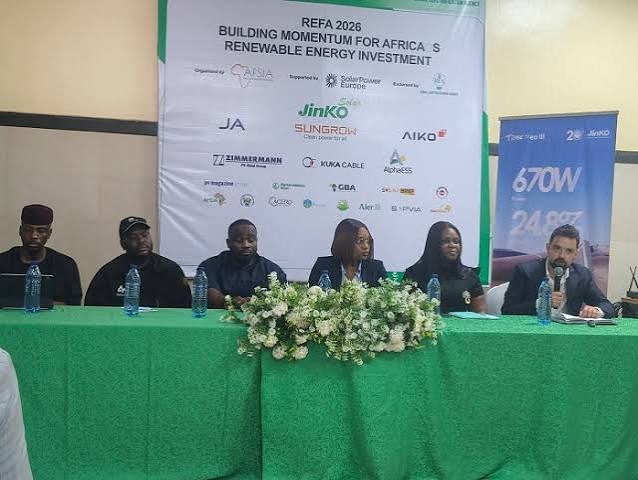
Nigeria’s growing solar market will take centre stage as the Renewable Energy Forum Africa (REFA) 2026 holds in Lagos on November 25-26 with the backing of the Rural Electrification Agency (REA).
Organised by the Africa Solar Industry Association (AFSIA) and supported by SolarPower Europe, the forum would bring together investors, developers, regulators, utilities and policymakers at the Radisson Blu Anchorage Hotel, Victoria Island.
The agency said the forum would strengthen partnerships, attract investment and support Nigeria’s clean energy and local manufacturing ambitions.
REA Managing Director, Abba Abubakar Aliyu, is billed to deliver the keynote address at the opening plenary.
The country also leads the continent in mini-grid capacity with 132MWp, while its commercial and industrial (C&I) solar capacity stands at 385MWp.
The market is receiving fresh support through the $750m World Bank-backed Distributed Access through Renewable Energy Scale-up (DARES) programme, targeting 1,350 mini-grids and electricity access for 17.5 million Nigerians.

-
Opinion4 days ago
Ancestorial Worship: My Take (1)
-

 Education21 hours ago
PAMO MEDICAL UNIVERSITY -Nullifies Arrest warrant on VC
-
Niger Delta22 hours ago
PANDEF Seeks 50% Oil Derivation Allocation Increase
-
Rivers20 hours ago
Don Seeks Repositioning Of Tech Education For Dev
-

 Education21 hours ago
IAUE MOVES TO END GHOST WORKERS SYNDROME AS 400 NEW NON-TEACHING STAFF UNDERGO MANDATORY ETHICS TRAINING
-

 News23 hours ago
Fresh Ebola Scare As NCDC Records Two Cases
-
News23 hours ago
Customs Partners EFCC, NDLEA, Others To Tackle Money Laundering, Terrorism Financing
-

 News4 days ago
FG Must Address Nigerians’ Concerns On Reforms -Shettima …Warns Against Misuse of AI, Social Media