Connect with us

Ict/Telecom

FG Trains 10,000 Women, PWDs On ICT

Published

on

Over 10,000 women, including Persons with Disabilities (PWDs) have been trained by the Federal Government on Information and Communication Technologies (ICT) to improve national productivity.
The ICT Director, National Centre for Women Development (NCWD), Mr Morrison Udobong, disclosed this at the closing ceremony of a five-day entrepreneurial training for the blind, deaf and hard of hearing in Abuja, recently.
Udobong said that the training was also a strategy to empower and end gender based violence in the country.
He noted that although ICT was male dominated, there was the need to encourage more women, particularly girls to engage in science and ICT based subjects, and consider a future in technology.
He explained further that the training was also to expose Internally Displaced Persons (IDPs) to ICT, enable them integrate well in the society and promote access to healthcare and other services.
“Over the years, we have trained over 10,000 women on various ICT courses and feedback from monitoring officers showed they are all doing well in their chosen endeavours.
“During this programme, participants with disabilities were exposed to various computer aided and adaptive technologies required to educate, raise self esteem, integrate and empower them to be useful and productive in their endeavours,” he said.
Director-General, NCWD, Dr Asabe Vilita-Bashir, who threw more light on the training, said that about 65 blind and deaf women across the country graduated from the training.
“This is aimed at exposing the participants to various ICT applications, tools and techniques which have the potential to make significant improvement in the lives of persons with disabilities.
“This allows participants to enhance their social, cultural, political and economic integration in communities by enlarging the scope of activities available to them”, she said.
Vilita-Bashir noted that the training would also empower rural women economically and make them more productive and self-reliant.
“We will continue to advocate the rights and needs of persons with disabilities and foster the effective use of ICTs that are accessible, adaptive and affordable.
“ICT has now been recognised as the driving force and primary gadget for almost all progressive knowledge-based and skills-oriented development activities and initiatives in all spheres of human endeavor.
“ICT is the catalyst for change in working conditions, handling and exchanging of information, teaching methods, learning approaches, scientific research and in accessing information,” she added.
Minister of Women Affairs, Mrs Pauline Tallen, who was represented by the Permanent Secretary of the ministry, Mr Adebiyi Olufunsho, stressed the need for the society to acknowledge the challenges of PWDs and accommodate them.
Also, Ms Anne Mukudi, representing African Development Bank, encouraged participants to use the skills and knowledge acquired to develop themselves and feature in the ICT world.
President, National Association of Blind, Abuja chapter, Mr Joseph Agada, expressed appreciation to the Federal Government for supporting PWDs and appealed for more employment for members.
Ms Uche Andrew, who spoke on behalf of the participants, assured the government that they would make judicious use of the laptops and skills acquired to further develop themselves on ICT.
“Before now, we used to see, feel and hear about laptops without knowing how to operate it, but this training has given us the required skills to be self reliant, able to use and access information from it”, she said.


Continue Reading

Ict/Telecom

Konga Launches Tech Sales Drive In Nigeria

Published

on

As demand for connected tools continues to rise among consumers and businesses, Konga has launched a month-long technology sales campaign aimed at boosting access to digital devices and services in Nigeria.
The e-commerce platform said its “Konga Tech Month” campaign, which runs from 1 to 31 May 2026, will offer discounts of up to 50 per cent on a range of products, including smartphones, laptops, televisions, refrigerators and accessories.
The company, in a statement said the campaign was designed to address increasing demand for genuine and reliable technology products in Nigeria’s expanding digital economy, where more individuals and businesses are relying on digital tools for communication, education and productivity.
Konga said it partnered with global technology brands including Samsung, LG, ASUS, HP and Starlink for the campaign.
A key feature of the initiative is the participation of Starlink, which Konga said has designated the retailer as an authorised support centre in Nigeria. The arrangement allows customers to access in-person assistance at selected Konga retail outlets for product purchases, installation guidance and troubleshooting support.
The company said customers would also have access to special discounts on Starlink kits during parts of the campaign.
Konga added that shoppers purchasing products from the official Samsung and LG stores on its platform will benefit from free delivery, while its same-day delivery service, KongaNow, will enable faster fulfilment of urgent orders.
The company encouraged customers to use its mobile application to access app-exclusive offers, flash sales notifications and selected free shipping deals.
Konga said the campaign aligns with broader efforts to improve digital adoption in Nigeria by making technology products more affordable and accessible, adding that direct partnerships with original equipment manufacturers would help ensure customers receive authentic products while improving consumer confidence in online technology purchases.
The company described the campaign as part of its strategy to strengthen its position in Nigeria’s e-commerce and technology retail market through pricing incentives, logistics improvements and partnerships with global brands.
Continue Reading

Ict/Telecom

Telcos Explain Service Disruptions ……As Nigerians Consume 4m Terabytes Data

Published

on

Telecom operators have explained the constant disruption to telephone services in the country, blaming it on persistent fibre disruption and vandalism.
This is coming as Nigerians further prioritise data usage in the first quarter of 2026, with statistics showing that the citizens increased their consumption to four million terabytes within the period.
Chairman, Association of Licensed Telecom Operators of Nigeria (ALTON), Gbenga Adebayo, while speaking at the on a television programme, at the weekend, painted a grim picture of an industry under siege.
Adebayo revealed that the persistent issues of dropped calls and slow Internet are not due to neglect by operators but are the direct result of an “industrial nightmare” of sabotage, vandalism, and criminality.
He described telecom operators as the ‘infrastructure of infrastructures” that supports every other sector, from banking to security regretting however, that this critical backbone is cracking under the weight of constant attacks.
In a startling revelation, Adebayo exposed the disparity between the safety of international infrastructure and the vulnerability of domestic networks.
He noted that the undersea fibre optic cables in the Atlantic have suffered barely one outage in two years.
In stark contrast, the terrestrial fibre optic cable running from Lagos to Kano is cut an average of 40 times every single day.
“If you have fibre cut as many as 40 times a day across the national network, there is no way that that will not impact the quality of service,” Adebayo stated flatly.
He explained that these cuts, often caused by reckless excavation or road construction, bleed the industry dry financially and force congestion onto remaining network routes.
Recall that the Executive Vice Chairman of the Nigerian Communications Commission (NCC), Dr Aminu Maida, said operators suffered 1,883 fibre cuts in the first three months of the year.
Beyond fibre cuts, the ALTON chairman highlighted the rampant theft of diesel, batteries, and generators at cell sites. He cited a bizarre situation in a Lekki community — one of Nigeria’s wealthiest corridors — where residents lacked public electricity for four months but demanded flawless service.
Operators, he revealed, are often forced to pay local community groups just to transport diesel to sites under the cover of darkness.
Perhaps the most alarming revelation was the security situation facing technical staff.
Adebayo disclosed that there are vast territories in Nigeria where engineers cannot respond to faults after 6:00 p.m. due to the threat of attacks by armed vandals and non-state actors.
Despite the doom, Adebayo noted a silver lining. He said the recent 50 per cent tariff adjustment approved by the government has restored investor confidence. He confirmed that capital is finally flowing back into the sector after years of stagnation.
Adebayo who warned that money alone would not fix the problem, issued a passionate call to the government, demanding that vandalism of telecom infrastructure be treated with the same severity as crude oil theft.
In a related development, March subscription statistics from the Nigerian Communications Commission showed that Nigerians consumed more than four billion gigabytes of data in 90 days in the first quarter of 2026.
Specifically, from January to March, Nigeria recorded 4.06 million terabytes of data, the highest level since the NCC began tracking the data. The development further confirmed data as the new ‘oil’ as more Nigerians do stuff online.
Continue Reading

Ict/Telecom

Platform Petroleum Unveils ICT Hub For Niger Delta Youths

Published

on

In a move to  boost the digital education and technological empowerment in Rivers State, the Platform Petroleum Limited has inaugurated the O.B. Lulu-Briggs ICT Centre for Digital Innovations in Obonoma, Akuku-Toru Local Government Area .
The state-of-the-art facility, commissioned recently,  represents a significant intervention aimed at bridging the digital divide and expanding access to information and communication technology across riverine communities in the Niger Delta.
Commissioning the centre, former Catholic Archbishop of Abuja, John Onaiyekan, commended the initiative, describing it as a timely investment in human capital development and a catalyst for educational advancement in underserved areas.
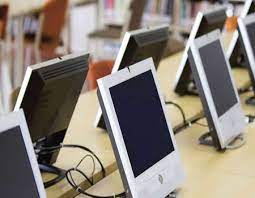
The ICT centre equipped with over 280 interconnected computer systems, positioned it as a major hub for computer-based testing (CBT), digital training, and innovation-driven learning.
It is expected to serve residents of Akuku-Toru, Asari-Toru, and Degema local government areas, thereby reducing the need for students and job seekers to travel  to urban centres for examinations and digital services.
Chairman of Platform Petroleum Limited, Dumo Lulu-Briggs, said the project was conceived in response to the increasing demand for digital literacy in a rapidly evolving global economy.
He emphasised that the centre goes beyond infrastructure, serving as a gateway to global opportunities for young people in the region, particularly in an era shaped by artificial intelligence, automation, and technological innovation.
According to Lulu-Briggs, equipping youths with relevant digital skills remains critical to enhancing their competitiveness and enabling them to participate meaningfully in the global knowledge economy.
The facility, named after his father, Olu Benson Lulu-Briggs, forms part of the company’s corporate social responsibility initiatives targeted at promoting education, enterprise, and socio-economic development in host communities.
Beyond its CBT capabilities, the centre also features dedicated spaces for training, collaboration, and enterprise development, alongside residential and support facilities designed to enhance learning outcomes.
In his remarks, Lulu-Briggs urged host communities to take ownership of the facility by ensuring its protection and proper use, stressing that its long-term value depends on collective responsibility and commitment.
The O.B. Lulu-Briggs ICT Centre is widely regarded as a strategic investment that will not only improve access to digital education but also strengthen Rivers State’s emergence as a growing hub for technology and innovation in Nigeria.
Stakeholders at the inauguration described the project as a transformative intervention capable of narrowing the digital gap, stimulating innovation, and creating sustainable opportunities for thousands of young people across the region.
Dignitaries at the event included Vice Chairman Ojunekwu Augustine Avuru and Managing Director/CEO John Anim, as well as traditional rulers, religious leaders, community stakeholders, and youth representatives.
King Onunwor
Continue Reading

Trending