Connect with us

Oil & Energy

Rising Oil Prices’ll Create Problems For Nigeria – NNPC

Published

on

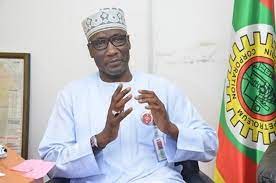
Group Managing Director of the Nigerian National Petroleum Corporation (NNPC), Mallam Mele Kyari, has warned that rather than being a positive development, the rising prices of crude oil in the international market could cause major challenges for resource-dependent nations like Nigeria.
He spoke just as the International Monetary Fund (IMF) expressed concern over the re-emergence of fuel subsidy in Nigeria in the face of the country’s low revenue mobilisation.
The Washington-based institution, however, welcomed recent moves by the Central Bank of Nigeria (CBN) to unify exchange rates, certifying Nigerian banks as being liquid and well-capitalised.
Kyari, at the virtual Citizens Energy Congress, tagged: “Securing a Sustainable Future Energy System through Strategy, Collaboration and Innovation,” yesterday described the rising price of crude oil as a “chicken and egg” situation.
He added that oil prices had started exiting the comfort zone set by the NNPC, and becoming a burden.
The forum was organised by DMG Events, a London-based Public Relations company, which said the occasion was to provide an opportunity for players to reset the energy agenda post- COVID-19 and connect the divergent and polarising perspectives.
Kyari put the comfort zone globally at $58-$60, saying that for the NNPC, anything above $70-$80 will create major distortions in the projections of the corporation and add more problems to the company.
Brent crude, Nigeria’s oil benchmark, is currently selling for over $74 and is likely to increase further in the coming days as the NNPC continues to battle the dilemma of shouldering the payment of petrol subsidy, which has made it unable to contribute to the Federal Account Allocation Committee (FAAC) on two occasions.
Kyari expressed the concern that as the commodity prices rise, buyers of Nigeria’s crude may be compelled to accelerate their investment in renewable sources of energy, thereby leaving the industry in a quagmire.
He said: “In a resource-dependent nation like Nigeria when it gets too high, it creates a big problem because your consumers shut down their demand. Demand will go down and obviously even as the prices go up, you will have less volume to sell.
“So, it’s a chicken and egg story and that’s why in the industry when people make estimates for the future, they always make it about $50 to $60. Nobody puts it beyond $60.
“But for us as a country, as prices go up, the burden of providing cheap fuel also increases and that’s a challenge for us but on a net basis, you know, the high prices, as long as it doesn’t exceed $70 to $80, it’s okay for us.”
According to him, Nigeria will have no problems supporting the restoration of about 5.8 million barrels a day that the Organisation of Petroleum Exporting Countries (OPEC) still has offline since the pandemic, due to the curbs in production quota imposed by the oil cartel.
He said adding that number to demand will stabilise and probably bring oil prices down to about $60 level or a little below $60, stressing that that’s a comfort zone for every producing company or country.
“I don’t see them (Nigeria) having any difficulty agreeing to add additional volume to cushion the effect of these high prices for this period,” he said.
He stated that Nigeria is already producing well below its capacity, because in early 2020, the country actually produced up to 2.4 million barrels of oil per day for both oil and condensates.
With declining investments in the oil sector, Kyari stated that in a short time, most likely the next five years, the world may experience an energy crisis if the current situation is not properly managed.


Continue Reading

Oil & Energy

Global Energy Crisis Is Reviving Green Hydrogen

Published

on

The global energy crisis has reshaped global energy priorities seemingly overnight. The Strait of Hormuz has been closed to virtually all commercial traffic for well over a month now, severely restricting global flows of oil and gas. As a result, global energy prices have skyrocketed, and supplies have tightened, pushing many countries to explore alternative energy pathways in a big hurry. This has led to an unfortunate resurgence of coal-fired power, especially in Asia – but it is also set to supercharge the clean energy industry on a global scale. And one of the unlikely benefactors of this groundswell of new investment may be the green hydrogen industry.
China, the world’s top hydrogen producer, is planning to ramp up production of hydrogen, and especially green hydrogen, more quickly than previously planned in order to shore up its energy security as import-dependent Asian markets are rocked by skyrocketing oil and gas prices. China’s National Energy Administration (NEA) has referred to hydrogen as a “strategic lever” for national energy autonomy and resilience, and has pledged to accelerate the development of the domestic sector accordingly.
China’s 15th five-year plan, released last month, flagged hydrogen as a “future industry.” But, apparently, the future is now. According to a recent report from the South China Morning Post, the rhetoric around hydrogen coming out of China signals a shift away from research and toward rapid practical development of the sector.
Last year, the NEA earmarked 41 projects in nine regions across the country to lead hydrogen pilot projects all along the value chain “from production and transport to storage and application.” Now, leadership is pushing to bring those projects out of demo phases and into industrial applications as quickly as possible.
European leaders, too, are pivoting to embrace green hydrogen production with renewed enthusiasm. Earlier this month, ministers from Austria, Germany, the Netherlands, Poland, and Spain petitioned the European Union to loosen production regulations to encourage investment into the sector. And Italy successfully approved a €6 billion state aid plan to support renewable hydrogen.
Even the United States is getting on board. This week, the Trump administration instructed the Department of Energy to save $5 billion worth of hydrogen hubs that were slated for closure. The hydrogen projects – though not green hydrogen ventures – were funded under the Biden administration in order to promote cleaner-burning fuel sources.
Hydrogen could potentially be a critical pathway for decarbonization, as it combusts at high heat like fossil fuels. But, unlike fossil fuels, when it burns, it leaves behind nothing but water vapor. This could make it indispensable for the decarbonization of hard-to-abate sectors like steelmaking and shipping. However, the vast majority of commercial hydrogen is made with fossil fuels. Green hydrogen, by comparison, is made using renewable energies.
But while hydrogen, and especially green hydrogen, could be a key part of the global clean energy transition, research and development in the sector had been cooling for years, as commercial and cost-effective green hydrogen production methods largely failed to materialize. “Even if production costs decrease in line with predictions, storage and distribution costs will prevent hydrogen from being cost-competitive in many sectors,” Roxana Shafiee, a postdoctoral fellow at the Harvard University Center for the Environment, told The Harvard Gazette in 2024. Shafiee led a study that found cause to believe “that the opportunities for hydrogen may be narrower than previously thought.”
But the economics of energy are changing as we speak, and the global hydrogen market is likely about to see a windfall as the world rushes to replace geopolitically risky fossil fuels, which have become prohibitively expensive overnight. Clearly, global leaders are already reembracing the fledgling sector as part of an all-of-the-above approach to energy security and independence. While hydrogen may not be a silver bullet solution, it could be a critical part of a more diverse and therefore more resilient global energy landscape going forward.
By Haley Zaremba
Continue Reading

Oil & Energy

PETAN Tasks Indigenous Oil Firms On Investments Attraction    … Global Engagement Sustenance

Published

on

The Petroleum Technology Association of Nigeria (PETAN) has urged indigenous oil and gas companies to deepen global engagement and attract investment.
The Association urged intending participants to leverage the forthcoming 2026 Offshore Technology Conference (OTC) in the U.S. to expand their access to new technologies and partnerships.
PETAN said its participation at the global event would be driven by a deliberate strategy to position Nigerian firms as competitive players within the international energy value chain.
In a statement issued  by the Association’s Publicity Secretary, Dr Joan Faluyi, In Lagos, at the weekend,  PETAN would anchor its activities at the Nigerian Pavilion, with the theme: “Africa’s Energy Transformation: Scaling Investment, Technology, and Local Capacity for Sustainable Growth”.
Faluyi noted that the conference, scheduled for May 4 to May 7 in Houston, Texas, remained a leading platform for offshore energy dialogue, partnerships and innovation.
According to her, PETAN’s participation goes beyond routine attendance and reflects a focused effort to strengthen Nigeria’s visibility and influence in global energy discussions.
“At OTC 2026, PETAN is returning with stronger alignment and a clearer objective, to ensure Nigerian companies are not just present, but actively engaged and recognised as credible global partners,” she said.
Faluyi explained that the association had consistently showcased the capabilities of indigenous oil and gas service providers at previous editions of the conference, reinforcing their capacity to compete internationally.
She added that the Nigerian Pavilion would serve as a strategic hub for investment discussions, technical exhibitions and direct engagement with global stakeholders.
The association is also scheduled to participate in key engagements, including the African Energy Forum, the NCDMB–OEM Investment Forum and the PETAN Golf Tournament slated for May 7 at Quail Valley Golf Course, Texas.
Faluyi described OTC as a critical gateway for Nigerian companies seeking international opportunities, noting that visibility and engagement at the event often translate into commercial partnerships.
“In an increasingly competitive energy landscape, securing a seat at the global table is essential. Through sustained participation, PETAN continues to assert Nigeria’s place in that conversation,” she said.
Also speaking, PETAN Chairman, Mr Wole Ogunsanya, said the Association’s focus was to ensure that indigenous capacity is fully integrated into global energy decision-making processes.
“We have seen firsthand how global energy decisions are shaped at OTC. This year, we are returning to ensure indigenous Nigerian capacity is not just present but recognised, engaged and heard.
“We are taking our businesses to the table where real partnerships are formed,” he said.
Faluyi added that under Ogunsanya’s leadership, PETAN was prioritising strategic positioning to ensure Nigerian companies are not only visible but considered credible partners in major international energy projects.
Continue Reading

Oil & Energy

Solar Panels Imports Ban: Experts Recommend Phase -out Approach 

Published

on

Stakeholders in Nigeria’s energy sector have warned that an abrupt restriction on solar panels imports would undermine electricity access.
The experts called for a gradual phase-out of imports over several years rather than an outright ban.
Recall that the federal government had announced plans to halt solar panel imports after investing more than N200 billion to encourage domestic production.
Speaking at the Solar Power Media Training, in Abuja, last week, the Campaign Director, Secure Energy Project (SEP), Joseph Ibrahim, said stakeholders support the goal of building local manufacturing capacity but cautioned against sudden policy shifts.
“Let me be clear, we wholeheartedly support local manufacturing of solar panels”.
“We want to see factories in our states, jobs for our youth, and a supply chain that begins and ends on our soil”, he stated.
Ibrahim insisted that the most effective path forward is a carefully managed roadmap implemented over three to five years to give investors and workers time to adjust.
“If we rush this, we risk making solar power too expensive for the millions who currently rely on it for survival.
“By taking a phased approach, we allow time for investors to build their plants, for our workers to learn specialised skills, and for our economy to adjust without losing power”, he said.
The SEP director said policy stability, access to financing, and strict quality standards are essential to building a sustainable local solar manufacturing industry.
“To make local manufacturing a reality, we don’t just need new laws; we need an enabling environment. This means stability — policies that don’t change with the wind,” he said.
Also speaking, Tosin Asonibare,  said renewable energy has become a critical solution to Nigeria’s persistent electricity supply challenges.
He cited findings by the Global Initiative for Food Security and Ecosystem Preservation, indicating that many Nigerians remain unaware of the proposed import restrictions and their potential implications.
According to him, respondents in the report largely favoured a phased ban supported by incentives for importing raw materials needed for local production.
“The report also shows that infrastructure for locally manufactured panels is not fully available, so there is need for foreign direct investment improvement in government policy.
“So that the local manufacturers and assembling companies can have higher capacity to meet demand. If that is not done, the price of solar panels will go up”, he said.
He warned that affordability could become a major concern for consumers if restrictions are implemented without adequate preparation.
Continue Reading

Trending