
Nation
FIRS Targets N5.9trn In 2021, Mani Tells Senate Panel

The Chairman of the Federal Inland Revenue Service, Mr. Mohammed Nami, said, yesterday, that the agency was targeting N5.9trillion revenue this year.
Mani stated this before members of the Senate Committee on Finance.
The panel was reviewing the performance of the FIRS 2020 revenue projection of N5.076trillion out of which it was able to realise N4.950trillion, representing 98 per cent.
He told the panel that the cost of collection being 4 per cent, achieved N130.45billion against a budget of N186.76billion.
The FIRS chairman said the agency was proposing a total revenue collection of N5.9trillion representing an increase of 16.22 per cent above 2020 budget of N5.076 trillion.
He said the cost of collection was projected at N289.25billion at 7 per cent to take care of the increasing cost of operation and planned expansion of operation for new sources of revenue.
He further said that the agency would not be recruiting any staff in 2021 as there were not enough accommodation yet even for existing staff in the face of Covid-19.
He said, “We need to observe social distancing rules and presently some of the staff are working remotely from home.”
The Chairman, Senate Committee on Finance, Senator Solomon Adeola, said the Senate would consider the possibility of approving an increase in the cost of collection that accrue to FIRS from its operation from its present approved 4 per cent.
He said whatever was recommended by his committee would be presented for approval by the Senate in plenary as the committee cannot unilaterally approved the proposed 7 per cent proposed by the agency.
Adeola said that FIRS should look at other alternative of revenue generation for its operations from other areas of revenue beyond a blanket increase of cost of collection for its operations.
He said his panel was looking at fashioning out ways the agency could generate additional revenue for the federal and state governments.
He said, “As a way of increasing revenue of the government, our committee is to begin a full blown investigation of all 467 revenue generating agencies of the Federal Government.
“This is to ascertain compliance with remittances into the consolidated revenue account of the government as well as remittances of the 1 per cent Stamp Duty by all agencies on contracts they awarded.
“For government to execute projects and provide services, revenue from the oil sector is now grossly insufficient,” he added.
ry base, wreaking havoc.
The incident continued unabated as the insurgents stormed a Humanitarian Hub and razed it down, even as thousands of residents were trapped as they receive directives and ideologies from the Boko Haram sect currently hoisting their flags in different locations.
As it is, the number of casualties on the sides of the military, the terrorists and civilians is yet unknown, as efforts to get confirmation from Police Public Relations Officer, DSP Edet Okon, proved abortive at press time.
Unfortunately, innocent civilians are feared dead as a result of the crossfire.
Sources said, the insurgents after capturing the town which is about 75km drive from Maiduguri, the state capital, were not after the lives of civilians as long as they comply with them.
A trapped resident, Ali Usmanu said that the insurgents succeeded in burning down the newly reconstructed council secretariat, police post, schools and other public structures in the town.
This destruction is coming barely 48hours when Governor Babagana Umara Zulum visited Dikwa and spent some days distributing food, non-food items and cash amounting to over N100 million to Internally Displaced Persons (IDPs) in the town.
Recover Towns Occupied By Terrorists, Bandits, Buhari Orders Security Chiefs
President Muhammadu Buhari has ordered the nation’s security chiefs to recover all areas being occupied by insurgents, bandits and kidnappers all over the country.
The National Security Adviser (NSA), retired Maj.-Gen. Babagana Monguno told State House correspondents that Buhari issued the order during the just-concluded meeting of the National Security Council.
The meeting was presided by Buhari at the Council Chamber of the Presidential Villa, Abuja, yesterday.
According to him, no sovereign nation will allow a group of non-state actors to bring it down to its knees and bring the state to panic; apprehension, distrust and disorder.
“Therefore, both the defence and intelligence organisations have been charged that while we look forward to having a peaceful, non-kinetic resolution, we will not allow this country to drift into state failure.
“And with effect from today, the new service chiefs have been given directives by the Minister of Defence, conveyed by the President to the Minister of Defence, to reclaim all areas that have been dominated by bandits, by kidnappers and other scoundrels of scallywags.
“In doing so, I’ve also asked all the intelligence agencies to collapse all their efforts onto one platform, so that with the convergence of efforts, we will be able to give the required intelligence to the operational elements of government.
“Now, I need to stress also that there are individuals in this country who have assumed a status that is beyond what they should be. The intelligence from our own sources, the intelligence at my disposal reveals that we have certain entities, certain individuals who are making capital out of insecurity, especially kidnapping.
“This is a situation that has to be brought to an end and I’m sending a warning to anybody who is hiding beneath a veneer of some status, whether official, in terms of an official capacity or traditional or religious, to stoke the flames of disorder.
“The government is very serious about this. As I said, we’re drifting into a situation that we can no longer afford to lose lives.
“We are not going to be blackmailed, we’re going to use whatever is at our disposal, while operating within the confines of legitimacy, within the confines of legality, but the government has a responsibility to assert its will, using the instruments at its disposal to keep the state moving, alive, happy in prosperity, this will not be compromised,’’ he warned.
Monguno revealed that the meeting also deliberated on issues of freedom of citizens to reside wherever they wish to reside as stipulated in the Constitution of the Federal Republic of Nigeria.
“While at the same time, the government endorses that anybody who is a criminal, who acts on his own outside the law, should be brought to book wherever he is, but the issue here is that when we continue to pitch ourselves against each other, then this problem will only continue to be magnified.
“Therefore, Mr President has charged everyone to be mindful of this situation because once we start to profile ourselves along ethnic or religious lines, then; there’ll be no end to it.
“We’ve seen what has happened in so many countries around the globe and we do not want Nigeria to fall into that type of situation.
“I think we’ve had enough of violence, enough of chaos, enough of anarchy but I want to stress once more that any individual or group that thinks it can take it upon itself to cause disunity, disharmony and push the country to the brink should have a rethink.
“Any individual who thinks he has any support, who thinks he can undermine this government, anybody, any human being, as long as it is a citizen of this country, any person who thinks he’s the cat’s whiskers, or he can be rocky on the perch and lead us into a situation of unhappiness, will have himself to blame at the end of the day,’’ he added.
The NSA further disclosed that the president had already given directives to the military and intelligence organisations to trail and flush out all the people that had been on their watch list.
He said: “I can assure you there are quite a handful of people on our watch list. They will be trailed, they will be routed out and they’ll be brought to book.
“They’ll be prosecuted and they’ll be made an example of and anybody who wants to use this situation to blackmail the government should also think.
“The President, finally, has asked us to put our heads together to try as much as possible to work on a whole of government basis, in conjunction with a whole of scientific basis to achieve a whole of nation result.
“When I say the whole of government, I’m not saying the whole of the executive. I’m saying the whole of executive, legislature and judiciary.
“That is what the partnership is and this partnership will work with people outside the federal establishment, that is working with the state governments, working with traditional and religious organisations and local community leaders, while at the same time trying to enhance community policing.’’
2023: Create More Polling Units, Senate Tasks INEC
The Senate Committee Chairman on Independent National Electoral Commission (INEC), Senator Kabiru Gaya, has tasked the commission on making polling units available for the electorate.
He said it was within the powers of the electoral umpire to make polling units available and accessible, noting that when there is a lack of polling units, the electorates are inadvertently denied their voting rights.
Speaking at a one-day joint Senate and House Committee on INEC and Electoral Matters, yesterday, the lawmaker stressed that the availability of polling units is the first level of “citizens’ active and physical democratic rights.”
Citing section 42 of the Electoral Act, 2010, Gaya said “The commission shall establish a sufficient number of polling units in each Registration Area and allot voters to such polling units”,
He maintained that if INEC stifled voting accessibility, voters would be discouraged.
He pointed out that the challenge of the 2019 general election was over-populated voters in some polling units, insisting that such developments should not happen in 2021.
“One of the challenges that almost marred the credibility of the 2019 general election especially in densely populated urban and rural registration areas was the accessibility to polling units.
“There were some polling units that had more than 12,000 voters well over the prescribed average number of 500 voters per polling units.
Gaya urged INEC to be proactive in the area of polling units’ location that is in difficult terrain as well as ensuring that the physically challenged are taken into consideration in accessing polling units, which he revealed would be captured in the proposed Electoral Act amendment Bill, 2021.
In doing this, he said, the National Assembly was ready to support INEC to ensure inclusiveness.
Reacting, INEC Chairman, Prof. Mahmood Yakubu, confirmed the challenges of voters’ accessibility.
He assured the parliament that the narrative would change, while displaying the video clip of how overcrowded voters struggled to vote in the last election, he expressed optimism that more polling units will be created with the support of lawmakers.
According to him, no new polling units were created in the last 25 years, even when the population of voters was on steady growth.
Zamfara Kidnap: ‘FG Must Implement Plans To Stop Further Attacks’
The Centre for Democracy and Development (CDD) has expressed relief on the release of kidnapped 317 students of the Government Girls Secondary School, Jangebe in Talata Local Government Area of Zamfara State.
The CDD Director, Idayat Hassan, in a statement, yesterday, stressed that the Federal Government must map plans to curtail further attack and child right violation.
Hassan also urged the government and relevant authorities to work together and map out workable strategies that would ensure that every child is protected in his or her quest to seek development and learning.
According to him, the Federal Government ought to make efforts to ensure that all abductees in captivity are released without succumbing to any form of amnesty or ransom.
“CDD finds it unacceptable that Nigerian children are being subjected to the dehumanizing and traumatic experiences, which the bandits have continued to subject them.
“It is a slap on the face of the entire country that common criminals have turned the national space into a lawless, chaotic, and non-habitable place.
“In the face of these traumatic experiences for the families of young scholars abducted by criminal gangs, we believe it’s time for the government to adopt a new approach to curb further attacks.
“The government, therefore, needs to effectively perform its primary function of ensuring the security of lives and property of all Nigerians rather than building the hope that the kidnapping of school children will simply go away.
“We urge the government to activate the national template involving the security agencies and communities as a means of tackling the current threat of mass abductions.
“Finally, CDD calls on the government at all levels to work together to provide victims of abductions with the right psycho-social support. Given the trauma many of these students have passed through, their lives are not likely to be the same again,” the statement said.



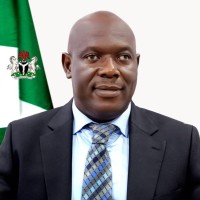
The Hydrocarbon Pollution Remediation Project (HYPREP) has commemorated the 15th anniversary of the release of the United Nations Environment Programme (UNEP) Environmental Assessment Report on Ogoniland, reaffirming its commitment to restoring the environment and improving the livelihoods of affected communities.
In a statement signed by the Project Coordinator, Prof Nenibarini Zabbey, to commemorate the anniversary, HYPREP described the anniversary as a significant milestone in Nigeria’s environmental restoration efforts, noting that the project has made remarkable progress in implementing the recommendations of the landmark UNEP report released on August 4, 2011.
The UNEP report had revealed extensive oil pollution across Ogoniland, severe environmental degradation, and serious public health risks resulting from decades of petroleum operations. It also recommended an initial $1 billion fund to commence the cleanup of the affected communities.
According to HYPREP, the Federal Government formally launched the Ogoni clean-up in 2016, while the Project Coordination Office was established in 2017 to drive the implementation of UNEP’s recommendations.
Zabbey said the current administration has continued to prioritise the project under the Renewed Hope Agenda.
Providing an update on the cleanup, the Project Coordinator disclosed that 30 of the 65 contaminated sites identified by UNEP have been fully remediated, while work is ongoing at several medium- and high-risk locations. It also stated that more than 1.5 million mangrove seedlings have been planted as part of what it described as the world’s largest restoration of oil-degraded mangroves, with over 1,000 hectares of shoreline already rehabilitated.
Zabbey further revealed that 49 Ogoni communities have been connected to potable water schemes through multiple water projects and booster stations aimed at providing safe drinking water across the region.
In the health sector, he said the 100-bed Ogoni Specialist Hospital in Kpite and the 43-bed Cottage Hospital in Buan are nearing completion, adding that several existing health facilities have been upgraded with modern medical equipment, while five ambulances have been donated to improve emergency healthcare services. The Project Coordinator also disclosed that a three-year human health biomonitoring study is being conducted in collaboration with the World Health Organization’s International Agency for Research on Cancer (IARC).
On economic empowerment, Zabbey stated that the Project has created more than 8,000 direct jobs and trained thousands of Ogoni youths and women in various vocational and technical skills, including software development, cybersecurity, aviation, commercial diving, seafaring, mechatronics, and creative arts. The project also reported awarding scholarships to more than 1,000 students, providing grants to small businesses, and supporting persons living with special needs through skills acquisition programmes.
The statement further highlighted ongoing legacy projects, including the Ogoni Power Project and the Centre of Excellence for Environmental Restoration, which it said is about 96 per cent complete. HYPREP also welcomed the recent designation of the Ogoni Wetland as a Ramsar Site of International Importance and pledged to continue promoting biodiversity conservation and sustainable management of the ecosystem.
Marking the anniversary, Zabbey said the progress achieved over the past 15 years demonstrates the collective commitment of government, development partners, stakeholders, and local communities to restoring Ogoniland. He called for renewed collaboration to sustain the cleanup effort, promote environmental sustainability, and support the long-term development of the region. 3
-

 News2 days ago
RSG Targets Nine Million Residents in Mosquito Net Distribution Campaign
-

 Oil & Energy2 days ago
Aiyedatiwa Signs New Electricity Bill
-

 Oil & Energy2 days ago
NLNG Commissions Research And Innovation Centre In RSU
-

 Maritime2 days ago
Marine Minister Commends President Tinubu On NPERA Bill Assent
-

 News2 days ago
KenPoly Holds Eight Convocations, August 29
-

 News2 days ago
RSG Begins Another Phase of Projects Commissioning Today
-

 News2 days ago
RMAFC Completes Revenue Sharing Review, Proposes New Pay
-

 Maritime2 days ago
NAGAFF Petitions IGP Over Alleged Maritime Police Harassment