
Nation
‘Nigeria Becoming Failed State’

The Financial Times of London has described Nigeria as a country going backwards economically and plagued with terrorism, illiteracy, poverty, banditry, and kidnapping and risks becoming a failed state if things don’t take a drastic turn.
The UK-based newspaper said this in an editorial yesterday titled, ‘Nigeria at Risk of Becoming a Failed State’.
It said the abduction and subsequent rescue of over 300 schoolboys in Kankara, Katsina State, revived memories of the 276 Chibok schoolgirls abducted in Borno State in 2014.
According to the newspaper, while the government’s claim that no ransom was paid to the abductors of the schoolboys remains doubtful, other acts of criminality could not be overlooked.
The editorial read in part. “The government insists no ransom was paid. Scepticism is warranted. In a country going backwards economically, carjacking, kidnapping and banditry are among Nigeria’s rare growth industries. Just as the boys were going home, Nigerian pirates abducted six Ukrainian sailors off the coast.
“The definition of a failed state is one where the government is no longer in control. By this yardstick, Africa’s most populous country is teetering on the brink.”
The newspaper also questioned the claim by the President, Major General Muhammadu Buhari (retd.), that Boko Haram had been technically defeated.
It said contrary to the government’s claim, Boko Haram remained an ever-present threat.
The Financial Times stated, “President Muhammadu Buhari in 2015 pronounced Boko Haram technically defeated’. That has proved fanciful. Boko Haram has remained an ever-present threat. If the latest kidnapping turns out to be its work, it would mark the spread of the terrorist group from its north-eastern base.
“Even if the mass abduction was carried out by ‘ordinary’ bandits — as now looks possible — it underlines the fact of chronic criminality and violence. Deadly clashes between herders and settled farmers have spread to most parts of Nigeria. In the oil-rich, but impoverished, Delta region, extortion through the sabotage of pipelines is legendary.”
The newspaper said security is not the only area where “the state is failing”.
The Financial Times added that Nigeria has more poor people than any other country even as Nigeria has the highest number of out of school children on earth.
The newspaper stated that as oil continues to lose its value, Nigeria’s economy would worsen.
“The population, already above 200 million, is growing at a breakneck 3.2 per cent a year. The economy has stalled since 2015 and real living standards are declining. This year, the economy will shrink four per cent after COVID-19 dealt a further blow to oil prices.
“In any case, as the world turns greener, the elite’s scramble for oil revenue will become a game of diminishing returns. The country desperately needs to put its finances, propped up by foreign borrowing, on a sounder footing,” it said.
The newspaper said Buhari, who has less than three years left in office, must use the remainder of his term, to redouble efforts at improving security.
It advised the government to restore trust in key institutions, among them the judiciary, the security services and the electoral commission, which will preside over the 2023 elections.
The Financial Times said the #EndSARS protests led by Nigerian youths, signaled a glimmer of hope for Nigeria’s teeming youth population
It added, “The broad coalition that found political expression this year in the EndSARS movement against police brutality provides a shard of optimism. At least Nigeria has a relatively stable democracy. Now Nigeria’s youth — creative, entrepreneurial and less tainted by the politics of extraction — should use that system to reset the country’s narrative.”
The newspaper concluded by saying that it was time for Nigeria to restructure its political system and concentrate on security, health, education, power and roads
“At the present trajectory, the population will double to 400 million by 2050. If nothing is done, long before then, Nigeria will become a problem far too big for the world to ignore,” it warned.



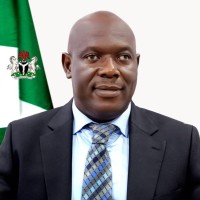
The Hydrocarbon Pollution Remediation Project (HYPREP) has commemorated the 15th anniversary of the release of the United Nations Environment Programme (UNEP) Environmental Assessment Report on Ogoniland, reaffirming its commitment to restoring the environment and improving the livelihoods of affected communities.
In a statement signed by the Project Coordinator, Prof Nenibarini Zabbey, to commemorate the anniversary, HYPREP described the anniversary as a significant milestone in Nigeria’s environmental restoration efforts, noting that the project has made remarkable progress in implementing the recommendations of the landmark UNEP report released on August 4, 2011.
The UNEP report had revealed extensive oil pollution across Ogoniland, severe environmental degradation, and serious public health risks resulting from decades of petroleum operations. It also recommended an initial $1 billion fund to commence the cleanup of the affected communities.
According to HYPREP, the Federal Government formally launched the Ogoni clean-up in 2016, while the Project Coordination Office was established in 2017 to drive the implementation of UNEP’s recommendations.
Zabbey said the current administration has continued to prioritise the project under the Renewed Hope Agenda.
Providing an update on the cleanup, the Project Coordinator disclosed that 30 of the 65 contaminated sites identified by UNEP have been fully remediated, while work is ongoing at several medium- and high-risk locations. It also stated that more than 1.5 million mangrove seedlings have been planted as part of what it described as the world’s largest restoration of oil-degraded mangroves, with over 1,000 hectares of shoreline already rehabilitated.
Zabbey further revealed that 49 Ogoni communities have been connected to potable water schemes through multiple water projects and booster stations aimed at providing safe drinking water across the region.
In the health sector, he said the 100-bed Ogoni Specialist Hospital in Kpite and the 43-bed Cottage Hospital in Buan are nearing completion, adding that several existing health facilities have been upgraded with modern medical equipment, while five ambulances have been donated to improve emergency healthcare services. The Project Coordinator also disclosed that a three-year human health biomonitoring study is being conducted in collaboration with the World Health Organization’s International Agency for Research on Cancer (IARC).
On economic empowerment, Zabbey stated that the Project has created more than 8,000 direct jobs and trained thousands of Ogoni youths and women in various vocational and technical skills, including software development, cybersecurity, aviation, commercial diving, seafaring, mechatronics, and creative arts. The project also reported awarding scholarships to more than 1,000 students, providing grants to small businesses, and supporting persons living with special needs through skills acquisition programmes.
The statement further highlighted ongoing legacy projects, including the Ogoni Power Project and the Centre of Excellence for Environmental Restoration, which it said is about 96 per cent complete. HYPREP also welcomed the recent designation of the Ogoni Wetland as a Ramsar Site of International Importance and pledged to continue promoting biodiversity conservation and sustainable management of the ecosystem.
Marking the anniversary, Zabbey said the progress achieved over the past 15 years demonstrates the collective commitment of government, development partners, stakeholders, and local communities to restoring Ogoniland. He called for renewed collaboration to sustain the cleanup effort, promote environmental sustainability, and support the long-term development of the region. 3
-

 News2 days ago
RSG Targets Nine Million Residents in Mosquito Net Distribution Campaign
-

 Oil & Energy2 days ago
Aiyedatiwa Signs New Electricity Bill
-

 Oil & Energy2 days ago
NLNG Commissions Research And Innovation Centre In RSU
-

 Maritime2 days ago
Marine Minister Commends President Tinubu On NPERA Bill Assent
-

 News2 days ago
KenPoly Holds Eight Convocations, August 29
-

 News2 days ago
RSG Begins Another Phase of Projects Commissioning Today
-

 News2 days ago
RMAFC Completes Revenue Sharing Review, Proposes New Pay
-

 Maritime2 days ago
NAGAFF Petitions IGP Over Alleged Maritime Police Harassment