Connect with us

Aviation

Easter : Lagos Airports Record Higher Number Of Passengers

Published

on

The domestic terminals of Murtala Muhammed International Airport in Lagos recorded higher number of passengers yesterday ahead of the Easter holidays.
The Federal Government had declared April 19 and 22 as public holidays to mark the Easter celebration by Christians in commemoration of the death and resurrection of Jesus Christ.
Our correspondent that visited the airport terminals observed that more travelers were leaving Lagos for other destinations.
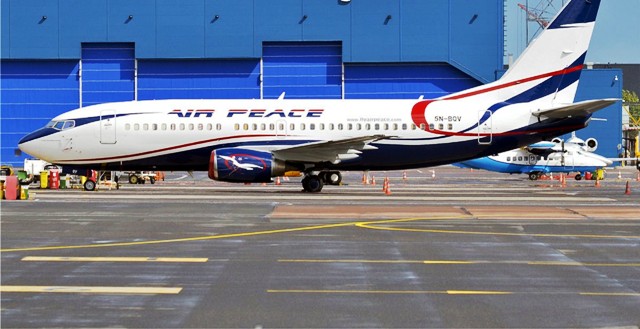
At the General Aviation Terminal (GAT), the counters of Air Peace and Arik Air had the long queues of passengers, while Dana Air and Max Air also had the long queues at the MMA2.
The upsurge of the out-bound passengers led to increase in air fares due to lack of seats on available flights.
Mostly affected were flights from Lagos to Abuja, Owerri, Port Harcourt, Enugu and Benin which usually sell for between N25, 000 and N32,000, but have gone up to about N42,000 and 46,000 respectives.
A travel agent, Mr Madu Ezechi, said the increase in the air fares was normal due to the high demand by passengers.
“This is a long holiday and many people want to take advantage of it to go home, see their loved ones and settle other issues.
“So, getting tickets is a bit difficult, especially if you are traveling in groups. Some people want to sit with their family members and are willing to pay for it,” he said.
The Federal Airports Authority of Nigeria (FAAN) had assured passengers and other airport users that her network of airports were fully prepared and ready for the usual upsurge in passenger traffic during the Easter period.
FAAN, in a statement signed by its General Manager, Corporate Affairs, Mrs Henrietta Yakubu, last Wednesday said that all necessary facilities, infrastructure and manpower had been deployed to ensure seamless operation at the airports.
She said that the relevant security agencies had been mobilised to beef up security at all airports during the period.
Yakubu advised intending travelers to endeavour to leave for the airport early enough to ensure that check-in formalities were conducted in good time.


Continue Reading

Aviation

Airlines Mull New Strategies To  Drive Business Sustainability

Published

on

Airlines and operators in the Nigerian aviation industry are considering a strategic review of their business models in order to mitigate frequent disruptions due to external shocks and ensure sustainable operations.
The strategic business review comes as the Federal Government is wrapping up plans to explore business  opportunities for local carriers, cargo operators and other commercial ventures in the global aerospace market set to hit over $ 900 billion in the next few years.
Part of the initiatives packaged by the government to achieve more participation in the value chain include the engagement of original equipment manufacturers , lessors, investors in the aviation infrastructure space and other interventions. The global aerospace market is valued at approximately $409.09 billion in 2026.
Nigerian airlines, like their global counterparts, had in recent weeks come under serious pressure due to  increase in aviation fuel price, which has created unease in the air transport ecosystem, forcing local carriers  to cut flights frequencies and routes they fly into, in order to remain in business.
The spike in the price of jet fuel is putting pressure in the cost component of airline operations as airlines now spend more money, almost tripping the value it took three months ago to keep airplanes in skies
.
Three airlines, including Ibom Air, Air Peace and Rano Air said they were considering reworking their business and operational models to ensure business sustainability.
The plans by the airlines revolved around optimisation of commercially viable routes and reduction of flights frequency on some routes, as well as cutting down on other operational expenses.
Air Peace said it was reducing  the frequency of its Abuja–London operations to three weekly flights due to fuel supply constraints
Rano Air is considering reducing its flight frequencies and temporarily suspending some routes to enable it remain in business.
Rano Air said the decision to reduce some flight routes followed a sharp rise in Jet A1 aviation fuel prices, which has significantly increased operating costs.
The airline said price surge has made certain routes commercially unsustainable, forcing a reduction in operations until conditions improve.
Rano Air said the suspension decision came after careful evaluation of the growing financial burden caused by escalating fuel prices.
Nigeria with its increasing number of airlines, ground handling companies and other activities taking place at airports is a huge consumer of aerospace equipment and facilities.
Discussions are intensifying with  major aircraft manufacturers, including Boeing, Airbus, Embraer, and Canadian corporation : Bombardier to enable local airlines secure airplanes at terms and conditions that aligns with their business plans.
To achieve this, the Federal Government has signed a strategic partnership agreement with French airplane maker – the Airbus Company.
Industry sources hinted that the pact will go a long way to facilitate easier aircraft acquisition for local carriers which are leveraging available opportunities to deepen their fleet expansion and modernisation drive.
Industry experts have described the move as deft in the broader strategy to attract development into the sector which is in dire need of such intervention.
An operator, who is a former group managing director in a cargo company said the current move by the Federal Government is a good demonstration to attract global leverage for the country’s aviation sector struggling with insufficient funds to remain competitive.
The operator who pleaded not to be  named in print said Nigeria is now  actively transforming its aviation and aerospace sector, by  shifting from a passive market to an active participant through strategic partnerships, pushing for infrastructure development, and private-sector-led initiatives.
Recently, the Federal Executive Council (FEC) approved the establishment of a Nigerian Aircraft Leasing Company – a private-sector-led Special Purpose Vehicle-  to provide local airlines with accessible leasing options.
 Nigeria , also  signed a Memorandum of Understanding (MoU) with Airbus to bolster aerospace development, focusing on training, sustainable aviation fuel (SAF) production, and technical expertise.
As part of follow-up efforts to the Federal Government’s approval for the establishment of a national aircraft leasing company to support domestic airlines, a delegation from Nigeria’s aviation sector has secured deals with Airbus and other aviation institutions in France.
 Last week , Keyamo visited France to explore opportunities for collaboration, capacity development, and aircraft acquisition.
The minister led a delegation including officials from the Ministry and the Nigerian Civil Aviation Authority (NCAA) with  stakeholders from the public and private aviation sectors, including a  team from the  Isaac Balami University of Aeronautics and Management (IBUAM) and 7- Star Global Hangar.
The delegation toured Airbus’ narrow-body and wide-body aircraft assembly plants, as well as helicopter assembly facilities in Toulouse and Marseille, where Airbus executives showcased some of the latest jet and helicopter technologies.
The company , it was learnt also expressed interest in expanding investment opportunities in Nigeria and the wider West African aviation market.
During the visit, the Minister secured opportunities for Nigerian institutions to collaborate with Airbus in the areas of student exchange programmes and capacity development.
An understanding was also reached with Airbus to facilitate partnerships and create a platform through which Nigerian airlines could access new aircraft using a sovereign guarantee framework approved by the administration of President Bola Tinubu.
Recall that Ibom Air had earlier received two aircraft through the current effort, expecting to receive two more brand new aircraft to be delivered to the airline soon.
Speaking on the development , Managing Director of Ibom Air, George Uriesi expressed gratitude to the Nigerian government and Airbus for the collaboration.
Airlines had expressed concerns that the sharp rise in Jet A1 costs has significantly strained flight operations, making it increasingly difficult to maintain some services profitably.
Aviation fuel prices surged from approximately N900 per litre in late February to over N3,000 per litre by April, according to the Airline Operators of Nigeria.
Nigerian airlines had threatened a nationwide operational shutdown from April 20, 2026, citing unsustainable fuel expenses.
To assuage the operators, President Bola Ahmed Tinubu approved a 30 per cent reduction in certain statutory aviation fees to provide temporary relief.
The Federal Government also introduced capped Jet A1 pricing and a proposed 30-day credit window for airlines.
While these interventions may ease short-term pressure, airlines continue to struggle with elevated operating costs.
But, the interventions by the government is not achieving the desired results.
Group Manager, Marketing and Communications of Ibom Air, Aniekan Essienette, disclosed that fuel costs per flight have jumped from about N2.1 million in January to approximately N7.6 million as of April 27.
“This represents more than a 350 percent increase since early March, in just about seven weeks,”
She  noted that the airline operates one of the most fuel efficient fleets in the domestic market, yet the spike in aviation fuel prices has significantly eroded its cost structure.
Ibom Air said it has been unable to fully adjust ticket fares to reflect the rising costs due to competitive pressures and the need to remain accessible to passengers.
“We chose to absorb the cost increases initially, believing the situation would ease within a short period. However, it has persisted for nearly two months, with no indication of relief,” the airline said.
The company warned that current conditions are unsustainable and may compel it to scale down operations.
“Globally, airlines respond to rising fuel costs by reducing flights. We may have to adopt similar measures, including cutting capacity, to continue operating,” she added.
She cautioned that if the trend continues, airlines may be forced to suspend operations entirely, as revenues would be insufficient to cover fuel expenses alone.
Ibom Air called on fuel marketers to review pricing mechanisms to ensure the viability of the airline industry in Nigeria.
Speaking in an interview yesterday, National President , National Association of Aircraft Pilots and Engineers (NAAPE), Captain Bunmi Gindeh , said the aviation fuel crisis has serious implications for airline. sustainability and safety..
Gindeh said if the situation is not properly managed, the aviation fuel supply crisis has far reaching implications for the sector , the country’s economy and the flying public.
He said , “The persistent disruptions to flight schedules occasioned by the Jet A1 supply shortfall have resulted in significant extensions of crew duty time beyond planned parameters.
“For our members, pilots and engineers alike, this translates directly into elevated fatigue levels, a condition that is universally recognised in aviation as a critical safety hazard. Fatigue impairs cognitive function, slows reaction time, and, most dangerously, erodes situational awareness, a pilot or engineer’s most essential tool in managing the complexities of flight operations.
“The safety of every passenger aboard is therefore placed at measurable risk when crew members are compelled to operate under these conditions.”
He said beyond the  immediate safety concerns, the fuel crisis is inflicting significant financial strain on airline operators.
Gindeh said :”  Grounded or delayed aircraft generate no revenue, yet fixed operational costs persist. This economic pressure invariably filters down to our members in the form of delayed salary payments, wage reductions, and general deterioration of welfare conditions.
“A workforce operating under financial stress is a workforce distracted, and distraction in an aviation environment is, once again, a precursor to compromised safety.
 “NAAPE is alarmed by early indicators that some operators are already restructuring their operations in response to this crisis. The recent announcement by Rano Air of a reduction in operational routes is a clear signal of the economic damage being wrought.
“ Should the situation remain unaddressed, we anticipate further route suspensions, potential cessation of operations by some carriers, and significant job losses across the aviation sector. Given that aviation is a critical driver of economic activity, trade, tourism, and connectivity in Nigeria, the downstream consequences for the national economy would be severe and far-reaching”.
He called  on the Federal Government, the Nigerian Civil Aviation Authority (NCAA), the Nigerian Midstream and Downstream Petroleum Regulatory Authority (NMDPRA), fuel suppliers, and all relevant stakeholders to treat the resolution of this Jet A1 supply crisis as a matter of urgent national priority.
A player in the sector who spoke under anonymity, said the Federal Government’s intervention may offer temporary relief but does not address the structural drivers of Jet A1 price volatility.
He  explained that aviation fuel pricing is largely determined by international Platts benchmarks and the naira-dollar exchange rate, meaning global oil trends and currency pressures remain the key cost drivers.
Marketers argued that direct price controls conflict with deregulation principles and are unlikely to be sustainable.
They  called for structural reforms, including tax reliefs, improved access to financing, naira-based domestic fuel transactions, and stronger support for local refining, including sales from the Dangote Refinery in naira to reduce dollar exposure.
They also questioned the feasibility of the proposed 30-day credit window for airlines without stronger risk-sharing mechanisms.
They maintained that without deeper reforms across the aviation fuel supply chain, current interventions will likely provide only short-term relief while price instability persists.
Continue Reading

Aviation

Passengers Stranded As Delta Airline From Atlanta Route Back Eight Hours After 

Published

on

Delta Air Lines flight DL54 bound to Lagos from its operating hub at the Hartsfield Jackson Atlanta International Airport, made air return after eight hours flight, as the crew announced to the passengers that the decision to go back to Atlanta was due to operational issues.
Airlive.com reported that passengers bound for Nigeria spent nearly a full workday in the sky on Saturday, only to end up exactly where they started and on Monday the airline cancelled its Lagos-Atlanta bound flight without adequate communication to the travellers.
Airllive.com indicated that the flight operated by an Airbus A330-200 (registration N854W) departed Atlanta at 5:42 PM EDT (Eastern Daylight Time) on Saturday, May 9 and according to flight tracking data, the aircraft climbed to a cruising altitude of 33,000 feet and maintained a standard eastbound track for approximately three and a half hours.
However, as the jet approached the midpoint of its oceanic crossing, the crew made the decision to turn the aircraft around and return to base over operational issues.
In a statement, Delta Air Lines confirmed that the flight was diverted back to Atlanta due to an “operational issue.” While the airline did not provide specific details regarding the nature of the malfunction or logistical hurdle, the decision to return to the hub (rather than diverting to an airport in the Azores or Western Europe) suggests the issue was one better handled by the airline’s primary maintenance base.
Upon returning to Atlanta in the early hours of Sunday morning, the airline officially cancelled the flight. The 21-year-old Airbus A330 involved in the incident remained on the ground in Atlanta for inspection.
Meanwhile, the return of Flight DL54 to Atlanta led to the cancelation of the Lagos-Atlanta flight (DLO55) on Monday  and was scheduled to leave Lagos at 11: 45 AM, as at the time of the report.
The passengers as at press time were not updated on when another flight would be scheduled to fly to Atlanta.
Enoch Epelle
Continue Reading

Aviation

Passenger Plane With 288 On Board Guts Fire After Landing

Published

on

A packed passenger plane caught fire after landing , forcing a mass evacuation of nearly 288 people on board and an airport shutdown.
The Turkish Airlines flight, heading from Istanbul to Kathmandu, was set ablaze after a spark went off in the jet’s landing gear, authorities said.
A spokesperson for Nepal’s civil aviation agency said: “All aboard are safe, the rescue part is over. We are now investigating the accident.”
The airport’s only runway was closed for almost two hours on Monday morning following the terrifying ordeal, but it has since reopened.
Several incoming flights were suspended following the saga as the runway was checked and cleared.
A Turkish Airlines spokesperson said: “Technical inspections of the aircraft have been initiated by our teams.
“Initial ?assessments indicate ?that the smoke was caused by a technical malfunction in a hydraulic ?pipe.”
Images showed the moments after the dramatic ordeal, with huge emergency slides seen deployed underneath the aircraft.
Smoke was also seen billowing from the plane’s right rear tyre as it touched down at Tribhuvan International Airport in the Nepalese capital.
There were 288 passengers and 11 crew members on board – all of whom were evacuated down the inflatable slides.
The plane was doused before it was safely towed to the taxiway.
Continue Reading

Trending