
Entertainment
Nigeria At 58: The Entertainment Milestone

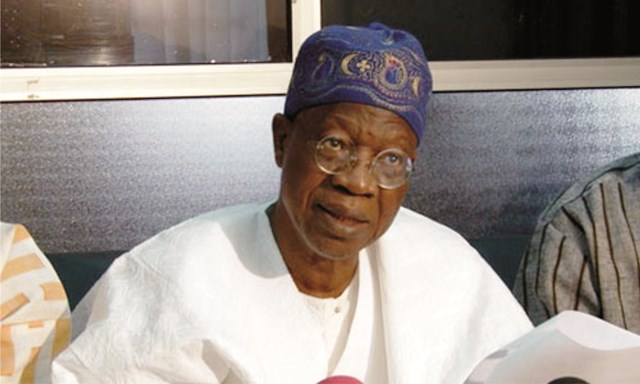
As Nigeria celebrates 58 years of freedom from the shackles of British colonial rule, a retrospective view of the nation’s entertainment enclave in the past eventful years of independence reveals a vibrant and dynamic industry that basks in success despite odds.
Since independence on October 1, 1960, the entertainment industry has metamorphosed into a multi-billion naira industry that has contributed immensely to the growth of the country’s Gross Domestic Product (GDP), rebranding of the nation’s image abroad as well as employment generation.
The unprecedented growth of the industry over the years was made possible by various factors which include, public private participation, government landable policies and programmes, as well as investments and financial grants. One of such policies of the present administration is the granting of pioneer status to the industry and tax rebate for the practitioners and other stakeholders in the industry.
The laudable policy has enabled them to enter into interesting contractual relationships with no restrictive regulatory presence to contend with. The spread of digital technology such as higher level of internet access, increased penetration of smart phones and other social media platforms have ushered in a positive multiplier effect on the various entertainment out lets via-a-vis movie, music comedy, tourism, arts and culture and beauty pageants as well as the hospitality industry.
In the movie sector popularly known as Nolllywood, the growth had been tremendous from the era of late Amaka Igwe’s ‘Checkmate’, one of the most popular television soaps of the 1990s to the advent of the first Nollywood moive “Living in Bondage”, movies like “Diamond Ring”, “Out of Bound”, etc had generated buzz, pushing the actors and actresses into fame and wealth.
As at 2006, the industry realised in amazing N16 billion from record of 50 indigenous movies. The figure represented close to 30 per cent of the N3.5 billion generated from 28 cinemas across the country including movies from Hollywood of America, Bollywood of India Gollywood of Ghana and other countries.
Films like “the Wedding Party” , “A Trip To Jamaica”, ‘Okafor’s Law’ 93 Days’ and the CEO, all shattered box offices. Nollywood also made great impact in major international film festivals across the globe and attracted investors to the country.
According to the CEO of Iroko TV, Mr Jason Njoku, “the VC backed Video-On-Demand (VOD) plat form for Nollywood movies, “Nollywood can now be mentioned in the same breath as Hollywood and Bollywood producing about 1500 and 2000 films annually.
“Nollywood is the most hard working, brutal and dynamic of industries that Nigeria has spawned. It is an economic miracle that the industry has not only flourished, but grown exponentially, considering the conservative budgets movie producers have to work with as well as antiguated distribution that held the industry back for many years. Today Nigerian movies are ruling the movie world”.
In the music sector, the beat goes on as the sector has also become quite successful both economically and structurally. The period of 2004 to 2006 saw the Nigerian music industry explode in the African stage with hits like African Queen’, ‘Tongolo’ and ‘Nabaka’ by Chocolate City’s Jeremiah Jang among others. Some of the hardworking artistes of that period and after wards have become famous and rich through their talents and hardwork.
It was gathered that when M1, one of Nigeria’s foremost rappers released M12 he reportedly received a cheque of N2 million from marketers. In 2013 Burna Boy was said to have received close to N10 million for life within a month of its release, while the very successful duo of Peter and Paul of the now defunct P-Square, once told CNN that they made as much as $100,000 per concert in countries outside Nigeria.
Though these kinds of cheques or money are not the flow but they indicate the kind of money that contemporary artistes flow,. The proliferation of these songs and the culture that of flow in them is a force that is irresistible even though we don’t understand the meaning of some of them like ‘Shoki’ Alingo’ ‘Skelewu, ‘Sekeni’ and ‘Skelemba’ etc.
In spite of its short comings such as jaded content, the dismal collection and administration of royalties and piracy, it is undeniable that the Nigerian music has scaled the heights that were only imaginable by prominent acts of the former decade.
The previous artistes only made money from record sales and live shows, but today, the channel has expanded like Magic the present day artistes now make money through social media platforms, endorsements, syne licencing, call, ring back tunes, concerts, tours and other business ventures.
Innovation in technology is a contributory factor to this novel / phenomenon. According to the co-founder of Chocolate City, Yahaya Maikori, “you cannot have selling records as your business model any more, if you do, you are bound to fail, music has become a promotion too. You do the music and get it out there with the intention to build a brand and then make money from related sectors, music is not the end any more, it is more or less the means to an end.
“Previously when you sold records that was the end, presently, the strategy is to put the music out, if it catches, you loverage on the popularity to across sell, so if the people love your music, they will probably like your shoes or patronise the service provider you endorse, music is no longer a property, but a service”.
There is a new wave of cultural awareness and positive identification of Nigerians locally and in disapora. These days people even speak Nigerian slangs which was not always the case and there is a resuscitated pride in the Nigerian identify. In 2014 CNN conducted a world wide poll on the ‘sexiest accent”, and the Nigerian accent ranked 6th. CNN then wrote: “Dignified with just a hint of willful naivette’, the deep rich ‘ohs’ and ‘Ehs’ of Nigeria bend the English language with out breaking it”, kudos to our innovative music stars.
Comedy has also evolved as a profession in Nigeria today, from court jesting to stand up comedy. There is a flourishing humour industry in the country, it is the next thing after Nollywood, the principal explanation being the ubiquitous adulation of such hunour prenures like Alibaba, Basket Mouth, AY, Julius Agwu Klint D’ Drunk, Okey Bakasi, I Go Dye, Princess Teju Baby Face, Mr. Ibu Skits etc.
So successful have these humour impressaries become that few will grace a thirty minute event and smile home with millions of naira. They are interestingly in top demand in several countries outside Nigeria, but the situation was hot like that in the 80s. the personalities of the era of clowning, mockery, ridicule and satire were Jagua, Danjuma, Gringory, Baba Sala, Baba Aluwe, Zebrudaya etc. Today the importance of humour in Nigeria is such that a successful comedian is another name for a successful Nigerian elite.
tourism is another money spinning industry in Nigeria attracting about N80 billion annual revenue. The important roles of the tourism sector in the socio economic development of any nation cannot be over emphasised. Although some of the tourist sites in the country are not well developed, because it is operating below capacity, tourism remains the fastest growing industry in Nigeria and globally.
The tourism sector also offers the opportunity to lessen the nation’s over dependence on oil revenue, if properly harnessed, as the country boasts of long stretches of exotic beaches, high mountains, well preserved tradition, culture and other enchanting tourist attractions like the slave routes historic artifacts etc.
Over the years, arts and culture had played prominent roles in the nation’s economy, there is a close affinity between tourism, arts and culture. The National Council for Arts and culture is developing the Nigerian culture to become the country’s income earner. Already it has produced some artifacts under waste to wealth scheme, which has attracted global investment and revenue.
It would be recalled that in 1977 the world converged on Lagos-Nigeria for the World Black Festival of Arts and Culture (FESTAC 77) which was goodtime arts were thriving in the country, a period a lot of revenue was generated for the country as a result of promoting and showcasing the country’s rich cultural values, since then, enough has not been done to attract such magnitude of tourists. We need to be proactive instead of paying lip service to the development of the sector because a country that does not preserve its cultural heritage risks losing its identify.
Another interesting aspect of the entertainment industry is beauty pageants which had promoted the culture and tourism potentials of the people and also generated revenue for the country. On the importance of beauty pageants to the economic and socio cultural development of the nation, a Nigerian beauty queen and Zonal Director Miss Commonwealth Pageant Uk, Miss Amaka Oguchi, in a media chat said: “It is quite sad that Nigerians don’t understand the impact a beauty queen can make as a spokes person . she can be a strong weapon used to a waken a sleeping giant (tourism). It is not surprising that beauty pageant show case a country’s fashion sense which is still geared towards promoting its cultural and tourism values.
Nigeria over the years has gained immensely from several national, regional and interventional beauty pageants won or hosted by the country. Nigeria gained global acclaim and revenue when she produced the first ever black African Miss World Agbani Derego. Since then Nigeria has been identified with beauty pasgcants globally.
It is therefore no gain saying the fact that since indepence in 1960 the entertainment industry has recorded awesome mile stones and remains the eggs that lays the golden goose for the nation. This is evident in the recent report by the price water cropor (PWC) which states that Nigeria entertainment and media industry will grow to $8 billion by 2019.
However it is not yet uhuru for the industry as we still need to exploit the gains from Nigeria’s integration into the technology driven global economy.
Jacob Obinna




The actress reacted after Yul appeared on The Honest Bunch Podcast, where he made comments that many listeners linked to his former marriage.
During the interview, Yul hinted that certain things happened while he and May were still married and suggested those moments contributed to the decisions he later made.
The Tide Entertainment reports that Yul hints that certain things happened while he and May were still married and suggests those moments contributed to the decisions he later made.
In the interview, the controversial actor said he had accepted being seen as the villain in the story.
He also stated that, despite everything, he genuinely wished May well and wanted her to prosper because she remains the mother of his children.
Yul Edochie finally shares last moments with late son three years after his tragic death
But while saying that, Yul also hinted that there were incidents in their marriage he had chosen not to discuss publicly.
According to him, he was “too much of a man” to come online and break down over personal matters.
Reacting to the interview, Sarah, in a post on her Instagram story, pointed out what she described as irony in Yul’s words—saying he wished May well while also making statements that could create doubt in people’s minds.
According to her, if he truly meant well for his former wife, there was no reason to hint at hidden issues and leave people guessing.
“You wish her well, but you granted Podcast the power to sow doubt in people’s minds by saying she did something that led you to do what you did, but you won’t say it,” she said.
“Oga, you’re just pained that she’s doing well!”
Sarah also questioned the purpose of the interview, asking if jealousy may have played a role.
Yul Edochie recounts final moments with late son.
The actor recalled that his son came into his room early in the morning before leaving for school.
According to him, they spent time talking, laughing, and joking in what felt like a typical father-son interaction.
Yul Edochie reacts to crashed marriage
The Tide Entertainment had reported that Yul Edochie had continued to speak about his ex-wife as he appeared on the Honest Bunch Podcast.
He shared part of what happened between them and all the things he wished for her while speaking about his new wife.
The actor noted that he and his ex-wife know what happened that led to the dissolution of their union.

Nigerian entrepreneur and socialite, Pascal Chibuike Okechukwu, also known as Cubana Chief Priest, has opened up on his fallout with singer Burna Boy, alleging that the music star publicly attacked him because of his close relationship with Davido.
Speaking during an interview on The Beat 99.9 FM on Wednesday, Cubana Chief Priest said his journey to success began from apprenticeship and years of hard work, adding that fame and financial growth often attract envy and criticism.
“Success comes with a lot of hate. I started my journey from apprenticeship and service and I learnt so much about growth and perseverance. When you start becoming successful, you understand how people treat you.
“I was on my own and Burna Boy came for me, went on his big platform and started tweeting things that are not genuine, things that are not possible, things that have not existed and the attack was straight to my wealth.
“So he wanted to make people look at my wealth, disrespect my wealth, I felt bad and that happened because of my relationship with Davido,” he said.
He further stated that Davido has consistently supported his businesses and personal projects.
“David is always there for me. He opened all my nightclubs, restaurants, everything. He always shows up to support me.
“He’s investing in clubs in Lagos, and I’m making music to prove a point that I can,” he added.

Nollywood Actor, Alexx Ekubo’s family has officially announced the funeral arrangements for the late actor, describing him as a man whose life was filled with love, faith, generosity and compassion.
The Tide Entertainment had earlier reported that the Nollywood actor passed away after suffering from kidney cancer.
The Ekubo-Okwaraeke family announced the funeral arrangements in a statement released via the actor’s social media handle.
The statement read: “Forever in Our Hearts.
“With profound sorrow, yet gratitude to God for a life so beautifully lived and deeply impactful, we officially announce the funeral arrangements of our beloved husband, son, brother, friend, and colleague, Alexx Ekubo-Okwaraeke
“The overwhelming outpouring of love, prayers, messages, visits, calls, support, and strength shown to the family during this painful period has been truly humbling. Words cannot fully express our gratitude.
“Alexx was deeply loved, and your kindness continues to remind us that his light, compassion, faith, and impact on so many lives will never be forgotten.
“Though his passing came far too soon, Alexx lived a life marked by love, warmth, generosity, laughter, and an unwavering devotion to God and the people he cherished. His presence filled rooms, lifted hearts, and created memories that will remain with us forever.
“We warmly invite family, friends, colleagues, fans, and well wishers to join us as we honor and celebrate his beautiful life, enduring legacy, and the precious memories he gave us all.
“SERVICE OF SONGS
Date: Wednesday, 10th June 2026
Venue: The Monarch Event Center, Lekki, Lagos Time: 4:00 PM – 6:00 PM
Dress Code: White
“WAKE KEEP
Date: Wednesday, 17th June 2026
Venue: 7 Ekubo-Okwaraeke Avenue, Aziukwukwa, Ujari Village, Arochukwu, Abia State
“FUNERAL SERVICE
Date: Thursday, 18th June 2026
Venue: Mary Slessor School, Amanagwu Village, Arochukwu, Abia State
“INTERMENT
Date: Thursday, 18th June 2026
Venue: 7 Ekubo-Okwaraeke Avenue, Aziukwukwa, Ujari Village, Arochukwu, Abia State
“RECEPTION
Reception to follow immediately after the interment at Mary Slessor School, Amanagwu Village, Arochukwu, Abia State.
Dress Code: White
“Please continue to keep Alexx, his wife, and the entire family in your prayers during this difficult time.”
-

 News3 days ago
RSG Targets Nine Million Residents in Mosquito Net Distribution Campaign
-

 Oil & Energy3 days ago
Aiyedatiwa Signs New Electricity Bill
-

 Oil & Energy3 days ago
NLNG Commissions Research And Innovation Centre In RSU
-

 Maritime3 days ago
Marine Minister Commends President Tinubu On NPERA Bill Assent
-

 News3 days ago
KenPoly Holds Eight Convocations, August 29
-

 News3 days ago
RSG Begins Another Phase of Projects Commissioning Today
-

 News3 days ago
RMAFC Completes Revenue Sharing Review, Proposes New Pay
-

 Maritime3 days ago
NAGAFF Petitions IGP Over Alleged Maritime Police Harassment