
Nation
THE STATES


Adamawa
Governor Mohammed Bindow of Adamawa State, recently said that the administration would provide more loans to farmers to boost food production in the state.
Bindow made this disclosure at the distribution of 9,421 tonnes of fertiliser and water pumps by the Ministry of local government and chieftaincy affairs in collaboration with ALGON in Yola South local government area.
He expressed the hope that the loans would assist small holder farmers to expand their agricultural activities as well as boost food production.
The governor said that the timely and adequate distribution of agricultural inputs was in fulfillment of his campaign promises.
Borno
The Borno State Police Command last Sunday, said it had deployed 3, 000 policemen to Maiduguri and other areas liberated from the Boko Haram insurgents.
The Police Public Relations Officer (PPRO) in the State, ASP Victor Isuzu, disclosed this in an interview with newsmen in Maiduguri.
Isuzu said that the measure became imperative to enhance security network in Maiduguri and other communities liberated from the insurgents.
He explained that the command had taken proactive steps to deal with security threats, protect lives and property in the state.
He said that the personnel had already resumed duty in their various posts.
Ekiti
The Primate of Anglican Communion, Most Reverend Nicholas Okoh, last Saturday said, “the suffering of the masses was caused by some few privileged Nigerians; who plundered the commonwealth without thinking about the poor.
He, therefore, urged Nigerian leaders to live a life that would positively affect their followers rather than earthly acquisition of wealth.
Our correspondent report that the primate said this during the burial service of former Minister of Tourism and Culture, Prof., Babalola Borishade at St Andrew Cathedral Anglican Church, Usi-Ekiti, in Ido/Osi local government area of Ekiti.
The primate, who delivered his sermon through the Arch Bishop of Ondo Province and Bishop of Ondo Diocese, Most Revd George Laosebikan, called on Nigerian leaders to live a life worthy of emulation.
FCT
Nigerian Air Force (NAF) last Thursday said its Agusta 109 Light Utility Helicopter suffered a mishap while undertaking a liaison mission in the North East.
The Director of Public Relations and Information, NAF Headquarters, Air Commodore Olatokunbo Adesanya, said this in a statement made available to newsmen in Abuja.
Adesanya stated that the helicopter’s target was to further enhance synergy between Nigerian Army and NAF in the ongoing counter-insurgency operations in the North-East.
He noted that the incidence, which occurred on Thursday, July 6, was as a result of airborne technical fault.
Kaduna
The Acting President, Prof. Yemi Osinbajo, says President Buhari has resolved to work with Ibrahim Magu as EFCC Chairman to stamp out endemic corruption in the country.
Osinbajo, who spoke at the inauguration of the Kaduna office of the anti-graft agency last Thursday, said that those who think that they were winning in fighting back against the government’s war on corruption, should wake up.
Represented by Governor Nasiru El-Rufai of Kaduna State, Osinbajo said, so long as Buhari remained Nigeria’ s President, Magu would continue to work as the Chairman of the Economic and Financial Crimes Commission (EFCC).
“Mr Chairman, two weeks ago, I discussed the EFCC and your appointment with President Muhammadu Buhari and he told me he has every confidence in you and every confidence in the commission and the work that you have been doing, and as long as he is president you remain the chairman of the EFCC,’’ he said.
Kogi
The Nigerian Army has offered free medical and environmental sanitation services to the people of Kogi State as part of activities to commemorate the 2017 Nigerian Army Day Celebration (NADCEL).
Regimental Medical Officer, Medical Reception Station, Army Records, Lokoja, Maj. Michael Bokos, who led the medical team on Saturday, told newsmen that the army was celebrating itself to show its friendliness with the public.
“It is just a way to showcase ourselves to the general public that we are civil-friendly, and interacting with our communities in terms of security, sanitation, healthcare, among others.
“Today, we felt that it is necessary to come out here and offer free medical checkups and treatment to the people as directed by the Army Headquarters all over the country.
Lagos
A former Deputy Comptroller General, Nigerian Customs Service, Mr Musa Tahir, last Thursday, said that he had no clue why the service paid N12 million into Justice Rita Ofili-Ajumogobia’s bank account.
Giving his testimony during cross-examination by Mr Olawale Akoni in the trial before an Ikeja High Court, Tahir said, “I have seen Hon. Justice Ofili-Ajumogobia but I have never met her one on one.
“I don’t know why the former Comptroller General of Customs (CGC), Alhaji Abdullahi Dikko said the money should be paid into my colleague, Musa Omale’s account to be forwarded into the company’s account of the judge.
“I don’t have the paper in which the CGC wrote the directive; the paper was handed over to Omale who worked in my office.
Nasarawa
A Mararaba Upper Area Court, Nasarawa State, last Thursday, sentenced two men, Kabiru Ibrahim and Yusuf Danjuma, to two months imprisonment, each for smoking cannabis sativa (a.k.a.Indian hemp).
The judge, Ibrahim Shekarau, said he convicted the defendants as they admitted committing the offence.
He, however, gave the convicts N2, 000 option of fine each, and warned them to desist from committing crime.
The convicts, who had no definite addresses, were arraigned on a three-count charge bordering on conspiracy, constituting public nuisance and making the atmosphere noxious for human health.
Niger
An economist, Prof. Kenneth Nnadi, has advised parents and guardians to encourage children to study mathematics because it was the driving force behind technological advancement.
Nnadi, a senior lecturer in the Department of Maritime Management Technology, Federal University of Technology, Owerri (FUTO) made the call in an interview with the News Agency of Nigeria (NAN) in Minna, on Saturday.ý
“Mathematics ýis the key to every science discipline; it sharpens intelligent quotient and boosts confidence and courage.
“Prospective scholars must dare mathematics; the dearth of mathematicians will impede global progress and force the world to a standstill.
Osun
The Osun State Government says it will continue to provide the needed support for farmers in the state in their efforts to boost food production.
The Commissioner for Agriculture and Food Security, Mr Kunle Ige, made the promise when he received the executive members of the state chapter of All Farmers Association of Nigeria (AFAN) in Osogbo.
He pledged that the state government would continue to give the required support to all genuine farmers, without any form of discrimination, so as to boost food production and banish hunger in the state.
He said that the government had initiated plans to guarantee the farmers’ easy access to loans, agro-chemicals, farm equipment and improved seedlings, adding, however, that the government could no longer afford to subsidise the inputs.
Taraba
The Taraba State House of Assembly recently commenced public hearing on the proposed Anti- open Grazing and Ranches Establishment Bill.
Our correspondent reports that the Speaker, Mr Abel Diah, flagged off the hearing in Jalingo, with Dr. Mark Useni, Chairman, House Ad-hoc-Committee on Public Hearing on the bill, presiding.
Diah, in a brief speech, asked the stakeholders to freely contribute to the bill to enable the House arrive at a position that would be in the interest of the people.
Representatives of the Ministry of Agriculture, Bureau for Local Government and Chieftaincy Affairs, the Nigerian Bar Association (NBA), NGOs and other groups, who spoke on the bill, said that it would promote peace between herdsmen and farmers.
The Permanent Secretary in the agriculture ministry, Mr Isaac Mela, opined that the bill, when passed and signed into law, would boost both crop and animal production in Taraba.
Yobe
The Internally Displaced Persons (IDPs) in the Abari camp in Damaturu, say they are now facing food scarcity, as they have planted their remaining grains in their farmlands.
One of the IDPs, Modu Bukar, told reporters in Damaturu last Tuesday that most of the IDPs had used the available grains as seeds for their crop growing.
“Most of us planted millet, sorghum and groundnuts, mostly from food assistance given to us by the government and non-governmental organisations (NGOs),’’ he said.
Another IDP, Ali Mohammed, said: “We are facing food challenges because we have planted what was left with us; we will, therefore, appreciate any support extended to us,’’ he said.
Reports that a Federal Government delegation, led by the Minister of State for Budget and National Planning, Zainab Ahmed, on Monday, visited Yobe to monitor the supply of food items, under the newly launched door-to-door food distribution initiative for IDPs.



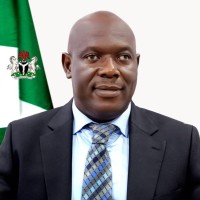
The Hydrocarbon Pollution Remediation Project (HYPREP) has commemorated the 15th anniversary of the release of the United Nations Environment Programme (UNEP) Environmental Assessment Report on Ogoniland, reaffirming its commitment to restoring the environment and improving the livelihoods of affected communities.
In a statement signed by the Project Coordinator, Prof Nenibarini Zabbey, to commemorate the anniversary, HYPREP described the anniversary as a significant milestone in Nigeria’s environmental restoration efforts, noting that the project has made remarkable progress in implementing the recommendations of the landmark UNEP report released on August 4, 2011.
The UNEP report had revealed extensive oil pollution across Ogoniland, severe environmental degradation, and serious public health risks resulting from decades of petroleum operations. It also recommended an initial $1 billion fund to commence the cleanup of the affected communities.
According to HYPREP, the Federal Government formally launched the Ogoni clean-up in 2016, while the Project Coordination Office was established in 2017 to drive the implementation of UNEP’s recommendations.
Zabbey said the current administration has continued to prioritise the project under the Renewed Hope Agenda.
Providing an update on the cleanup, the Project Coordinator disclosed that 30 of the 65 contaminated sites identified by UNEP have been fully remediated, while work is ongoing at several medium- and high-risk locations. It also stated that more than 1.5 million mangrove seedlings have been planted as part of what it described as the world’s largest restoration of oil-degraded mangroves, with over 1,000 hectares of shoreline already rehabilitated.
Zabbey further revealed that 49 Ogoni communities have been connected to potable water schemes through multiple water projects and booster stations aimed at providing safe drinking water across the region.
In the health sector, he said the 100-bed Ogoni Specialist Hospital in Kpite and the 43-bed Cottage Hospital in Buan are nearing completion, adding that several existing health facilities have been upgraded with modern medical equipment, while five ambulances have been donated to improve emergency healthcare services. The Project Coordinator also disclosed that a three-year human health biomonitoring study is being conducted in collaboration with the World Health Organization’s International Agency for Research on Cancer (IARC).
On economic empowerment, Zabbey stated that the Project has created more than 8,000 direct jobs and trained thousands of Ogoni youths and women in various vocational and technical skills, including software development, cybersecurity, aviation, commercial diving, seafaring, mechatronics, and creative arts. The project also reported awarding scholarships to more than 1,000 students, providing grants to small businesses, and supporting persons living with special needs through skills acquisition programmes.
The statement further highlighted ongoing legacy projects, including the Ogoni Power Project and the Centre of Excellence for Environmental Restoration, which it said is about 96 per cent complete. HYPREP also welcomed the recent designation of the Ogoni Wetland as a Ramsar Site of International Importance and pledged to continue promoting biodiversity conservation and sustainable management of the ecosystem.
Marking the anniversary, Zabbey said the progress achieved over the past 15 years demonstrates the collective commitment of government, development partners, stakeholders, and local communities to restoring Ogoniland. He called for renewed collaboration to sustain the cleanup effort, promote environmental sustainability, and support the long-term development of the region. 3
-

 News2 days ago
RSG Targets Nine Million Residents in Mosquito Net Distribution Campaign
-

 Oil & Energy1 day ago
Aiyedatiwa Signs New Electricity Bill
-

 Oil & Energy1 day ago
NLNG Commissions Research And Innovation Centre In RSU
-

 Maritime1 day ago
Marine Minister Commends President Tinubu On NPERA Bill Assent
-

 News2 days ago
KenPoly Holds Eight Convocations, August 29
-

 News2 days ago
RSG Begins Another Phase of Projects Commissioning Today
-

 News2 days ago
RMAFC Completes Revenue Sharing Review, Proposes New Pay
-

 Maritime1 day ago
NAGAFF Petitions IGP Over Alleged Maritime Police Harassment