
Opinion
Is It Victory For Villains?

Who is a villain? Third Edition of the Cambridge Advanced Learners Dictionary (online version), defines a villain as “a bad person who harms other people or breaks the law”. Therefore, anyone who deliberately inflicts bodily, emotional or psychological injury on another, as well as, break the laws of the land or other laws made by constituted authority, is a villain.
By this definition, a villain is a law breaker, a thief, a rebel, a dupe, an embezzler of public funds, etc. However, a villain, though a sinner, may enjoy reprieve if adequate propitiation is made by him. My Christian faith recommends simple laxative of confession and repentance, then go home and sin no more.
But why would an English dictionary refer to a villain as ‘bad man’, the same description given to witches and wizards? Does it mean that the foregoing vices are equated with demonic inclination as witchcraft? Does it mean a villain: rebel, thief, dupe, embezzler of public fund can also kill like witchcraft? I recall an encounter, in the Christian Bible, Book of 1 Samuel 15:23, between Prophet Samuel and King Saul, when the former warned King Saul that, “rebellion is as the sin of witchcraft…” Rebellion, defined as “actions against those in authority or against the rules or against normal and acceptable ways of doing things.”(CALD)
Suffice it to say that a villain, in the first instance, is a bad man or bad woman. A rebel. A witch or wizard and ultimately a transgressor of law! A villain is one whose action or inaction inadvertently or deliberately, subjects people to physical or psychological harm. A villain is one whose policies are inimical to the well-being of majority of the masses. A villain is an enemy of God and of the people, hence, should be treated with disdain and reproach, unless he repents.
Done with the villainy concept, may I succinctly aver that Nigeria is inhabited by hordes of villains, with different sizes and shapes? We have villains in our homes, schools, churches and government. At homes, we have those who deliberately work against noble family values. While in schools, we have those who exploit the naivety and gullibility of already psychologically ravaged students, in order to satiate their ludicrous but sadistic ego. In churches, we have those putting up ‘ministerial’ garb but are nothing but wolves. They take undue advantage of ‘social refugees’, who in disillusionment had run to their church for succor. But instead of succor they are tortured, psychological and physically, at times.
Worst of the villains are those, either in the corridors or porch of power those who sooner than they prostrate and beg for your votes, suddenly become lords over you. In place of the good roads they promised you, they will give you good guns, to kill one another .In place of food, they will give you maggots to eat. And while you are busy killing yourselves, they will steal you dry and relocate to their safe haven. They may return to power after all, if they are able to pay their way through second term, or better still they may install their boys. But if their bubble bursts, and their party loses to the opposition, they may end up in EFCC’s custody answering to allegations of loots and stealing. Predictably, they may be harassed, intimidated and charged to court. Their appearance in court, usually news worthy, will be fully reported by all media houses, in a manner reminiscent of late Mandela appearing in a South African court during his apartheid struggle days. He pleads ‘not guilty’ to all the charges, and probably will be released on bail .If he is lucky, he will be given option of plea bargain or be made to appear regularly in court for hearing until he bows and join the ruling political party.
In worst scenario, which seldomly happens, he is extradited to a foreign country, may be, UK, where he will be speedily convicted and jailed for proven corruption case. On serving out his jail term, which he does stoically, he returns home triumphantly into the waiting arms of malnourished kinsmen and compatriots whose antecedents may be as questionable as his. Amidst a heroic reception, characterized by pump and pageantry, intermittently disrupted by vociferous praise singers who harangue their audience with incoherent speeches suggestive of redemption, emancipation and victory, they would blasphemously refer to their ex-convict- boss as Jesus! May be Jesus of Nigeria. Sure not Jesus of Nazareth! I have watched these shows of shame once in Lagos and recently in Oghara, Delta State. Who knows the next venue?
Apparently, it seems the villains are having a field day, to the chagrin of few responsible Nigerians. Often, they grab juicy political appointments, win plum contracts and win electoral offices. They are the ones pampered, feared and compensated. One thing is sure though, we all shall one day give account of our stewardship, either here on earth or in heaven, to man or to God. Like the wise man, Solomon, warns, there is no hiding place for the wicked. Certainly he will not go unpunished.
As responsible citizens of Nigeria, we all have a duty, to unequivocally condemn the dastardly acts of these villains. We must reject their ‘china gifts’ and collectively rise up against crass impunity and delusive power show. I advocate for a social revolution. By this, we will hold them accountable for the pains they have inflicted on the common man for a long time.
I dream for a day when you hold one villain hostage with the same gun he gave you to kill your brother. I look forward to the day you boo the same man who paid you to sing undeserved praises to him. We must unanimously rise up against evil and evil men and enthrone a wall against their malfeasance. We must bring them to book and ask them questions about their stewardship to our nation. Most importantly, come 2019, we must deploy effectively, our political sword, which is our voters’ card, to ‘destroy their career’. Thanks to the US President, Donald Trump. Only then can we say it is not victory for the villains but victory for the masses.
Onyenma, social commentator and columnist writes from Port Harcourt.
Kennedy Onyenma



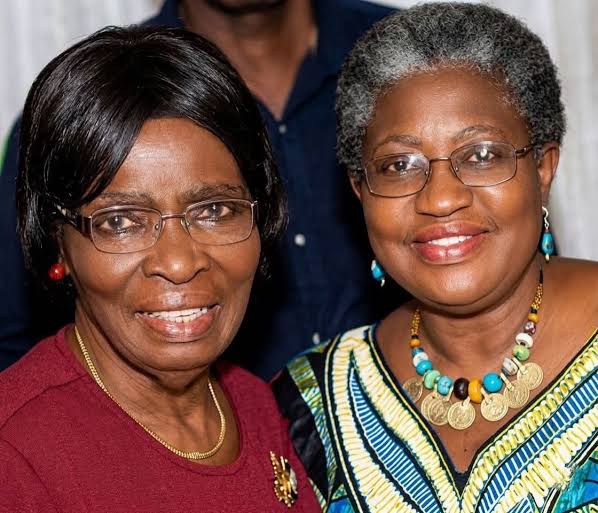
Quote “Professor Kamene Okonjo
Some women leave behind more t
Yet, to remember Professor Kam
Professor Okonjo was the belov
one of the most dramatic chapt
On December 14, 2012, the then
She leaves behind children, gr
Professor Kamene Okonjo deserv
By: Sylvia ThankGod-Amadi

Quote: An African who invokes
This is the concluding part
… Given the fact that I was
At the end of the visit by the
Back to my apartment, at abo
Under normal circumstances, yo
That all she asks is that Chie
For some reason that I do not
I believe that everyone in hu
Our ancestors have not gone fa
By: Jason Osai
The Federal Government’s approval of a N70,000 monthly transport intervention for public service workers for six months, beginning in November 2026, offers hope to employees struggling with the rising cost of living. The agreement with the Nigeria Labour Congress (NLC), reached at a conciliation meeting in Abuja on October 27, is intended to cushion transport costs and ease pressure on workers’ incomes. But for public servants in Rivers State, it raises a familiar question: will the State Government key into the intervention and ensure that its workers benefit? The agreement provides for N70,000 monthly across all levels, for six months. The Federal Government also approved peculiar allowance arrears effective from May 1, 2026, to be paid in three equal instalments beginning in November.
The parties agreed to reconvene after one month to assess implementation. Ultimately, the value of these resolutions will be measured not by announcements but by whether eligible workers receive the money. Transport costs consume a substantial share of many civil servants’ earnings before they can meet household needs. Support for commuting is therefore not a luxury or political favour; it is temporary assistance to help workers remain at their jobs without sinking further into hardship. For lower-paid employees, transport costs can turn modest salaries into a daily exercise in difficult choices and sacrifice.
The agreement also urges State and Local Governments to participate and unions to press for implementation. The federal agreement does not automatically guarantee that every State and Local Government employee will receive the support. State authorities must clarify how it will apply to their workforce, make the necessary arrangements and publish a payment timetable. Rivers State must approach the arrangement with urgency and transparency. The Government should State whether it will implement the intervention and when payments will begin. Any administrative or financial question should be addressed promptly with organised labour, not allowed to become excuses for delay.
The concern is sharpened by the earlier N35,000 monthly wage award introduced by the Federal Government in 2023 after petrol subsidy removal. It was intended as temporary relief pending a new national minimum wage. While several States negotiated and paid wage awards or related sums, implementation nationwide was uneven. Reports in 2024 indicated that many States had failed to pay the federal award, while others provided different amounts. In Rivers, labour and media reports raised concerns about implementation of the N35,000 award for State workers, amid separate announcements and arrangements concerning Local Government employees.
The wage award was meant to ease the immediate effects of subsidy removal, yet workers faced uncertainty over whether the promised relief would reach them. In February 2024, the Rivers State Government announced approval of the N35,000 award for local government workers, but subsequent reports showed that implementation across worker categories remained a concern. The lesson is clear: approval and implementation are not the same. A declaration at a meeting offers little comfort to a worker whose account does not reflect the promised payment. For workers who travel to their offices daily, the implications of delayed support are significant. Transportation expenses compete with food, rent, school fees, healthcare and other essential household needs.
As fares rise, employees may be forced to reduce spending on necessities or borrow to sustain their families. A timely transport intervention would therefore provide practical relief and demonstrate that government understands the economic pressures confronting its workforce. Its temporary nature makes prompt implementation even more important. It is fair to acknowledge that this transport intervention is a new agreement and that its administrative details may require clarification. Rivers State should not be condemned in advance for a failure that has not occurred. Nevertheless, the earlier experience gives workers legitimate grounds to seek assurances before the November commencement date. The State should avoid allowing uncertainty to persist until workers begin asking why the promised assistance has not arrived.
The NLC and unions in Rivers State should engage the State Government immediately and seek a written commitment, an implementation plan and a process for reporting missed payments. If clarification from the Federal Government is needed, the State should seek it without abandoning the goal of providing relief. Labour leaders must also keep members informed about progress and insist that any agreed arrangements are applied fairly and transparently. The Rivers State Government should treat this intervention as an opportunity to rebuild confidence. Timely support would show that workers’ welfare is more than a talking point and that the State recognises the economic realities confronting its employees.
Silence, delay or selective implementation, by contrast, would revive frustration over earlier relief measures and weaken trust between government and labour. Every month lost to administrative delay leaves workers facing the same transport burden without the intended assistance. The State should consult labour, publish arrangements and pay eligible workers on time. Rivers workers should not have to wonder whether federal relief will reach them. The Federal Government has announced the support; now the State must make its position clear. We hope the N70,000 monthly transport intervention will not follow the troubling path of the earlier wage award. Rivers State should learn from that experience and ensure that this time, relief is not merely promised but delivered.
Sylvia ThankGod-Amadi
-
Opinion3 days ago
Ancestorial Worship: My Take (1)
-

 News3 days ago
FG Must Address Nigerians’ Concerns On Reforms -Shettima …Warns Against Misuse of AI, Social Media
-
News5 hours ago
Customs Partners EFCC, NDLEA, Others To Tackle Money Laundering, Terrorism Financing
-

 News5 hours ago
Fresh Ebola Scare As NCDC Records Two Cases
-

 Featured3 days ago
Tinubu Jets To S’Arabia For Lesser Hajj …Unveils Free Healthcare For Pensioners
-
Niger Delta3 days ago
Police Rescue Woman, 24, From Online Dating Kidnappers … Arrest Five Suspects
-
 Featured3 days ago
2027: Be Politically Neutral, Fubara Tasks Traditional Rulers
-
News3 days ago
FG Approves King Amachree Airport In Rivers, Sets Conditions For Construction